Fort Lytton: Brisbane’s Nineteenth-Century Coastal Defence
Site at a Glance
- Rating
- 4.6
- Popularity
- Low
- Country
- Australia
- Primary era
- Modern
- External website
- Open
- Eras represented
- Modern
- Civilizations
- British
- Site type
- Military
- Remains
- Fort
On this page16 sections
History
Fort Lytton is a nineteenth-century coastal fort in Australia, located at Lytton near Brisbane, Queensland. Built by Queensland between 1880 and 1882 in response to fears of attack by a foreign colonial power, particularly Russia or France, it was designed to prevent hostile vessels from entering the Brisbane River. The fort became Queensland’s principal fixed defence of Brisbane and its port.
Construction and colonial defence
The Queensland Parliament approved the project in 1878, following defence recommendations associated with Sir William Jervois and Peter Scratchley. Jervois was a British defence planner whose proposals influenced coastal fortifications in the Australian colonies, while Scratchley was a British military engineer and colonial defence adviser. Scratchley designed Fort Lytton and helped shape a wider system intended to protect Brisbane from attack by sea and land.
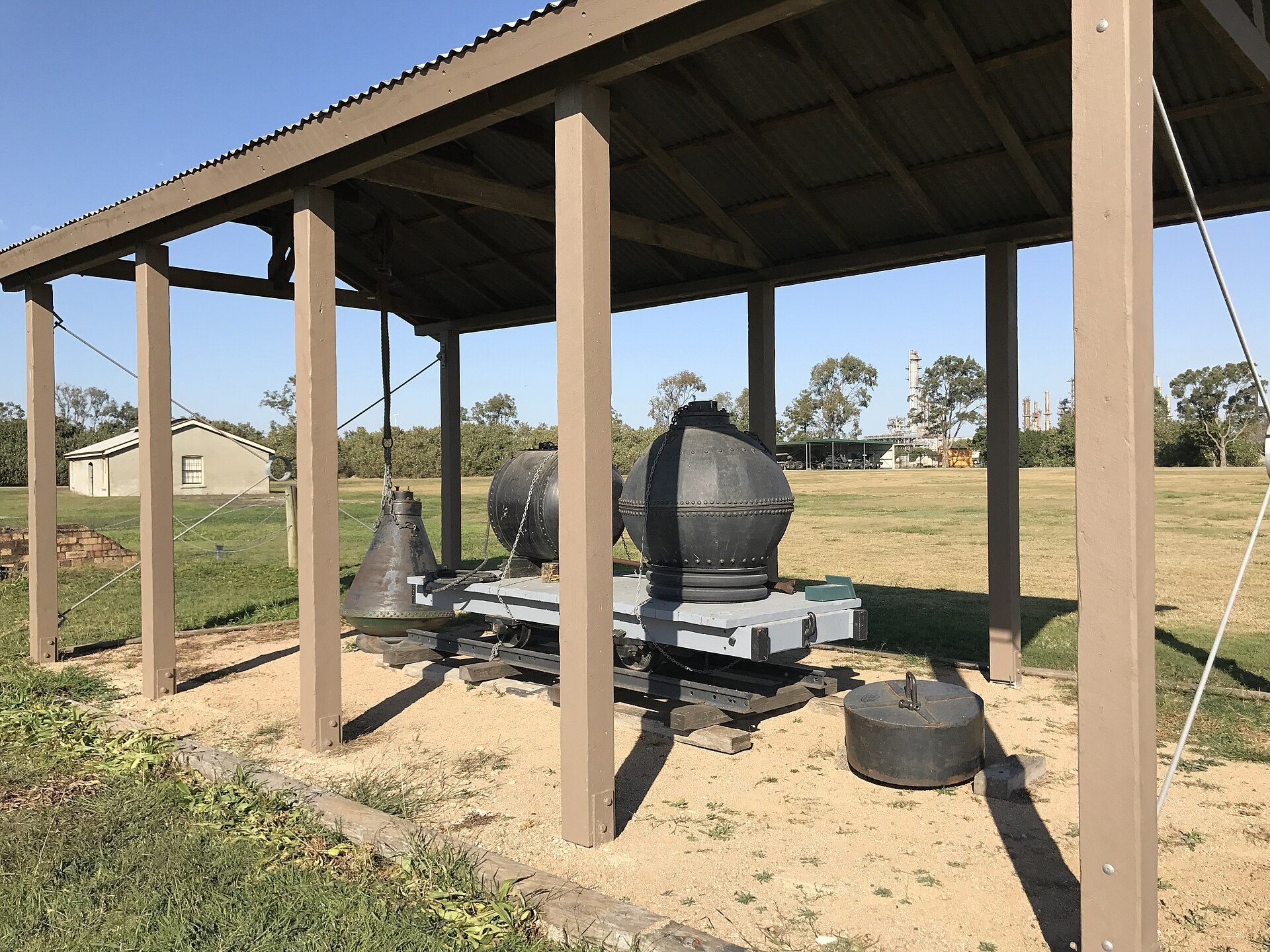
Brisbane was considered vulnerable because it lay relatively close to the French naval garrison at Nouméa and because islands in Moreton Bay could provide positions from which an enemy might operate. The planned defence therefore included both the fort and a field force of artillery, engineers, and infantry. Queensland also established a marine defence force with the gunboats Gayundah and Paluma, the torpedo boat Mosquito, and armed barges.
Training and military service
Fort Lytton operated from 1880 until 1965. During its first four decades, it was Queensland’s principal training base for reserve soldiers. As many as 5,000 reservists attended the annual Easter Encampment, and thousands of soldiers trained there before service in the Second Boer War, the First World War, and the Second World War.
The Second Boer War, fought in southern Africa from 1899 to 1902 between the British Empire and the Boer republics, brought Fort Lytton an important mobilisation role. Most, and probably all, of the nine Queensland contingents that sailed from Brisbane between November 1899 and May 1902 assembled and trained at the fort. More than 3,000 Queensland officers and men served with British forces during the conflict.
During the First World War, Fort Lytton mainly trained troops for overseas service. Its wharf was also used for embarkation. The fort’s artillery fired warning shots on two occasions, against a Dutch steamer and a local fishing vessel that failed to follow wartime procedures. After the war, the site became an extension of the nearby quarantine station, with tents used to house returning soldiers.
Changing coastal defences
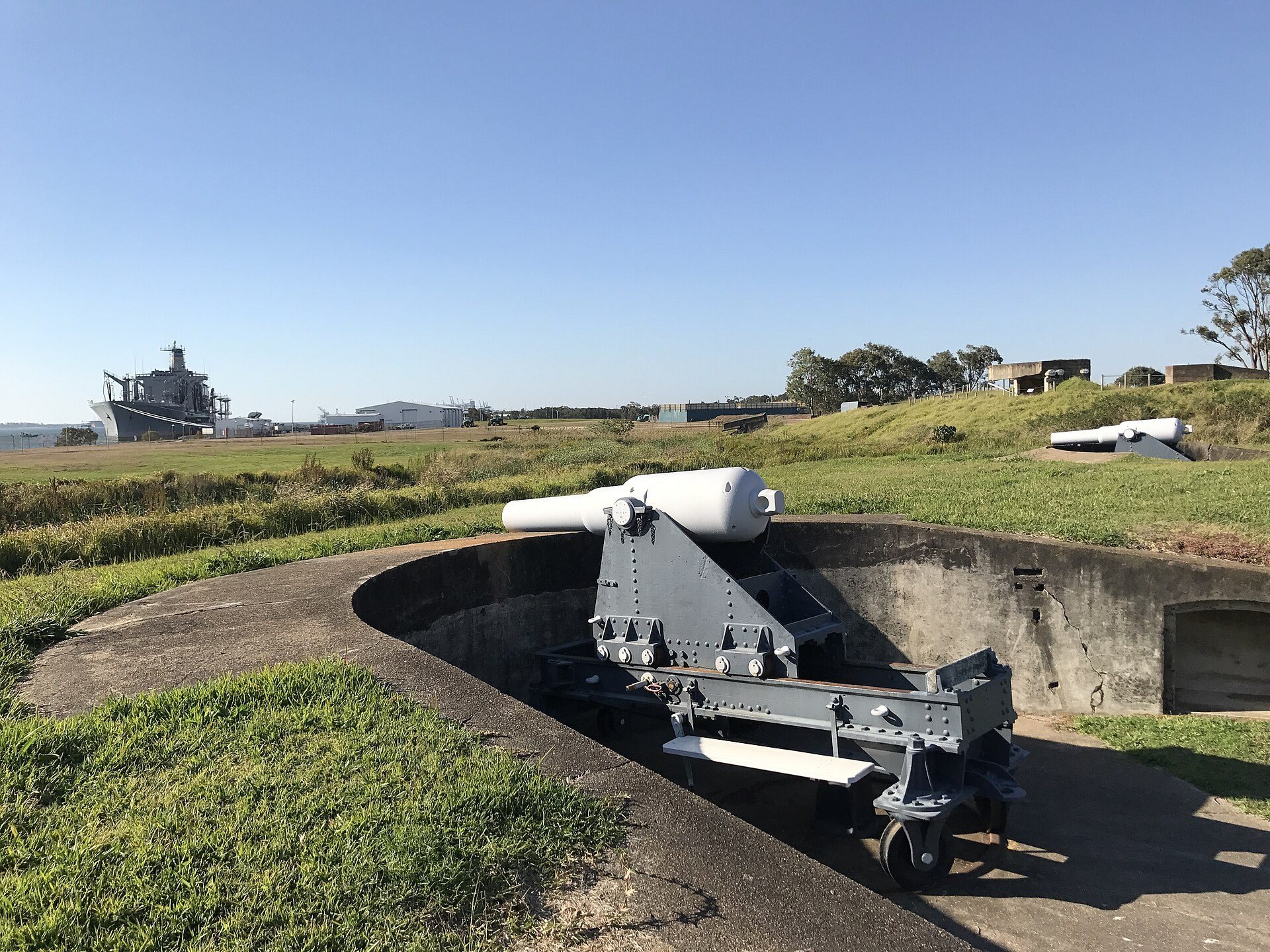
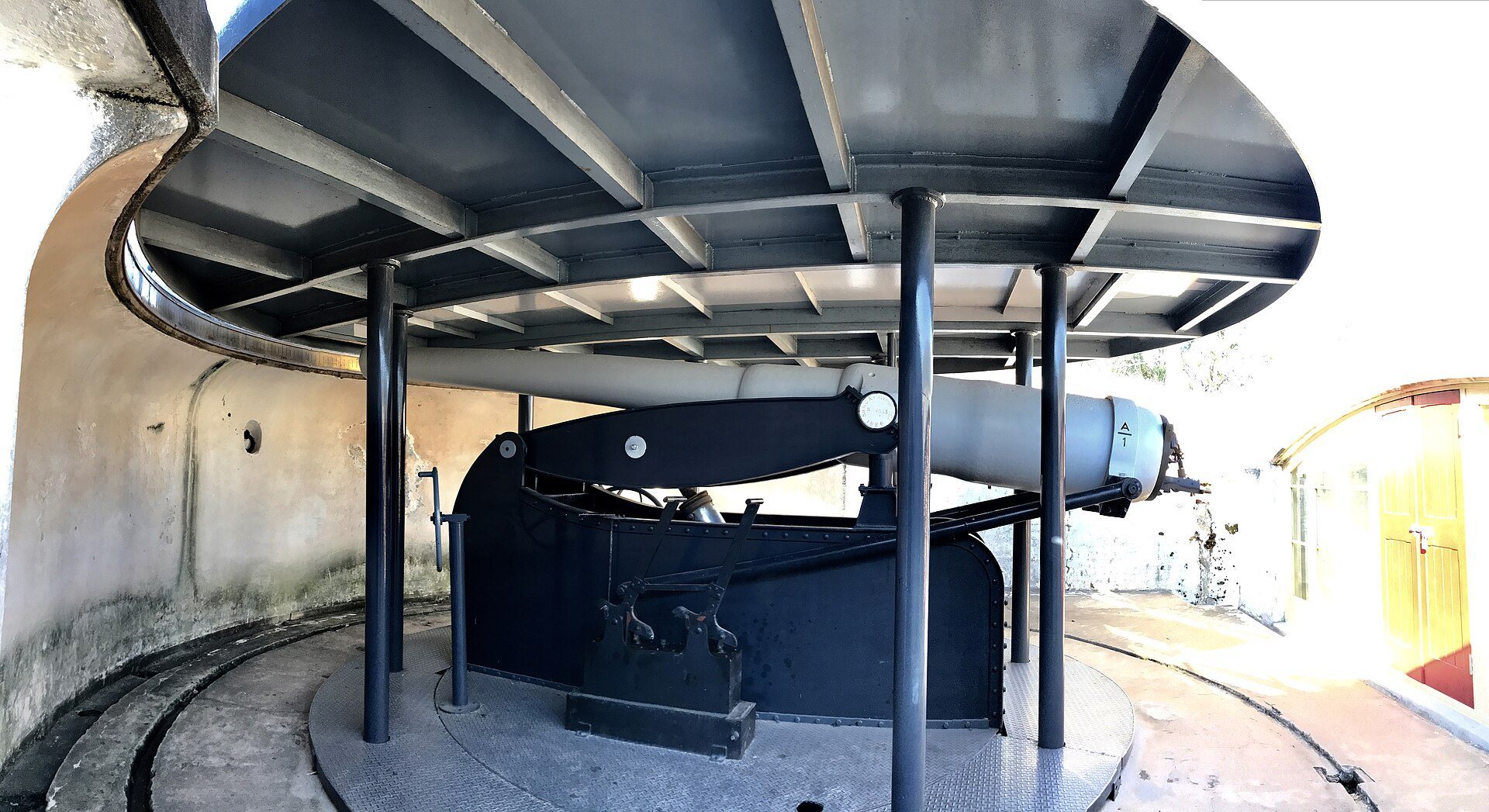
The original river-mouth defences combined a remote-controlled minefield with four muzzle-loading heavy guns. By 1888, the two 80-pounder guns had been replaced by two 6-inch (150-millimetre) 100-pounder breech-loading disappearing guns. A disappearing gun was mounted so that recoil lowered it behind cover after firing, reducing the exposure of the weapon and its crew. Two quick-firing Hotchkiss 6-pounder guns were added in 1893. The minefield closed in 1908, while the disappearing guns remained operational until 1938.
During the Second World War, Fort Lytton became the inner part of a larger Moreton Bay defence system. Four outer coastal forts, Fort Bribie, Fort Skirmish, Fort Cowan Cowan, and Fort Rous, were built between 1937 and 1943. Fort Lytton also operated as an Inner Inspection Station, sending inspection parties to ships before they continued up the river.
Wartime installations included signals and radar stations, heavy anti-aircraft guns, searchlights, and additional river barriers. Brisbane’s growing strategic importance, including its use as a submarine base, led to progressively stronger defences. Eighty-nine submarines were dry-docked in Brisbane for repairs over three years.
Closure and preservation
After the Second World War, the fort began to close, although its signal station continued operating until late 1965. In October 1965, it gathered intelligence about the Indonesian coup that brought General Suharto to power. Soon afterward, the site was transferred to Ampol for construction of the Lytton Oil Refinery.
Most of the approximately 1-square-mile (2.6-square-kilometre) military complex was converted to oil-refining and storage facilities. Three areas remained intact: the colonial fort and its associated structures, Lytton Hill and its associated structures, and the heavy anti-aircraft battery. Ampol transferred the colonial fort and related structures to the Queensland Government in 1988, and the preserved area became Fort Lytton National Park in 1990. Lytton Hill and the heavy anti-aircraft battery remained within the refinery.
Remains
The surviving site represents parts of a larger military complex centred on the Brisbane River mouth. The colonial fort is a pentagonal garrison concealed behind grassy embankments and enclosed by a water-filled moat. Other surviving or preserved elements relate to the fort’s river defence, its later wartime communications and weapons, and the separate defensive position on Lytton Hill.
Colonial fortifications
Fort and gun positions
The nineteenth-century fort has a pentagonal plan, with its defensive buildings and gun positions protected by earthworks and a moat. Its first heavy weapons were two 80-pounder and two 64-pounder muzzle-loading guns. In 1888, the 80-pounders were replaced by two 6-inch (150-millimetre) 100-pounder breech-loading disappearing guns. Their mounting allowed the guns to drop behind the parapet after firing, while the two Hotchkiss 6-pounder quick-firing guns added in 1893 provided faster fire against smaller or more mobile targets.
Wharf and river defence
The fort stood at the mouth of the Brisbane River, where its position allowed it to control access to the waterway. A wharf formed part of the military layout and was used for troop embarkation during the First World War. The original river defence also included a remote-controlled minefield, which operated until it was closed in 1908.
Second World War river defences
Guns, observation, and searchlights
Second World War additions included a 4.7-inch (120-millimetre) naval gun, a remotely controlled twin 6-pounder rapid-fire gun, and a 15-metre (49-foot) lookout tower. Searchlights supported observation and the control of the river barriers. The site also contained a signals station and a radar station, allowing military communications and the detection and tracking of objects.
Boom-net system
A permanently anchored ship, HMAS Kinchela, stood near the middle of the river off Fort Lytton. Two fixed heavy steel boom nets blocked the river on the far side of the vessel. Two movable gates extended between Kinchela and the fort and were operated by large winches at both locations. A boom net was a physical barrier used to obstruct or control shipping. Indicator loops, which were underwater electrical detection systems, and photo-electric beam systems downstream of the fort warned of approaching vessels. Searchlights illuminated the nets when required.
Hilltop and anti-aircraft positions
Lytton Hill redoubt
Lytton Hill was the only substantial hill within the former military complex. It lies about 0.75 miles (1.21 kilometres) east of the colonial fort. A redoubt, a small enclosed defensive work for troops, artillery, or observation, was built there in the mid-1880s. The position served as a lookout and as a base for infantry and field-artillery units defending the fort against land attack.
Signals and radar stations
Telegraph communication connected Lytton Hill with Fort Lytton. From the hill, personnel observed and reported movements of ships in Moreton Bay and attacking forces on land. During the Second World War, the hill contained an army signals station and a Royal Australian Air Force radar station. It also supported several civilian installations at different times, including semaphore communication with the prison on St Helena Island, temporary accommodation for a boys’ reformatory school, and a radar station for the Brisbane Pilot Service.
Heavy anti-aircraft battery
The preserved heavy anti-aircraft area contains four protected gun pits and a command post. A heavy anti-aircraft battery was a group of large guns intended to defend against aircraft. Together with the colonial fort and Lytton Hill, this battery forms one of the three portions of the former military complex that remained intact after the surrounding land was converted to refinery and storage facilities.