Fort Ingall: A British Fieldwork on the Témiscouata Transport Route
Site at a Glance
- Rating
- 4.6
- Popularity
- Low
- Country
- Canada
- Primary era
- Modern
- External website
- Open
- Eras represented
- Modern
- Civilizations
- British
- Site type
- Military
- Remains
- Fort
On this page26 sections
History
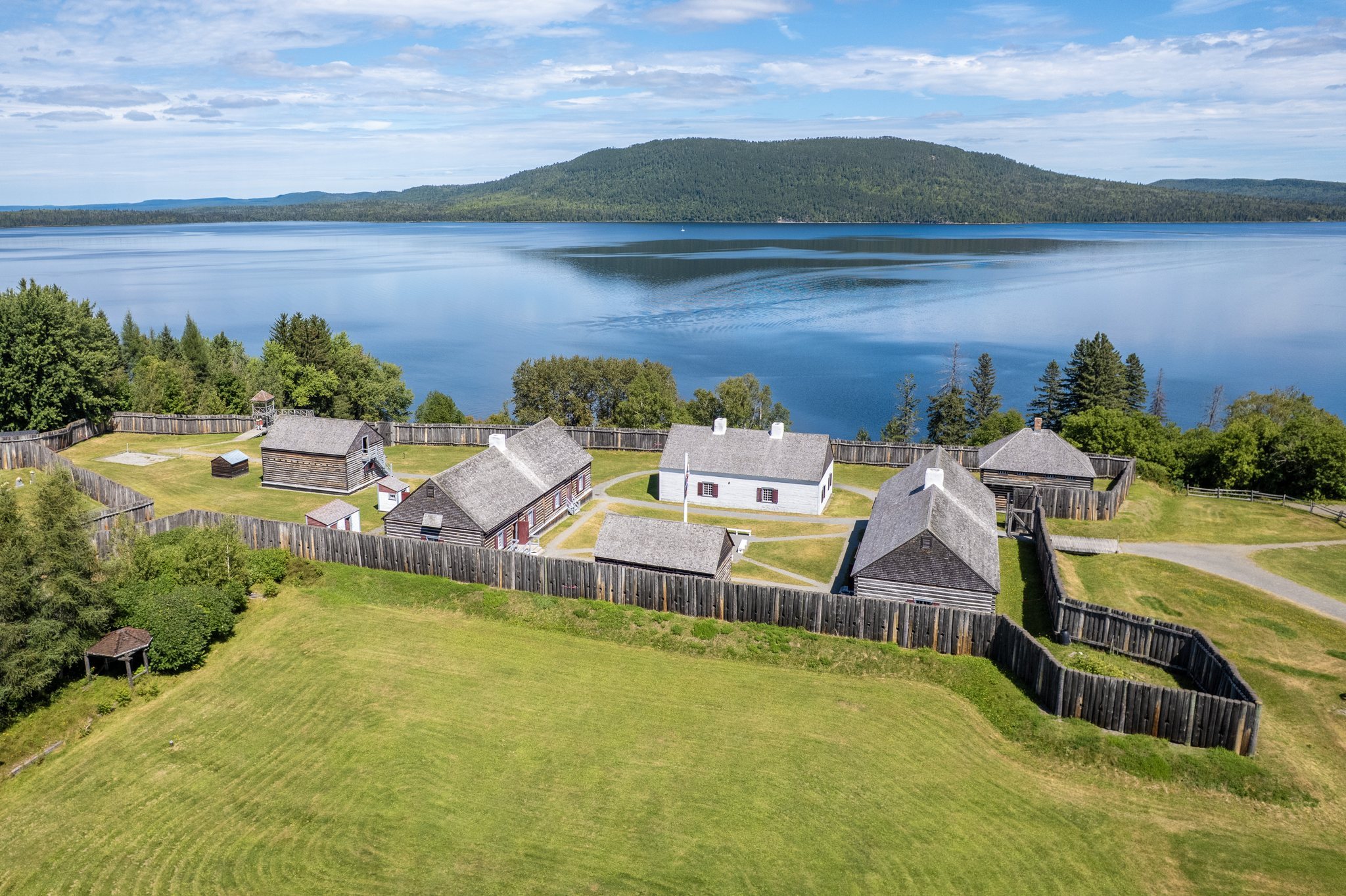
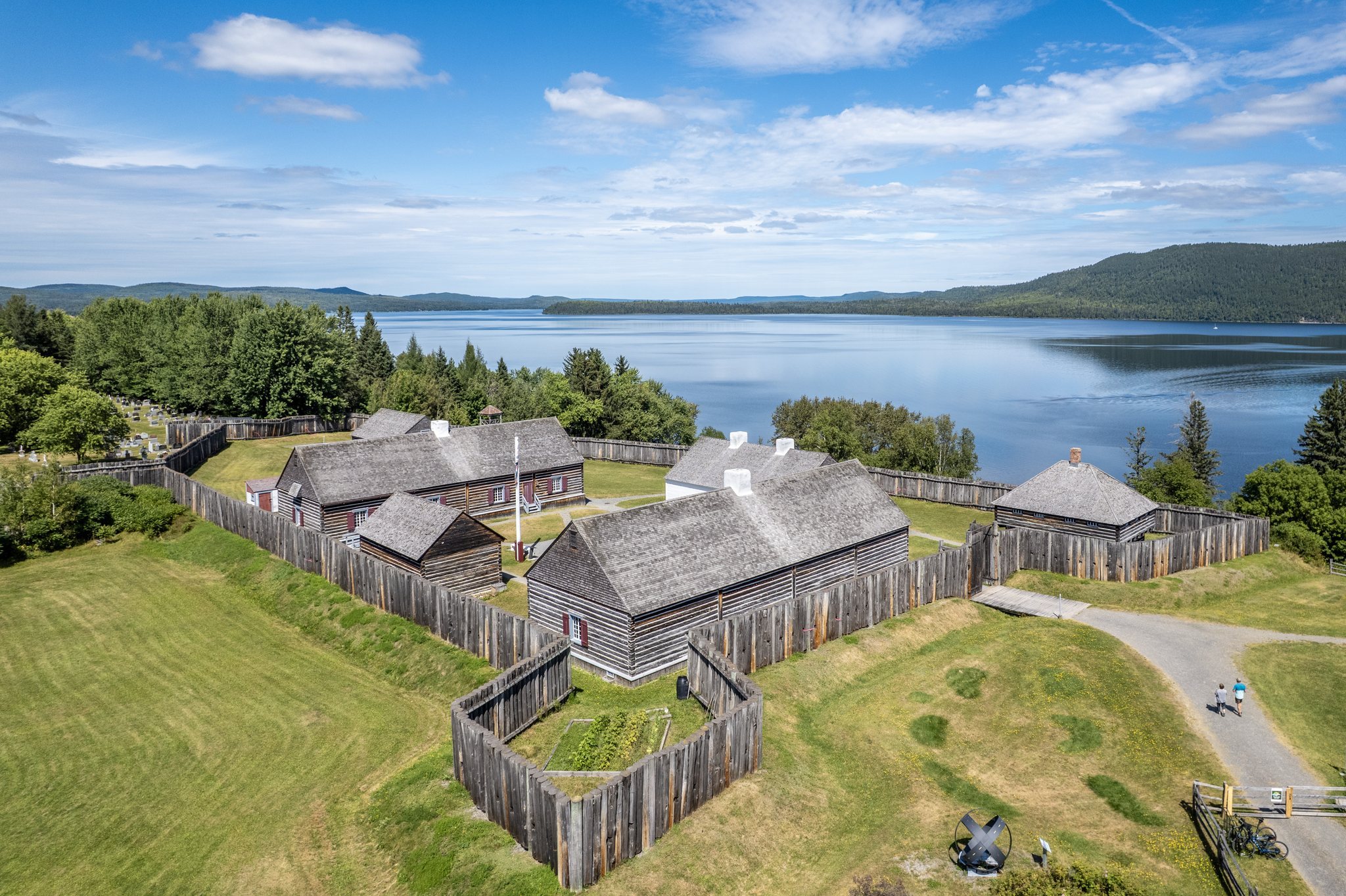
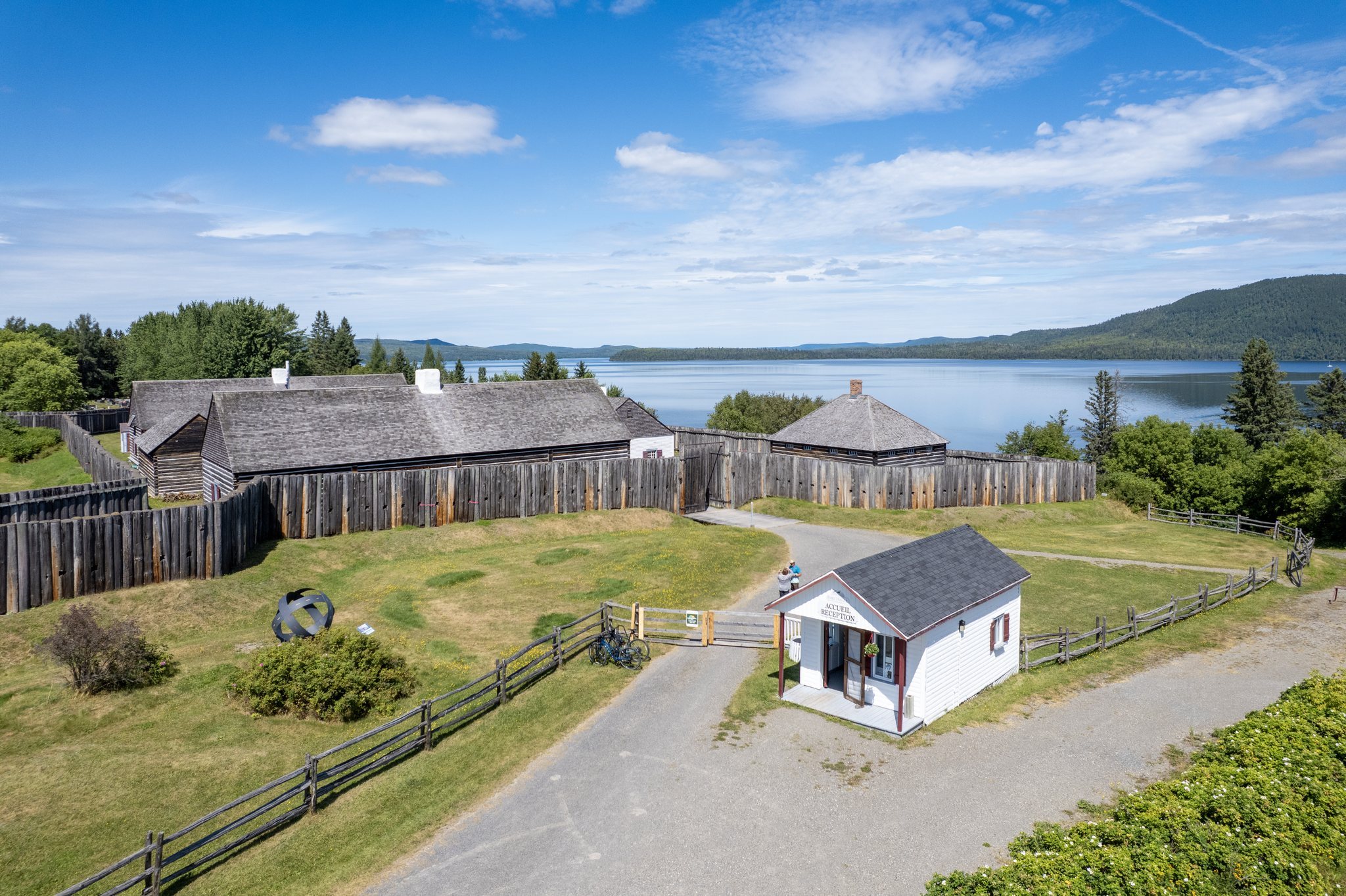
Fort Ingall is a British fieldwork in Canada, built at Cabano, now part of Témiscouata-sur-le-Lac, Quebec, in 1839 during the Aroostook War. This largely bloodless dispute between British North America and the United States concerned the northeastern boundary and access to timberlands. The fort stood on the west shore of Lake Témiscouata beside the Grand Portage, the route linking the lake with the Saint Lawrence River, and was intended to control this important transport corridor.
The Aroostook War
The conflict grew from an ambiguously defined international boundary, competing Canadian and American claims to timber-cutting rights, and disagreements over taxation. Tensions sharpened when Rufus McIntyre, an American customs official, attempted to collect taxes from inhabitants who already paid taxes to Britain. Local residents imprisoned him in Fredericton, after which Maine mobilized approximately 10,000 militia. Britain responded by constructing temporary fortifications along the Grand Portage.
Four British forts were built in the region: Fort Grand-Sault, Fort Petit-Sault, Fort Dégelé, and Fort Ingall. Lieutenant Frederick Lennox Ingall, a British Army officer, directed the construction of Fort Ingall, which took his name. The first post was erected in 1839 and expanded into a larger fortified position between 1839 and 1841. Its military use lasted from 1839 to 1842, when the garrison reached about 200 men.
Garrison and military use
The first detachment arrived in July 1839 from the 24th Regiment of Foot, a British Army infantry regiment. It consisted of one officer and twelve soldiers, accompanied by six wives and eleven children. The regiment remained until February 1840, when the 11th Regiment of Foot replaced it. The 11th had arrived in November 1839 with five officers, three sergeants, one drummer, and ninety-seven soldiers. By December, its strength had risen to eight officers, six sergeants, one drummer, and 169 soldiers. It left the region in June 1840, making way for the 56th Regiment of Foot.
The 56th sent four officers, five sergeants, one drummer, and 115 soldiers to Fort Ingall in May 1840. By December, the British force in the Madawaska region numbered ten officers, eleven sergeants, two drummers, and 245 soldiers, although it is uncertain whether this total included the posts at Dégelis and Petit-Sault. The 56th withdrew in October 1841, leaving Lieutenant Norton and three soldiers at the fort until December.
The 68th Regiment of Foot arrived in August 1841 with six officers, five sergeants, one drummer, and 168 soldiers. In August 1842, four officers, five sergeants, one drummer, and 148 soldiers were stationed at Fort Ingall. Most of these troops withdrew in November 1842, while the remainder left in June 1843. One sergeant and five or six Royal Artillery personnel served at the site from July 1841 to August 1843. One or two Royal Engineers, the army specialists responsible for military construction, worked in the region from December 1839 to November 1842.
Settlement and later military return
The Webster-Ashburton Treaty of 1842 settled much of the disputed boundary between the United States and British North America and ended the Aroostook War without a battle between the opposing forces. The territory was divided between Canada and the United States, while Britain retained control of the portage route. Fort Ingall was then abandoned as a military post. Sergeant Purcell stayed with his family for a time before leaving the site entirely.
British forces returned briefly after the Trent affair, an 1861 crisis between Britain and the United States that raised fears of a wider conflict during the American Civil War. In December 1861, Fort Ingall served as a transit point for troops moving between the Maritime colonies and Quebec. A detachment of the 17th Regiment of Foot remained to defend the position against a possible attack from the American forts at Fairchild and Houlton. The army abandoned the fort again at the beginning of 1862.
Local tradition holds that early inhabitants of Cabano dismantled the fort and reused its large wooden logs in houses. By the 1920s, no visible remains were thought to survive. The railway station at Cabano later took the name Fort Ingalls station, preserving the association with the former military post.
Rediscovery and reconstruction
Archaeological excavations in the 1960s located the fort again. Campaigns by the Société historique de Cabano in 1967 and 1968 exposed foundations and sections of the palisade, while porcelain, bottles, clay pipes, and military insignia provided material evidence of the garrison.
Reconstruction began in 1972, using nineteenth-century construction techniques and the original dimensions. The first phase rebuilt the barracks, and a second phase in 1977 reconstructed the blockhouse and latrines. Work continued through 1978, but further funding was denied in 1980, leaving some of the thirteen original buildings unreconstructed. The reconstructed fort now functions as a museum and historical site, with exhibitions on the fort and the Aroostook War, including objects recovered during excavation. The Historical and Archeological Society of Temiscouata owns and manages the site.
Fort Ingall was recognized by the Quebec government as a historical and archaeological site on August 20, 1975. In 2012 it was classified as a Quebec heritage monument, the province’s highest level of heritage recognition. During the 1980s and 1990s, the site also acquired cultural functions through the Café de l’Adjudant and the Témiscouata Roseraie, whose symbolism emphasized the peaceful resolution of the border dispute. The Garrison of Lake Témiscouata, formed in 2007, added historical military reenactments and educational activities. Further restoration was announced for 2026 because parts of the reconstructed site had deteriorated.
Remains
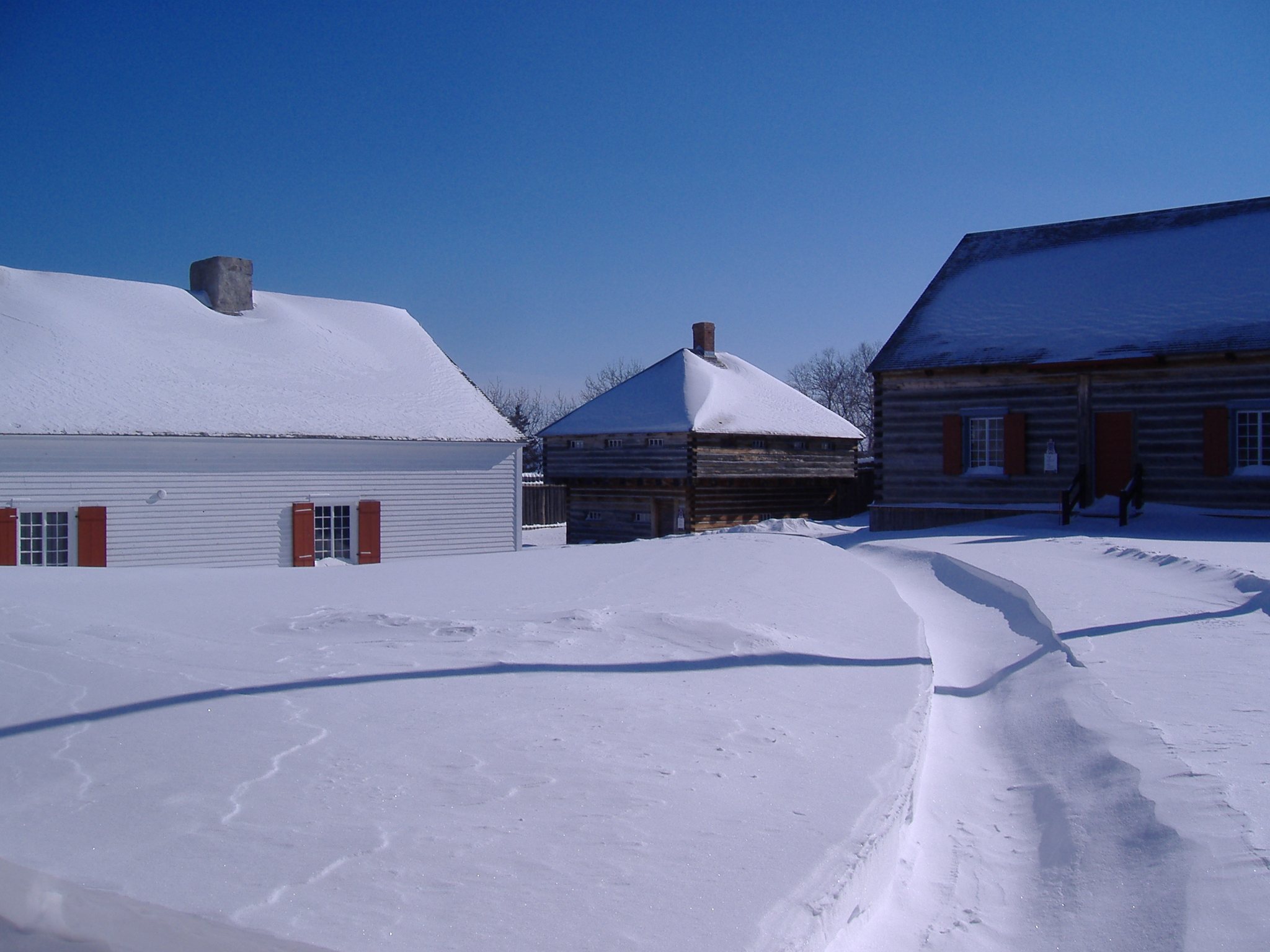
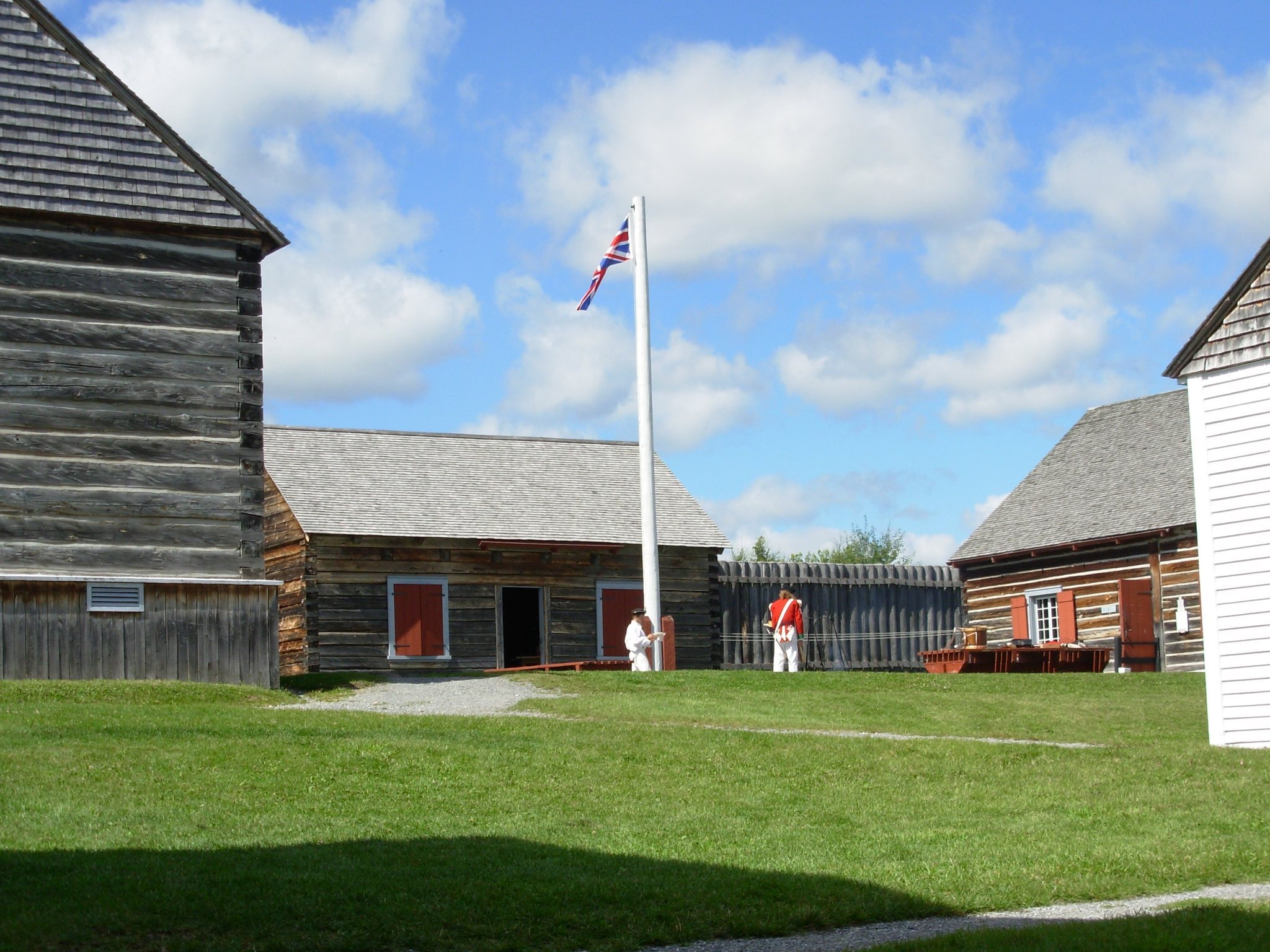
Fort Ingall was a fieldwork, meaning a temporary or semi-permanent military fortification built for a particular defensive position rather than a permanent masonry fortress. Its thirteen buildings stood within a wooden stockade. The structures were made from overlapping cedar and pine logs insulated with oakum and lime mortar. Most roofs were covered with red-painted cedar shingles, while the powder magazine had a sheet-metal roof. The officers’ dormitory and officers’ quarter had pine-plank walls whitened with lime.
Stockade and defensive works
Stockade
The stockade was about 12 feet, or 4 metres, high. Round timber formed its main posts and horizontal sleepers, and numerous loopholes, narrow openings for firearms, allowed defenders to fire through the enclosure. Three bastions and two demi-bastions covered angles that would otherwise have remained exposed. An earlier defensive line consisted of a ditch containing sharpened stakes.
Artillery
Two 24-pounder carronades supplemented the fort’s defences. A carronade was a short, large-bore cannon intended for close-range fire, and these weapons formed part of the position’s defensive equipment.
Soldiers’ and officers’ quarters
South dormitory
The south dormitory contained two principal ground-floor rooms and a large attic. It originally housed 100 soldiers. Each ground-floor room had a fireplace connected to a central chimney, and two exterior doors provided access. A staircase in the east room led to the attic. In the reconstructed building, the east room contains a permanent exhibition on the border war, while the west room is furnished as a period dormitory.
North dormitory
The north dormitory had the same dimensions and function as the south dormitory and also accommodated 100 soldiers. Its reconstructed interior now serves as a reception hall.
Officers’ dormitory
The officers’ dormitory contained four ground-floor bedrooms, four offices, and a large attic for storing personal belongings. It was designed for up to eight officers, although it apparently never housed the full number. A staircase in the northwestern office led to the attic. The reconstructed building is used as offices by the Historical and Archeological Society of Temiscouata and as premises for the Garrison of Lake Témiscouata.
Supply and domestic buildings
Kitchen
The kitchen prepared food for the soldiers, who ate in the dormitories. It contained an oven and formed part of the service area supporting the garrison.
Commissariat
The commissariat stored food, uniforms, spare weapons, equipment, and tools. A commissariat was the military department responsible for these supplies. The reconstructed building now contains a permanent exhibition.
Officers’ quarter
The officers’ quarter provided space for officers’ meals and discussions and also supplied sleeping quarters for commissariat officers. It has not been reconstructed.
Bakery
The bakery produced large quantities of bread. Soldiers, their wives, and their children all took part in its operation. The building has not been reconstructed, and its former location is occupied by a lookout point.
Latrines
The officers’ latrine was a small building with two toilets. The soldiers’ latrine contained seven toilets, including two reserved for women and five for men. A wall separated the women’s toilets, which were reached through a second exterior door. Commissariat officers had a separate latrine for their own use. The latrines were reconstructed during the later phase of the 1970s work.
Blockhouse and water supply
Blockhouse
The two-storey blockhouse served as a lookout, prison, and storage building. Its upper storey projected beyond the lower storey and contained numerous loopholes and machicolations, which were projecting openings used to attack opponents below. The blockhouse was reconstructed during the later phase of the 1970s restoration.
Wells
Three wells supplied the soldiers with water. One remains visible at the site.
Archaeological and lakeside features
Lime kiln
A lime kiln that predates Fort Ingall stands within the site. It produced lime used to whiten the buildings, clean the latrines, and make mortar. The kiln has collapsed and is in very poor condition.
Labelle Inn
The Labelle Inn, a civilian inn that predates the fort, stood nearby on the shore of Lake Témiscouata. It probably served both as a regimental canteen and as a relay for travellers.
Boat house
The boat house stood near Lake Témiscouata and stored and repaired the fort’s canoes. Its former location is now completely underwater, and the building has not been reconstructed.
Excavations exposed the foundations of several buildings, including the kitchen, officers’ dormitory, and powder magazine, as well as sections of the palisade. Porcelain, bottles, clay pipes, and military insignia recovered from the site help connect the surviving archaeological remains with the fort’s domestic, military, and supply functions.