Fort Battleford: A North-West Mounted Police Fort in Canada
Site at a Glance
- Rating
- 4.2
- Popularity
- Low
- Country
- Canada
- Primary era
- Modern
- External website
- Open
- Eras represented
- Modern
- Civilizations
- British
- Site type
- Military
- Remains
- Fort
On this page4 sections
History
Fort Battleford is a former North-West Mounted Police fort in Canada, established in 1876 and used until 1924. The North-West Mounted Police was the federal police force created to extend Canadian law and government authority across the western territories before becoming part of the Royal Canadian Mounted Police. Fort Battleford was the force’s sixth fort in the North-West Territories, a former Canadian territory that covered much of western and northern Canada before later administrative changes.
Foundation in the North-West Territories
Battleford was the capital of the North-West Territories, making it an important location for a police and government presence. The federal government also wanted a strong force in the area because of its large First Nations population and the conflicts that had affected relations between Indigenous peoples and the United States south of the Medicine Line, the historical term for the Canada–United States border. The North-West Mounted Police enforced the law, assisted settlers with homesteading, and encouraged First Nations communities to adopt a settled way of life modeled on European societies.
Fort Battleford’s position was also shaped by transportation plans. The Canadian Pacific Railway was initially expected to follow the Qu’Appelle route through Battleford, but the line was built farther south. Battleford consequently lost the territorial capital to Regina, then known as Pile of Bones. From 1876 to 1883, the government house at Battleford was associated with the territorial capital. During the 1885 conflict, Fort Otter was built on the government house site.
The North-West Rebellion of 1885
The North-West Rebellion, also called the North-West Resistance, was an armed conflict between Canadian government forces and Métis and First Nations communities in what is now Saskatchewan and Alberta. Fort Battleford became a central military base during the conflict. Operations connected with the fort included the battles at Cut Knife Hill and Fort Pitt, the lifting of the Siege of Battleford, and the protection of approximately 500 settlers from the surrounding area who sought refuge there.
Chief Poundmaker, a prominent nineteenth-century Cree leader, was arrested at Fort Battleford. Six Cree men and two Stoney men were hanged at the fort for murders associated with the Frog Lake Massacre and the looting of Battleford. The Frog Lake Massacre was an 1885 attack in which several people were killed at Frog Lake. The execution of the eight men was the largest mass hanging in Canadian history.
Fort Battleford was designated a National Historic Site of Canada in 1923. The designation recognized its role in the military operations of 1885, the refuge it provided for approximately 500 settlers, and its part in lifting the Siege of Battleford.
Remains
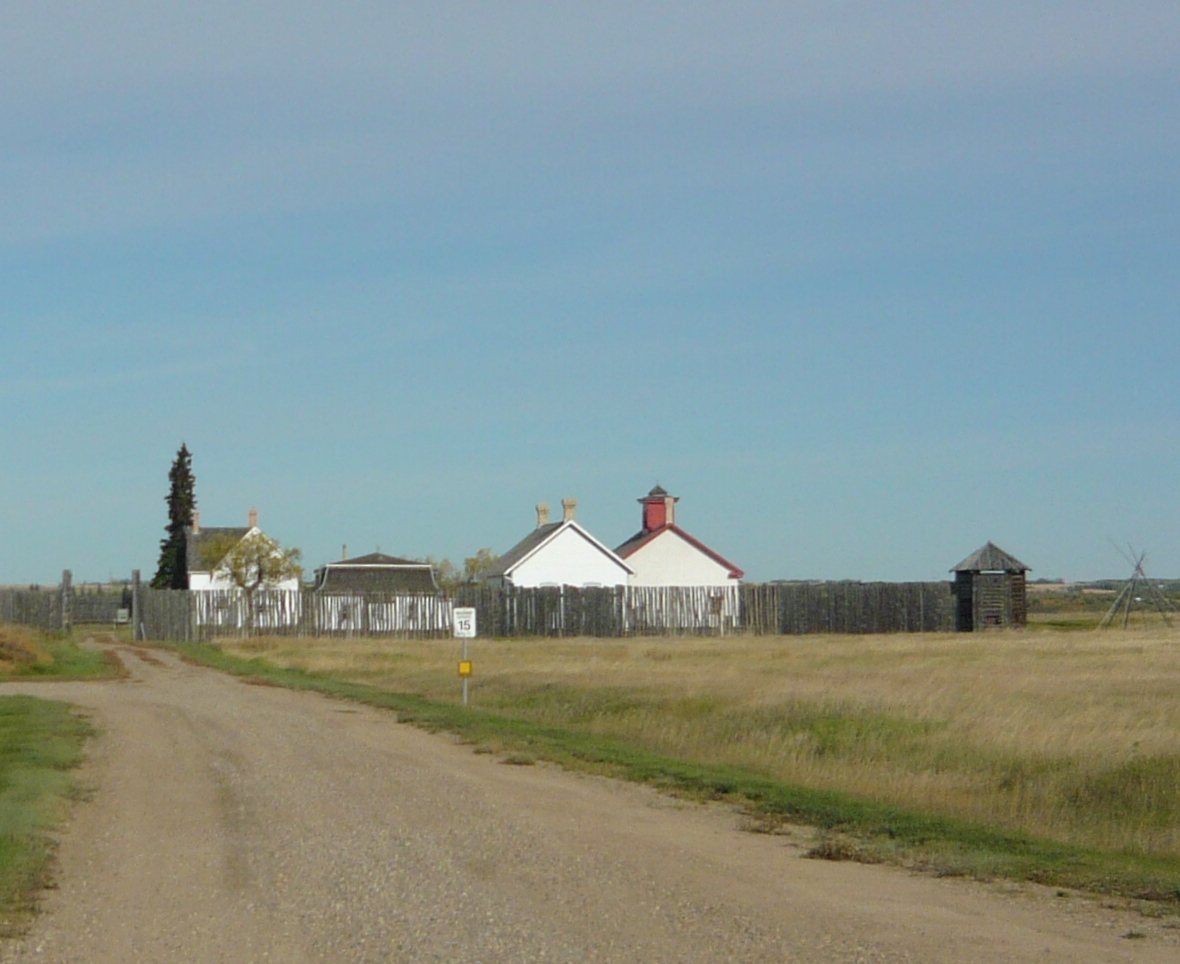
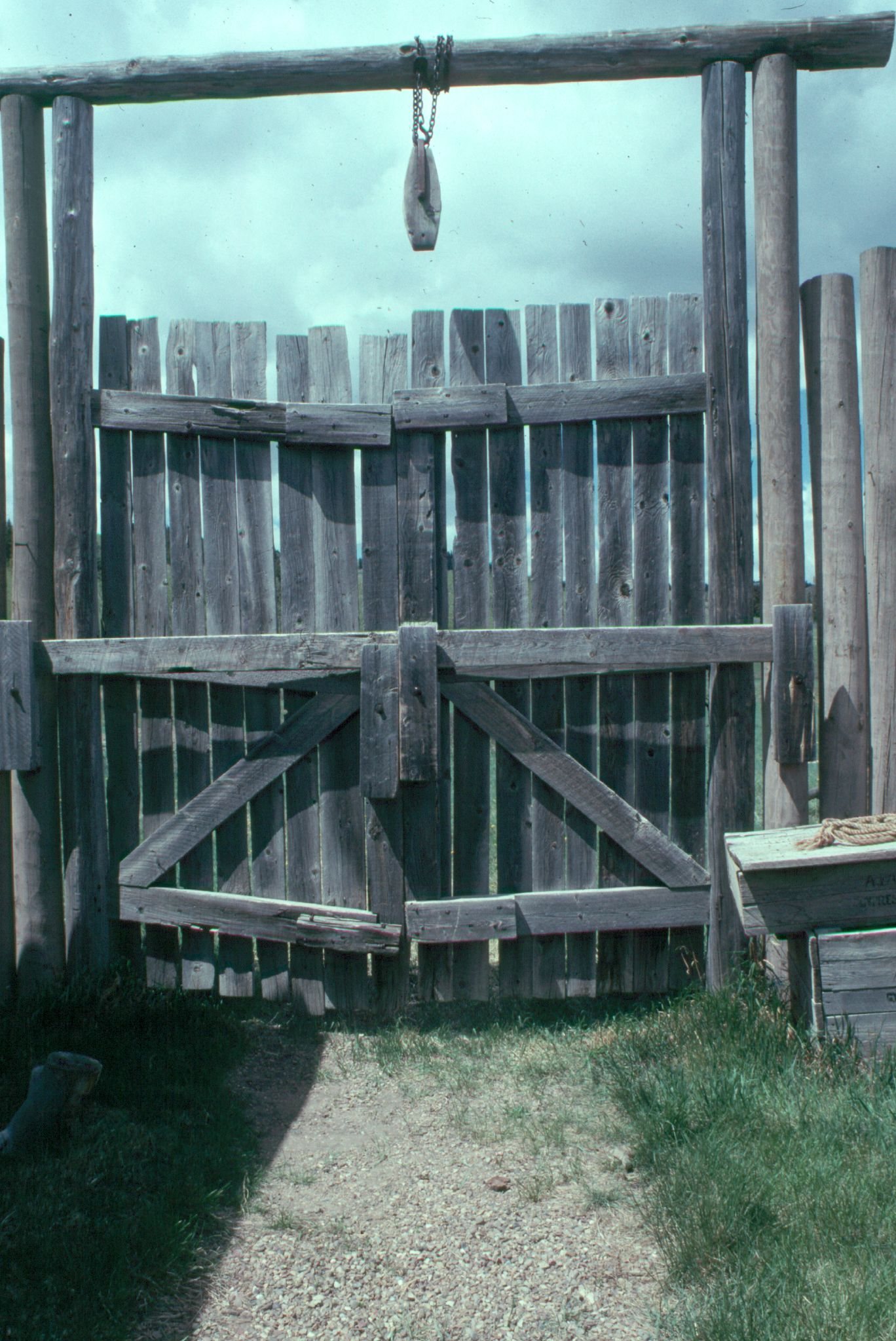
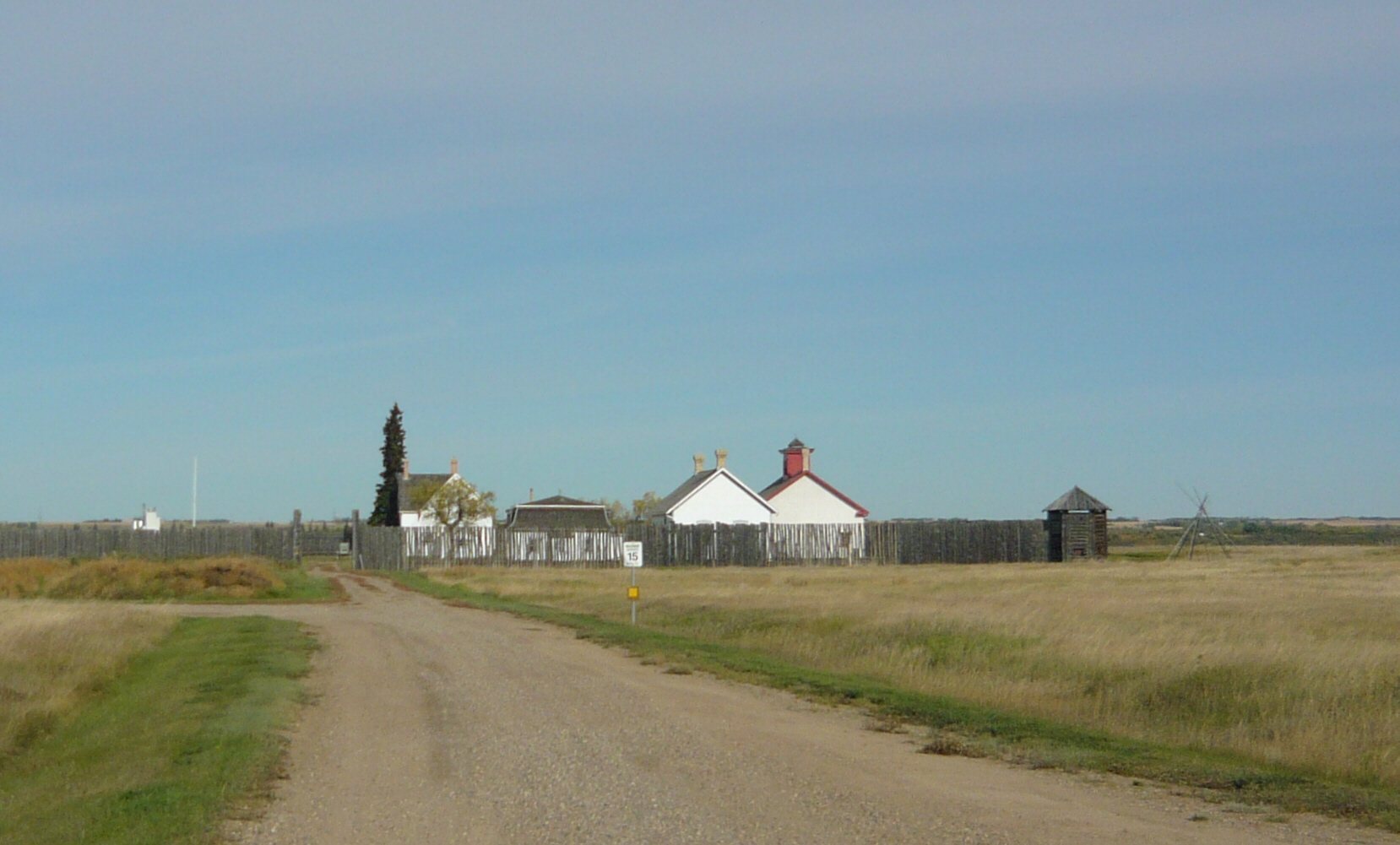
Fort Battleford was a wooden installation on a plateau near the confluence of the North Saskatchewan and Battle rivers in Saskatchewan. Its elevated position made it readily defensible and gave those at the fort clear lines of sight across the surrounding area and toward Government Ridge, allowing warning of possible attacks.
The two rivers supplied access to fresh water and offered an alternative transportation route to the Red River cart, a large two-wheeled freight vehicle used across the prairie. An on-site well was not available until many years after the fort was established. The installation was capable of sheltering approximately 500 people, a capacity that became especially important during the 1885 conflict.