Fayd: An Early Islamic Pilgrimage City in Saudi Arabia
Site at a Glance
- Popularity
- High
- Country
- Saudi Arabia
- Primary era
- Medieval
- Eras represented
- Medieval
- Civilizations
- Abbasid, Umayyad
- Site type
- Settlement
- Remains
- Town
On this page23 sections
History
Fayd is a historic city in Saudi Arabia’s Hail region, with evidence of activity before Islam and a major role as a pilgrimage station in the early Islamic centuries. Its importance grew under the Umayyad and Abbasid caliphates, successive Islamic dynasties.
Early Islamic growth and water supply
Fayd flourished during the Umayyad and Abbasid periods and was counted among the provinces of the Abbasid Caliphate. The medieval geographer al-Bakri credited Abu al-Dulaym, a dependent of the Umayyad governor Yazid ibn Umar ibn Hubayra, with digging a well and directing spring water through a channel.
The historian al-Tabari recorded that a trench encircled Fayd in 145 AH, a year in the Islamic calendar, during the rule of Abu Ja’far al-Mansur, the second Abbasid caliph.
Pilgrimage route and medieval accounts
Fayd lay roughly midway between Kufa and Mecca on the Darb Zubaydah, a pilgrimage route linking Iraq with the Hijaz. The route was named for Zubaydah bint Ja’far, an Abbasid princess. Pilgrims and other travelers from Iraq and Persia used Fayd to rest, obtain food and water, and trade goods and services with local residents. The surrounding land also served as pasture for the Tayy tribe, whose leader was identified as Zayd.
Medieval writers describe Fayd as a busy stopping place. Al-Muqaddasi, Ibn Rusta, and al-Hamawi mention markets, a mosque, springs, wells, cisterns, and lodging for the official responsible for the road. Al-Harbi describes gardens, forts, some already in ruins, and a ruler’s palace. Ibn Jubayr wrote of a large fortified settlement enclosed by an old wall, while Ibn Battuta gave a similar account.
Modern archaeological excavations have examined the fortress and areas beside its southern wall. Some recovered objects are displayed in a museum built at the site.
Remains
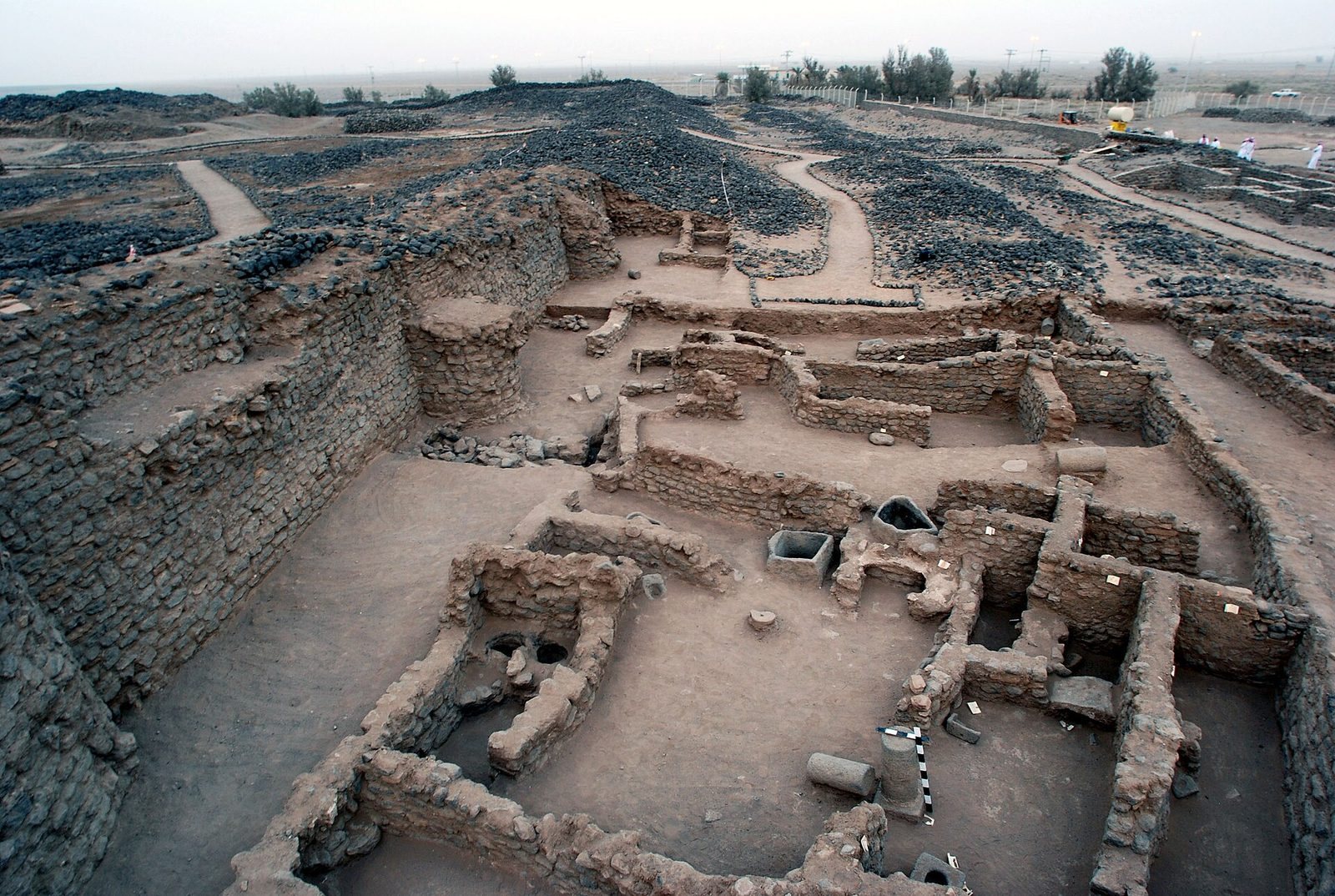
Fayd’s remains extend along the north bank of Wadi Fayd, from a residential area in the west to the fortress in the east. The archaeological area includes building foundations, wells, water installations, cisterns, and the substantial stone fortress.
Rock art and early structures
Mountain rock faces
Rock faces on mountains near Fayd carry prehistoric images of animals, ancient Thamudic inscriptions, and early Islamic writing. Thamudic is an ancient North Arabian script.
Foundations and stone circles
Near the mountains, building foundations and stone circles of different shapes and sizes mark another group of architectural remains.
Wells and water systems
Wells
More than 45 old wells have been identified in Fayd, dating to the early Islamic period. Some still supply water for crop irrigation. The Red Well was formerly known as the Palm Spring or the Cold Spring. North of it is the Tent Well, once called the Hot Spring or the Market. Another old well is also present in the settlement.
Underground channels
Three channels begin at the bottom of a well. One runs south toward the Tent Well, while the others extend east and northeast. They connect with wells in the old residential settlement and the fortress.
Cisterns
Two cisterns, underground tanks for storing water, associated with the Darb Zubaydah lie near Fayd. One is square and the other rectangular; a surface channel, 40 centimetres wide, links them. Its walls are 60 centimetres thick. Soil covers both tanks, leaving only small parts visible. They were used to irrigate land and water animals. Private cisterns near the fortress are similar in size and construction to those beside the route.
Residential settlement
Building foundations
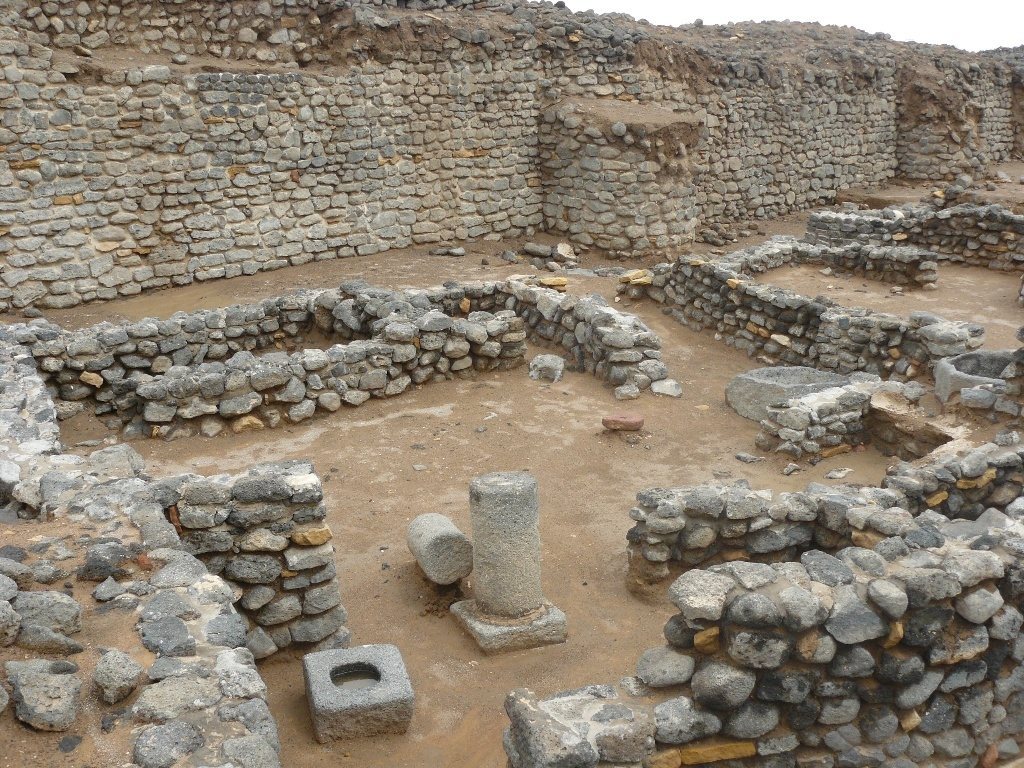
The residential settlement contains the remains of more than 100 architectural units, including foundations that preserve the outlines of complete buildings. Foundations of water installations are visible at ground level, alongside the remains of an old well. A large building stood at the settlement’s northern edge. Homes are concentrated on the western side of the wider archaeological area.
Raised mounds
Raised mounds on the north side of Wadi Fayd contain foundations of old houses from the settlement, as well as architectural details from parts of other building units.
Fortress and excavated buildings
Fortified complex
Locally identified as a palace, the main fortress is built of black volcanic stone and measures 120 by 80 metres. Circular and semicircular towers stand around its middle. A citadel, or fortified inner stronghold, occupies the northeastern end, and the entrance was probably on the south side. Building foundations lie southwest of the citadel and at other points within the fortress. The structure occupies the centre of an old town buried under accumulated rocks. Archaeological evidence suggests that it served as the ruler’s fortified palace, though that identification remains an interpretation.
Excavated rooms and service area
Excavations inside the fortress and near its southern wall uncovered rooms, horse stalls, guards’ quarters, and accommodation for visitors. A service area between the southern and inner walls contained bread ovens and washing basins. Channels pass through a lower, square area and drain into the basins.
Southern wall and adjoining units
The fortress’s southern wall runs east to west for about 115 metres. Three semicircular towers support its outer face. The wall is two metres thick and extends two metres deep. On its northern side, five building units adjoin the wall in the western section. Each has two rooms, a courtyard, and an entrance.
Other installations
Other features at the site include underground passageways, a basin associated with the palace, and a large mill for grinding grain.
Excavated objects
Pottery and ceramics
Pottery finds include red-clay ovens set on stone platforms that helped keep them stable. Other fragments come from jars, ewers, cooking pots, and cups, including rims, handles, bodies, and bases. The range includes unglazed pottery, dark-blue or green glazed pieces, white pottery with a tin-based glaze, multicoloured glazed ware, and Chinese porcelain. Some porcelain is celadon, a type of ceramic often associated with a greenish glaze.
Glass and carved stone
Medium-sized glass fragments come from the bodies, necks, rims, and bases of vessels. They are white, green, blue, and black. Soapstone, a soft stone that can be carved, appears in varied forms, including objects with incised or carved decoration and a finely worked geometric design.
Coins, metalwork, and other objects
Other finds include lamps and cooking pots of different sizes. Some pots have handles projecting from their bodies and a grey-green colour. Five coins include an Abbasid gold dinar, a gold coin, and a silver coin. Copper objects comprise a vessel, a small spoon, and tools for mixing powders. Other metal objects and an intricately made ivory fragment, apparently part of a small vessel with a handle shaped like a bird’s face, were also recovered. Most of the finds belong to Islamic periods and are up to 1,300 years old.