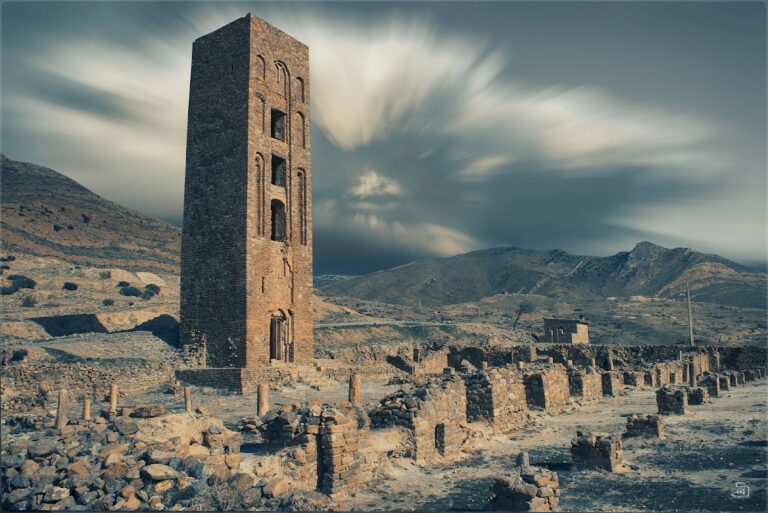
El Mokrani Fort: An Ottoman-Era Fortification in Algeria


Site at a Glance
- Rating
- 4.5
- Popularity
- Low
- Country
- Algeria
- Primary era
- Early Modern
- Eras represented
- Early Modern, Modern
- Civilizations
- French, Ottoman
- Site type
- Military
- Remains
- Fort
On this page5 sections
History
El Mokrani Fort is an Ottoman-era fortification and watchtower in Bordj Bou Arreridj, Algeria, first built in the sixteenth century as a strategic position associated with the Kingdom of Beni Abbas. Its construction was attributed to Hassan Pasha, the Ottoman governor of Algiers and son of Khair al-Din Barbarossa, the naval commander linked to the establishment of Ottoman authority in North Africa.
Ottoman construction and the Kingdom of Beni Abbas
The first fort was destroyed soon after it was built by Abd-el-Aziz El Abbassi, the brother of Ahmed Amokrane and sultan of the Kingdom of Beni Abbas, a regional Berber kingdom in the Bibans area of northern Algeria. Ottoman forces returned to the Medjana in 1740 and restored the fort, placing 300 janissaries there. Janissaries were soldiers of the Ottoman state’s elite infantry corps.
The Mokrani then demolished the restored fort and sent the surviving janissaries to Algiers with a letter declaring their wish to remain independent. The Ottoman deys, the rulers of Algiers during much of the Ottoman period, implicitly accepted this position by never imposing taxes on the Mokrani makhzen tribes, including the Hachem, Ayad, and Ait Abbas. Makhzen tribes were groups recognized for administrative or military service and often granted special tax privileges.
Colonial alteration and modern preservation
The fort later became known as El Mokrani in association with El Hadj Mohamed El Mokrani, the Algerian resistance leader who played a central role in the 1871 uprising against French colonial rule. During the French colonial period, the fort was seized and altered several times, changing its earlier architectural appearance.
Around 1967–1968, the Algerian army transferred the fort to the municipal authority of Bordj Bou Arreridj. In 1993, the municipality placed it at the disposal of the National Archaeological Agency for conversion into a museum commemorating El Mokrani and resistance to French occupation, while also providing a regional library for the Bibans. Restoration took place in 2008, and the fort was classified as a protected historic site in 2010.
Remains
Fortification and watchtower
Built on the highest plateau in the area, the fort combines the functions of a garrison and watchtower. Its elevated position allowed it to monitor potential enemies. The original architectural character included massive yellow stone blocks, fortified walls, and large open windows. Later alterations made during the French colonial period changed the appearance of the earlier structure. A Roman engraving is located beside the fort, adding an archaeological feature to the surrounding setting.