Dmitrievka Archaeological Complex: Early Iron Age Settlement and Alan Fortress
Site at a Glance
- Popularity
- Medium
- Country
- Russia
- Primary era
- Medieval
- Eras represented
- Medieval
- Civilizations
- Unclassified
- Site type
- Military
- Remains
- Fort
On this page11 sections
History
Early Iron Age settlement
The Dmitrievka archaeological complex, near the modern villages of Dmitrievka and Dobroe in Belgorod Oblast, Russia, includes an Early Iron Age fortified settlement, an eighth-century Alan fortress, settlement areas, and a cemetery. The complex is associated with the Saltovo-Mayaki culture, an archaeological culture of the medieval steppe and forest-steppe regions of Eastern Europe. The fortress later served as a refuge for people from nearby unfortified settlements.
A fortified settlement occupied the cape during the first millennium BC, in the Early Iron Age. The available information does not identify who built it.
Alan fortress and its destruction
In the eighth century, as the Khazar Khaganate, a medieval polity that ruled parts of the Eurasian steppe, flourished, the Alans built a fortress on the cape. The Alans were an Iranian-speaking people associated with areas north of the Caucasus and the surrounding steppe. The fortress provided shelter for people living in nearby unfortified settlements.
A Pecheneg invasion destroyed the Alan fortress in the early tenth century. The Pechenegs were a nomadic confederation that moved through the Eurasian steppe.
Investigation and protection
The site was known by the 1870s. I. I. Lyapushkin began archaeological investigations in 1951. An expedition led by S. A. Pletneva worked there between 1957 and 1973, excavating about 1,600 square metres at the fortified settlement, 2,000 at Settlement 1, 100 at Settlement 2, and more than 3,000 at the cemetery. The complex remains only partly investigated.
Genetic analysis of individuals from the Dmitrievsky and Verkhnesaltovsky-IV catacomb cemeteries identified Y-chromosome haplogroup G2 and mitochondrial haplogroup I among people associated with the Saltovo-Mayaki culture. A haplogroup is a group of related genetic lineages identified through shared markers. At Dmitrievsky, sample DA189, dated between 600 and 1000, was assigned Y-chromosome R1b1a1a2-M269 and mitochondrial J1b4. Sample DA190, dated to 733, was assigned Y-chromosome G2a1a1-Z6653>G2a-FT61413 and mitochondrial U1a1c1.
A decree of the Council of Ministers of the Russian Soviet Federative Socialist Republic dated 30 August 1960 placed the site under state protection. It is listed as a federally significant cultural heritage property.
Remains
Fortress and settlement areas
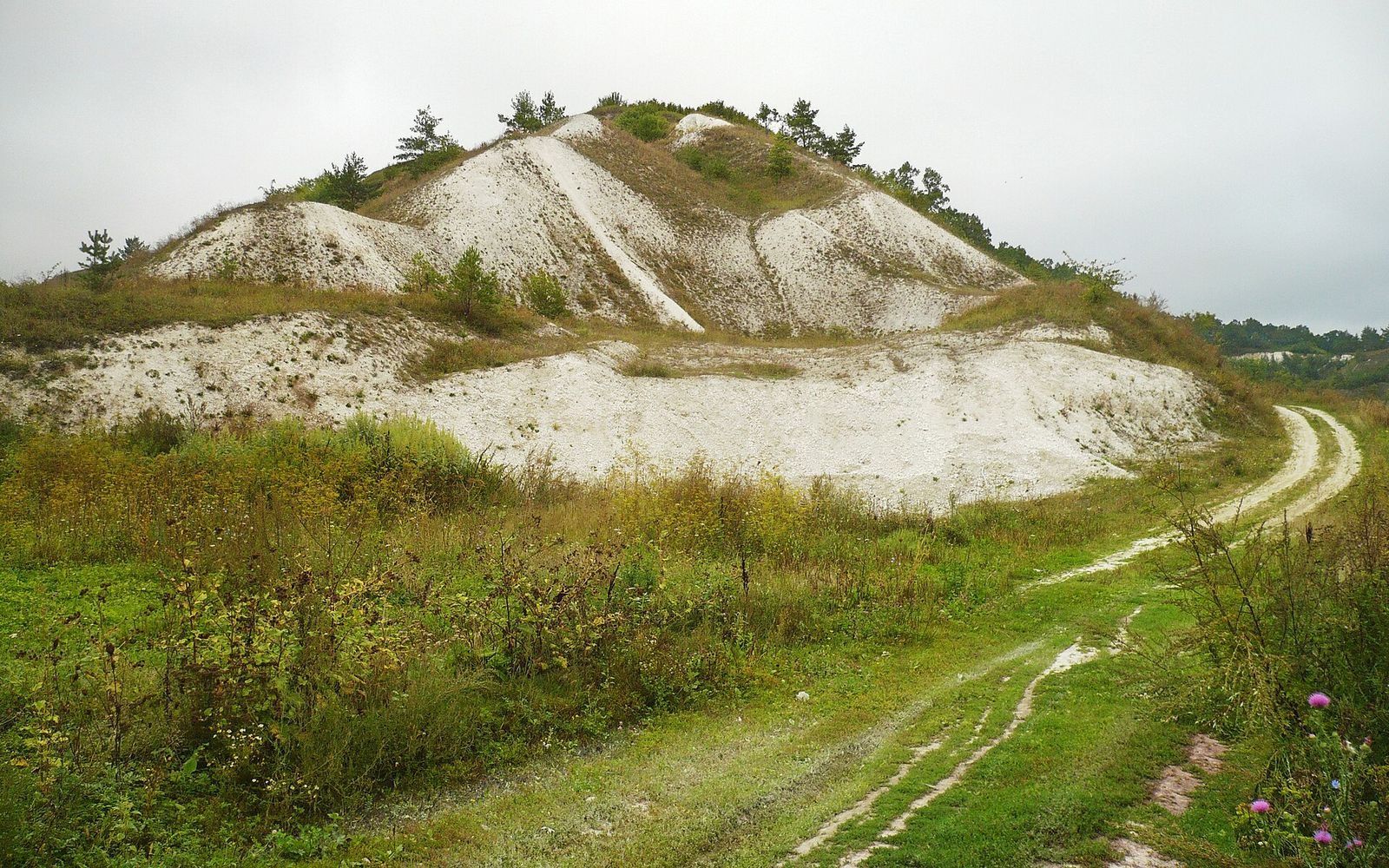
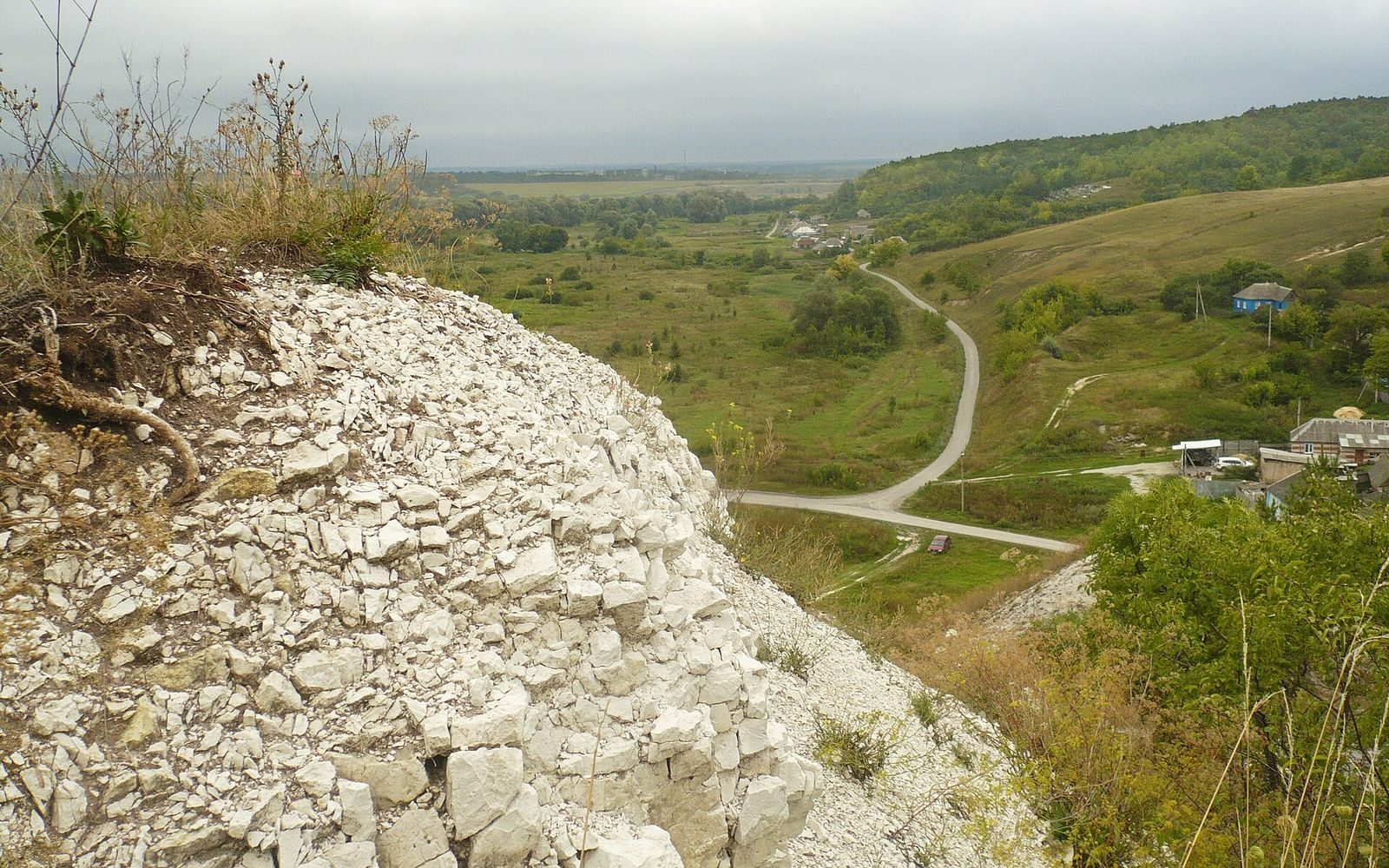
The complex lies on the right bank of the Korocha River and comprises a fortress, settlement areas, and a cemetery. The fortress occupied a cape about 50 metres high. Its remains include chalk-built walls and sunken dwellings, while most cemetery graves were cut into firm ground.
Fortress walls
The fortress walls were built from chalk blocks. They measured about 4 to 4.5 metres thick and stood approximately the same height.
Dwellings
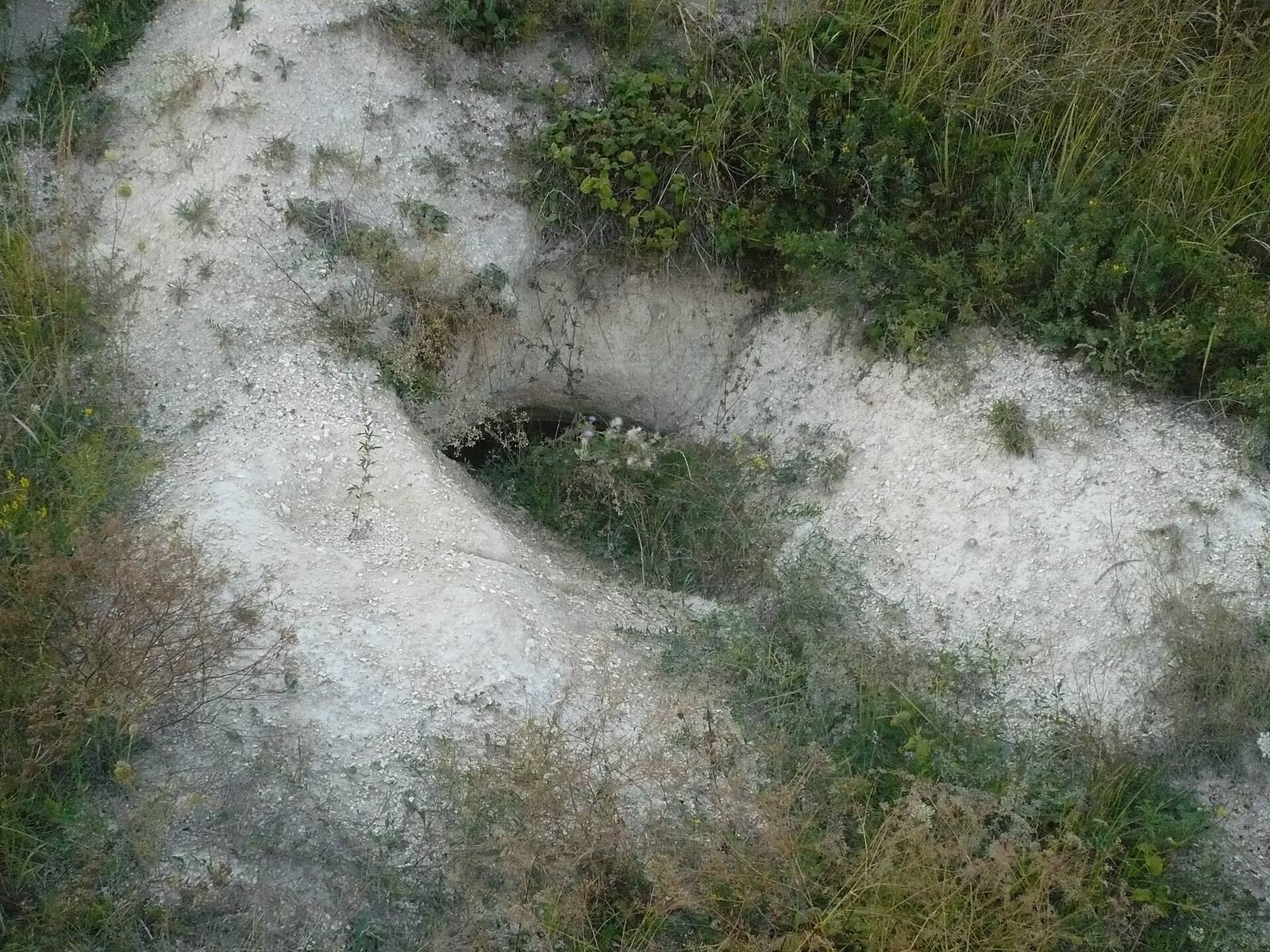
Excavations uncovered 20 dwellings, two at the fortified settlement and 18 in the settlement areas. The usual house was rectangular, had no corridor, and was sunk about 0.8 metres into the natural ground. Its prepared floor held an open hearth at the centre. A typical dwelling covered about 9 square metres, while most buildings measured up to 11.6 square metres. Builders used upright posts for support or timber boards and slabs. One building contained a tandoor, a type of oven.
Cemetery and burial customs
Graves and burial positions
The cemetery contained 161 individual and collective burials. Most were catacombs, graves reached by an entrance passage leading to a burial chamber, cut into hard ground. Men were laid on their backs with their bodies extended; women were placed on their sides in contracted positions.
Grave goods and rites
Many graves contained vessels, and some also held weapons or ornaments. Finds included sabres, bows, and arrows. Some burials included a horse, occasionally with its harness. Funeral feasts and animal sacrifices formed part of customs in memory of the dead, with horse meat and nuts among the favored ritual foods. Some male warriors and young women were buried on charcoal layers. S. A. Pletneva interpreted charcoal beneath some graves as serving a binding role in a rite of posthumous marriage.