Church of St. Mary the Virgin, Clumber Park: An Anglican Church
Site at a Glance
- Rating
- 4.7
- Popularity
- Low
- Country
- United Kingdom
- Primary era
- Modern
- Eras represented
- Modern
- Civilizations
- British
- Site type
- Religious
- Remains
- Church
On this page9 sections
History
The Church of St. Mary the Virgin at Clumber Park in the United Kingdom is an Anglican church completed in 1889 in the Decorated Gothic style, a phase of English Gothic architecture. It follows the Anglo-Catholic tradition, which emphasizes historic liturgy and sacramental practice.
First Chapel and New Church
In 1864, Henry Pelham-Clinton, the 5th Duke of Newcastle, commissioned Thomas Chambers Hine to design a chapel dedicated to St Paul. The building was never finished and acquired the nickname “the pigeon coop.” The 7th Duke of Newcastle later demolished it and, in 1886, commissioned a replacement dedicated to St Mary the Virgin. Designed by George Frederick Bodley and built by R. Franklin of Diddington, Oxfordshire, the new church was completed by 1889 at a cost of £30,000.
Dedication and Protest
The Bishop of Southwell opened the church on 22 October 1889, its dedication day. The ceremony drew a protest from the Protestant Alliance, a Church of England pressure group opposed to what it regarded as Roman Catholic influence. Its members petitioned the Archbishop of Canterbury, objecting to the church’s furnishings and ceremonial. They cited a crucifix above the screen separating the nave from the chancel, images of Mary and St John, a canopy over the high altar, and further altar furnishings, including a crucifix, a receptacle for consecrated bread and wine kept for later use, and a suspended silver lamp.
The memorialists also alleged that the Communion service followed the form of the Roman Catholic Mass and that no one received Communion with the celebrant. They described a procession led by a cross-bearer and an incense-bearer, banners for the sacrament and the Virgin, and about 50 men whom they called “priests.” They said the Bishop of Lincoln wore a gold ceremonial cloak and that the Bishop of Southwell followed in one depicting Mary and the infant Jesus. The protesters argued that such rites could alienate people from the Church of England and encourage demands to end its established status and remove its endowment.
The church belongs to the Church of England’s Province of York, one of its two ecclesiastical provinces, and the Diocese of Southwell and Nottingham, an area under a bishop’s jurisdiction. Its administrative subdivisions are the Archdeaconry of Newark and the Deanery of Bassetlaw and Bawtry, and its parish is Worksop Priory. The church is Grade I listed, England’s highest listed-building protection category.
Remains
Plan and Exterior
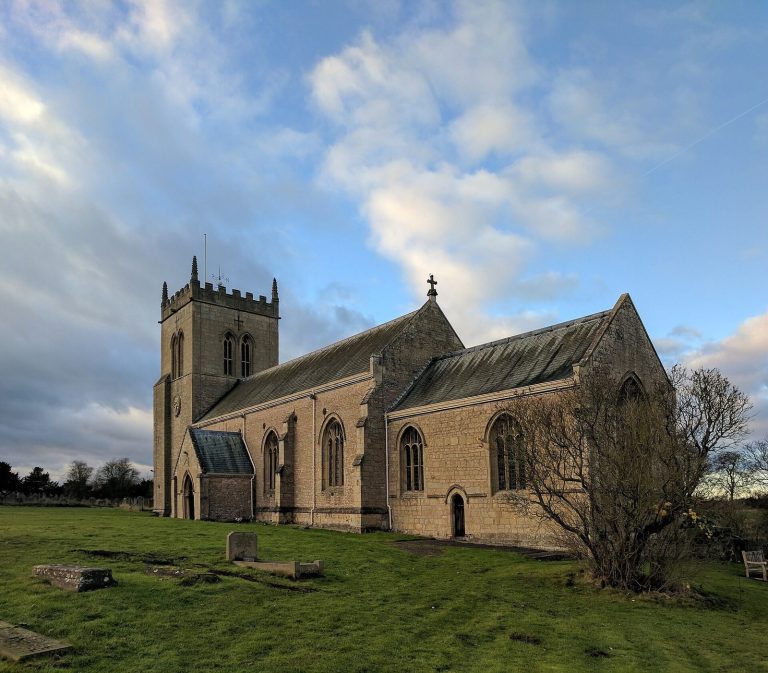
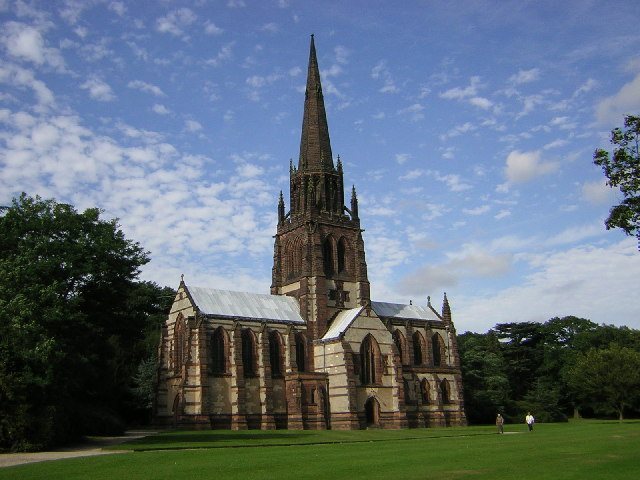
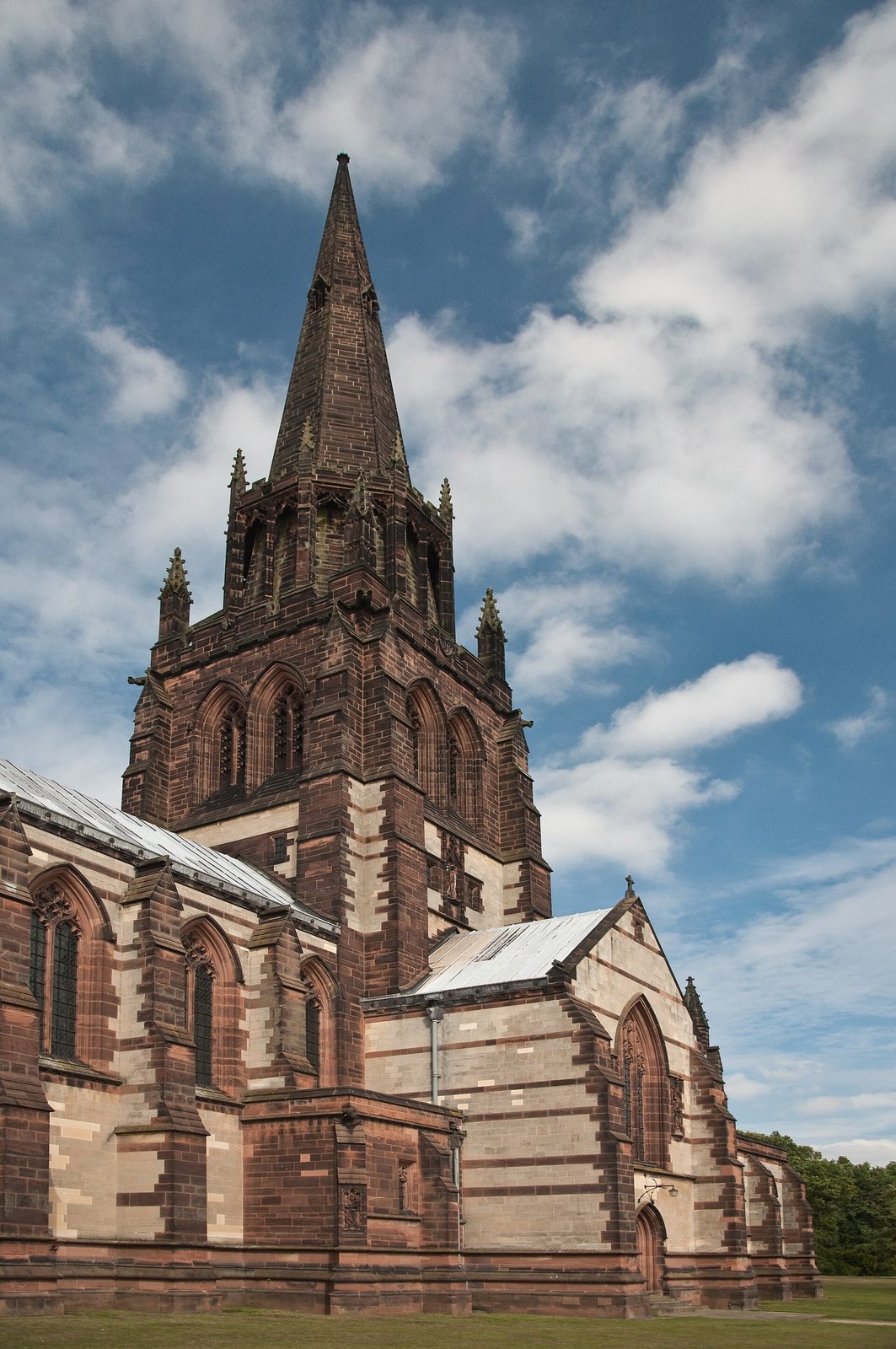
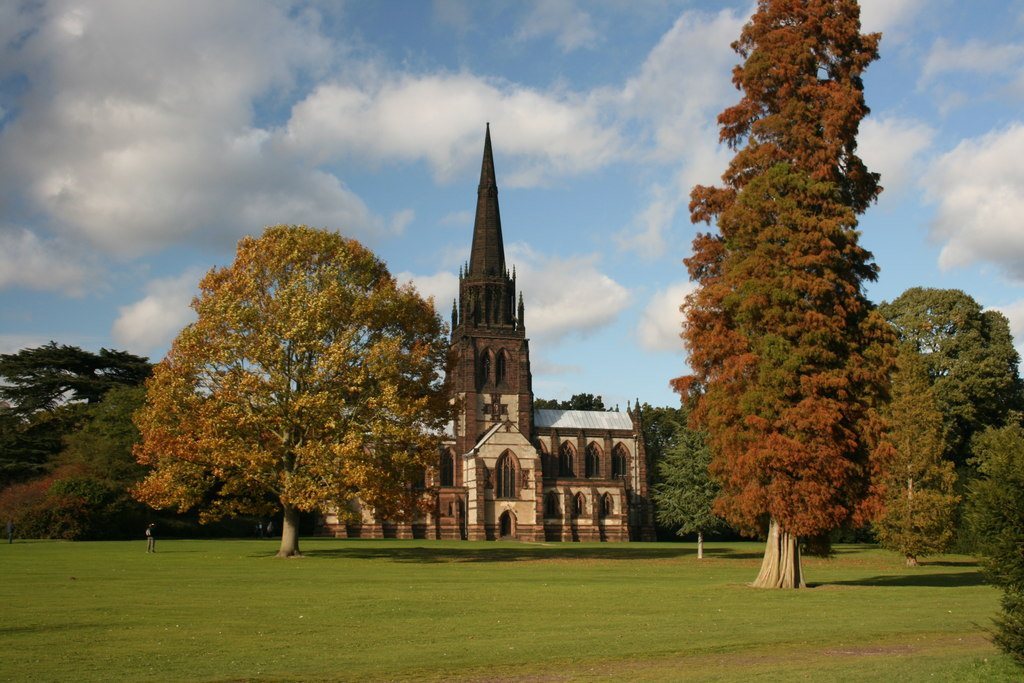
The church has a cross-shaped plan and measures 125 feet long by 65 feet wide. A central tower containing one bell carries a 175-foot spire rising from an octagonal corona, a crown-like architectural feature. The exterior is built of Steetly ashlar, carefully dressed stone blocks, with dressings of red Runcorn stone.
Interior
Nave and Chancel
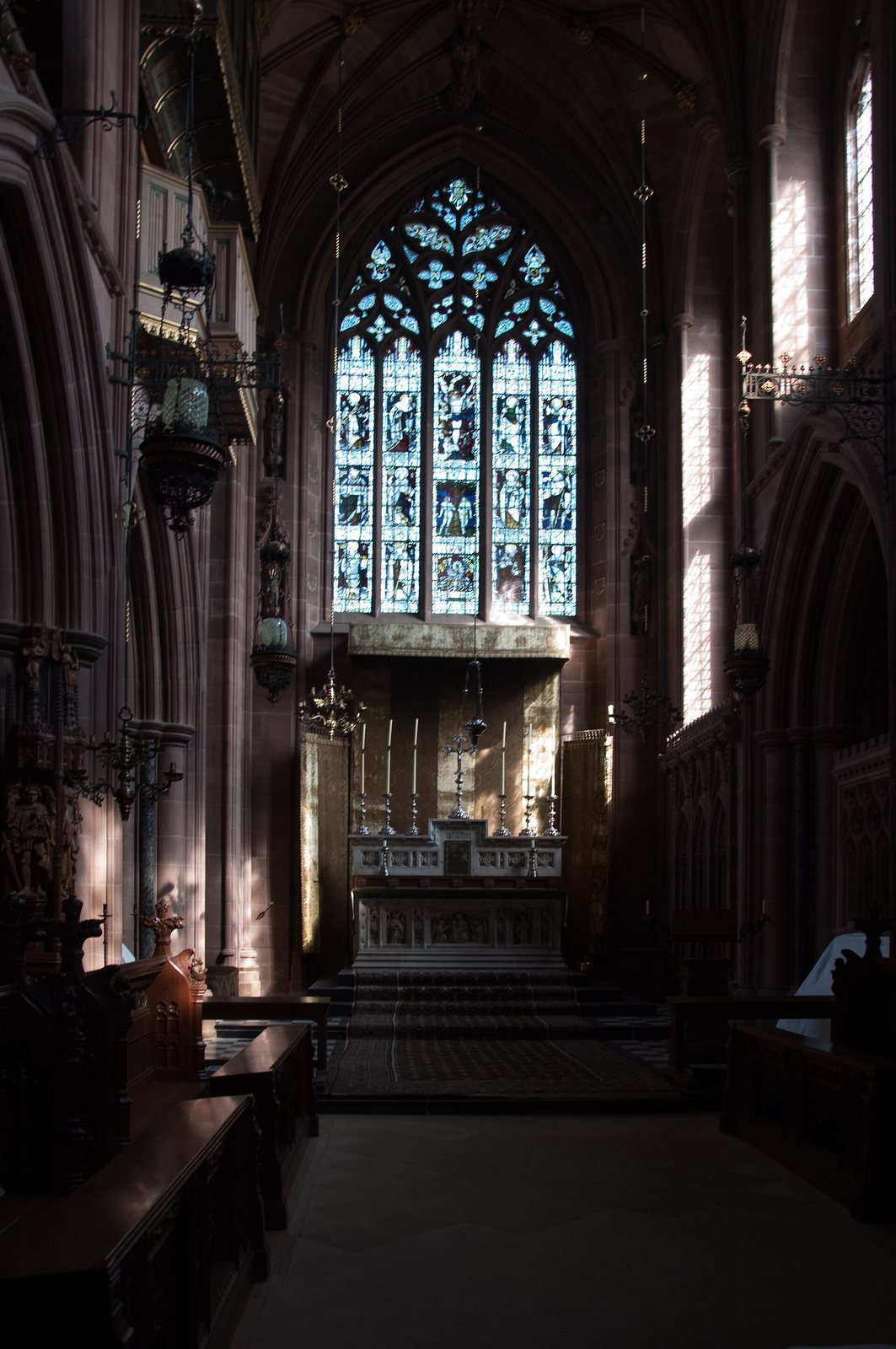
Red Runcorn stone is also used inside. The nave has a plain interior, while carvings decorate the chancel.
Stained Glass
The church’s stained glass was made by Charles Eamer Kempe, an English stained-glass artist and designer.
Organ
The three-manual organ was made by Gray & Davison and installed in 1889. Harrison and Harrison overhauled it in 1979 under the direction of organ consultant David Butterworth. It has otherwise remained unaltered.