Chartreuse de Saint-Hugon: A Carthusian Monastic Complex in France


Site at a Glance
- Rating
- 4.6
- Popularity
- Very Low
- Country
- France
- Primary era
- Unclassified
- Eras represented
- Unclassified
- Civilizations
- Unclassified
- Site type
- Religious
- Remains
- Monastery
On this page8 sections
History
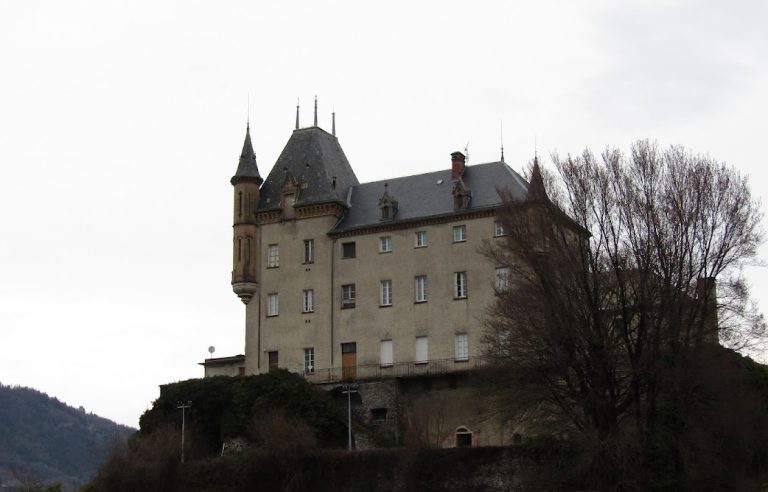
Chartreuse de Saint-Hugon is a Roman Catholic Carthusian monastic complex in France, at Saint-Hugon in the commune of Arvillard, Savoie. Founded in 1173 and begun in stone and timber construction in 1183, it belonged to the Carthusian order, a Catholic community known for its strongly contemplative way of life. The monastery later became an important center of iron production in the valley of the Bens.
Foundation and Carthusian community
The foundation was prepared by an act of 1170, which granted the future community the valley between the Gétron and Bens streams and the territory between Mount Lovet and the Maurienne Alps. Agnes of Savoy, Countess of Geneva, joined local lords, their wives, and their children in establishing and endowing the settlement. Nantelme, probably the man who later became bishop of Geneva, is identified as the community’s prior.
According to the foundation tradition, the monastery took its name from Saint Hugh of Châteauneuf, the bishop of Grenoble associated with the Carthusian order. The inhabitants of Arvillard were said to have seen him in a vision, dressed in luminous clothing and surrounded by twelve flying Carthusian monks. The settlement gave the valley of the Bens the name Saint-Hugon. Carthusian monks directed the monastery until 1792.
Iron production and industrial change
For more than six centuries, the community combined monastic life with ironworking. Its forges used ore from the nearby Molliet area, while charcoal came from forests extending through the territories of Dauphiné and Savoy. From the seventeenth century, Bergamask ironworkers and powerful new master-forging families reduced the monks’ role in metallurgy. A master forger was an industrial producer who operated ironworks and made forged goods such as edged tools.
Ironworking continued at Saint-Hugon until 1791, when two blast furnaces were fired on opposite sides of the Bens. A blast furnace is an industrial furnace that smelts iron ore continuously at high temperature to produce cast iron. The iron made at Saint-Hugon-Savoie supplied most of the region’s edged-tool forges until 1873, when the last blast furnace was permanently shut down.
Revolution and later ownership
The French Revolution ended the monastery’s prosperous period. In 1792 the monks were expelled, the chartreuse, meaning a Carthusian monastery or monastic complex, was looted and abandoned, and its extensive properties were sold as national property. The lands reached into Tencin in the Grésivaudan and the Valbonnais domain.
Jacques Louaraz, a native of Allevard and a former servant of the Carthusians, later acquired Saint-Hugon. Prosper Leborgne, an industrialist from Grenoble and a relative of General Count de Boigne, bought it in 1829. Leborgne founded a dynasty of edged-tool manufacturers and master forgers known throughout Europe. Before its later religious revival, the former monastery served successively as a farm, spa establishment, distillery, hunting lodge, and venue for festivities.
Transformation into a Buddhist institute
The La Rochette paperboard company acquired the site in 1924. In 1980, the company transferred it to the Grenoble association Buddhism, Science and Tradition. The association restored the buildings and presented them to Kjabdjé Kalou Rinpoche, leading to the establishment of the Karma Ling Institute, a Buddhist religious and educational center. The institute received the 14th Dalai Lama in 1993 and again in 1997.
A major fire began in the former chartreuse at about 2 a.m. on 1 December 2017. It destroyed the building, including much of its wooden framework and floors. Following a support campaign, the Karma Ling Institute reopened and resumed its activities in May 2018.
Remains
Chartreuse de Saint-Hugon stands in the Saint-Hugon forest on the right bank of the Bens valley, at an elevation of 827 metres near La Rochette. The Bens forms the boundary between Savoy and Dauphiné, and the settlement occupies the lower part of the valley. The complex’s construction included substantial timber, particularly in its framework and floors, alongside the buildings and industrial installations associated with monastic iron production.
Ironworks and furnaces
The site’s industrial organization was connected to the surrounding landscape. Nearby ore from Molliet supplied the ironworks, while the forests provided charcoal for the furnaces. Two blast furnaces stood on opposite sides of the Bens and were fired in 1791. Industrial activity continued at the site until the final furnace stopped operating in 1873, linking the monastic complex to the region’s manufacture of edged tools.
Monastic buildings
The former monastic buildings were restored after their transfer to the Buddhist association in 1980 and adapted for the Karma Ling Institute. Their timber framework and floors formed a substantial part of the complex before the fire of 1 December 2017 destroyed the building. The site’s present historical character therefore reflects successive phases of Carthusian monastic life, iron production, secular reuse, Buddhist occupation, and fire damage.