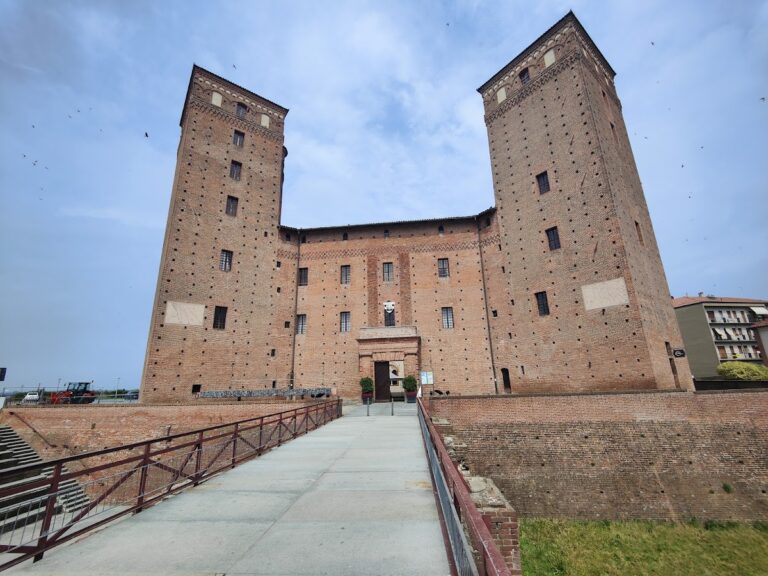
Certosa di Pesio: A Carthusian Monastery in Italy


Site at a Glance
- Rating
- 4.5
- Popularity
- Low
- Country
- Italy
- Primary era
- Early Modern
- External website
- Open
- Eras represented
- Medieval, Early Modern, Modern
- Civilizations
- Duchy of Savoy
- Site type
- Religious
- Remains
- Monastery
On this page12 sections
History
Certosa di Pesio is a former Carthusian monastery in Italy, located at about 859 metres above sea level in the upper Pesio Valley of Piedmont, below the Marguareis massif. Founded in 1173 in the medieval period, it was dedicated to the Virgin Mary and Saint John the Baptist and became an important religious and economic presence in the valley.
Foundation and early development
The monastery was probably established after the people of Chiusa and the lords of Morozzo donated land at Ardua. A charter dated October 1173 records the foundation. The first prior was Ulderico of Casale Monferrato, a professed Carthusian from the Grande Chartreuse, the motherhouse of the order in the French Alps near Grenoble.
Ulderico led the community until 1199. He organized the correrie, or lower house where lay brothers and workers handled service and administration, while beginning the permanent monastery on the opposite bank of the Pesio River. He also established the granges of San Michele and Rumiana. The foundation provided spiritual guidance and refuge for the population of the valley, whose circumstances had been affected by repeated Saracen incursions. It was also linked to the nearby Charterhouse of Casotto, founded in 1172, whose facilities no longer met the needs of its growing community.
In 1218, priors from the Savoyard charterhouses of Saint-Hugon and Aillon inspected Pesio, its lands, and the upper valley, setting wider conditions for expansion and repair. In 1233, the monastery entered a prayer alliance with the Charterhouse of Durbon.
Growth, conflict, and restoration
During the following centuries, numerous benefactors supported the charterhouse. The Carthusian community contributed to agriculture and pastoralism in the upper Pesio Valley, helped establish principal connecting routes, and was associated with the formation of the settlements of Pradeboni, Vigna, and San Bartolomeo della Certosa. The monks also helped preserve the valley woodland, which is now included in the Marguareis Natural Park.
Relations with the municipality of Chiusa deteriorated during the thirteenth century as boundary disputes escalated into attacks. Parts of the monastery were destroyed, and goods accumulated by the monks were stolen. The Carthusian order consequently ordered the abandonment of Pesio in 1350.
The monks returned in the early fifteenth century and restored the monastery. At the end of 1446, Louis XI of France visited the charterhouse secretly while he was living in exile with his father-in-law, Duke Louis I of Savoy. Antoine Cocq, one of the monks, predicted that Louis would recover the favour of his father, Charles VII, then king of France. After this prediction was fulfilled, Louis made rich gifts to the monastery.
Another revolt began in 1509 over possession of the then-uninhabited area of San Bartolomeo, which lay along the boundary between charterhouse and municipal property. Residents of Chiusa damaged and burned monastery properties on their way to the complex and threatened, mistreated, and wounded monks. Duke Charles II of Savoy sent troops and commissioners to suppress the revolt and secure the return of the stolen goods.
Later monastic history
The church was consecrated in 1599. In 1634, the monastery received Victor Amadeus I, Duke of Savoy, and Christine of France, his duchess. In 1655, a group known as the Carnival band, motivated by personal hostility toward the monks, besieged the monastery and ravaged its interior. The complex was completely rebuilt during the seventeenth century, with further remodelling in the sixteenth and nineteenth centuries.
Religious life ended in 1802 during the suppression of religious orders under French imperial rule. Twenty-three religious members and 43 servants or wage workers were expelled, and the property was auctioned on 3 March 1803. A period of gradual abandonment followed, accompanied by damage and the removal of surviving contents. Sacred furnishings were transferred to churches in Cuneo, Limone Piemonte, Lurisia, and Peveragno. Ancient books went to the civic library of Cuneo, while silver bells were taken to the Louvre in Paris.
Hydrotherapy and renewed religious use
In 1840, Giuseppe Avena bought the former monastery, restored it, and converted it into a hydrotherapy establishment, a nineteenth-century health resort based on therapeutic bathing or mineral-water treatments. Camillo Benso, Count of Cavour, Massimo d’Azeglio, and Maria Clotilde of Savoy were among its frequent visitors. The establishment declined in the early twentieth century as new centres developed elsewhere in Italy, and the complex again fell into disuse and abandonment.
In 1934, the Missionary Fathers of the Consolata of Turin began a new religious phase through targeted restoration and conservation. They continue to manage the site. Certosa di Pesio is a Catholic institution in the Diocese of Mondovì and belongs to the Lombardy Province, an administrative grouping of charterhouses, of the Carthusian order. Its dedications remain the Virgin Mary and Saint John the Baptist.
Remains
Certosa di Pesio occupies the upper Pesio Valley near the Pesio River, at the foot of the Marguareis massif. Several buildings are arranged around a large cloister, whose open side faces the surrounding woodland and mountain above it. The complex combines communal religious spaces with separate cells, reflecting Carthusian practice, in which shared services were balanced with extensive individual seclusion.
Cloister and monastic quarters
Portico
A 250-metre-long portico runs along the complex. Its Romanesque-style columns support the circulation space beneath which the monks’ cells and accommodation for groups are arranged. The portico forms a principal architectural connection between the community’s living quarters and the cloister.
Monks’ cells
Each monastic cell contained a modest room, a small cellar, and a vegetable garden with its own well. This arrangement provided the individual setting required by the Carthusian way of life while keeping the cells within the organized structure of the monastery.
Prior’s Chapel
The cloister gives access to the Prior’s Chapel, a small room decorated with frescoed religious scenes and eighteenth-century illusionistic perspectives. Its painted decoration distinguishes the chapel from the more utilitarian spaces connected with the monastic quarters.
Church of the Assumption
At the northern end of the complex stands the Church of the Assumption, built in the sixteenth century. Its decoration includes frescoes by Jan Claret showing scenes from the life of Jesus and the Virgin Mary. Antonio Parentani painted frescoes in the presbytery vault, while decorative stucco from the seventeenth and eighteenth centuries contributes to the interior finish.
Collections
The charterhouse contains a large taxidermy collection of local and exotic animals. The collection survives within the complex, although its condition is not always good.
Nearby sites