Castro de Cuaña: An Iron Age Fortified Settlement in Spain
Site at a Glance
- Rating
- 4.5
- Popularity
- High
- Country
- Spain
- Primary era
- Iron Age
- Eras represented
- Iron Age
- Civilizations
- Unclassified
- Site type
- Settlement
On this page13 sections
History
Iron Age foundation and Roman-period occupation
Castro de Cuaña is an Iron Age fortified settlement in Spain, associated with the Castro culture, an archaeological tradition linked to fortified communities in northwestern Iberia. It dates from the beginning of the fourth century BCE or earlier and experienced a later phase of Roman influence. Occupation may have continued through the first century CE and possibly beyond the Roman conquest.
The settlement’s population has been estimated at between 1,500 and 2,000 people.
Excavation and interpretation
Written references to Castro de Cuaña date back at least to 1818. José María Flórez excavated it in 1877, making it the first hillfort in Asturias to be studied.
After the Spanish Civil War, Antonio García y Bellido and Juan Uría Ríu conducted further investigations. Their work helped shape an interpretation of northern Iberian peoples as Celtic. However, circular rather than rectangular houses and burials without ash urns have been cited as evidence against a direct connection between the Castro culture and the Celts.
Religious and heritage history
With Christianity’s arrival in the region in the fifth century, the divine character associated with a nearby stone monument was absorbed into Christian belief. The stone then became known as the Stone of Our Lady.
Castro de Cuaña was designated an archaeological zone and a Spanish Asset of Cultural Interest in 1931. An educational interpretation center has operated at the site since 1993.
Remains
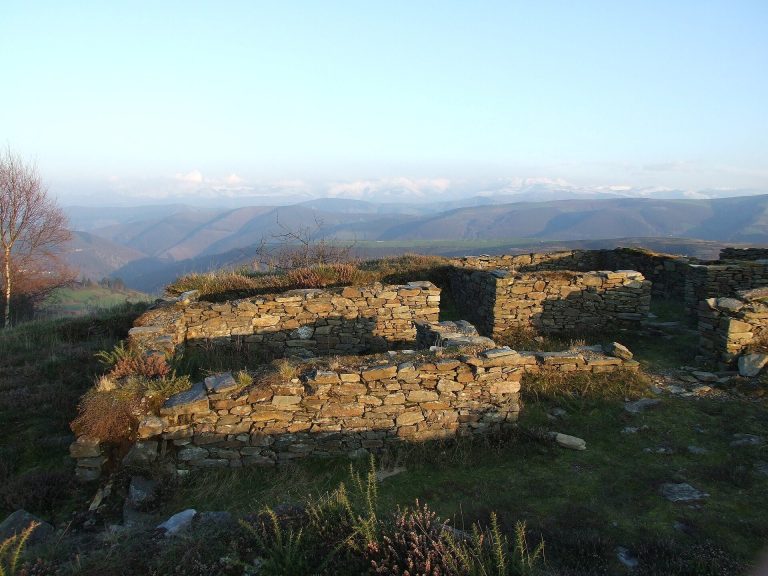
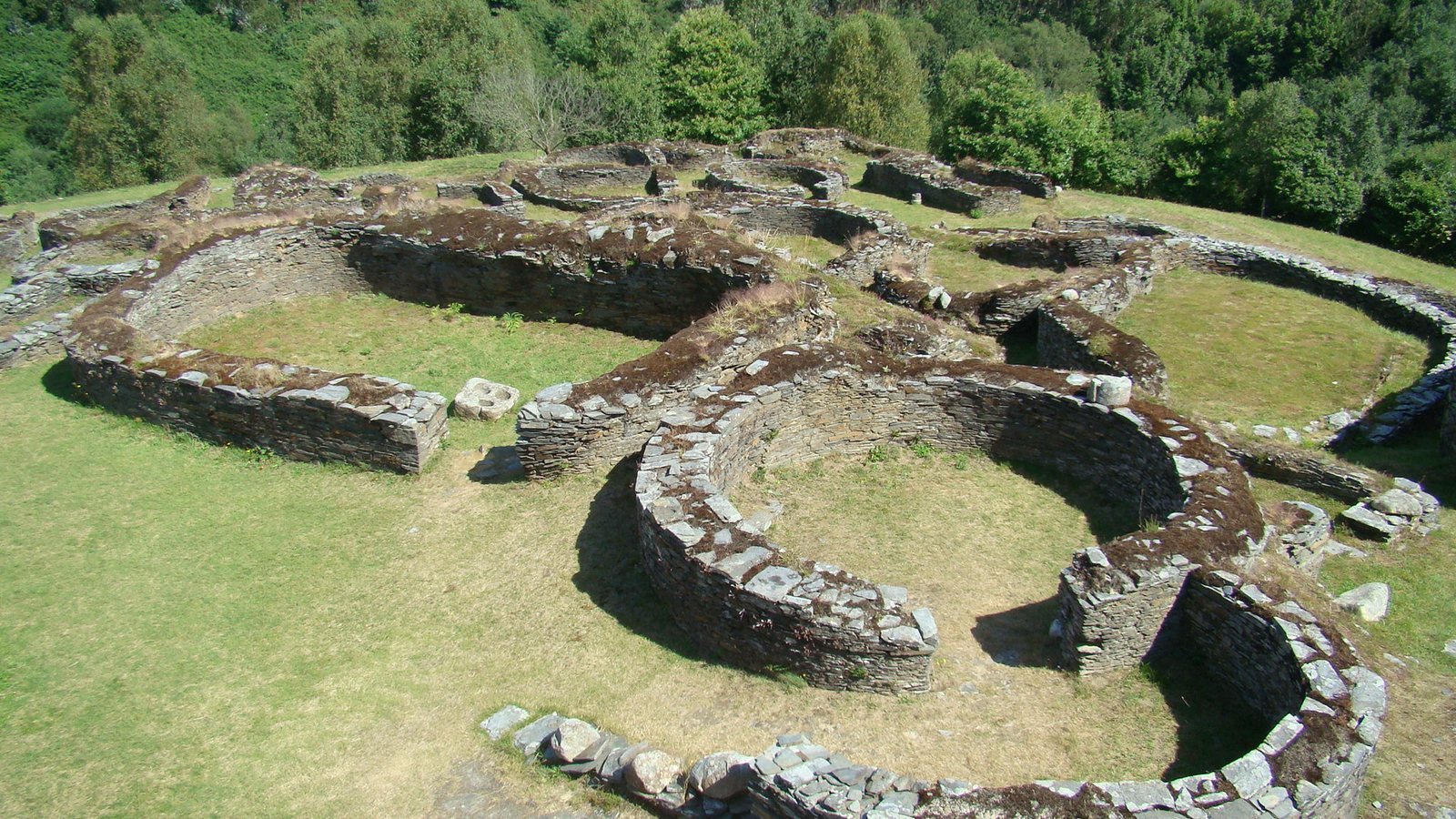
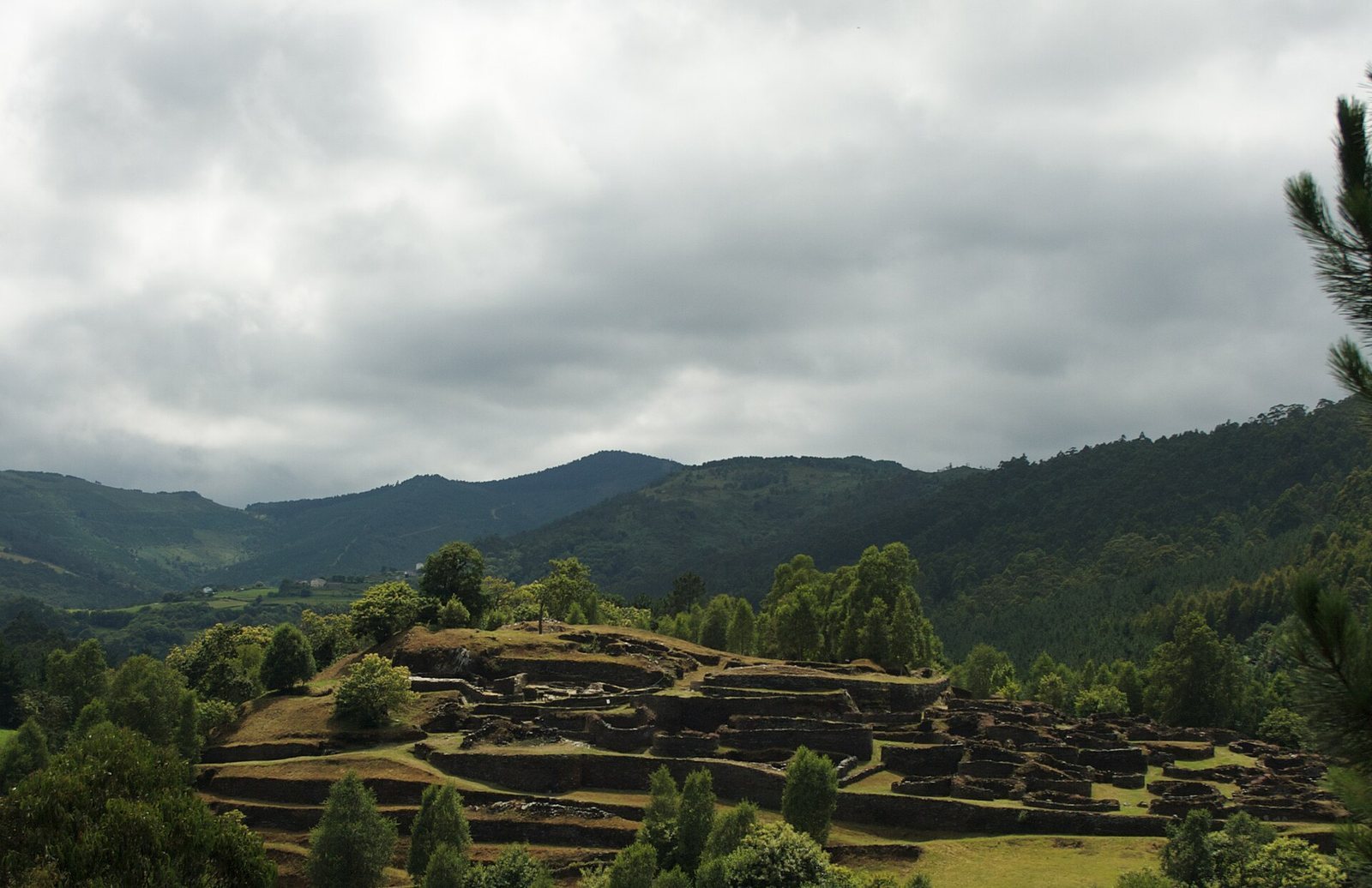
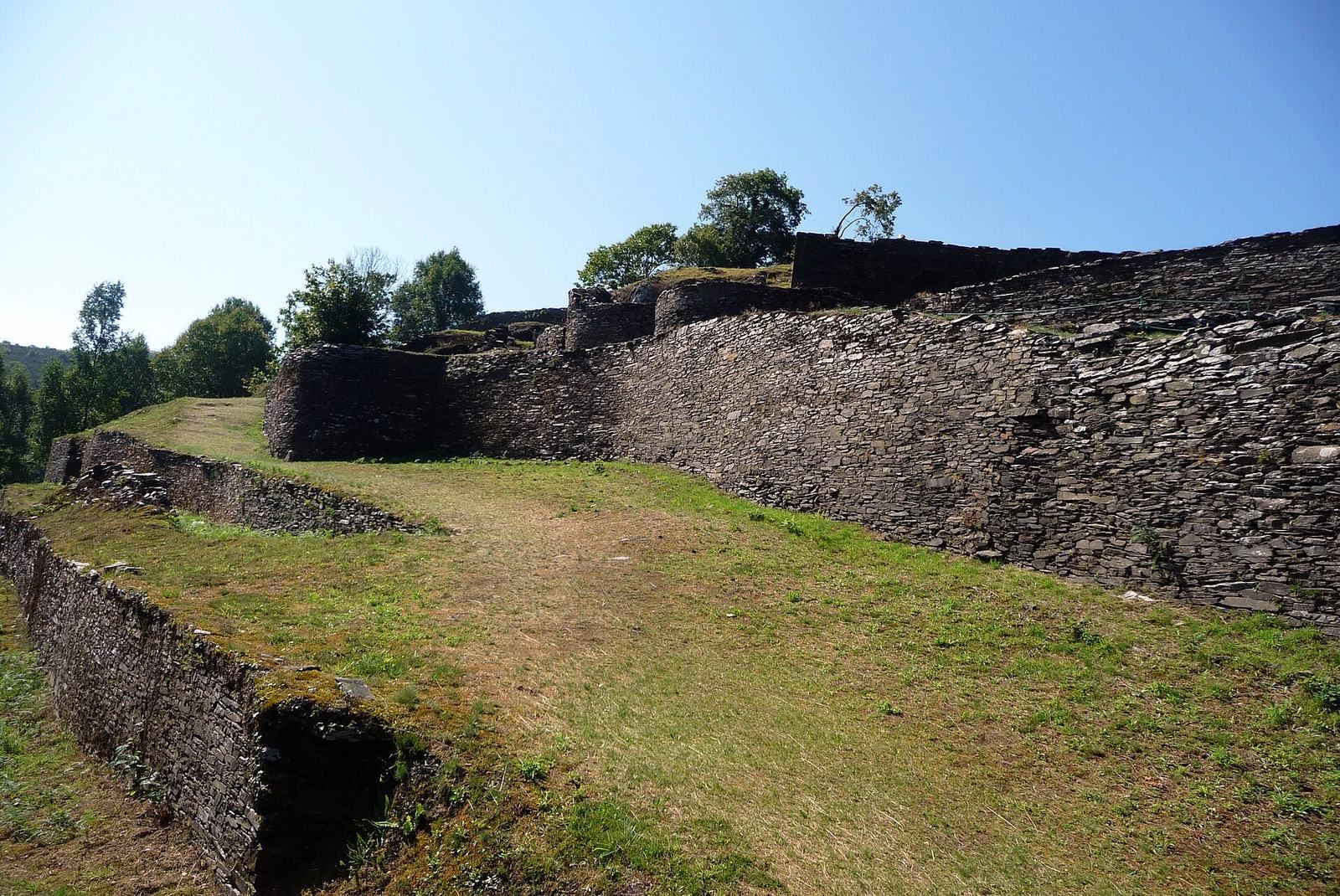
The settlement includes an upper enclosure and a lower area known as the North Quarter, enclosed by a system of walls, an earthen rampart, a guarded passage, and towers. Its buildings range from circular houses to oval and rectangular structures, with paved streets and drainage systems forming part of the settlement layout.
Defenses
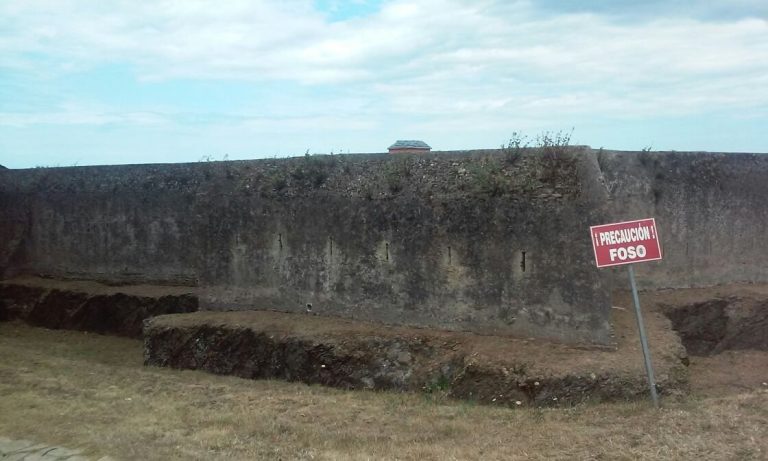
The defenses combine a wall, an earthen rampart, a guard passage, and several towers with differing plans. The surviving wall reaches up to 2.8 metres in height.
Enclosures and domestic buildings
Upper enclosure and North Quarter
The upper enclosure is thought to have been used for keeping livestock and contains relatively few buildings. El Torreón, a watchtower within this area, is presumed to have served for surveillance. The lower North Quarter covers about 0.5 hectares and contained approximately 80 huts within its own smaller perimeter wall.
Houses and streets
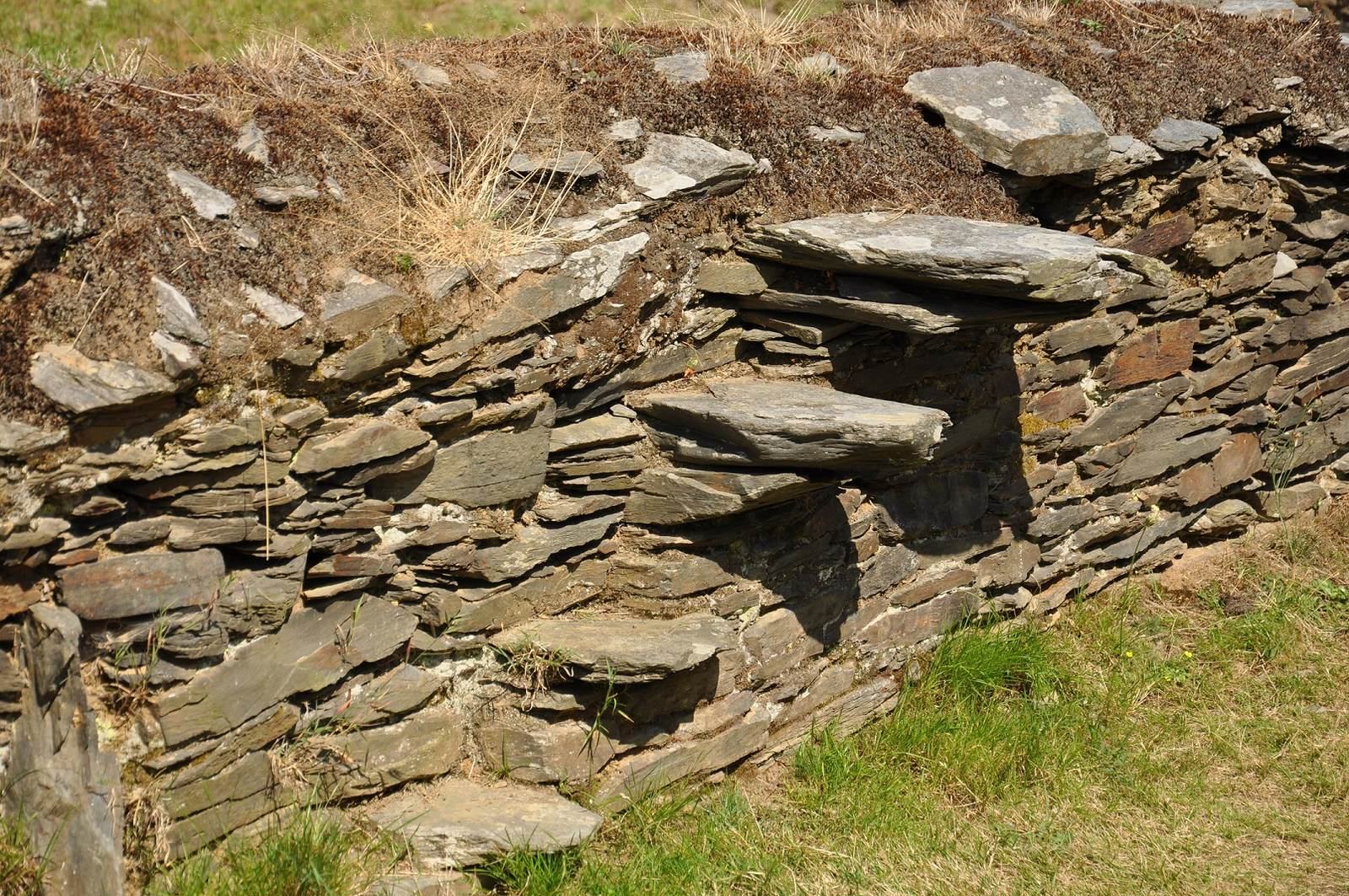
Many houses were circular, often with porches, and built from slate and mud. Their roofs were made of plant material or, less commonly, slate. Other buildings had oval or rectangular plans, rounded corners, and internal partitions. The streets were paved and had drainage systems.
Bathing and ritual structures
Terrace buildings
On a small terrace above the access path, two buildings succeeded one another over time. Some chambers had false vaults, formed by overlapping masonry rather than a true arch. The buildings also had paved floors with channels and a large, bathtub-shaped granite monolith. Once interpreted as cremation furnaces, they are now considered more likely to have been bathhouses.
Other structures and finds
Other identified remains include an acropolis, the high or fortified part of a settlement, a sacred enclosure, and a castro-style sauna, a heated bathing structure associated with hillfort settlements in northwestern Iberia. Local stone is present among the archaeological remains. Finds include iron objects, casting molds, and pottery that may be Roman.
Stone monument
Near the settlement is a preserved discoid stele, a standing stone with a disc-shaped top. It is about 1.5 metres high, and its disc measures 1 metre across. The front is rough and appears worn, while the back is slightly concave. Interpretations include a possible connection with the hillfort and a possible depiction of a pagan solar divinity.