Castle Grudziński in Poddębice: A Renaissance and Mannerist Palace
Site at a Glance
- Popularity
- Medium
- Country
- Poland
- Primary era
- Early Modern
- Eras represented
- Early Modern
- Civilizations
- Polish–Lithuanian Commonwealth
- Site type
- Domestic
- Remains
- Elite Residence
On this page8 sections
History
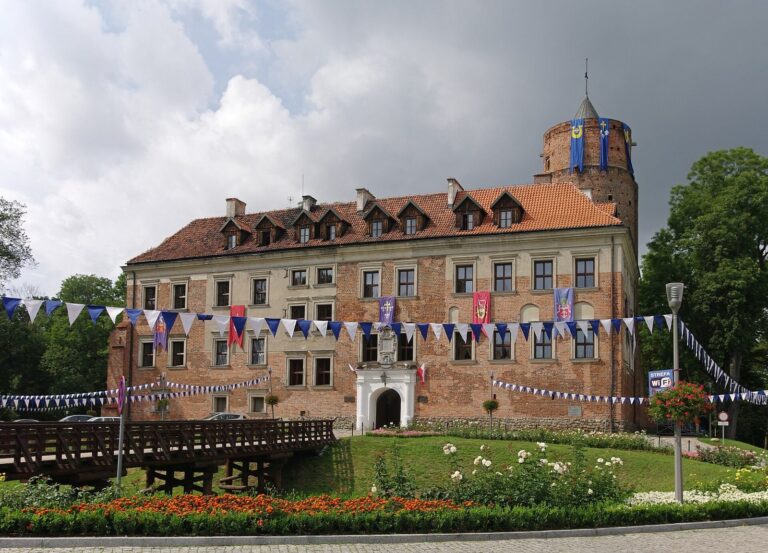
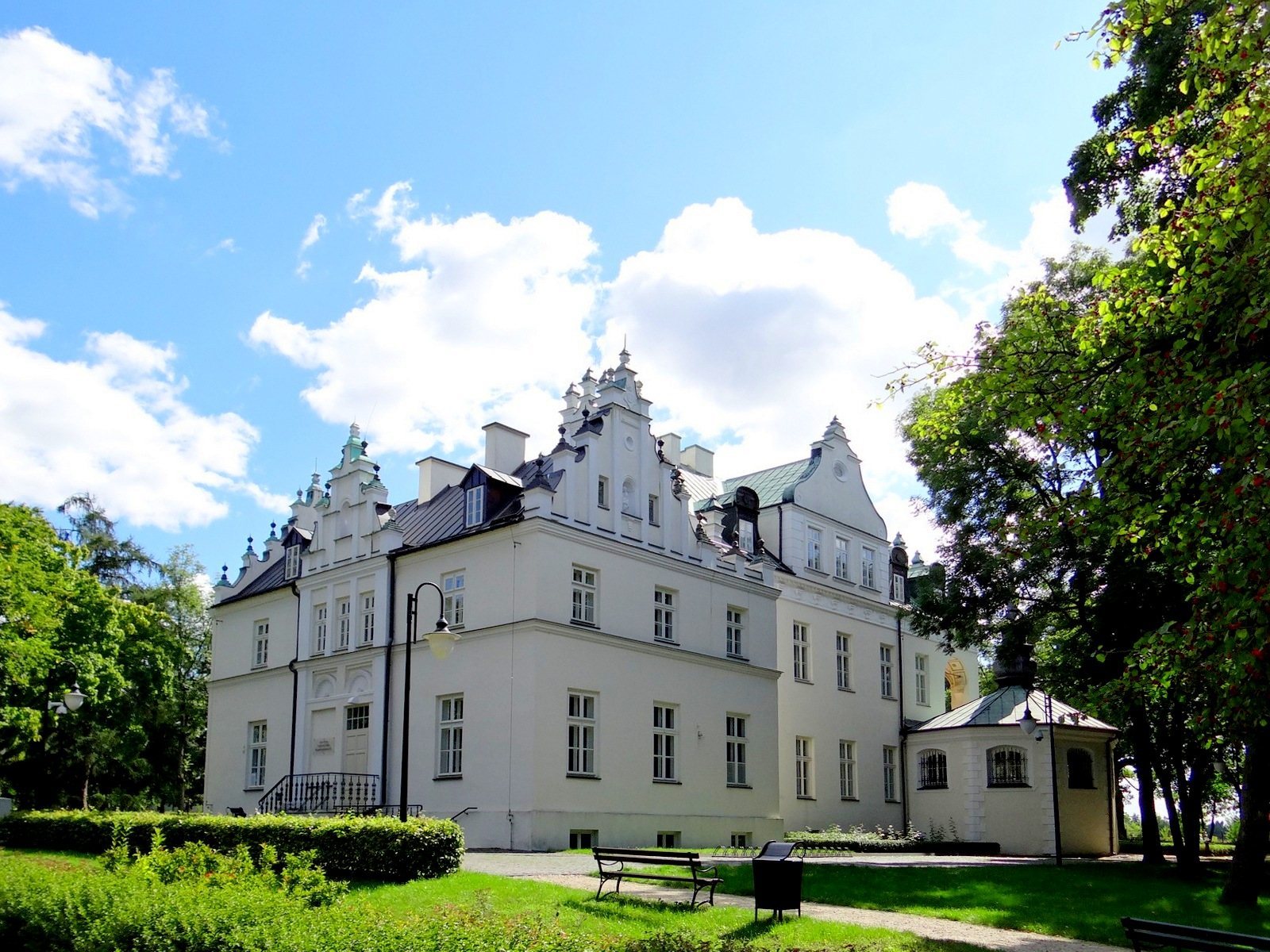
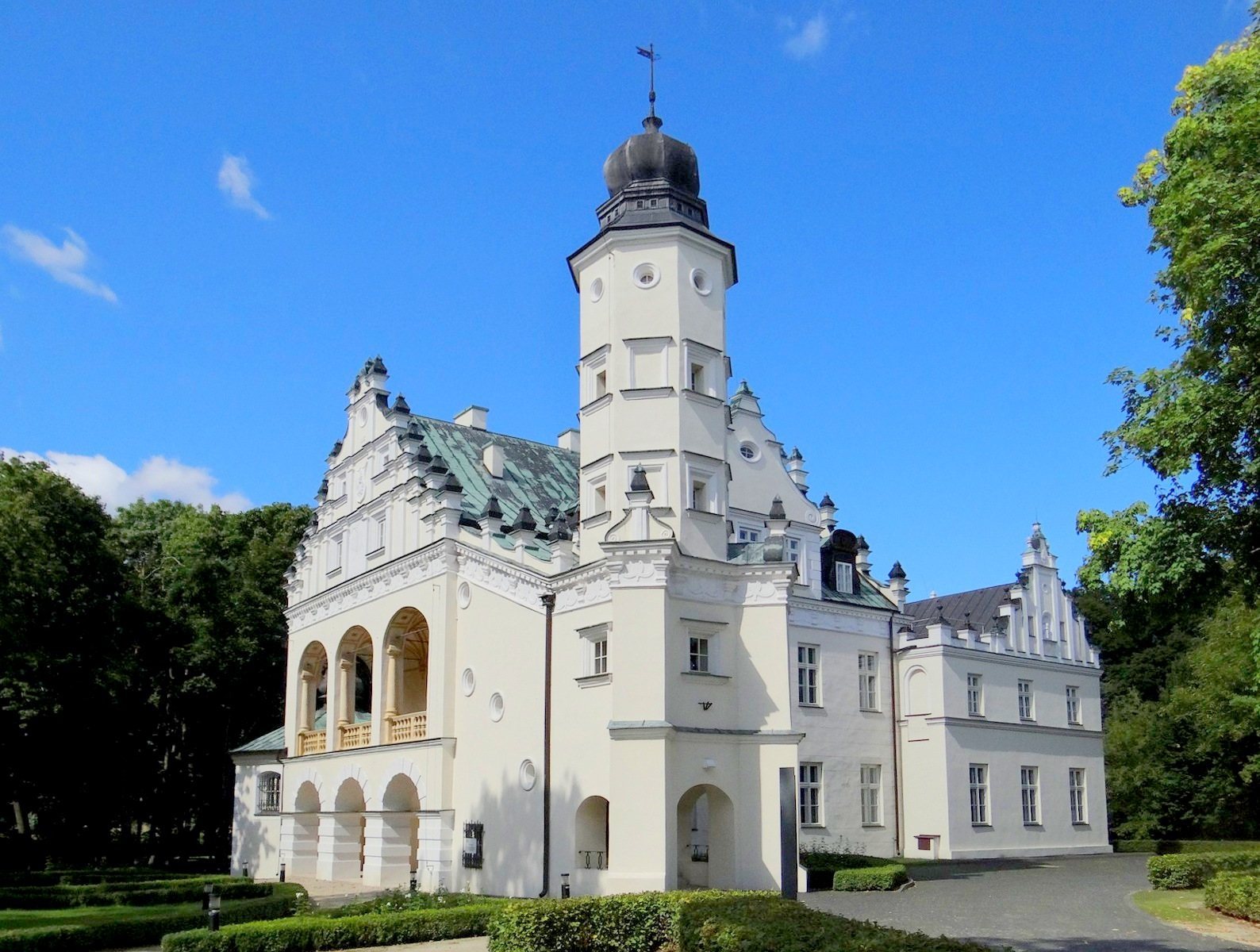
Castle Grudziński in Poddębice is a palace in Poland, built before 1617 by Zygmunt Grudziński, a voivode (senior provincial governor) of Rawa, on the site of a Gothic castle. Its Renaissance and Mannerist design reflects a late Renaissance style. The palace served as a home for the Grudziński family and as a residence for members of the upper aristocracy. The site lies in present-day Łódź Voivodeship, in an area historically belonging to Greater Poland.
Foundation and Grudziński ownership
After Zygmunt died in 1618, the property passed to his wife, Barbara Karśnicka, who died after 1625. Their son Stefan, a local administrative official, then held the estate. It later changed hands several times.
Alterations and later use
A chapel was added in 1690, followed by a Neoclassical loggia in 1750. The palace underwent restoration in the nineteenth century, and the wider complex was remodeled in the second half of that century.
Władysław Wyssogota-Zakrzewski owned the palace during the 1920s. It now houses a small museum.
Remains
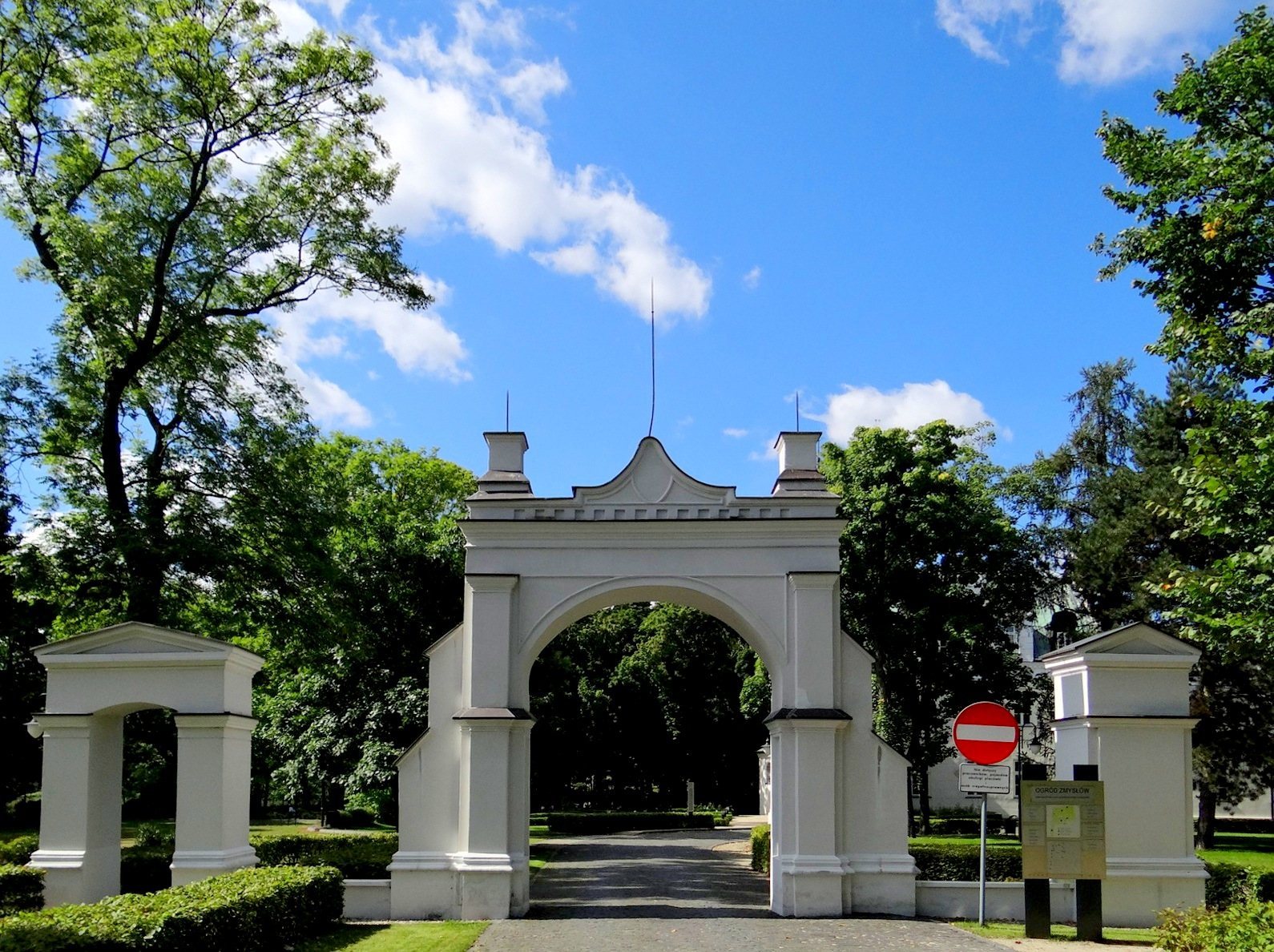
The complex brings together the palace, a chapel, and a park with trees beside a Protestant church. The restored palace and its associated buildings reflect additions and changes made over several centuries.
Buildings and grounds
Palace
A gable bears the Wyssogota coat of arms, also associated with Władysław Wyssogota.
Chapel
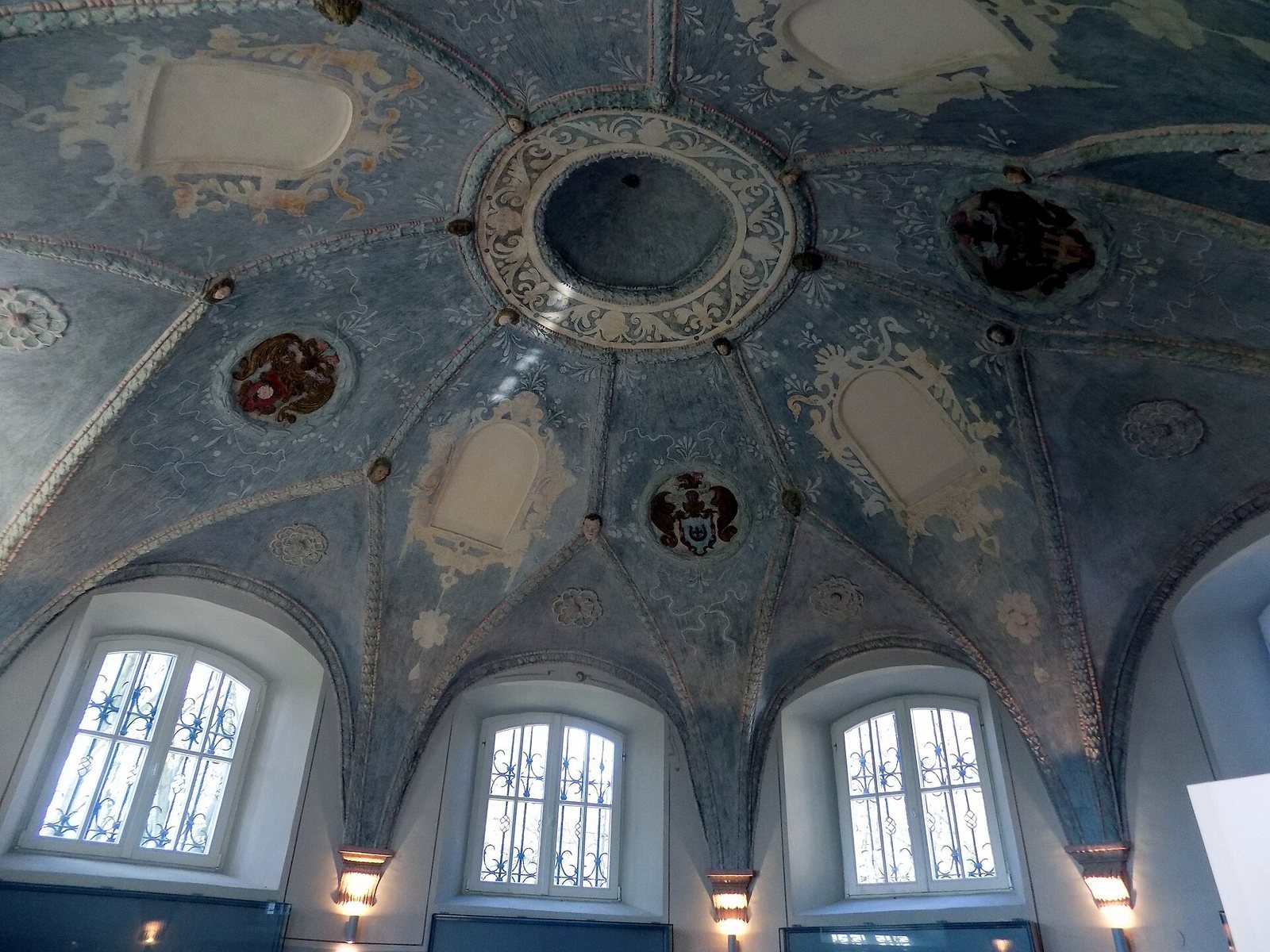
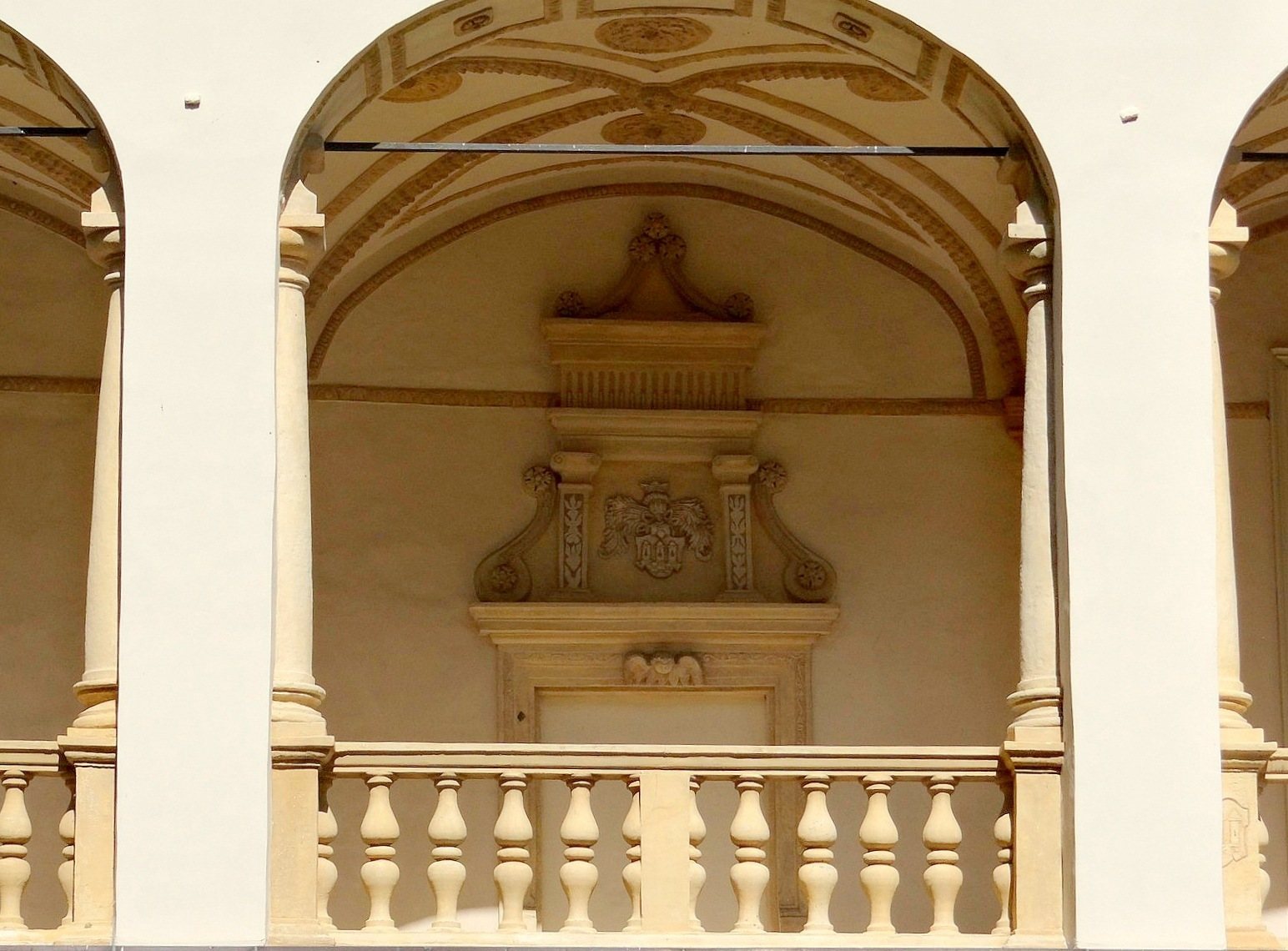
The chapel contains Baroque frescoes. Its vaults carry the coats of arms Pomian, Rola, Grzymała, and Jastrzębiec. Grzymała is associated with Zygmunt Grudziński, while Jastrzębiec is associated with Barbara Karśnicka.
Park
The park, planted with trees, forms part of the palace complex and lies beside a Protestant church.