Castillo de Jagua: A Spanish Colonial Fortress in Cuba
Site at a Glance
- Rating
- 4.2
- Popularity
- Very Low
- Country
- Cuba
- Primary era
- Early Modern
- Eras represented
- Early Modern
- Civilizations
- Spanish
- Site type
- Military
- Remains
- Fort
On this page7 sections
History
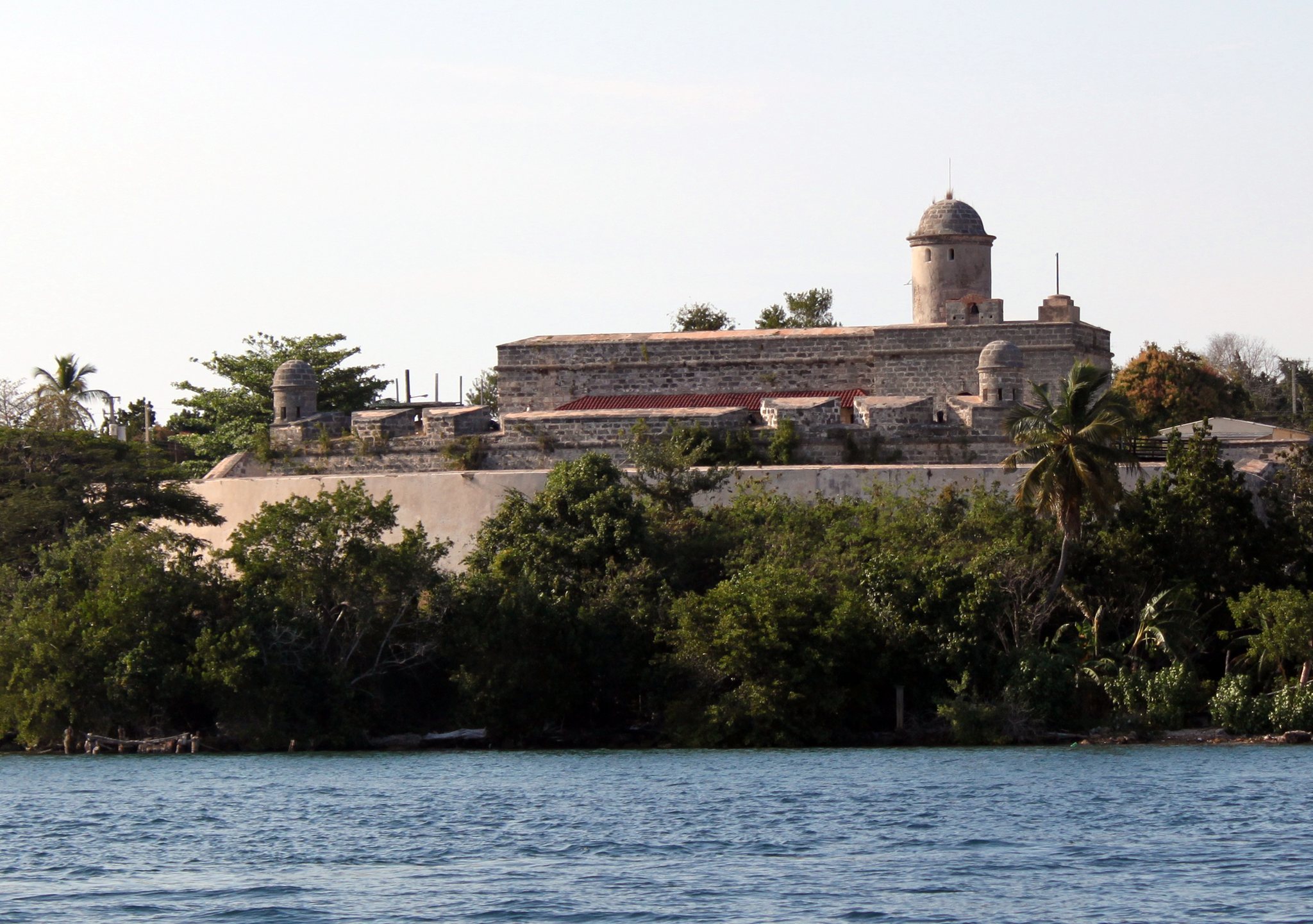
Castillo de Jagua is a Spanish colonial fortress in Cuba, south of Cienfuegos, built during the 1730s and 1740s to defend the entrance to Cienfuegos Bay. Its design combined European medieval architectural features with an American fortification adapted to local terrain. Originally called Castillo or Fortaleza de Nuestra Señora de los Ángeles de Jagua, it was established under Philip V, king of Spain from 1700 to 1746, as part of Spain’s effort to protect Caribbean ports and coastal routes.
Spanish Colonial Construction
Construction began in 1733 and was completed in 1745 under the direction of a military engineer. The fortress is also dated to 1742. Its main purpose was to protect the bay from pirates and privateers operating along the Caribbean coast. It later helped suppress extensive smuggling carried out between local residents and seafaring privateers.
Cienfuegos and the Protected Harbor
After French colonists founded Cienfuegos on April 22, 1819, the harbor protected by Castillo de Jagua became one of the most important commercial centers in central Cuba during the colonial period. The port remains important to the country’s economy.
Later Public Memory
The fortress also entered Cuban numismatic history. Ten-peso foreign-exchange certificates issued during the 1980s, in red and green A and B versions, showed the castle on their reverse. These certificates were withdrawn from circulation in the late 1980s or early 1990s.
Remains
Castillo de Jagua stands at the entrance to Cienfuegos Bay in the port of Jagua, facing the bay entrance. Built of solid limestone, it occupies several levels and combines vaulted interior halls with defensive works arranged around the fortress.
Fortification Layout
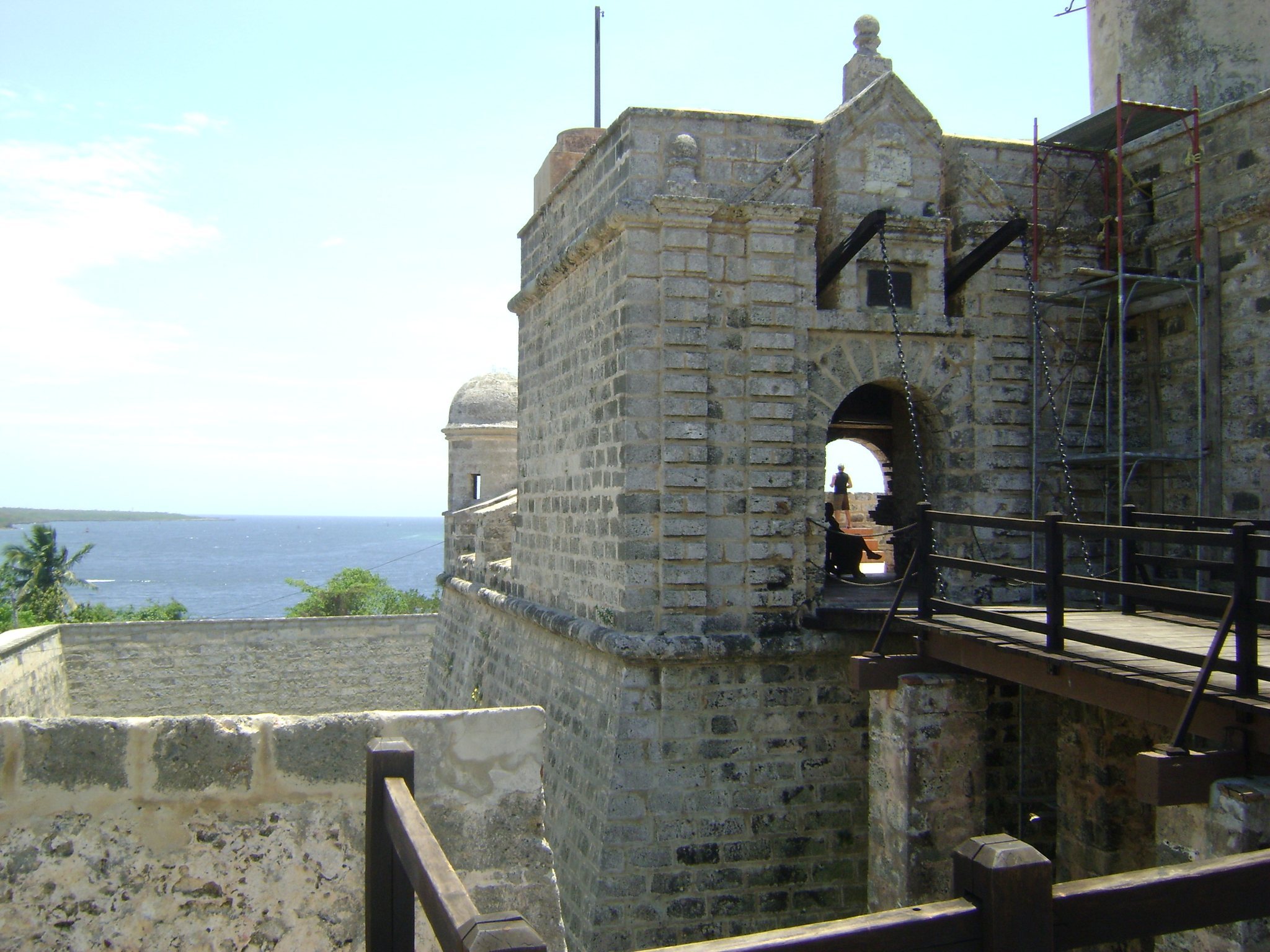
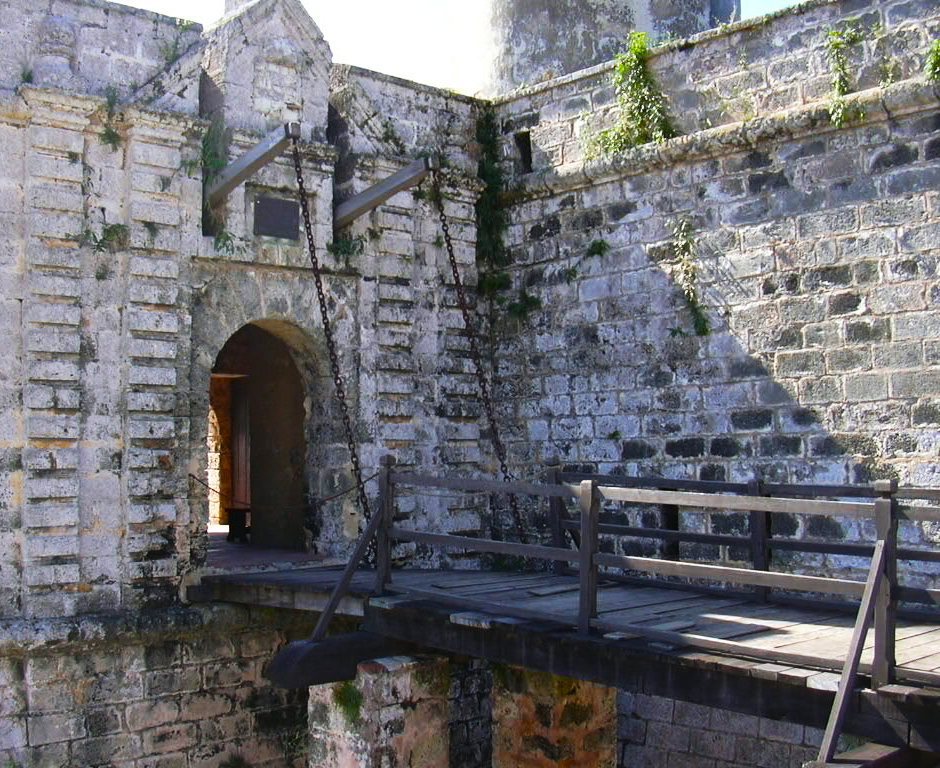
The fortress includes a well or cistern, a watchtower, and a surrounding moat. The moat was never flooded, while the surviving drawbridge remains in excellent condition and is described as one of the last still fit for use. A drawbridge is a movable bridge that can be raised to restrict access, and the structure continues to define the approach to the fortification.
Architectural Character
Its vaulted naves are long interior halls or passages covered by vaults, and their presence, together with the moat, links the design to European medieval architecture. The geometric layout and adaptation to the terrain give the fortress the character of a fort built in the colonial Americas. Castillo de Jagua is also associated with the wider Cuban colonial architectural tradition.