Casmenae: An Early Greek Colony and Strategic Settlement in Sicily
Site at a Glance
- Rating
- 5
- Popularity
- Very Low
- Country
- Italy
- Primary era
- Iron Age
- Eras represented
- Iron Age
- Civilizations
- Ancient Greek
- Site type
- Settlement
- Remains
- City
On this page10 sections
History
Foundation and strategic role
Casmenae was a Greek settlement founded by Syracusans around 643 BC on Monte Casale in southeastern Sicily, Italy. It was among Syracuse’s earliest colonies, alongside Akrai and Kamarina. The fifth-century BC historian Thucydides placed its foundation 90 years after Syracuse’s. Whether Casmenae was a fully independent Greek city-state is uncertain. It has instead been interpreted as a military settlement under Syracuse’s control, serving as a fortress and regional support base.
Casmenae’s position helped Syracuse control central Sicily and an inland route west known as the Via Selinuntina. The settlement stood in a frontier region between Greek communities and the indigenous Sicilian people known as the Siculi. Its population at its height has been estimated at about 7,000 to 8,000, including roughly 2,000 soldiers and their families. A citizen was called a Kasmenaios.
Conflict and political change
Casmenae may have fought alongside Syracuse against Kamarina and its Siculian allies around 553 BC. Later, when the Gamoroi, an oligarchic group in Syracuse, were driven out of the city, Casmenae gave them refuge. Around 485 BC, Gelon, the ruler of Gela, returned them to Syracuse.
In 357 BC, after landing at Heraclea Minoa, the Syracusan statesman and military leader Dion recruited troops at Casmenae for an attack on Syracuse.
Abandonment and archaeological investigation
Casmenae appears to have been abandoned toward the end of the fourth century BC, as Syracuse gradually declined. It has also been proposed that a Syracusan tyrant destroyed the settlement, possibly in connection with moving people from smaller towns to larger cities.
The archaeologist Paolo Orsi identified Casmenae in the early twentieth century. Excavations under his direction ran from 1922 to 1931 and resumed in the late 1960s. Repeated illegal digging has disturbed the site, and its perimeter fences have deteriorated amid inadequate funding and oversight.
Remains
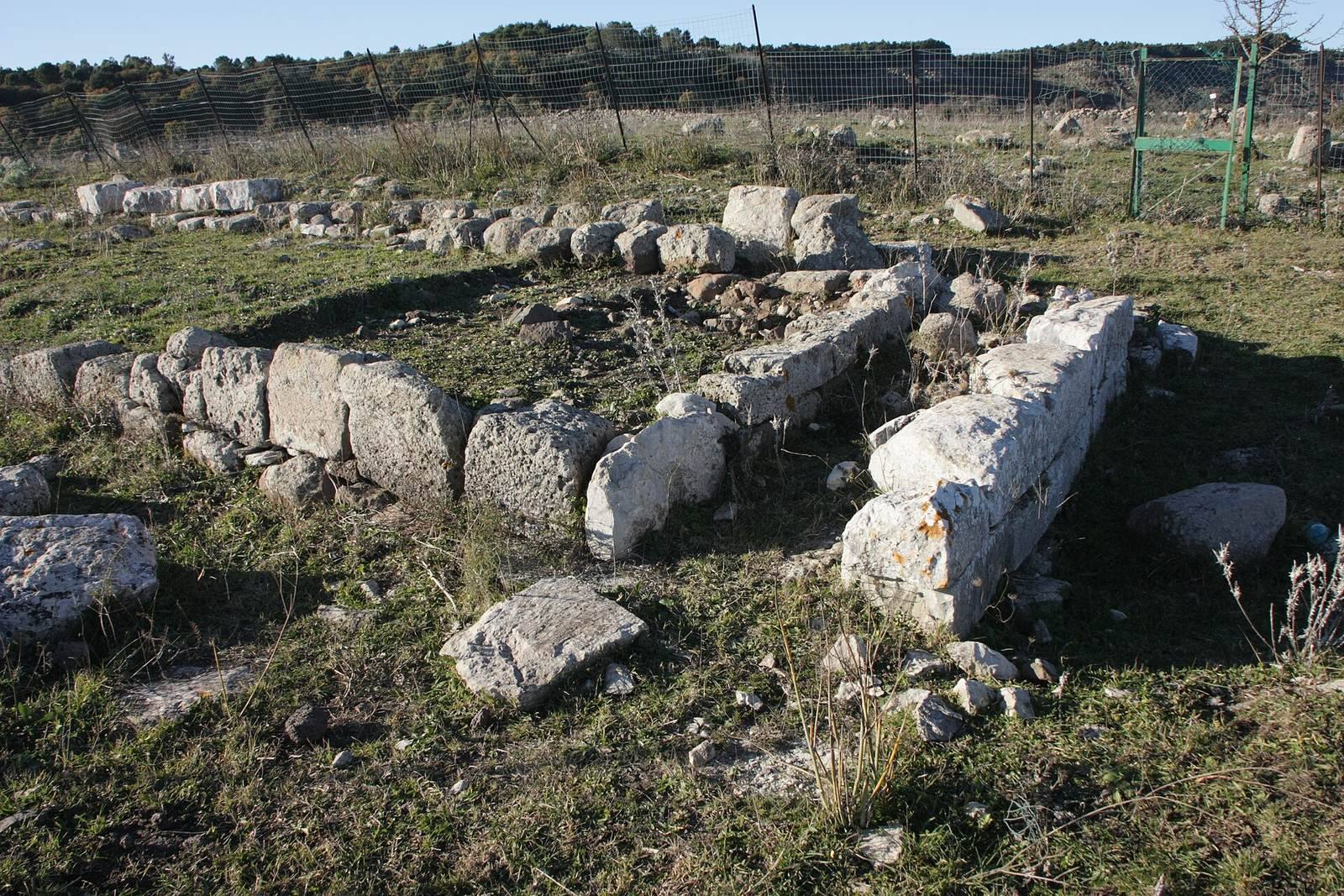
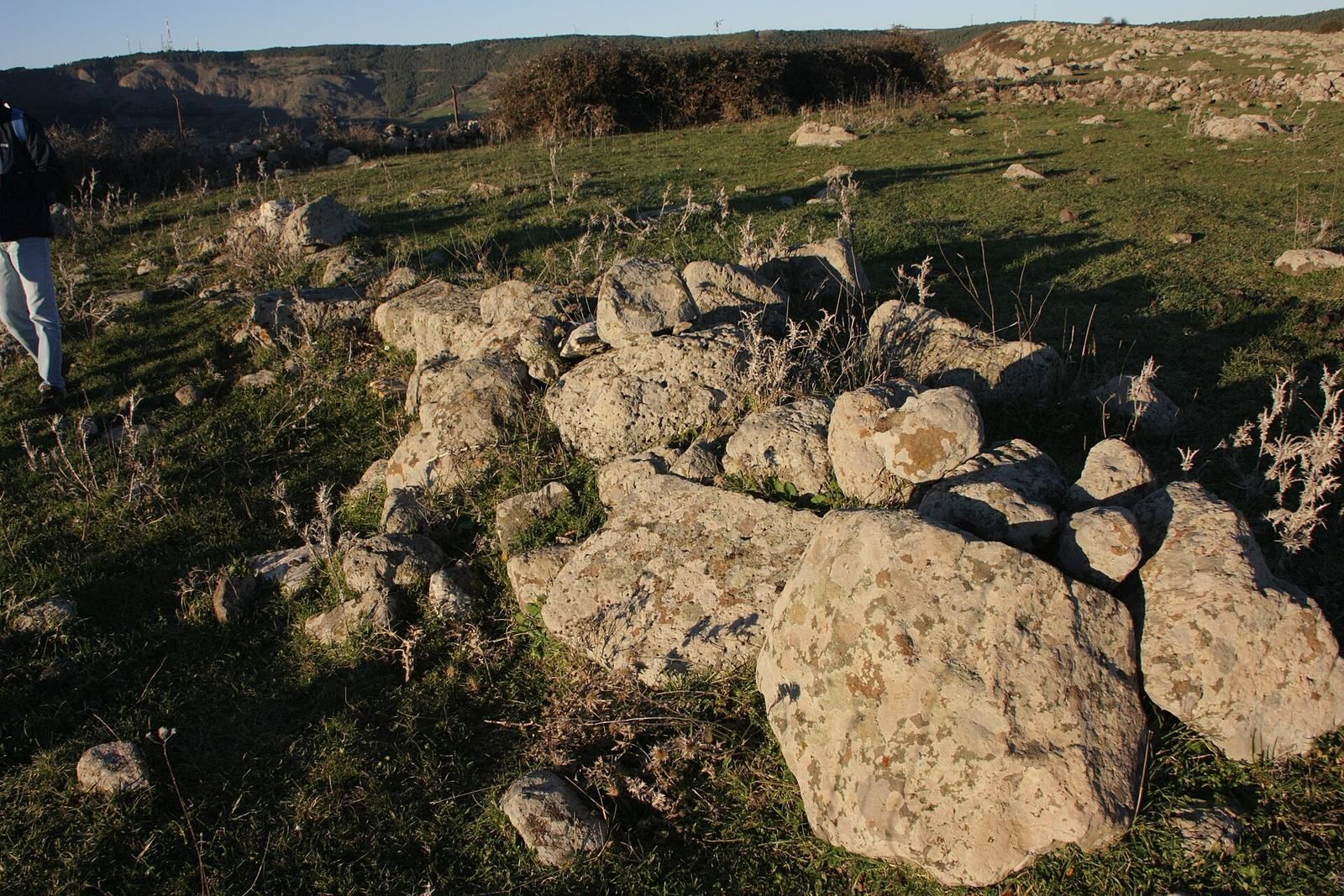
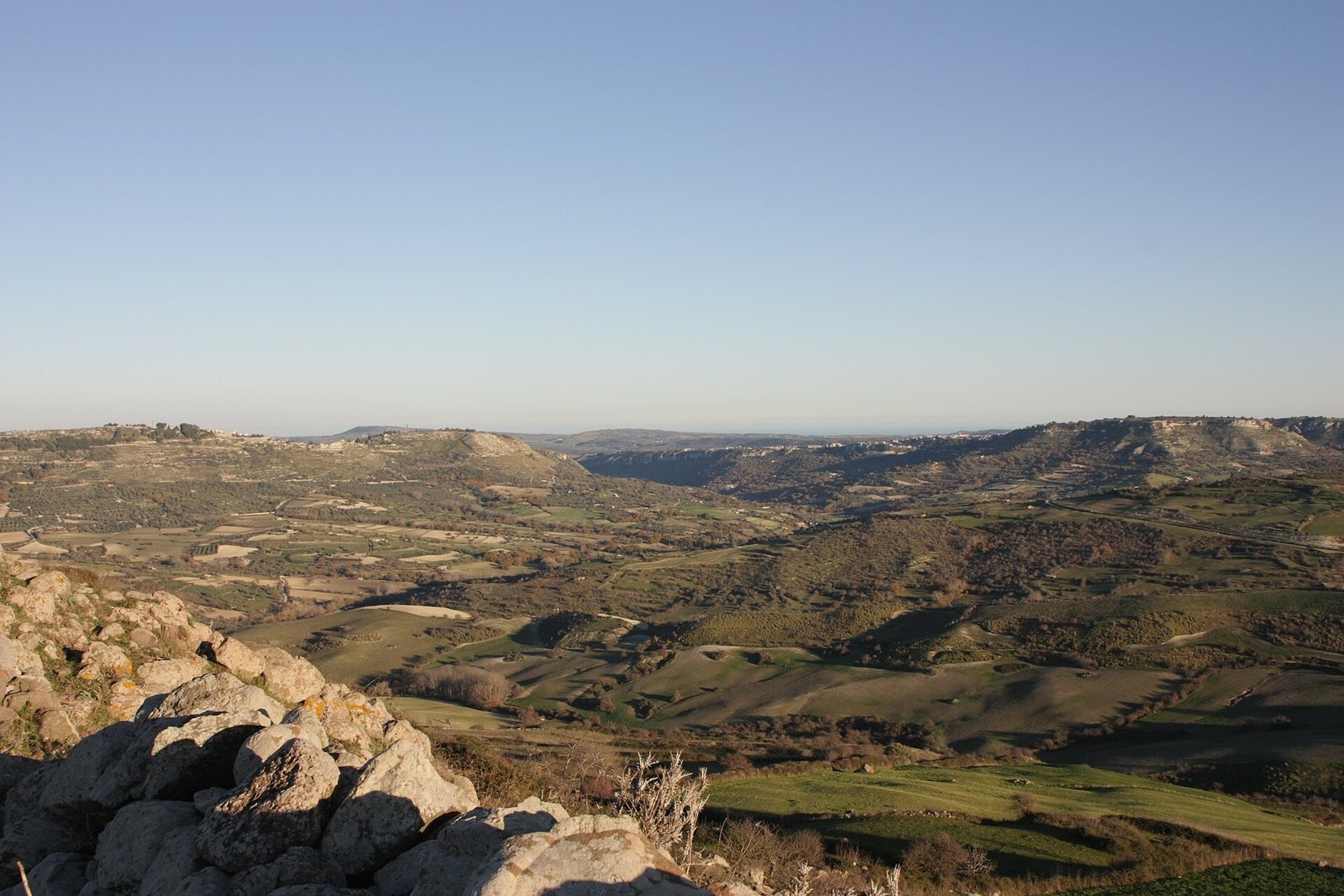
The archaeological remains occupy the broad, flat summit of Monte Casale, a steep-sided hill in southeastern Sicily. The surviving features include a planned urban layout, a stone defensive circuit, excavated houses and a sanctuary.
Hilltop setting and city plan
Monte Casale rises about 820 to 830 metres and covers roughly 70 hectares at the summit. Its steep slopes provided natural protection. The hill lies within the territories of Buscemi and Giarratana, about 12 km west of Akrai. South of Casmenae, Terravecchia was the former site of Giarratana; its inhabitants left after the earthquake of 1693.
Casmenae’s urban layout dates to the sixth century BC. It comprised about 38 to 40 parallel streets, each approximately 3 metres wide, and blocks roughly 25 metres wide. The cross streets followed irregular courses, distinguishing the plan from a regular grid known as a Hippodamian plan. The plural form of the city’s Greek name has been interpreted as referring to a grouping of quarters.
Defensive walls
Walls enclosed the hilltop for about 3.4 km. Built from large stone blocks and approximately 3 metres thick, they incorporated rectangular towers. Sections of the circuit survive.
Temple of Ares
At the western end of the hill, excavations uncovered the foundations of a temple and its associated sacred precinct. The sanctuary dates to the sixth century BC and had two building phases, around 560 BC and 525 to 500 BC. It was decorated with multicoloured terracotta sculpture. Numerous weapons were found inside the temple, while finds from Casmenae include arrows, daggers, spears and javelins. These offerings have led to the sanctuary’s interpretation as a place of worship for Ares, the Greek god of war, and to its name, the Temple of Ares.
Houses and cemeteries
Four houses have been excavated at Casmenae, and several tombs have been found in the city’s cemeteries.
Mills and archaeological finds
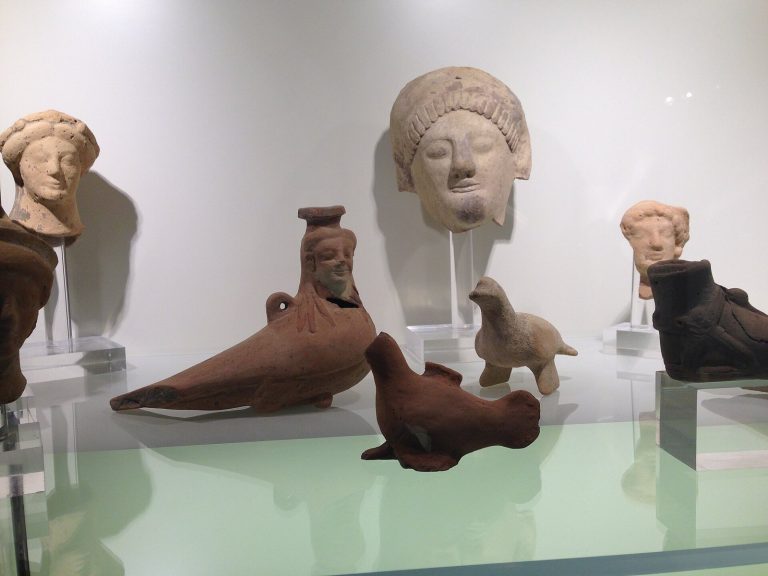
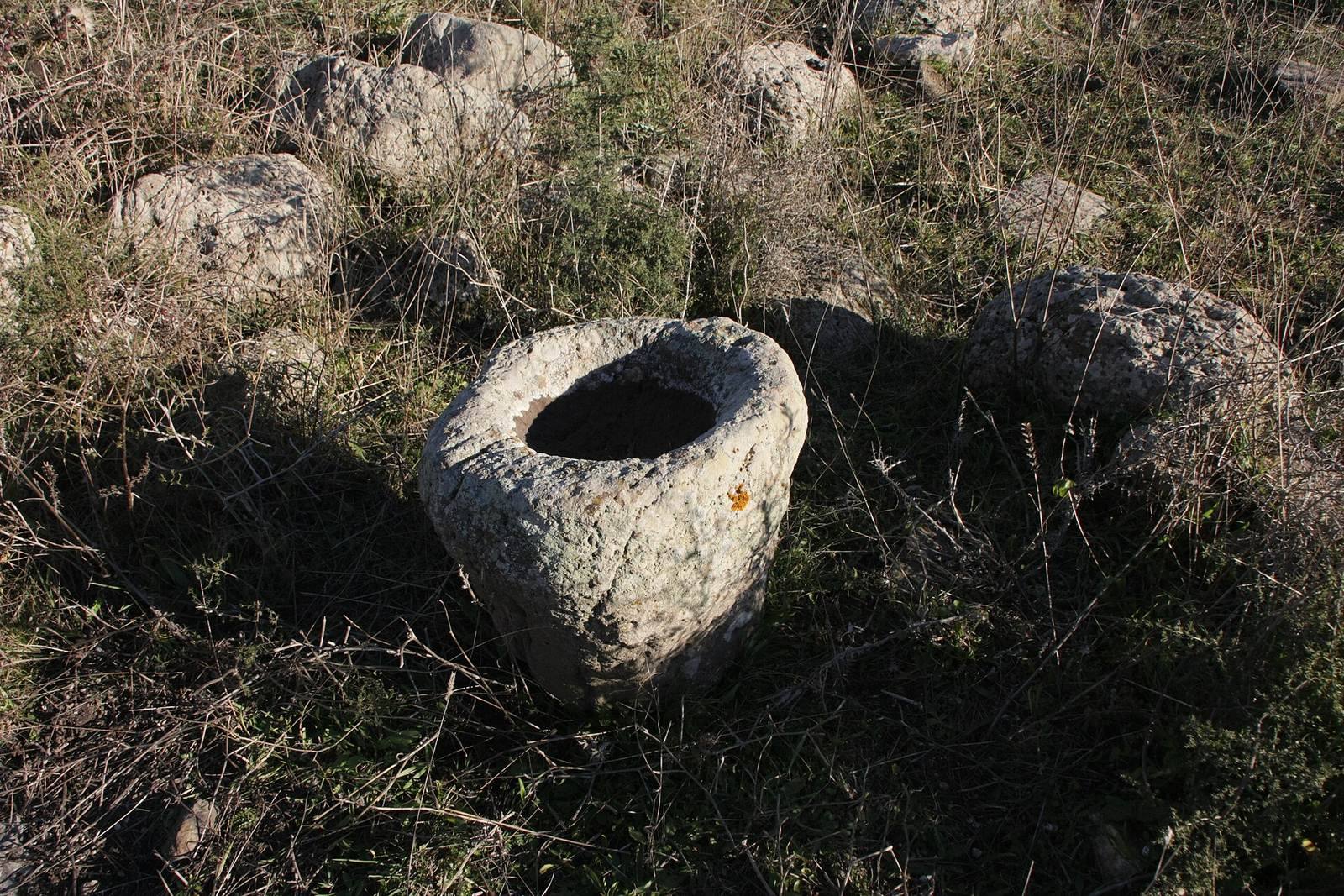
Basalt blocks still emerging from the ground were used as mills in the ancient city. Finds from Casmenae are held and displayed at the Paolo Orsi Regional Archaeological Museum in Syracuse.