Wilenstein Castle: A Medieval Double-Castle Complex in Germany
Site at a Glance
- Popularity
- Medium
- Country
- Germany
- Primary era
- Medieval
- Eras represented
- Medieval
- Civilizations
- Electoral Palatinate, Holy Roman Empire
- Site type
- Military
- Remains
- Castle
On this page8 sections
History
Wilenstein Castle is a medieval castle ruin in Trippstadt, Germany, dating to the 12th century. It developed into a divided complex held by different noble families. An older attribution placed its construction in 1152 under Frederick Barbarossa, a Hohenstaufen emperor, but that claim is now considered outdated.
Early records and feudal ownership
The castle’s first recorded mention comes in 1174, when Landolfo de Wilenstein served as legal advocate for Hornbach Abbey. Gerwin von Wilenstein held the office from 1207, followed by Eberhard von Wilenstein in 1237. The Counts of Leiningen were the castle’s feudal lords in 1247, while Otterberg monastery held rights to graze animals in the surrounding forest. The Wilenstein branch of the Wartenberg family died out in 1300.
Destruction, division, and Palatine control
A succession dispute in 1334 between Count Konrad of the Raugraf family and Count Gottfried of the Wildgraf family resulted in the castle’s destruction. It was later rebuilt. In 1347, the Electoral Palatinate, a territory of the Holy Roman Empire governed by an elector entitled to vote in imperial elections, granted half the castle each to the Flersheim family and a widowed countess of the Leiningen line from Falkenstein. The estate was divided between an Upper Castle held by the Falkenstein branch and a Lower Castle held by the Flersheim family. The neighbours disputed their holdings at first, then agreed to a truce after a year. In 1481, amid Leiningen inheritance disputes, the castle returned entirely to the Electoral Palatinate.
War, changing ownership, and restoration
During the Thirty Years’ War, the major European conflict of 1618–1648, the castle complex was destroyed in 1633–34 and was probably left uninhabited. In 1719, Baron Ludwig Anton von Hacke acquired the ruin and surrounding forest district. He lived at his residence in Trippstadt, about one kilometre to the east. The castle passed to France in 1792, became the property of Alsace in 1803, and was purchased by the Kingdom of Bavaria in 1865.
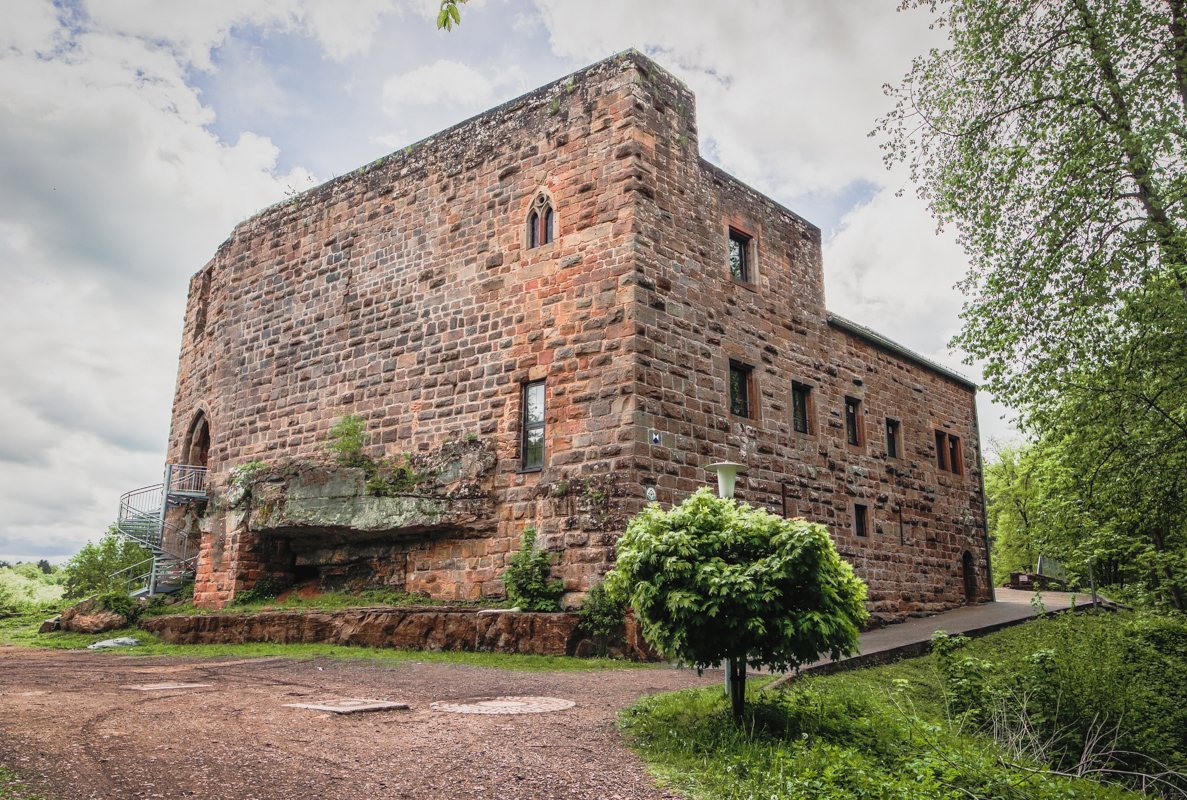
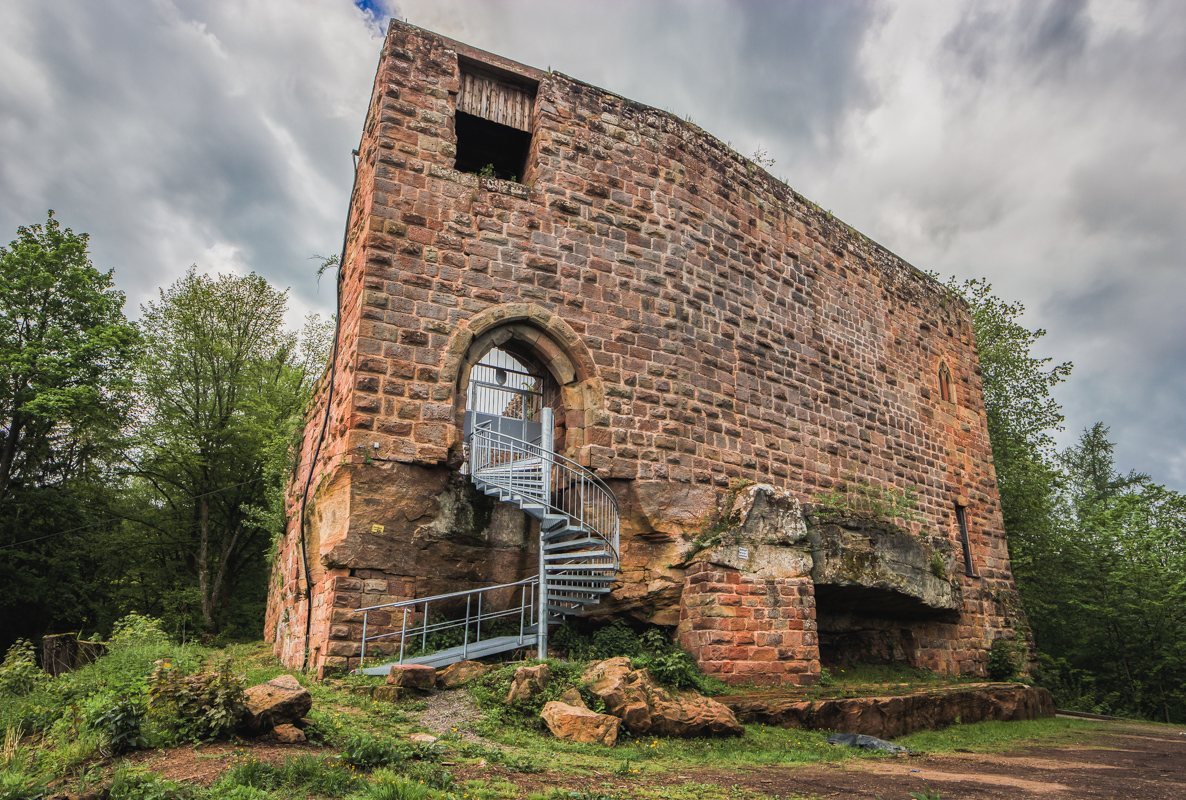
Part of the Upper Castle was restored in the early 1960s and converted into a residential school centre. A support association has operated the centre privately since 1962.
Remains
The divided castle site
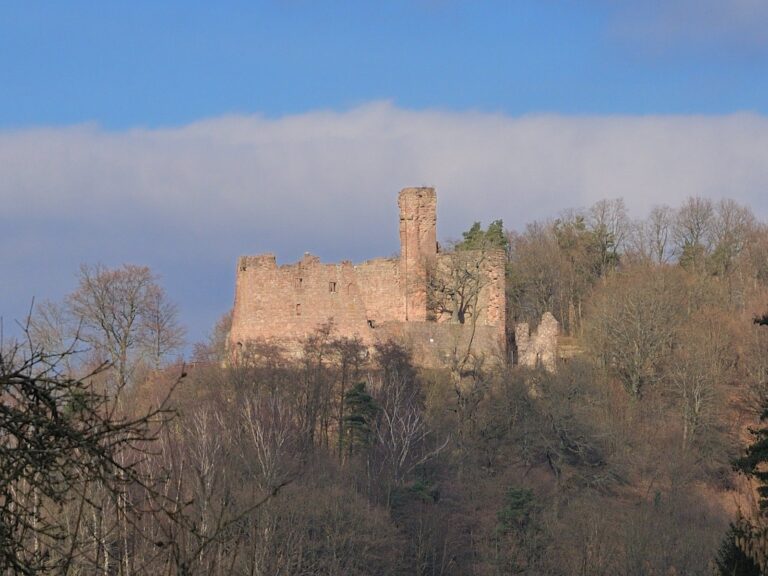
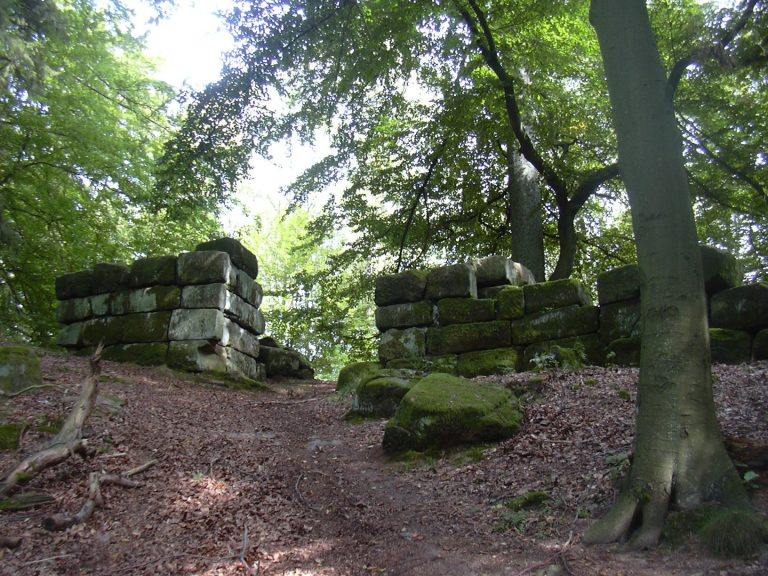
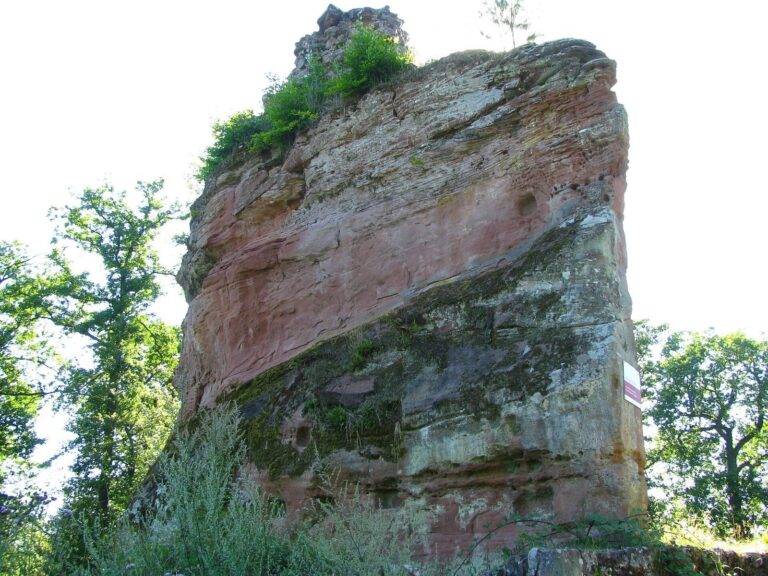
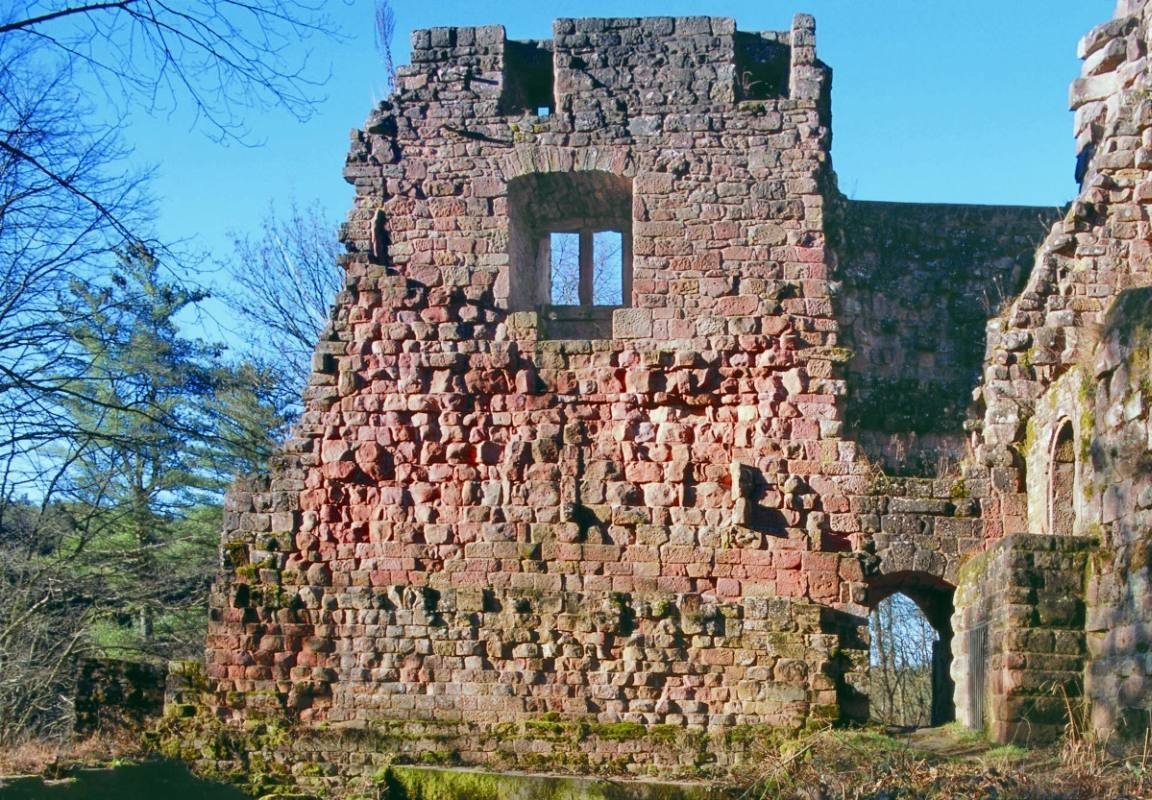
The ruin stands at 344 metres above sea level on a mountain spur in the northwestern Palatinate Forest, above the right side of the Karlstal valley of the Moosalbe. The complex is arranged in two sections, with the Upper Castle on the eastern side and the Lower Castle on the western side. The remains are chiefly walls, and most belong to the Upper Castle.
Upper Castle
Surviving features of the Upper Castle include a shield wall, gate, principal residential hall, pentagonal defensive tower, and defensive space associated with the walls. These features survive among the wall remains of the eastern section.
Lower Castle
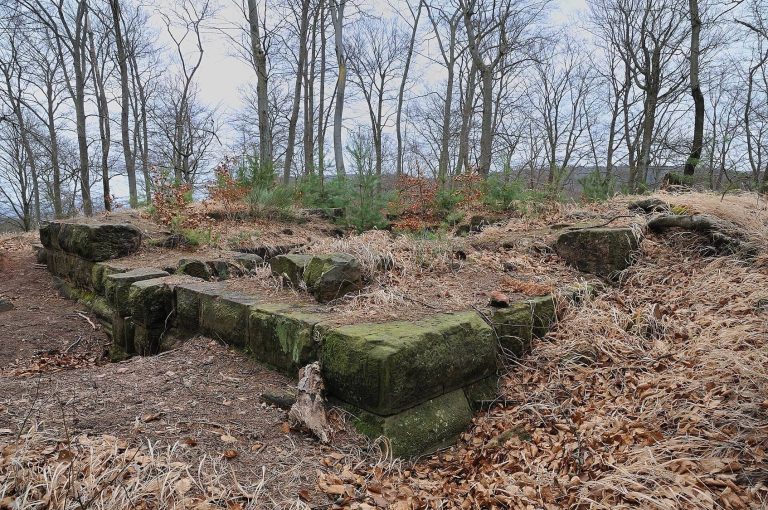
The Lower Castle was built in the mid-14th century by the Lords of Flersheim. Parts of its ruin survive directly beside the Upper Castle, forming the western section of the divided site.