Black Ladies Priory: A Benedictine Nunnery near Brewood
Site at a Glance
- Rating
- 5
- Popularity
- Very Low
- Country
- United Kingdom
- Primary era
- Early Modern
- Eras represented
- Early Modern
- Civilizations
- English
- Site type
- Domestic
- Remains
- Manor House
On this page12 sections
History
Black Ladies Priory was a Benedictine nunnery dedicated to St Mary near Brewood in the United Kingdom. Established in the mid-12th century within the manor of Brewood, it stood about 4 km west of the town, on the northern edge of Kiddemore Green. Benedictines followed the Rule of St Benedict. The priory’s founder is uncertain, though Roger de Clinton, bishop of Coventry and Lichfield, is a possibility because the manor belonged to the bishop and the house may have been founded on land he granted.
Foundation and endowments
A deed from the mid-12th century records Ralph Bassett granting land at Pattingham and Hardwick to the nuns. Their community was sometimes known as the Black Ladies or Black Nuns of Brewood. The name may have distinguished them from the nearby Augustinian White Ladies Priory, whose religious community followed the Rule of St Augustine, although black habits were also worn by Benedictines elsewhere. Medieval references to the “nuns of Brewood” can be ambiguous. The priory’s 14th-century seal called it the convent of St Mary of the Black Ladies, and a surviving fragment from 1538 refers to the Black Nuns at Brewood.
The house relied on modest holdings scattered across the area. In 1170, the nuns of Black Ladies and Blithbury jointly transferred land at Ridware to its manor’s lord in return for annual rent and confirmation of meadow rights. Property at Gailey that had belonged to Blithbury had passed to Black Ladies by 1189, when Henry II placed it under royal control. King John compensated the priory with the manor of Broome in 1200. Three years later, its prioress successfully defended the community’s right to present a priest to Broome church. The church’s vicar, who claimed it as a chapel of Clent, had disputed that right. The priory retained it thereafter.
During the 13th century, the nuns exchanged land in the manor of Brewood for a small enclosed holding near the priory, and traded their Pattingham land for cleared ground at Chillington. They also acquired land at Rudge through grants and exchanges, received a mill at Chetton in 1225, and gained holdings or rents at Broomhill, Brewood and Horsebrook. In 1275, the prioresses of Black Ladies and Blithbury recorded a land transaction together. Blithbury appears to have joined Black Ladies later in the century, and its lands became an important part of the priory’s income.
Royal support brought some relief, but the community remained poor. John granted alms to the nuns of Brewood and Blithbury in 1204. Henry III made grants to “the nuns of Brewood,” though not all can be assigned to one house. A separate grant in 1241 specifically gave the Black Nuns one mark to redeem a pledged chalice. In 1267, Henry III confirmed his father’s grant of Broome to the priory. A record of 1291 valued the Chetton mill at 16 shillings. That same year, Pope Nicholas IV offered an indulgence to people visiting the priory on four festivals celebrating Mary and on the church’s anniversary. In medieval Catholic teaching, an indulgence remitted temporal punishment for sin; such visitors could also bring offerings to the house.
Oversight and difficulties
A royal hunting incident brought the priory into a legal dispute. A stag escaped a hunt in Gailey Hay and drowned in the priory’s fishpond. John Whitmore had shot at it, while John Giffard of Chillington removed the carcass and claimed it, taking half and leaving the rest to the nuns. Giffard and Whitmore were imprisoned and fined. In 1286, the nuns were pardoned for their part in the affair because of their poverty.
The priory’s financial and religious discipline drew episcopal scrutiny. Around 1323, Bishop Roger Northburgh conducted a canonical visitation, a formal inspection of a religious house’s management and observance. He ordered the prioress and officeholders to provide accounts, dismissed the cellaress, who managed food and drink, and the estate manager, and temporarily stopped new admissions. He forbade the prioress to accept payments from prospective nuns and restricted pensions, allowances and other payments. He also required her to eat in the refectory and sleep in the dormitory, barred lay people from sleeping in the convent, and limited the nuns’ contact with outsiders and departures from the cloister. One nun was reprimanded for leaving it. A Franciscan friar was appointed as confessor.
In 1324, prioress Alice de Swynnerton and two others were accused of forcibly taking oxen from Clement of Wolverhampton at Horsebrook. The alleged value of the goods was later increased, but the accused did not answer the summons, and money held as security from Alice was forfeited. She resigned in 1332. The nuns also disputed with Brewood’s vicar over tithes on wool from other people’s animals when those animals grazed on priory land. A royal subsidy assessed at two shillings in 1327 and three shillings in 1333 reflected the community’s continuing financial pressures.
Later medieval community
The nuns retained some valuable rights and received occasional benefactions. In 1346, Edward III licensed the prioress and convent of Brewood to take the income of Rode church in Somerset, where they already had the right to present a priest. Thomas Swynnerton sought the licence, and Alice Swynnerton had formerly led Black Ladies, but it is uncertain which community was involved; there is no evidence that the transfer took effect. In 1394, prioress Petronilla acknowledged a gift of £100 from Thomas Gech to establish a chantry, an endowed foundation for prayers or services for the dead, for Thomas de Brompton and his forebears. It was the largest recorded gift to the priory.
Leadership was not always settled. Despite the nuns’ right to elect a prioress, bishops appointed one in 1442, 1452 and 1485 after extended vacancies. Margaret Chilterne, formerly a nun of Chester Priory, was appointed in 1442 and had resigned by 1452. Elizabeth Botery held office from 1452 until her death in 1485, when Margaret Cawardyn was appointed. Isabel Lawnder was prioress by 1521. A visitation that year found the priory in good order and without debts, although one nun reported that young girls slept in the nuns’ dormitory.
Dissolution and the Giffard estate
The priory’s 1535 accounts listed income from its house and demesne, meaning land retained for the estate’s own use, along with rents and other holdings. The recorded total from land and alms was £11 1s. 6d.; other records identify income from further estates, including Blithbury. Net income in 1537 was £17 2s. 11d. The 1535 Suppression of Religious Houses Act targeted houses with net annual incomes below £200, and Black Ladies fell below that threshold.
The community surrendered the priory on 16 October 1538. It comprised prioress Isabel Lawnder and three other nuns, as well as a chaplain and seven employees. Lawnder received an annual pension of £3 6s. 8d.; each of the other nuns was assigned half that amount. The pensions were confirmed in February 1539. Thomas Giffard of Stretton had been granted a lease of the house and farm, while Edward Littleton of Pillaton Hall had also been promised the property. In February 1539, Giffard bought the site, watermill, demesne lands, church, churchyard and steeple for £134 1s. 8d. The property was then assessed at an annual value of £7 9s. 1d.
Black Ladies became part of the Giffard family estate as Thomas Giffard succeeded to his father’s lands between 1556 and 1560. The family temporarily lost the property through sequestration, the seizure or administration of an estate for political reasons, during the Commonwealth and Protectorate because of its Royalist activities. From the early 18th century, some or all of the property was leased. It was sold in 1893 to Major Ernest Vaughan.
The Giffards remained Catholic after the English Reformation, the religious and political break with papal authority that established the Church of England. The family became a leading force in regional Catholic recusancy, protecting a community that included many tenants who refused to conform to the established church. A family chapel at Chillington served local Catholics. When it closed for building work in the 18th century, worship moved to the Giffard chapel at Black Ladies and continued there until 1844. A Catholic church dedicated to St Mary was dedicated at Brewood in June that year. Black Ladies residence is listed at Grade II*, a category for particularly important buildings of more than special interest; its associated former stables and its garden walls and gate piers are also identified as historic structures.
Remains
House, chapel and associated buildings
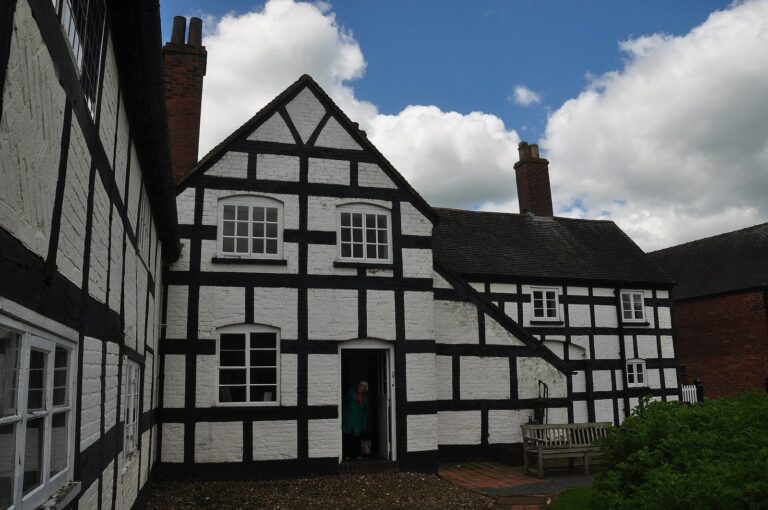
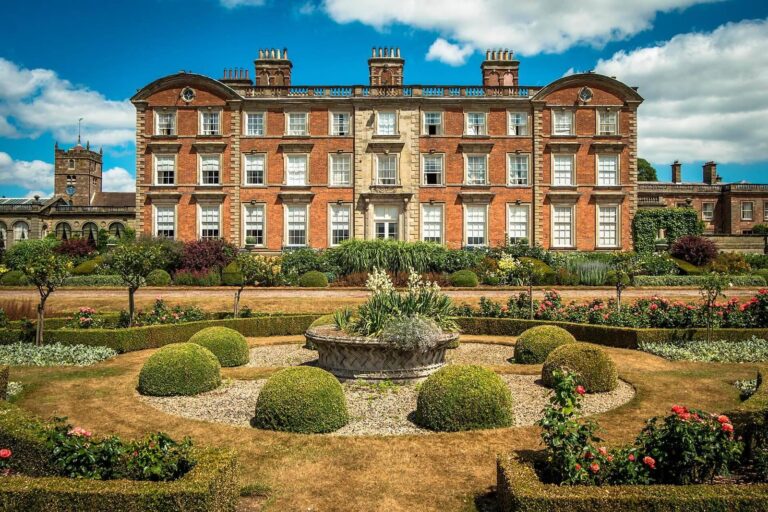
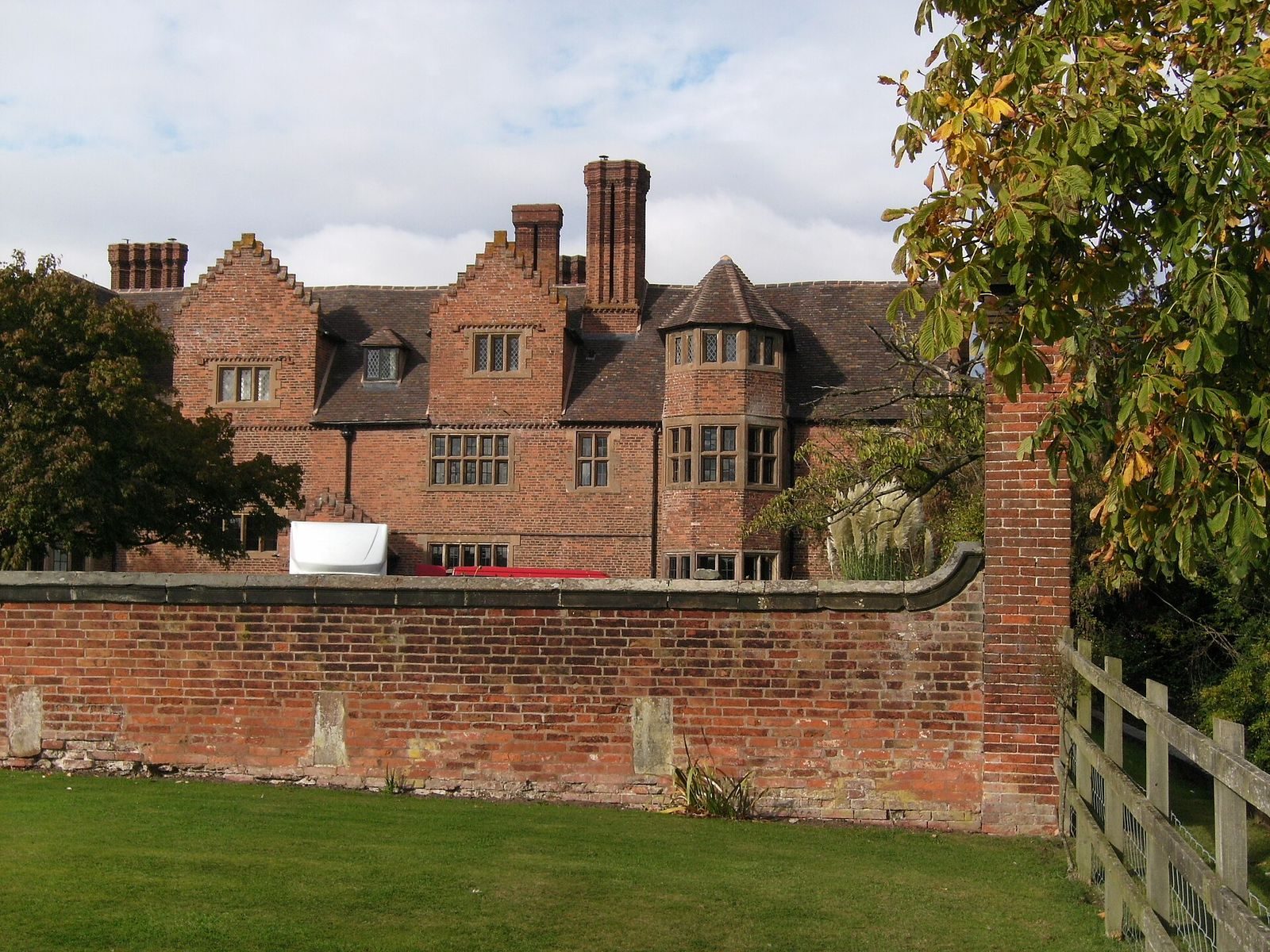
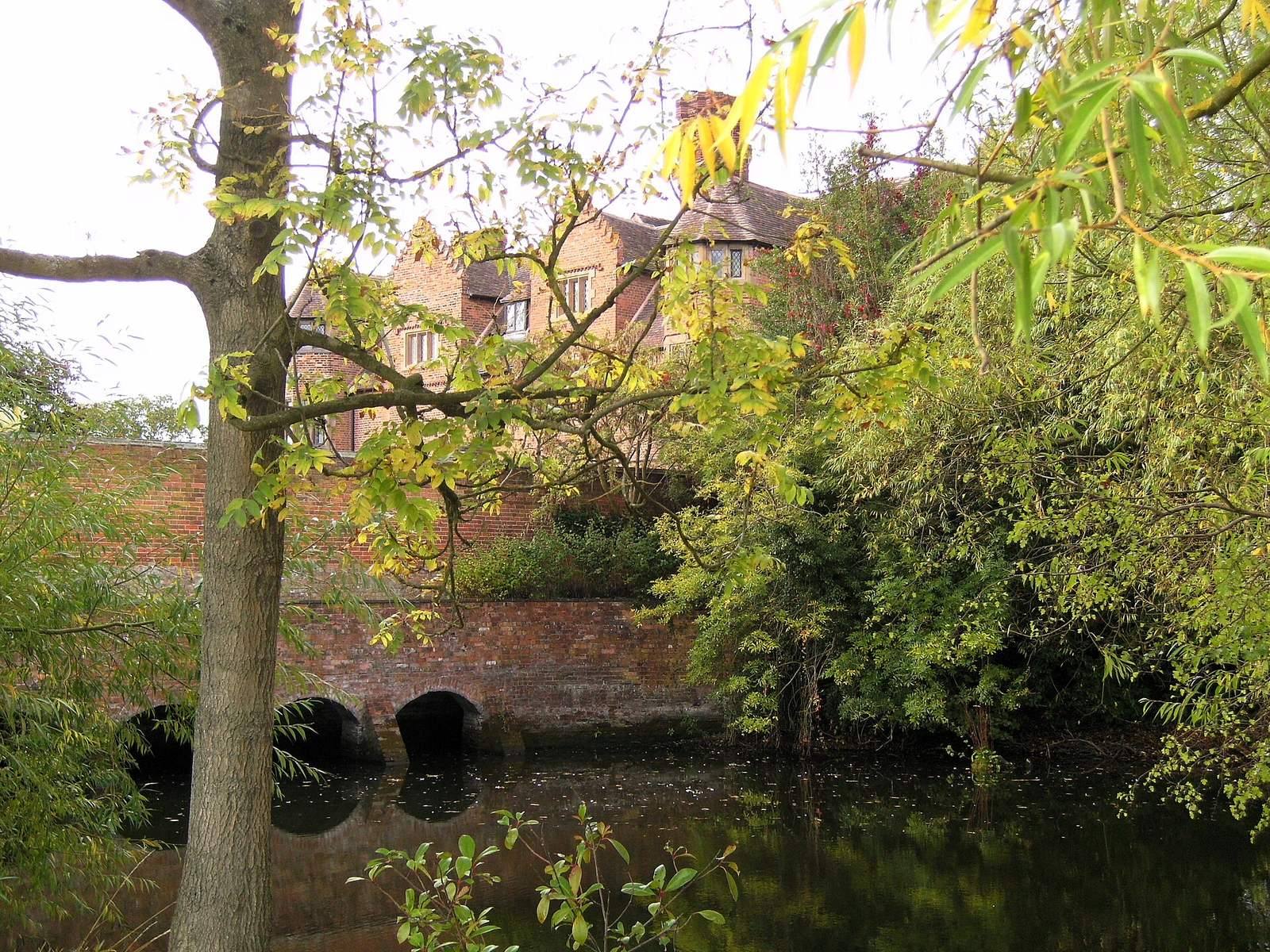
The present site is centred on a large residence built by the Giffard family after the priory’s dissolution. The house is dated to the late 16th or early 17th century and combines Tudor and Jacobean styles; it was altered in the 20th century. Service and agricultural buildings formed part of the associated estate, while the priory’s fishpond and the recorded church and churchyard relate to the earlier religious house.
Black Ladies house
The present house is the principal building of the site. Its post-dissolution date distinguishes it from the medieval priory, and the available evidence does not establish how much, if any, convent masonry it incorporates. The surrounding historic garden walls stand to its east, north and south, with gate piers marking parts of the grounds.
Former stables and pond
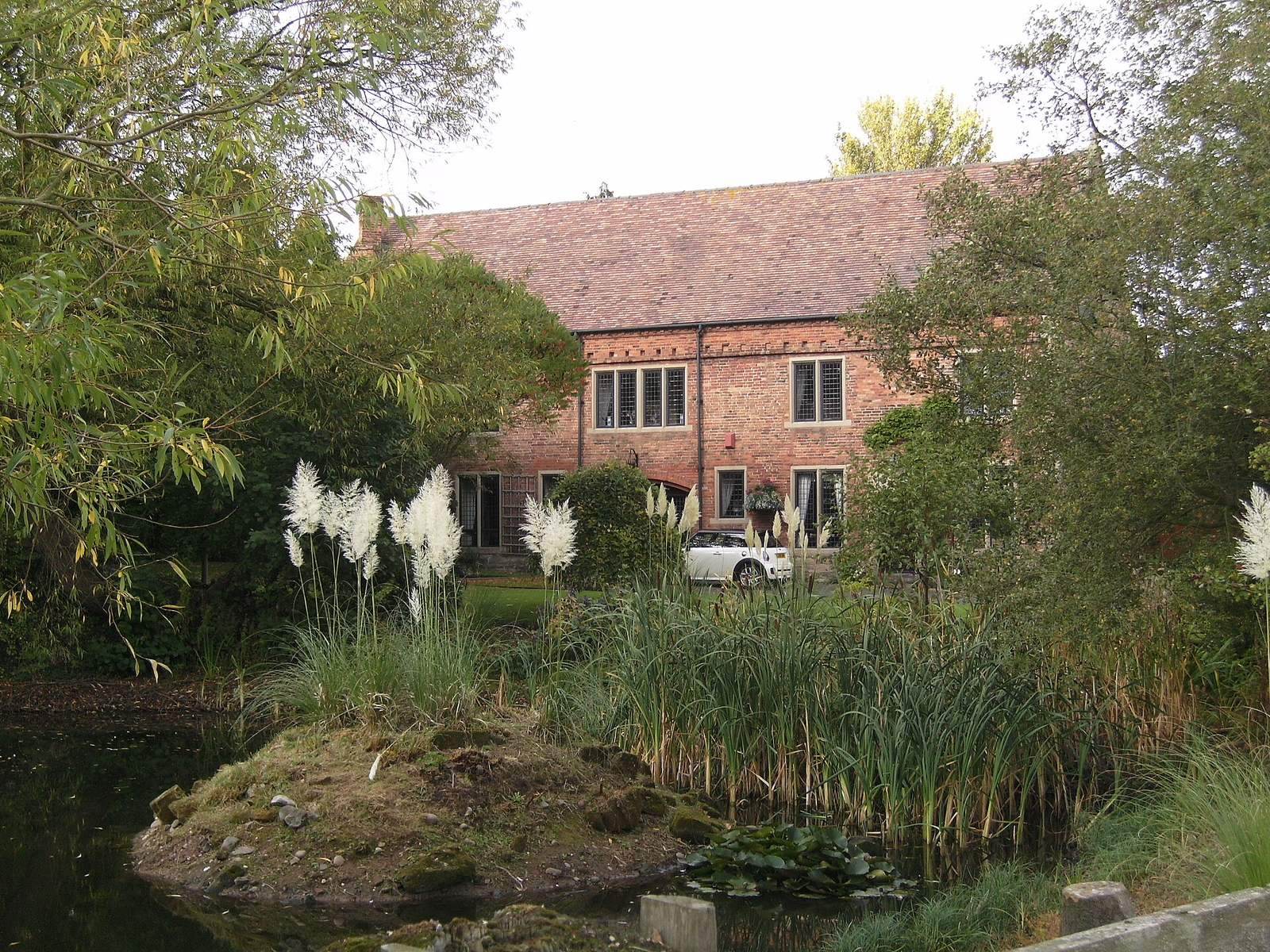
The house had a group of service and agricultural buildings. Its former stables are now a separate house known as Tudor Barn. The priory pond lies in front of this building. A fishpond is also associated with the medieval priory and was the place where a stag from a royal hunt drowned.
Family chapel
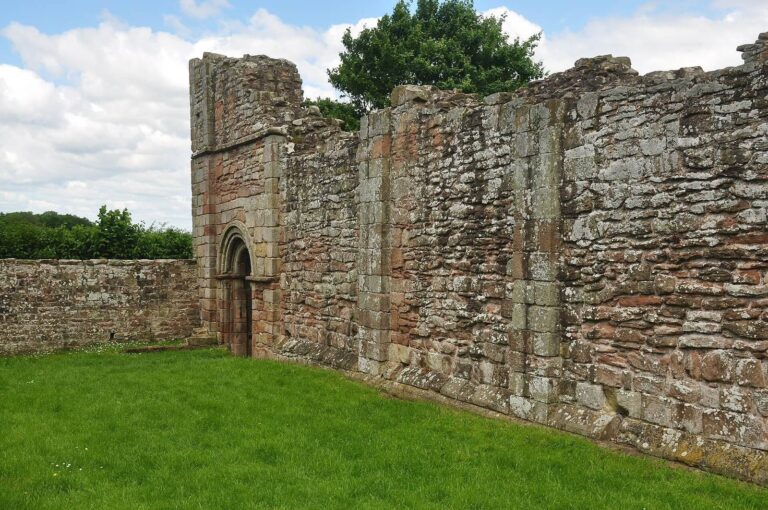
A chapel stands north of the house and was linked to it by a passageway. In 1846, a witness judged the chapel to be older than the main house and suggested that its masonry had come from the convent. This proposed reuse remains uncertain.
Priory church and dissolution inventory
At the dissolution, the priory’s church had a tower containing three bells, and the property included a churchyard and steeple. The inventory also listed a silver chalice, three spoons, a horse, a wagon and a dung cart, along with furnishings and fittings from the brewery, cheese loft and other buildings. These goods were sold at auction for a recorded total of £7 6s. 1d.
Madonna and Child
A Madonna and Child image now in Brewood’s Catholic church is thought more likely to have come from the Giffard family chapel at Black Ladies than from the medieval priory. Its Baroque style is characteristic of the early to mid-17th century. A tradition links a wound on the image’s leg to a sword blow during a search of White Ladies Priory by Parliamentary soldiers while Charles II was escaping. The story held that the wound continually wept and that the liquid was used as a cure.