Bayburt Castle: A Historic Fortress Overlooking Bayburt

Site at a Glance
- Rating
- 4.3
- Popularity
- Low
- Country
- Turkey
- Primary era
- Medieval
- Eras represented
- Medieval
- Civilizations
- Byzantine, Seljuk
- Site type
- Military
- Remains
- Castle
On this page13 sections
History
Bayburt Castle is a historic fortress in Bayburt, Türkiye, built and enlarged by successive powers whose original foundation date and builders remain unknown. Standing above the city, it is known to have existed during the Bagratid period, from 885 to 1044, and its beginnings may reach further back, possibly before the Common Era. The castle is associated with Ottoman architectural style, although its fabric reflects many earlier phases of construction and repair.
Byzantine and Armenian Periods
Before Turkish rule, Byzantine and Armenian authorities held Bayburt Castle. The fortress was strengthened during the reign of Justinian I, the Byzantine emperor who ruled from 527 to 565. Its position on a steep hill beside the upper Çoruh River gave it control over the settlement below and helped make it a defensive stronghold in northeastern Anatolia.
Seljuk Conquest and Reconstruction
The Great Seljuks, a Turkic-Islamic dynasty that established extensive rule in the Middle East and Anatolia, captured the castle in 1054–1055. Bayburt consequently became one of the first areas in Anatolia conquered and settled by the Turks. The fortress later passed to the Saltukids and, for a time, to the Danishmendids, two regional Turkic dynasties that controlled parts of Anatolia.
Inscriptions connect the castle’s most extensive repair and strengthening with the Seljuk period. During the rule of Tughrul Shah, a Seljuk prince who governed Erzurum, the fortress was virtually rebuilt as a defensive position, particularly against attacks from the Empire of Trebizond, a Byzantine successor state on the southern Black Sea coast. Ziyâeddin Lü’lü, described as Tughrul Shah’s army commander, palace servant, and architect, repaired and reinforced the walls and built some of the bastions.
Turkmen and Ottoman Rule
Bayburt Castle was later held by the Akkoyunlu, a Turkmen ruling confederation that preceded Ottoman control in parts of eastern Anatolia. It passed to the Ottoman Empire in 1514. A record from 1520 describes it as an important fortified position protecting Bayburt and the transit route between Trabzon and Iran. The garrison consisted of 397 guards and held cannons, rifles, and other military materials.
Suleiman the Magnificent ordered a major restoration in 1541. The Ottoman sultan ruled from 1520 to 1566, and the castle gained increased importance during his campaign in Iran. A further repair took place during the reign of Murad III, who ruled from 1574 to 1595. During the Ottoman period, the fortress was also officially known as Çinimaçin Castle, a name that appears in the Book of Dede Korkut epic.
Destruction and Archaeological Work
The castle and the settlement within its fortified enclosure were occupied and destroyed at different times. Russian forces largely destroyed both during the Russo-Turkish War of 1828–1829. The site then remained neglected until the 1980s, when repairs were made to sections threatened with collapse. These interventions stabilized parts of the fortress, while the internal structures remained in their post-destruction condition. Archaeological work and restoration began again in 2017.
Remains
Fortifications and Gates
Walls and Bastions
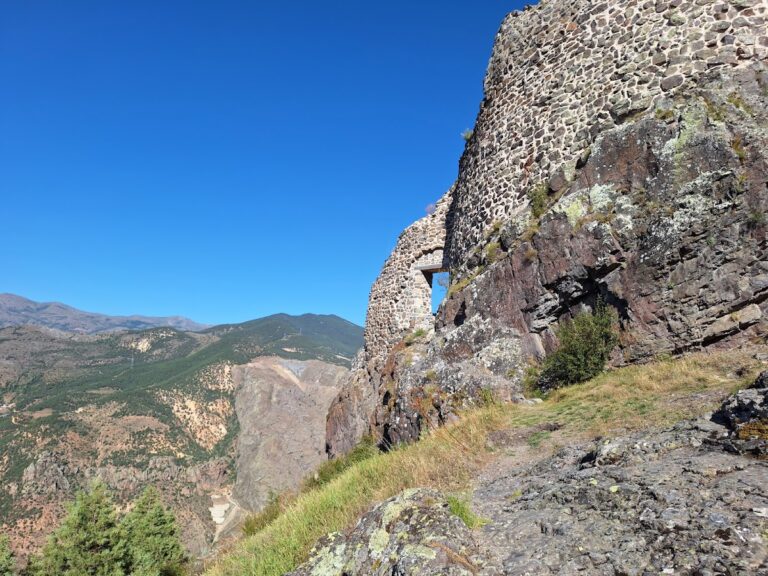
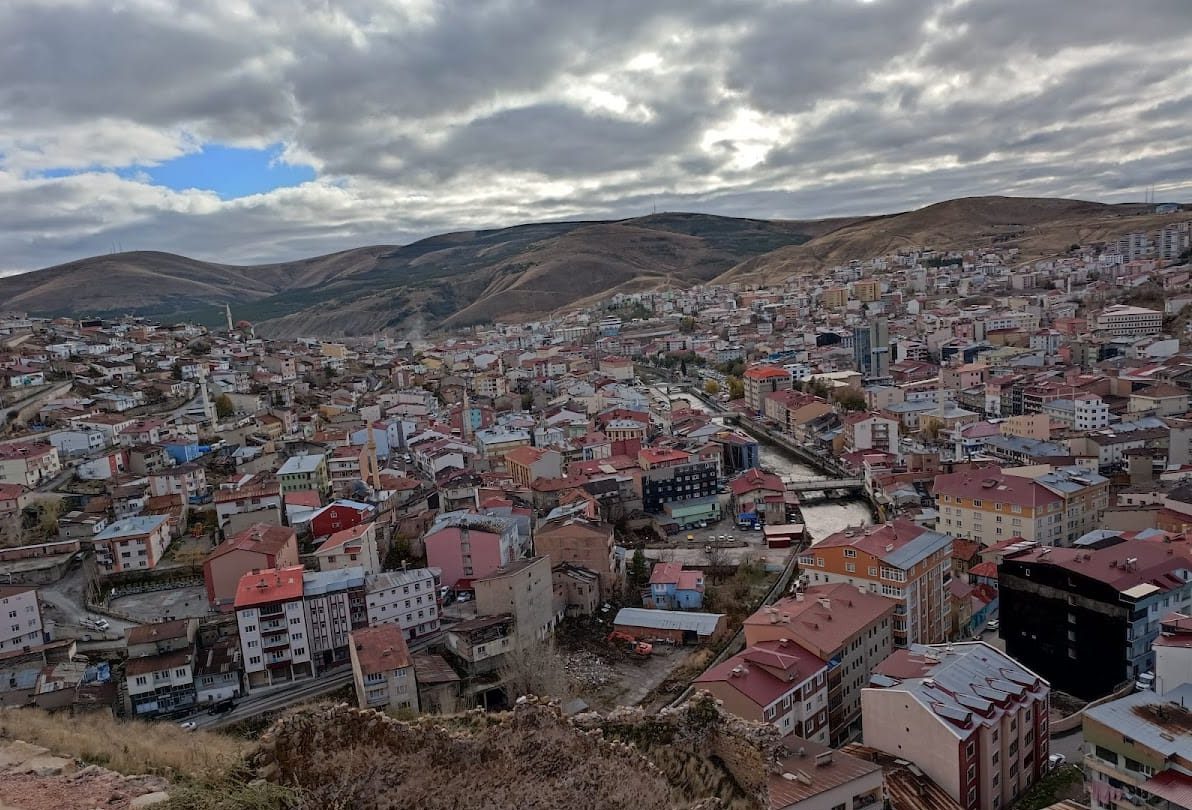
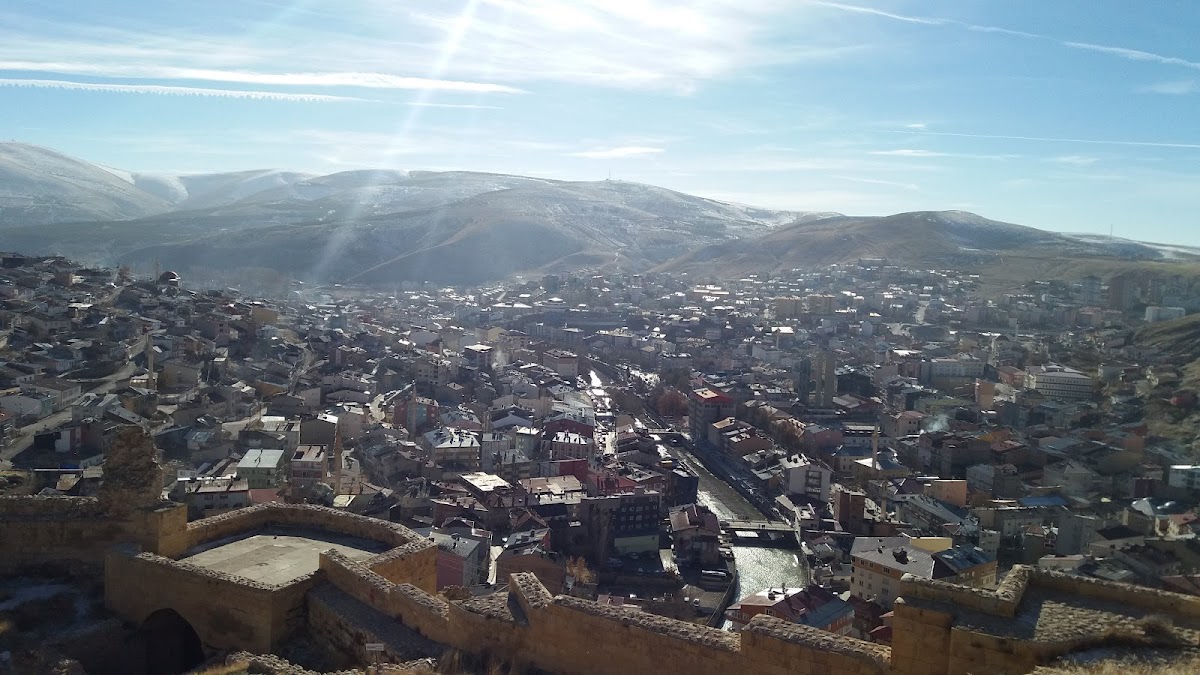
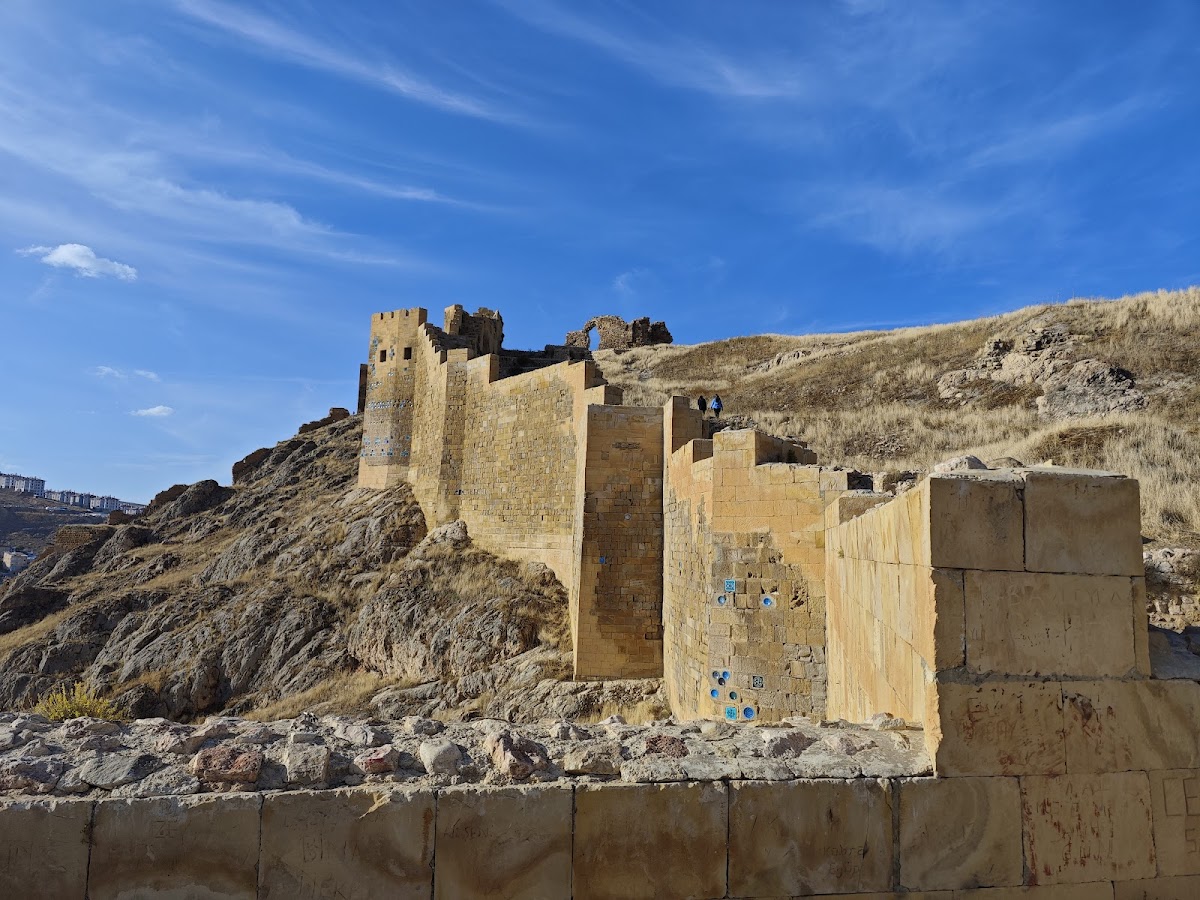
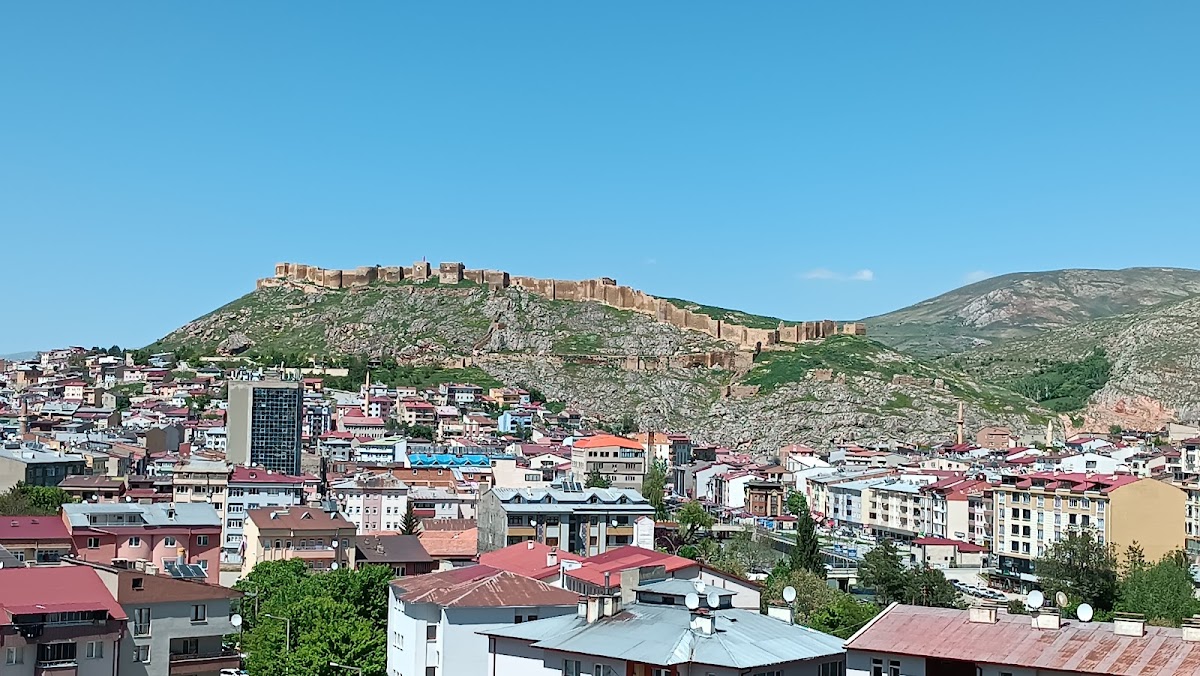
Bayburt Castle occupies a steep, rocky, peninsula-like hill north of Bayburt, on the bank of the Çoruh River in its upper basin. The city lies at approximately 1,150 metres above sea level below the fortress. Two lines of walls enclose the site. Together, the walls extend for more than 2 kilometres and reach approximately 30 metres in height, with roughly 200 metres between the inner and outer lines.
The walls rise directly from steep rock and are supported by retaining walls. Semicircular, quadrangular, and triangular bastions strengthen their corners and other points. These varied forms belong to the castle’s successive defensive alterations, particularly the substantial Seljuk rebuilding and later Ottoman repairs.
Eastern and Western Gates
Two large gates stood on the eastern and western sides of the fortress. The eastern entrance, called Demirkapı or “Iron Gate,” had three layers of iron. The western entrance, known as Nöbethane Kapısı or “Watch Station Gate,” led toward Bayburt.
Citadel and Associated Remains
Settlement and Mosque
The fortified interior once contained a settled neighborhood. After visiting Bayburt in 1647, Evliya Çelebi, a seventeenth-century Ottoman traveler and writer, described 300 houses and a mosque within the citadel. His account places domestic and religious buildings inside the defensive enclosure during the Ottoman period.
Inscription and Bastion
A bastion facing the city was built by Hatice Sultan, Tughrul Shah’s wife. It formerly carried a single-line inscription in Naskh, a widely used Arabic calligraphic script for manuscripts and formal inscriptions. The inscription remained in place until 1936 and has since been lost.
Churches and Cave
Remains of churches dating from the fourteenth to the eighteenth century lie east of the castle. A cave is located on the western side. Together with the fortifications and the recorded buildings within the citadel, these features reflect the site’s long sequence of military, residential, and religious use.