Asmild Church: A Medieval Parish and Former Convent Church in Denmark
Site at a Glance
- Popularity
- Low
- Country
- Denmark
- Primary era
- Medieval
- Eras represented
- Medieval, Early Modern, Modern
- Civilizations
- Danish
- Site type
- Religious
- Remains
- Church
On this page17 sections
History
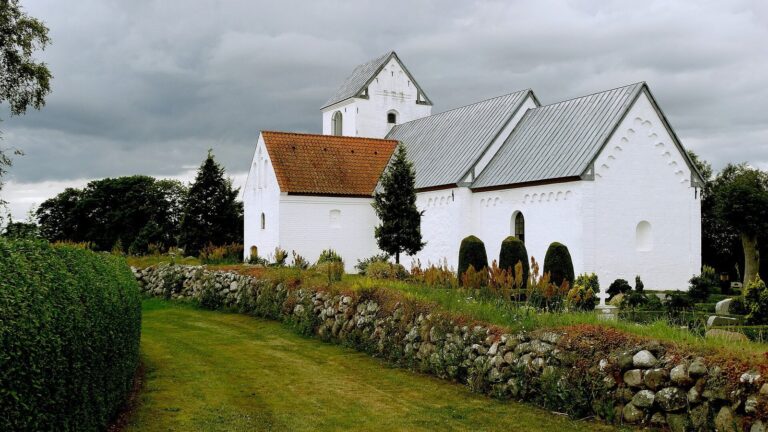
Asmild Church is an early medieval church in Viborg, Denmark, built around 1090, though it may be older. It was originally called St Margaret’s Church and was also known as Asmild Monastery Church.
The early church and Bishop Eskil
On 20 October 1132, Bishop Eskil of Viborg, a senior Christian cleric responsible for a diocese, was killed inside the church before the altar by men who had entered it. A political motive is possible. Denmark was unsettled as Erik II Emune, a claimant to the throne, rebelled against King Niels; Erik later became king. The murder was never solved, and Eskil’s role in the events remained unknown.
From around 1170, the church belonged to a convent of Augustinian nuns, members of a Christian religious order that follows the Rule of Saint Augustine.
Reformation and changing ownership
At the Reformation, the 16th-century movement that established Protestant churches across much of northern Europe, Asmild Church became the parish church, and the church and monastery became royal property. For about 150 years, the monastery was most often granted as a fief, a property grant held for a period under specified obligations, to judges of Viborg Landsting, a regional court.
The church and monastery became private property in 1683. People living at the monastery influenced the church’s interior over time. The Braem family owned the monastery in the early 18th century, while the Bruun family owned the monastery and church through most of the 19th century.
Twentieth-century changes
Fire destroyed the last remains of the monastery buildings in 1907. The church passed to its congregation in 1916, and a porch was added in 1924. In 1950, the Asmild Stone was found in the foundations of the demolished northern tower.
Remains
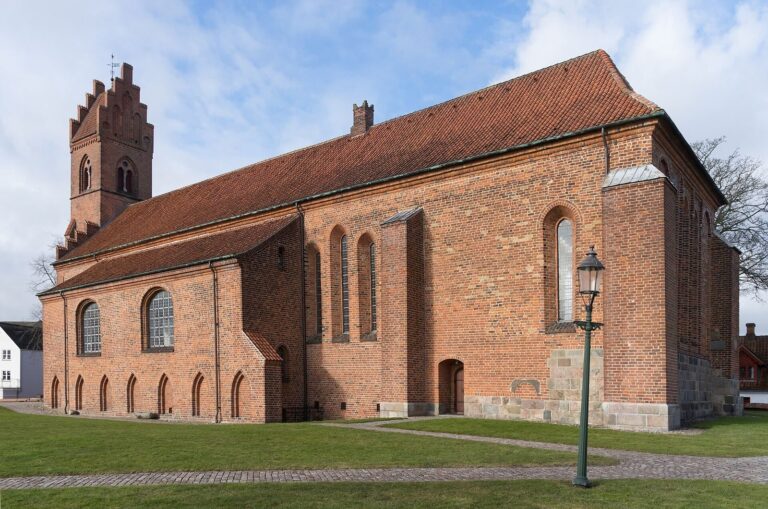
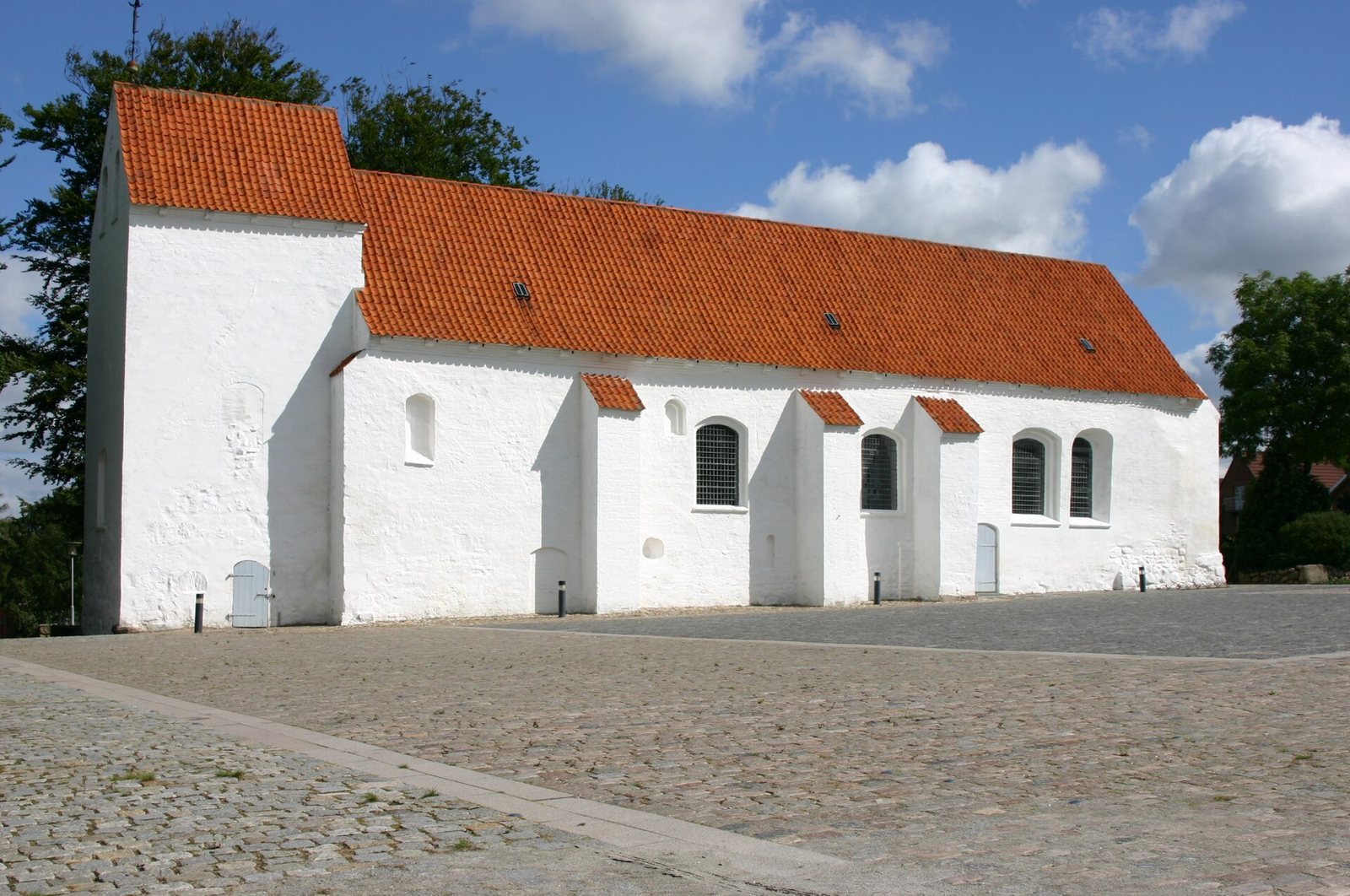
Asmild Church stands on the eastern side of Viborg Søndersø, opposite Viborg Cathedral. The surviving stone-and-brick building preserves traces of a larger original plan, reshaped by the removal of aisles and towers.
Church structure
Original plan and surviving walls
The original church had a long nave, the main body of the church, flanked by two side aisles. An arcade, or row of arches, connected the spaces. The plan also included two towers at the western end and rounded projections at both the eastern and western ends. The southern aisle and both original towers were demolished, and a replacement tower was built; the northern aisle was also demolished. The arches were later bricked up, but their outlines remain visible in the north and south walls.
Masonry
The walls combine granite ashlar, stone cut into squared blocks, spring limestone, a mineral deposit formed by spring water, and tuff, rock formed from volcanic ash. The use of spring limestone and tuff is one reason the church may predate its approximate construction date. Later additions use monk bricks, large bricks used in medieval construction, alongside ordinary bricks.
Porch and Asmild Stone
The porch contains the Asmild Stone, a runestone, or stone bearing a runic inscription. Its text identifies Thorgund, daughter of Thorgot Thjodulfsson, as the person who raised the stone for her husband, Bose.
Interior furnishings and artworks
Furnishings and church fittings
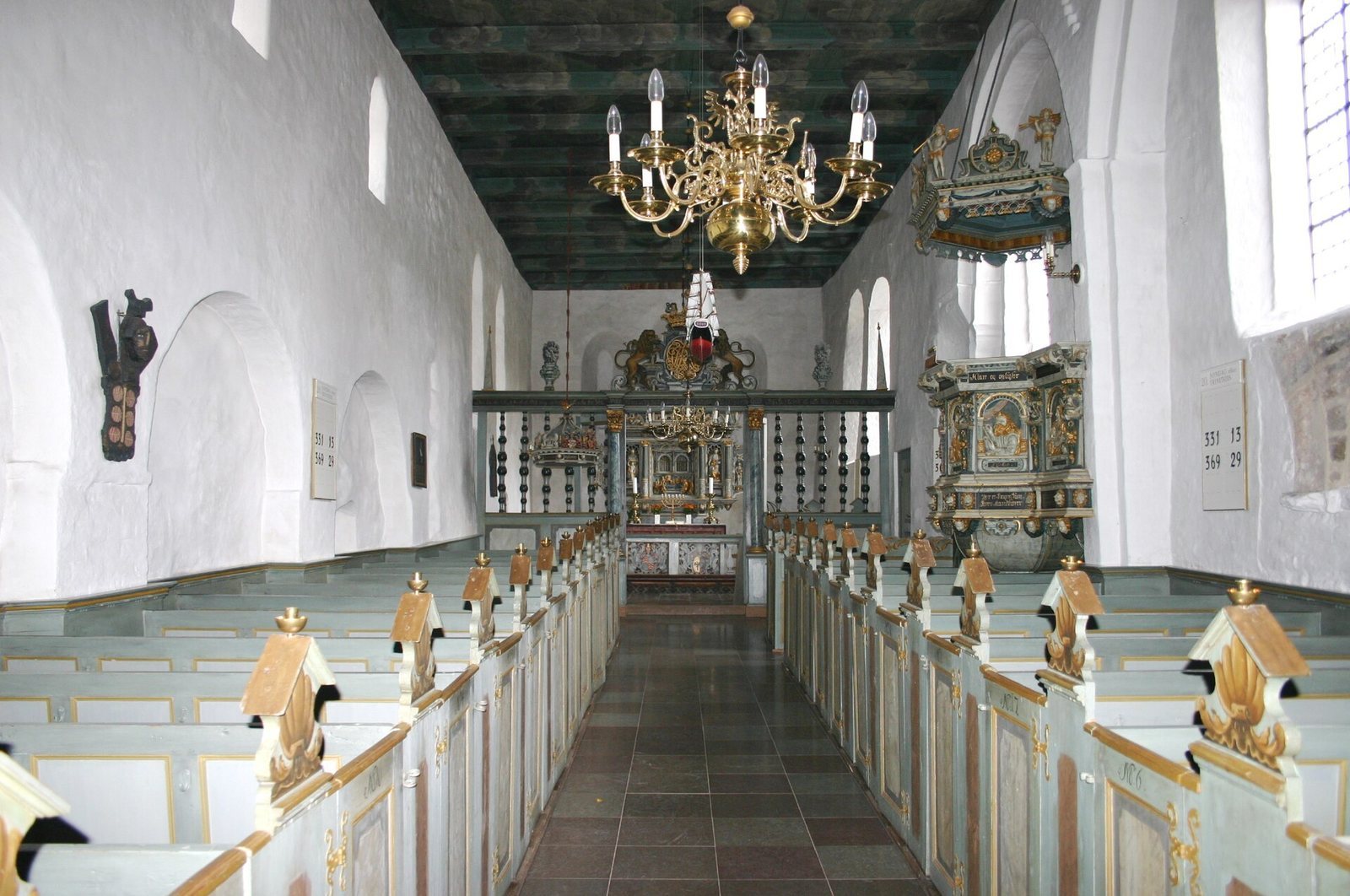
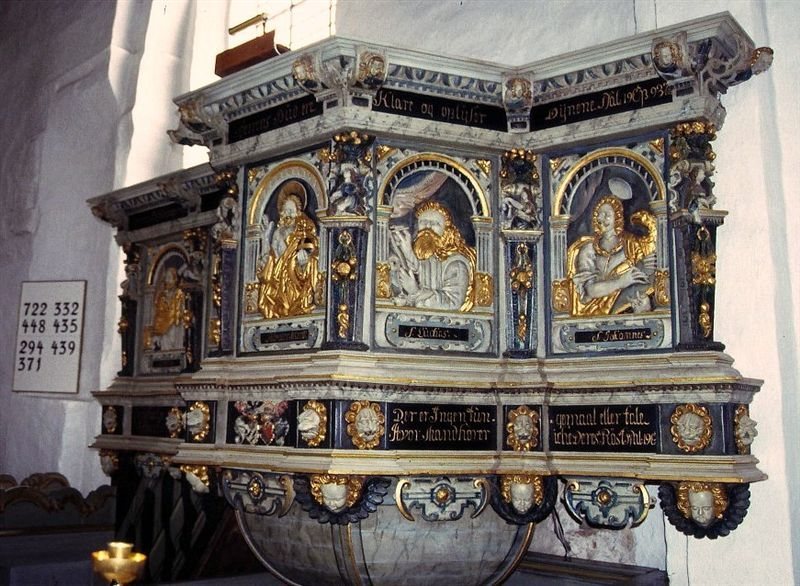
The furnishings are Baroque, an ornate style of art and design. The pews have carved ends, and the pulpit and altarpiece feature carved woodwork. A granite baptismal font is Romanesque, a medieval European architectural style, and has a simple interlaced pattern. A chancel screen separates the chancel, the area around the altar, from the nave. The pulpit hangs on the south wall and may once have stood where the screen is now. Behind the screen, a parish clerk’s chair probably dates from the Reformation.
Paintings and wall works
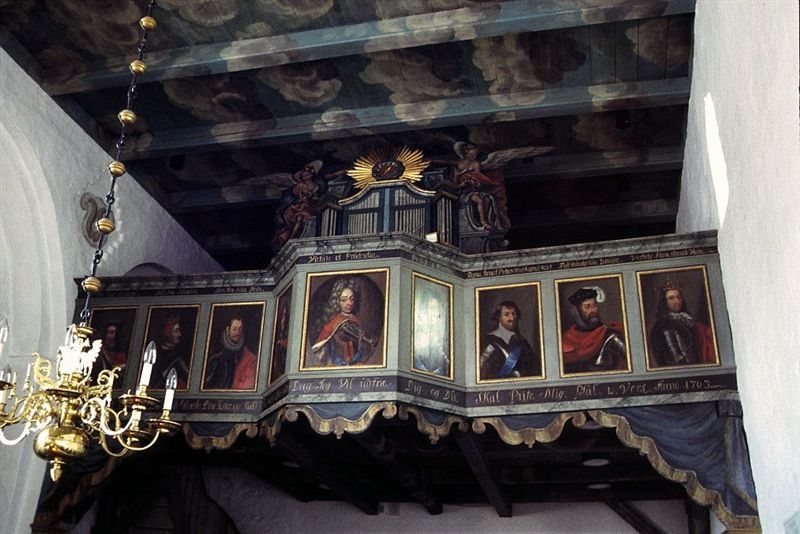
Paintings of nine kings from the House of Oldenburg, a royal house whose members ruled Denmark for centuries, decorate the front of the organ loft. Local painter Jens Thrane made them in 1703. A small oil painting on the north wall is believed to portray Hans Tausen, a leading Danish Protestant reformer, as a young man. The same wall holds Niels Helledie’s Bird Crucifix, given by Viborg’s financial institutions for the church’s 900th anniversary in 1990.
Tower room
The tower room contains a small exhibition with models showing the church through different periods. It once served as a family chapel for the Braem family, whose coffins were moved to a burial chamber beneath the room.
Churchyard and grounds
Bruun family burial ground
The churchyard contains the Bruun family’s burial ground, Denmark’s largest family burial ground. It remains in use.
Herb garden
Below the church, toward Viborg Søndersø, a garden has four sections of medicinal and culinary herbs. They represent herbs grown at monasteries in the 12th, 13th, 14th and 15th centuries. Established in 1998, the garden was donated by the Danish Nursery Owners’ Association for its centenary.
Bishop Gunner sculpture
A stylized sculpture by Erik Heide stands on the church’s south side. Unveiled on 22 June 2000, it depicts Bishop Gunner, who led the Diocese of Viborg from 1222 to 1251. His bishop’s residence stood a few hundred metres east of the church.