Aruchavank: A Seventh-Century Armenian Apostolic Church in Armenia


Site at a Glance
- Rating
- 4.8
- Popularity
- Very Low
- Country
- Armenia
- Primary era
- Medieval
- Eras represented
- Medieval
- Civilizations
- Armenian
- Site type
- Religious
- Remains
- Church
On this page6 sections
History
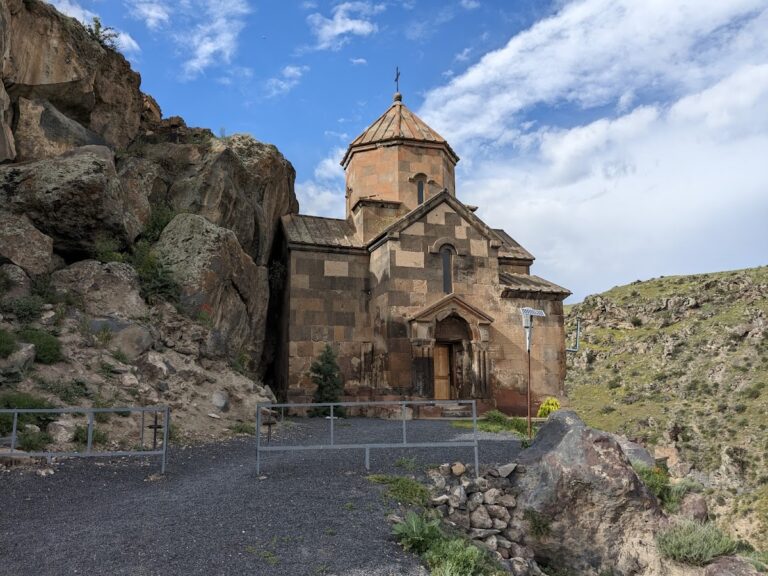
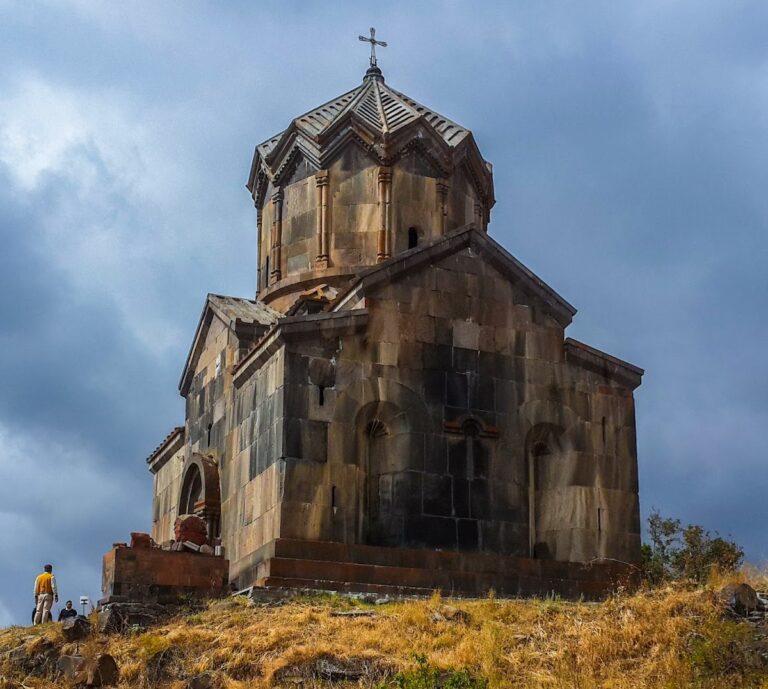
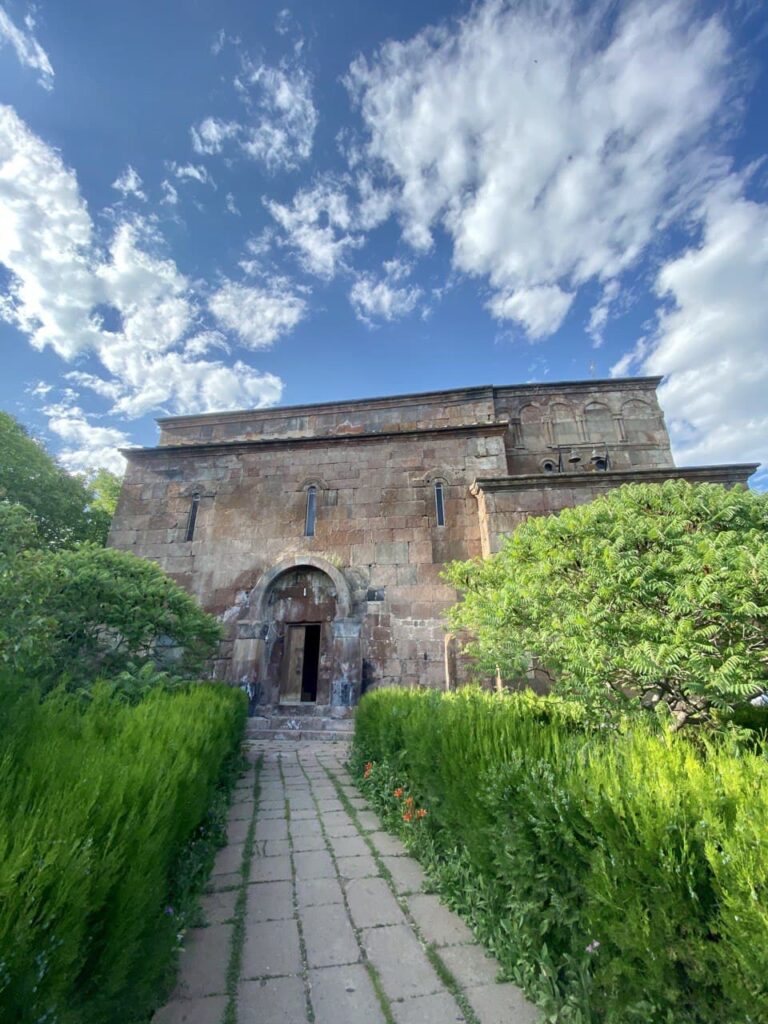
Aruchavank, also known as the Cathedral of Aruch or Surb Grigor, is a seventh-century Armenian Apostolic church in Armenia, located at Aruch in Aragatsotn Province. It was commissioned by Prince Grigor Mamikonian, a member of a major Armenian noble family, and his wife Heghine during the 660s. The church is regarded as one of the most important and largest Armenian churches of the medieval period.
Foundation and dating
Wall inscriptions and medieval historical writings connect the church and its adjoining residential palace with a building campaign between 661 and 682. The precise completion date remains uncertain. An inscription refers to the reign of Byzantine Emperor Constantine III, who was associated with the year 641, although this may reflect confusion with Constans II, whose reign lasted from 641 to 668.
Later history and restoration
Aruch became a citadel during the later Middle Ages. Aruchavank was extensively damaged by earthquakes and may also have suffered damage when it was used as a fortress during the sixteenth and seventeenth centuries. The church was restored between 1946 and 1948, while its adjoining palace complex was excavated in campaigns conducted from 1947 to 1952.
Aruchavank is a protected cultural monument in Armenia. It no longer functions as an active church, and the main structure survives in a partly ruined state.
Remains
The church stands on a rocky plateau at the western foot of Mount Aragats. Its Armenian architectural design combines a domed hall, a church form in which a central dome rises over a hall-like interior, with a single-nave basilica, which has one principal longitudinal interior space. The church originally had one dome, but the supporting drum and the cupola, or domed upper covering, have collapsed.
The church
Frescoes once covered parts of the interior and included scenes of the Ascension, though most have nearly disappeared. In the apse vault, Christ is shown at approximately 7 metres high holding a parchment scroll in his left hand. The name Stepanos, identified as the painter, is inscribed beneath the pedestal.
The palace complex
A residential palace associated with Prince Grigor Mamikonian stood on the south side of the church. Excavations revealed two separate buildings. The western building is colonnaded, with columns, bases, and capitals whose plan and architectural details resemble those of the catholicosal residence at Dvin, the seat and institutional center of a catholicos, a senior bishop in certain ancient Christian churches. The second building lies to its east.