Arshakid Mausoleum: A Royal Burial Complex in Armenia
Site at a Glance
- Rating
- 4.6
- Popularity
- Medium
- Country
- Armenia
- Primary era
- Classical
- Eras represented
- Classical
- Civilizations
- Armenian
- Site type
- Burial
- Remains
- Tomb
On this page11 sections
History
The Arshakid Mausoleum is a mid-to-late fourth-century Armenian royal burial complex in Aghtsk, Armenia. It was built to receive the remains of Arshakid, or Arsacid, kings after their earlier tombs were violated during a Persian occupation.
Persian seizure and royal recovery
The fifth-century Armenian historian Pavstos Buzand recounts in Epic Histories that Shapur II, the Sasanian king of Persia, found the tombs and treasures of Armenian kings after retaking Armenia and occupying Ani-Kamakh. Shapur ordered the royal remains removed, destroying the ancestral tombs. The tomb of King Sanatruk resisted because its massive, ingenious construction could not be overcome.
Persian forces carried the bones and treasures toward Persia. They believed that burying the kings’ remains in their own land would bring them the rulers’ glory, fortune, and strength. Shapur also sought to weaken Armenian morale. In the mid-fourth century, Vassak Mamikonian, Armenia’s sparapet (senior military commander), assembled about 60,000 troops and defeated the Persians in Ayrarat. Campaigning under King Arshak of Armenia, Vassak recovered the royal remains and treasures, then brought the remains to Dzorap, identified with modern Aghtsk, for reburial in a newly built mausoleum.
Burial at Dzorap and later history
The royal tombs at Dzorap remained in use until the early fifth century, when the Arshakid dynasty ended. A church was built beside the complex in the late fourth or early fifth century. The complex is associated with the Armenian Apostolic Church.
Earthquakes and invasions later prompted another transfer of the royal remains to the safer location of Vagharshapat, also known as Echmiadzin. In his History of Armenia, Movses Khorenatsi recounts this relocation. The church underwent partial reconstruction in the nineteenth century.
Remains
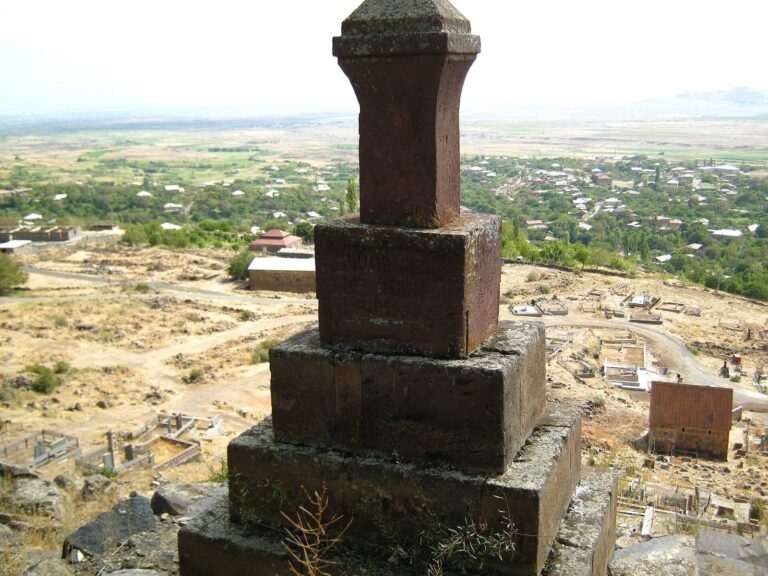
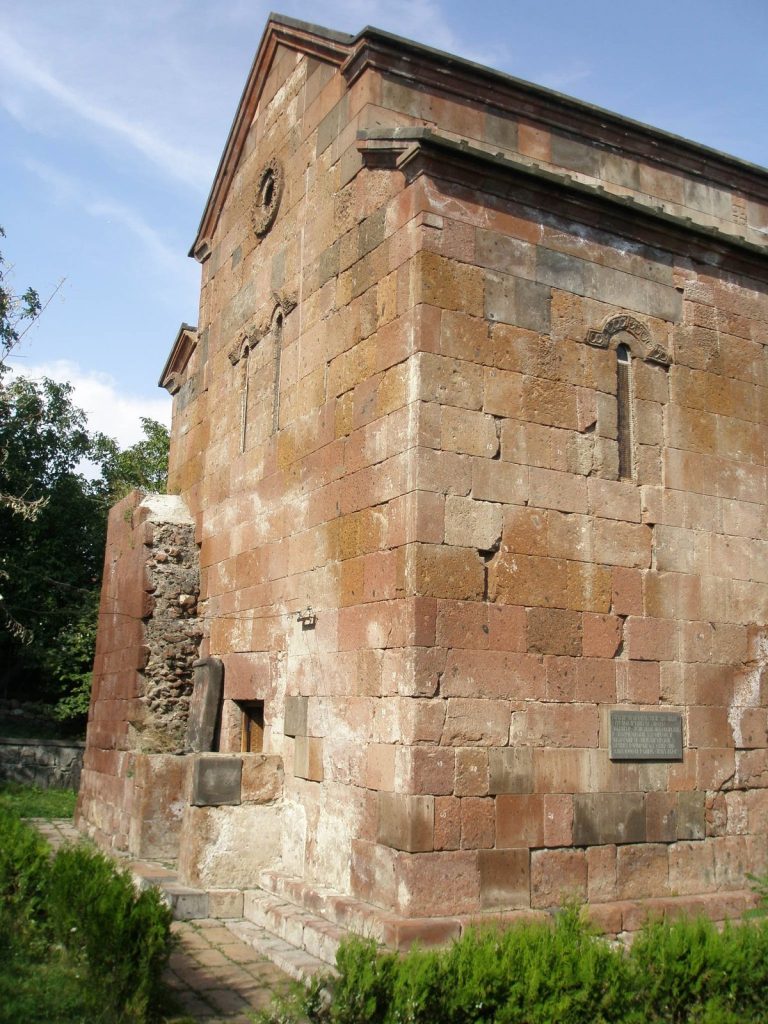
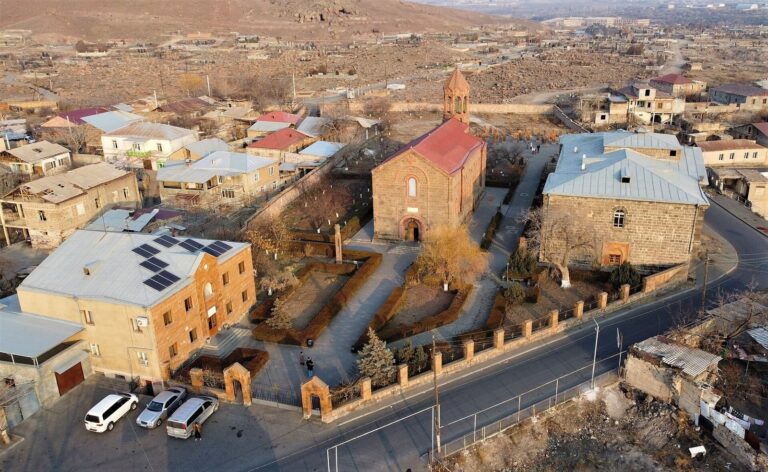
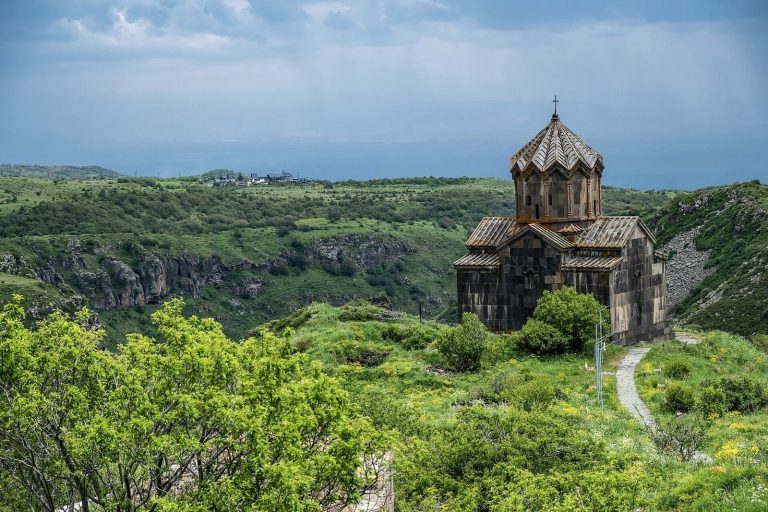
The complex lies beside a gorge overlooking the Amberd River. Its layout centers on the mausoleum, with a small basilica attached to its north end. A separate shrine stands about 100 metres north of the tomb and basilica, beside a path descending toward the gorge.
The mausoleum
Burial chamber and entrance
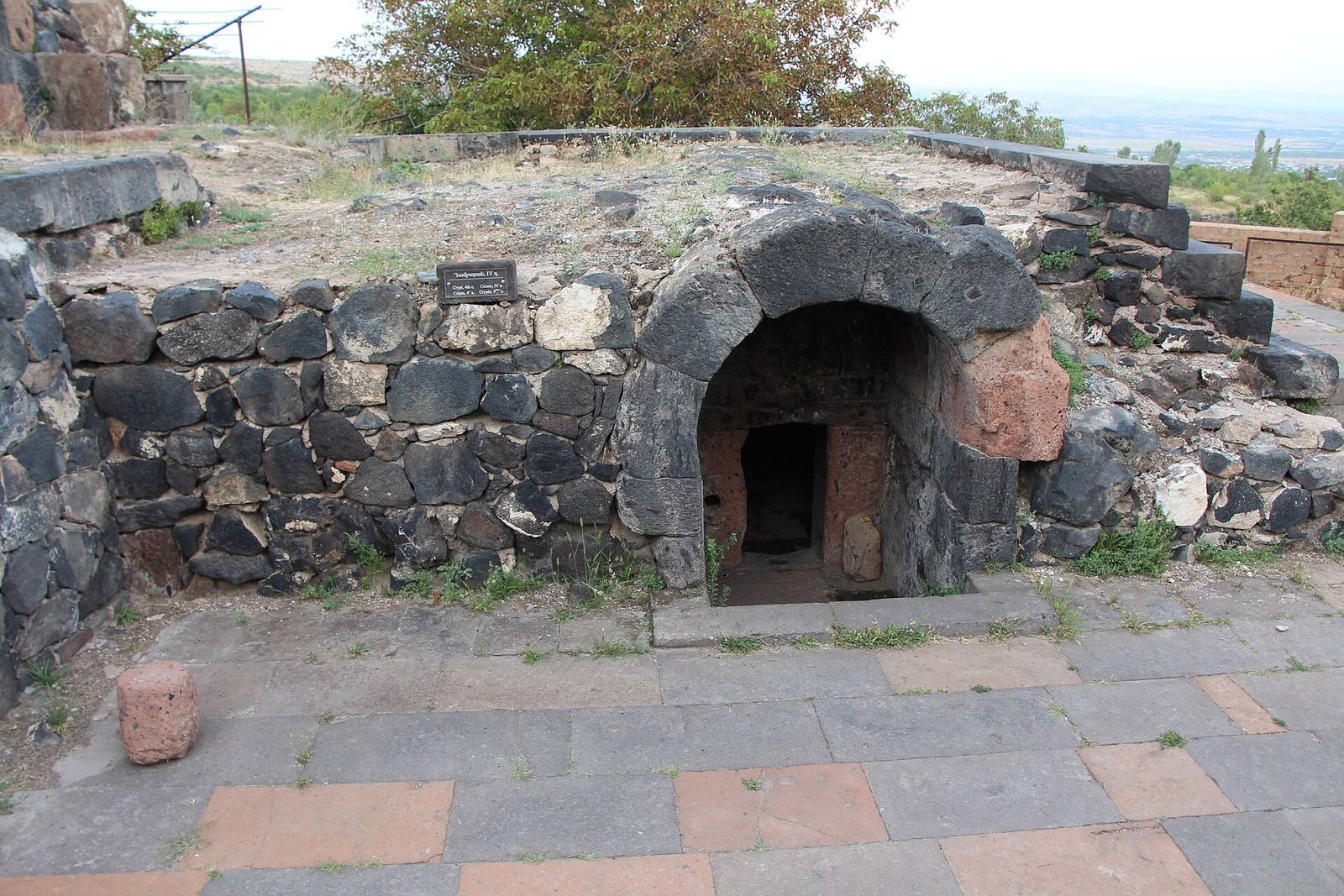
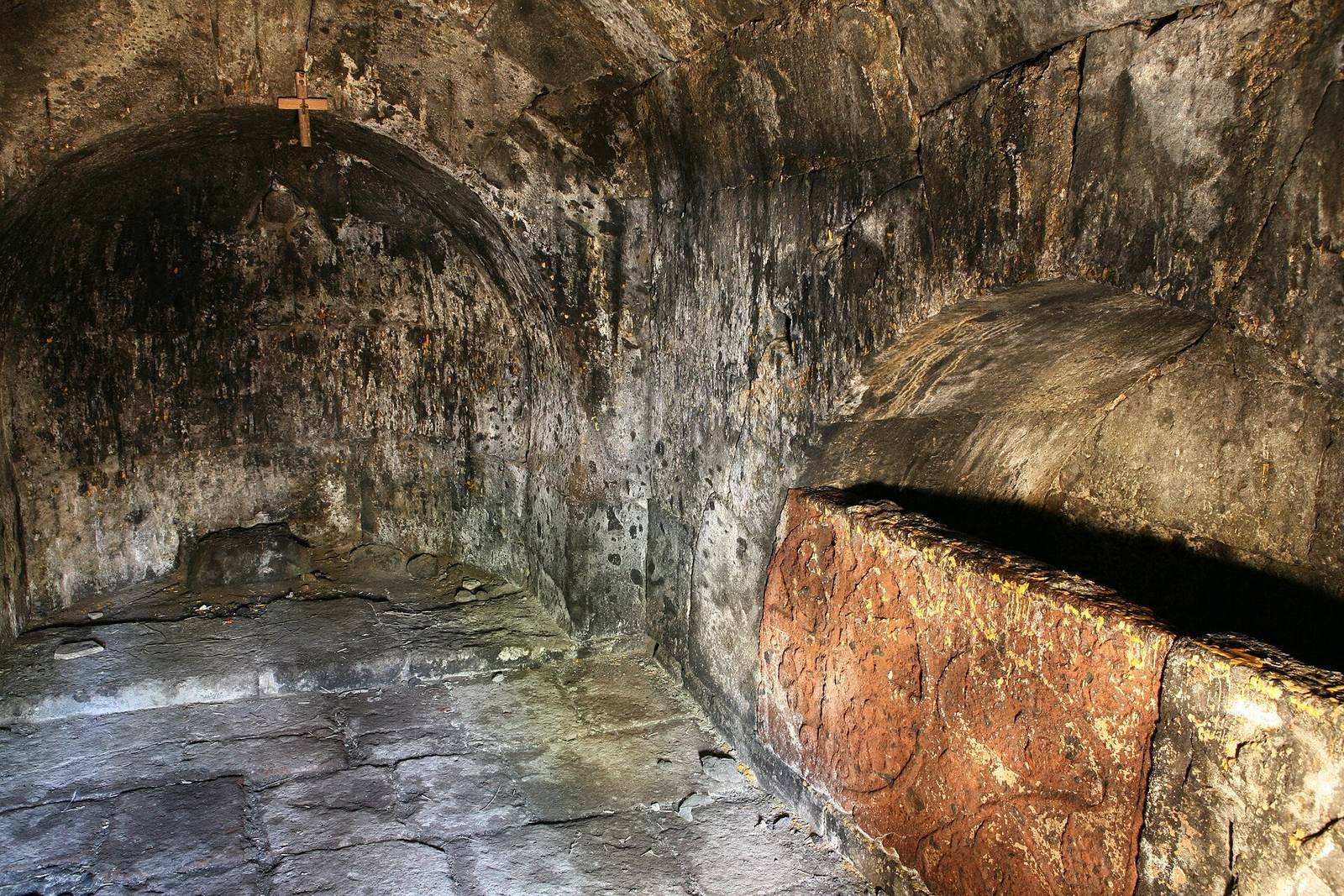
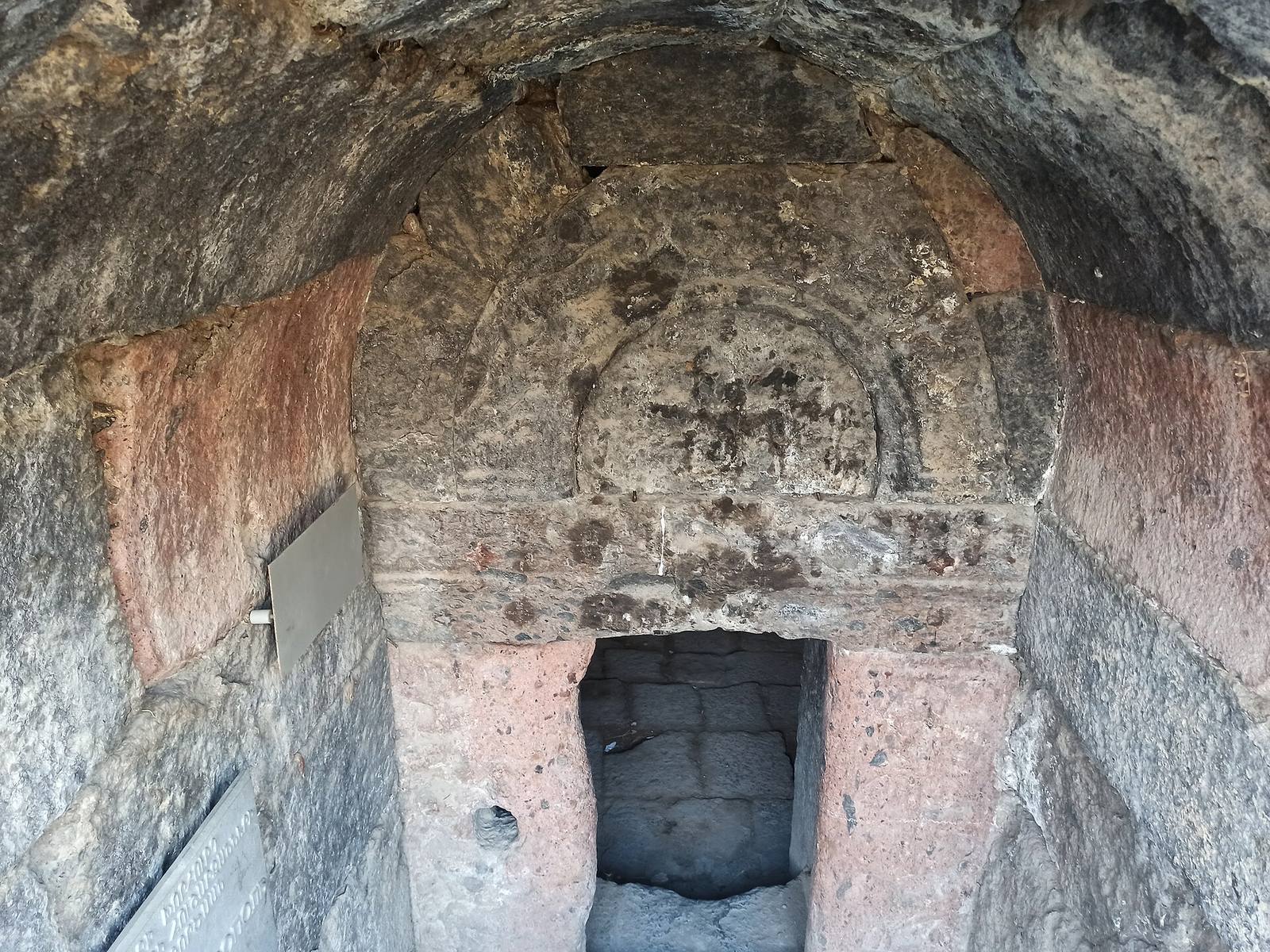
The mausoleum originally had two storeys, with its lower chamber underground; this chamber is the surviving level. It has a low vaulted ceiling and a partly cross-shaped plan. Rectangular niches for human remains occupy the middle of its north and south walls, each beneath an open arch. At the eastern end, a semicircular recess lies before a small hall.
Light enters the chamber through a single western entrance. Beyond the outer doorway, a small porch has stone steps that rise to ground level.
Stone ossuary boxes
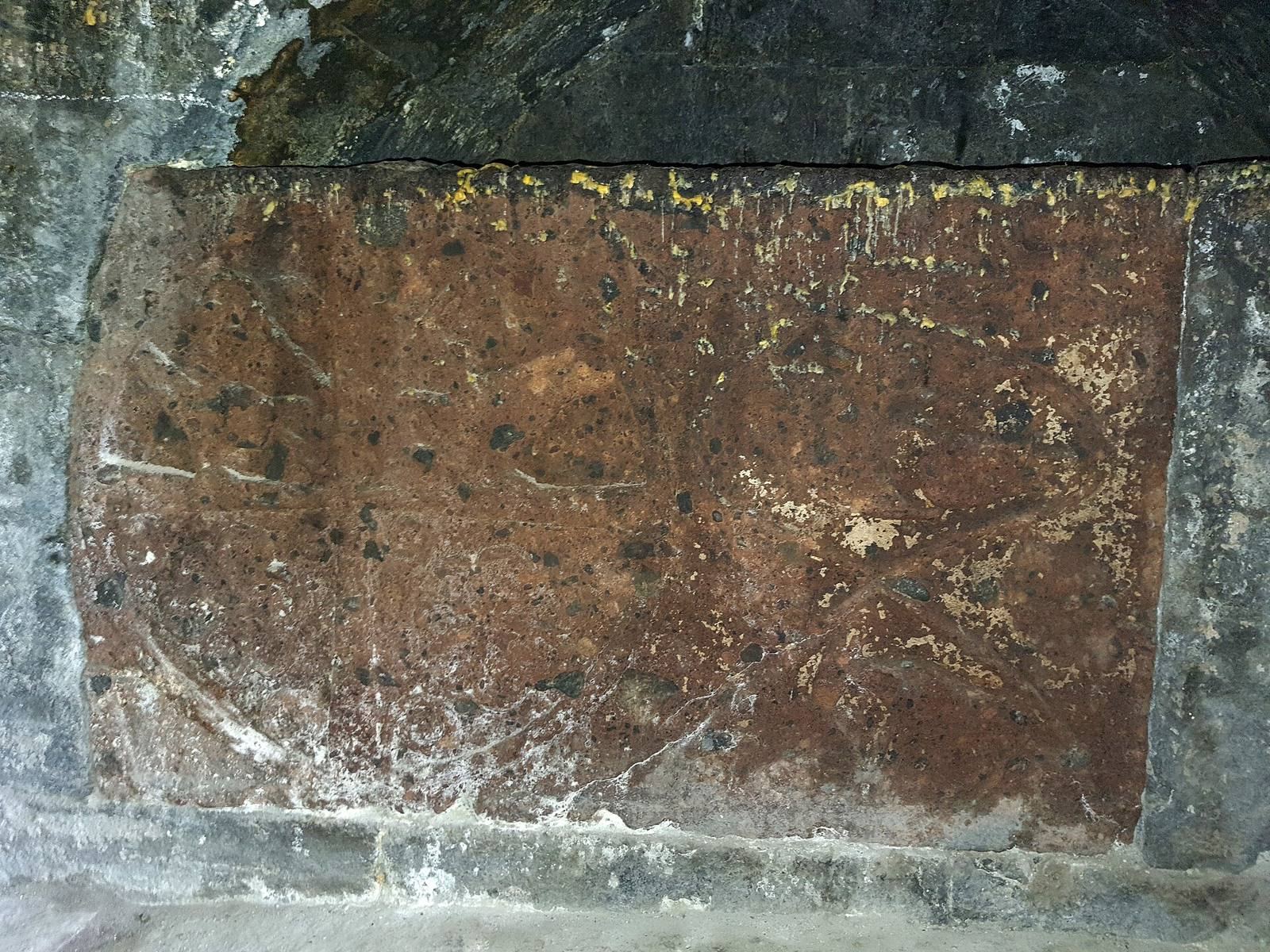
Two stone ossuary boxes, containers for human bones, carry different carved scenes. The northern box shows Daniel in the lions’ den and ram motifs. Tradition holds that it contained the remains of Christian kings. The southern box depicts a mythical hero, birds linked with astrology, a calf among grapevines, and a cross within a circle with two birds above it. It also shows a hunter and two dogs attacking a wild boar. Tradition associates this box with pagan kings.
Carvings around the entrance
Faint shallow stone carvings around the entrance depict hunting scenes. They appear on the rounded stone above the doorway and on the columns; the surviving work is worn.
Church and gorge features
Basilica
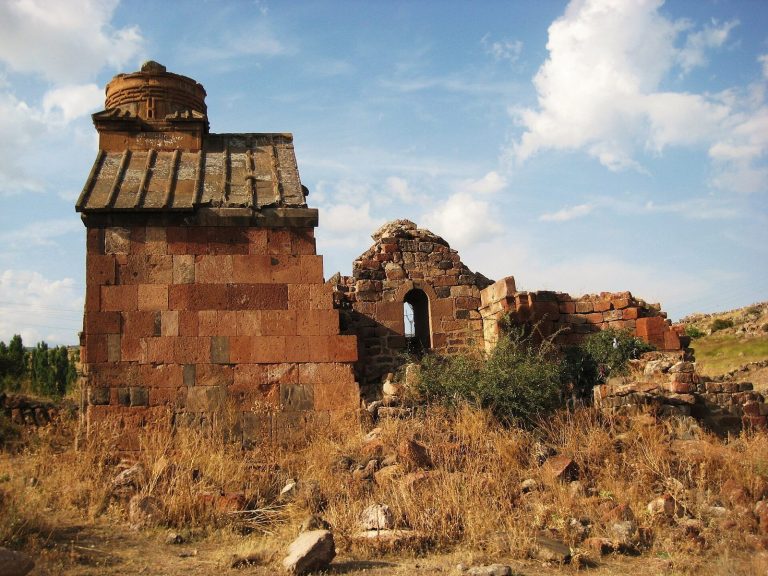
The small basilica adjoining the mausoleum had a central nave, or main church space, divided from the side aisles by four columns. A semicircular recess stood before the nave, while a small room for study or prayer lay to one side. Lower walls and several large stones survive, with relief carving visible on some of them.
Shrine and caves
The shrine stands beside the descending path about 100 metres north of the mausoleum and basilica. The gorge contains numerous caves dating from the sixteenth to eighteenth centuries. They served as refuges during invasions, and some still have doors.