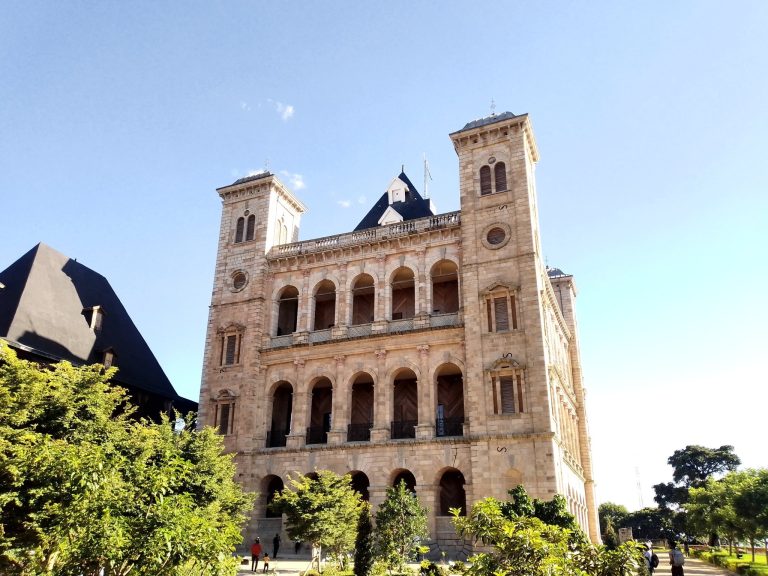
Ambohimanga: The Sacred Fortified Royal Settlement of Madagascar
Site at a Glance
- Rating
- 4.3
- Popularity
- Low
- Country
- Madagascar
- Primary era
- Early Modern
- Eras represented
- Early Modern, Modern
- Civilizations
- Merina Kingdom
- Site type
- Military
- Remains
- Fortified Town
On this page17 sections
History
Ambohimanga is a traditional fortified royal settlement in Ambohimanga Rova, northeast of Antananarivo, Madagascar. Built and developed by the Merina rulers of Imerina from the fifteenth century onward, it became the spiritual capital of the kingdom and remains a major place of worship and pilgrimage. One of Imerina’s twelve sacred hills, it is regarded as the most important and best-preserved monument of the precolonial Merina Kingdom.
Early settlement and the formation of the rova
The central highlands around Ambohimanga were inhabited between about 200 BCE and 300 CE by the Vazimba, regarded in Malagasy tradition as the island’s earliest inhabitants. Merina migrants reached the highlands by the fifteenth century and established hilltop settlements among existing Vazimba communities. At least four Vazimba tombs on or around the hill remain pilgrimage places.
The earliest settlement on the summit probably dates from the fifteenth century. Oral tradition instead places the foundation of the Ambohimanga rova, a fortified royal compound or settlement, around 1700, when the dethroned prince Andriamborona arrived from Imamo with his nephew, wife, and mother, Ratompobe. After several relocations requested by King Andriamasinavalona, Andriamborona settled at Ambatolampy. Following his death, the king brought his remains back to Ambohimanga for burial.
The hill was formerly called Tsimadilo. Andriamborona renamed it Ambohitrakanga around 1700, and King Andriamasinavalona gave it the name Ambohimanga in the early eighteenth century. The name combines Malagasy terms associated with a hill and with sacredness, blueness, beauty, or goodness.
During the reign of King Andriamanelo, from 1540 to 1575, separate Merina principalities were united into the Kingdom of Imerina. His campaigns against the Vazimba encouraged the development of fortified hill settlements with earthen walls, stone gateways, and defensive trenches. This model later spread among the Imerina nobility.
Royal government at Ambohimanga
In 1710, Andriamasinavalona divided Imerina into four territories and appointed his son Andriantsimitoviaminiandriana to govern Avaradrano, the northeastern territory, from Ambohimanga. Between 1710 and 1730, the new ruler built the first systematic defensive walls and seven initial gates. He also strengthened royal authority and encouraged settlement in the surrounding villages.
The division of Imerina brought seventy-seven years of civil war, famine, and hardship. Andriantsimitoviaminiandriana and his successors repeatedly expanded Ambohimanga’s defenses while competing for territory. His adopted successor, Andriambelomasina, ruled Avaradrano from 1730 to 1770, greatly enlarged the settlement, and repelled an attack by Sakalava warriors employed by the ruler of Antananarivo.
Andriambelomasina designated his eldest son Andrianjafy as successor and his grandson Andrianampoinimerina as the next heir. Andrianjafy ruled from Ambohimanga between 1770 and 1787, constructed the Nanjakana compound, and often lived at nearby Ilafy. Andrianampoinimerina deposed him after a violent conflict in 1787.
Andrianampoinimerina used Ambohimanga as the base for campaigns that brought Imerina’s twelve sacred hills, including Antananarivo, under his authority. By 1793 he had reunited the four territories and ended the civil war. Representatives of noble groups helped enlarge and fortify Ambohimanga with new walls, gates, and trenches. He also ordered the construction of the traditionally styled rosewood Mahandrihono palace.
After conquering Antananarivo in 1793, Andrianampoinimerina moved the political capital there but declared Ambohimanga the kingdom’s spiritual capital. Royal rituals continued at the hill, and the king regularly stayed in Mahandrihono. His son Radama I lived in the Nanjakana compound during his youth and continued to visit Ambohimanga after moving to Antananarivo.
Later royal changes and religious transformation
Radama I’s widow and successor, Queen Ranavalona I, ruled from 1828 to 1861. She renovated Mahandrihono and transferred several buildings from the royal compound at Antananarivo to Ambohimanga. Rasoherina later rebuilt Nanjakana, while Ranavalona II added two large pavilions combining Malagasy and European forms to Mahandrihono.
Ranavalona I prohibited pigs at Ambohimanga because of their association with Europeans and the recent promotion of pork as food. During much of the nineteenth century, foreigners were forbidden to enter the royal city, which acquired a reputation as a forbidden city. The restriction primarily protected the sanctity of the social and political order.
The royal court became Christian under Ranavalona II in 1869. A small chapel was built outside the eastern gate, although a permanent church was not constructed at Ambohimanga until 1883. After a fire during Ranavalona II’s visit in 1870, she authorized the construction of village houses in brick, a material previously used mainly for tombs and walls.
Colonial destruction and the survival of sacred traditions
Following French colonization and the exile of the royal family, the colonial administration removed royal relics and important belongings from Ambohimanga to Antananarivo in 1897. In March of that year, French authorities destroyed the wooden structures over the royal tombs, moved the royal bodies to tombs at the Rova of Antananarivo, and transferred funerary objects to the Manjakamiadana palace, which had become an ethnological museum.
A French garrison occupied the royal city. Military buildings, including a kitchen and canteen, were erected over the stone foundations of the tombs and removed by 1904. The removal of the royal bodies was intended partly to weaken the Menalamba, Malagasy resistance fighters who opposed French colonial rule. Menalamba members regarded the royal tombs and their soil as sources of ancestral power and came to Ambohimanga to collect earth for their campaigns. Although the tombs were desecrated and the resistance was defeated, the hill retained its sacred character.
The Malagasy government reconstructed the royal tombs in 2008. The remains of Ranavalona III, whose lamba-wrapped remains survived the 1995 fire at the Rova of Antananarivo, were later reinterred at Ambohimanga. The site was inscribed on the UNESCO World Heritage List in 2001 under cultural criteria (iii), (iv), and (vi). The protected property covers 59 hectares and has a 425-hectare buffer zone.
Ambohimanga received legal recognition during the colonial period, entered the National Inventory in 1939, and later benefited from municipal protection and Malagasy laws adopted in 1982 and 1983. Since 2006, the Office of the Cultural Site of Ambohimanga, known as OSCAR, has managed the site. Restoration since 1996 has used traditional materials and techniques suited to the original periods of the buildings. Local groups, UNESCO, the Mamelomaso association, and restoration volunteers have helped replant woodland, repair structures, conserve stones around a spring, and protect the site from heavy rain and landslides.
Conservation continues to face illegal tree cutting, fires, invasive golden bamboo and lantana, and extreme weather. Cyclone Giovanna in February 2012 stripped wooden shingles from Andrianampoinimerina’s house, damaged the Mahandrihono palisade, uprooted sacred fig trees, and destroyed medicinal plants and historic jacarandas. Many Merina regard Ambohimanga as an embodiment of an ideal ancestral social order and, after the destruction of Antananarivo’s Rova, as the last major physical link with that sacred past. Descendants of the andriana, the Merina noble class, and members of the Tsimahafotsy clan have helped promote and protect the site.
Remains
Ambohimanga occupies a summit in Madagascar’s central highlands, about 24 kilometres northeast of Antananarivo. The hill rises roughly 450 feet above the surrounding land and slopes gradually westward. The royal city is enclosed by stone walls and defensive trenches and is surrounded by villages, valleys, and terraced rice fields created during the seventeenth and eighteenth centuries. A customary religious system protects the summit forest, which preserves indigenous medicinal and culturally important plants.
Walls, trenches, and gateways
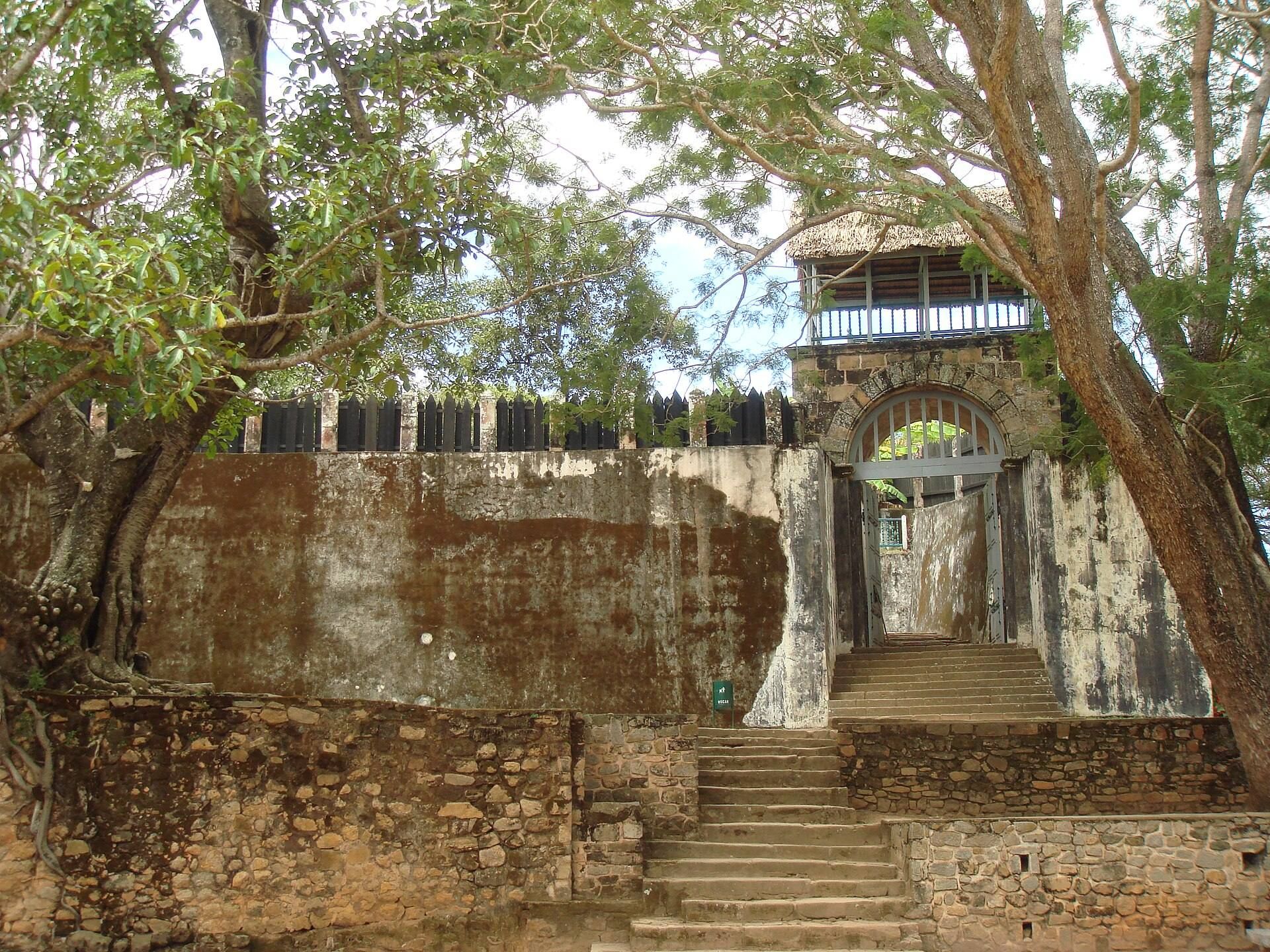
The fortifications combine stone walls with hadivory, defensive trenches reaching depths of up to 30 metres. The oldest trenches, called Mazavatokana, lie behind the present royal settlement and may predate Andriantsimitoviaminiandriana. Local tradition attributes them to King Andrianjaka in the early sixteenth century. Andriantsimitoviaminiandriana first dug trenches around Bevato and extended the settlement northeastward, while Andrianampoinimerina later used compulsory labor to create a trench encircling the entire hill. The present defensive wall was reconstructed around 1830 under Ranavalona I and was whitewashed with lime mixed with approximately sixteen million egg whites.
Principal gateways
Ambohimanga has fourteen stone gateways, seven inner gates built under Andriantsimitoviaminiandriana and seven outer gates constructed before 1794 under Andrianampoinimerina. Their two series also represented the completion of Imerina’s reunification. Ambatomitsangana, meaning “standing stone,” is the largest and best-preserved gateway. A stone disk about 4.5 metres across, 30 centimetres thick, and weighing approximately 12 tonnes was rolled into place by twenty soldiers each morning and evening. An observation post stands above the entrance.
Western and funerary entrances
Andakana, in the western wall, retains its stone disk and has a cut-stone approach. Ambatomitsangana and Andakana were gateways of the living, through which corpses could not pass and people who had recently been in contact with the dead could not enter. Miandrivahiny on the northern side and Amboara were used for transporting corpses. Andranomatsatso retains its stone disk, while Andranomatsatso, Antsolatra, and Ampitsaharana served mainly as lookout points.
Sacred and ceremonial approaches
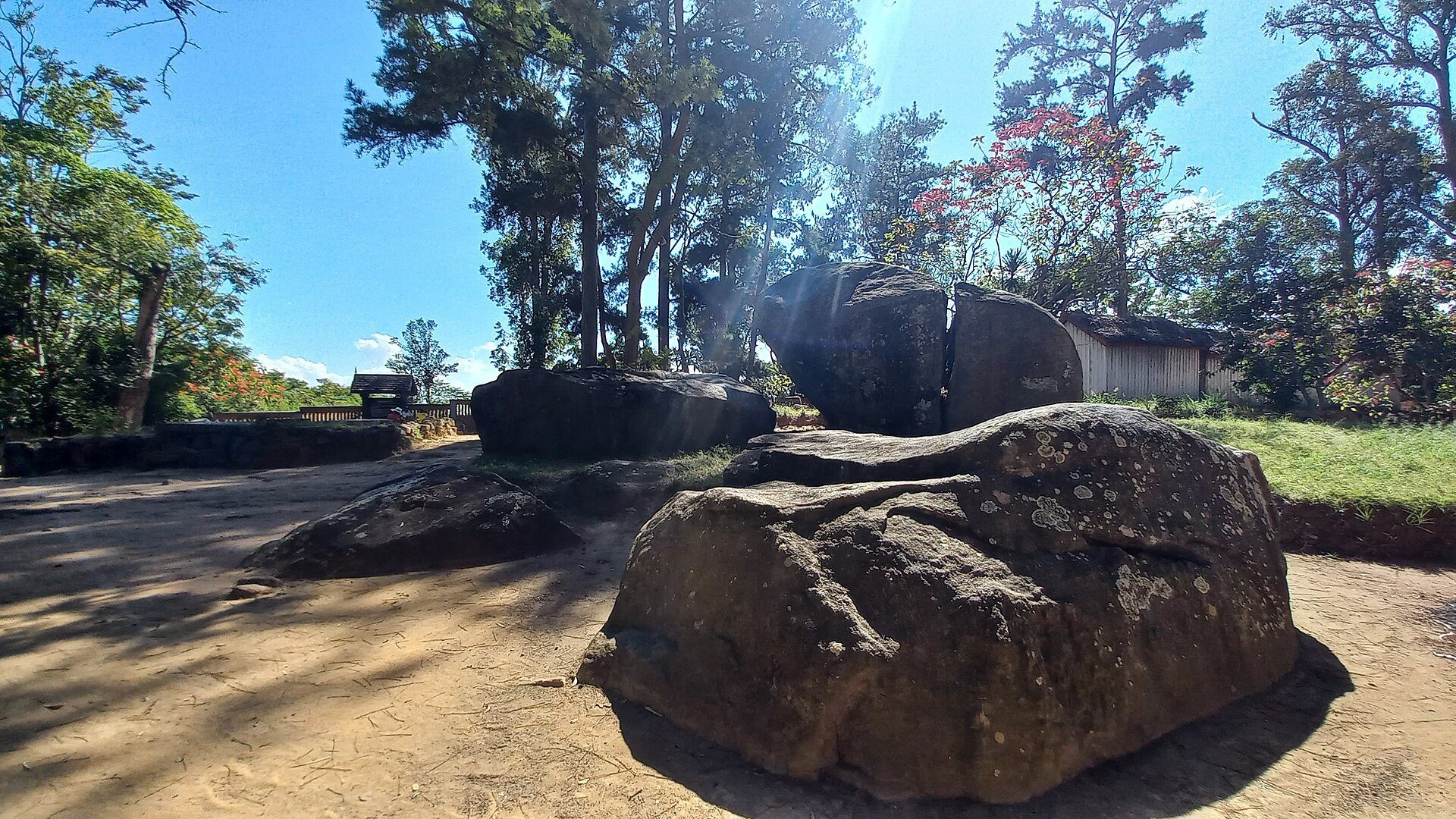
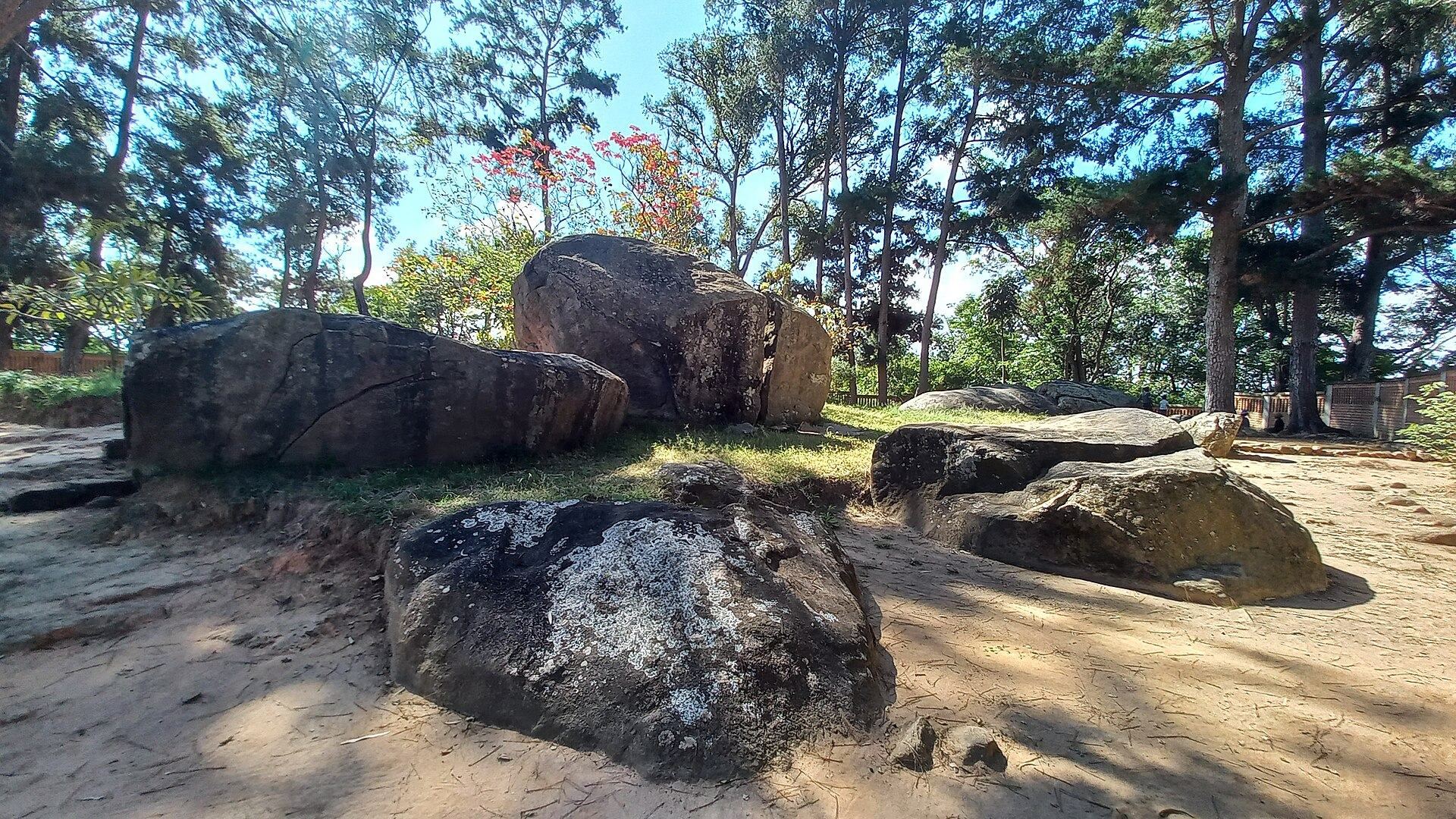
Andrianampoinimerina replaced the earlier Ambavahadiantandranomasina with the wooden gate Ambavahadimasina. Pieces of its lintel were used to light the sacred fire for circumcision ceremonies. The red earth inside the gateway and the wooden boards on its approach were considered sacred, and travellers carried portions of them as protective tokens. Large stones near the walls served as platforms for royal addresses. At Ambatorangotina, twelve Ambatofotsy leaders pledged allegiance to Andrianampoinimerina, who later used the place to announce laws, issue decrees, and administer justice.
The three royal compounds
The royal city is divided into Bevato, Mahandrihono, and Nanjakana. Their arrangement follows Merina rova principles, in which living houses were built from wood and vegetation while tombs were built in stone. A royal compound traditionally included a lapa, or royal residence, a fasana, or tomb, and a kianja, or courtyard marked by a vatomasina, a sacred stone used as a ceremonial platform. The compounds also express cardinal and vertical hierarchies, with the northeast associated with ancestors and sacred power, the east with ancestral veneration, the north with masculine political authority, and the south with royal women and spiritual power.
Bevato
Bevato is the oldest royal compound, first established by Andriamborona in the late seventeenth century. Andriantsimitoviaminiandriana occupied and expanded it three times between 1710 and 1730. Its original low stone wall was replaced by a wooden palisade under Andriambelomasina, and Ranavalona I and Ranavalona II later extended it westward. The original buildings were destroyed during the French colonial period. A school and later the Ambohimanga town hall were built there, although the town hall was subsequently demolished.
Andriamborona built his mother’s tomb at Bevato and later moved it at the king’s request. A large sacred stone marked the former tomb site, and the first royal residence was built nearby. Andrianampoinimerina was enthroned while standing on this stone, which was also used for allegiance oaths, royal horseback mounting, the Fandroana festival, and religious services after the court became Christian. Bevato contained houses for royal wives and their servants, and once housed the royal sampy, sacred objects or talismans, including Ifantaka.
Two royal fig trees planted by Ranavalona I stood at the edge of Bevato, where she addressed the public. Ranavalona II planted additional fig trees, while jacarandas were introduced during the colonial period. Pilgrims placed stones around the fig trees, which were believed to possess hasina, sacred or ancestral power and legitimacy. Bevato and the nearby Ambarangotina courtyard hosted royal gatherings, festivals, decrees, public judgments, and royal speeches.
Mahandrihono
Mahandrihono is the largest and best-preserved compound. It lies east of the central courtyard and higher than Bevato, expressing its greater political importance. Andriambelomasina established it in the early eighteenth century, enclosed it with a stone wall, and built the twin houses Mahandry and Tsararay together with Manandraimanjaka. Andrianampoinimerina reserved the compound for the king, removed the twin houses to create a larger royal residence, and added an annually renewed wooden enclosure outside the stone wall.
The original Mahandrihono palace is the only building from Andrianampoinimerina’s reign that remains intact. It was his residence before the political capital moved to Antananarivo and retains its original form apart from the replacement of its thatched roof with wooden shingles. The simple aristocratic wooden structure has rosewood walls and a peaked roof supported by a central rosewood pillar about 10 metres high. Objects associated with the king, including weapons, drums, talismans, a fanorona board, and a raised bed, are kept inside.
Royal pavilions and tombs
Ranavalona I enlarged the Mahandrihono courtyard and built the stone walls and two stone gateways that enclose it. Ranavalona II later added palisades, demolished Manjakamiadana, and constructed two Malagasy-European pavilions using wood from the Masoandro house transferred from Antananarivo. The larger pavilion, Fandriampahalemana, was built in 1871 and contains reception rooms below and the bedrooms of Ranavalona II and her attendant above. Tranofitaratra, the smaller “house of glass,” was built in 1862. The queen consulted ministers there, and windows on all four sides provided views across the surrounding countryside.
Mahandrihono originally contained twelve royal tombs arranged north to south. Each had a stone crypt topped by a small, windowless wooden tranomasina. Larger northern tombs held sovereigns, while smaller tombs held royal wives and relatives. French authorities destroyed the wooden structures in 1897 and removed the bodies and funerary objects. Military buildings were later erected over the stone foundations, including a kitchen and canteen above the tombs of Andrianampoinimerina and Andriamasinavalona. The military structures were removed by 1904, and the royal tombs were reconstructed in 2008.
Ritual pools and the sacrificial pen
Two ceremonial pools were carved into the compound’s stone foundations under Ranavalona I. One served the wives of Hova Tsimahafotsy soldiers and the other the wives of an elite military corps known as “the 500.” The pools were not used for ordinary bathing or drinking. They held fish from Lake Itasy and specially consecrated water, and Ranavalona I, Radama I, and Rasoherina used the larger pool for ritual purification during the annual Fandroana, the Malagasy New Year festival associated with royal bathing and purification.
A sunken fahimasina pen west of the courtyard held sacred zebus, humped cattle used in royal rituals, before circumcision ceremonies and Fandroana sacrifices. Its black animals with white forehead markings were called volavita, while reddish-brown animals were called malaza. They were led from west to east, toward the direction associated with ancestors and sanctity. A second sacrificial pen northeast of the courtyard was filled in by the French in the late nineteenth century.
Nanjakana
Nanjakana is the highest of the three compounds and lies northeast of Mahandrihono. It was probably first constructed for Andrianjafy in the late eighteenth century. A stone esplanade north of the compound provides broad views and was associated with Andrianampoinimerina’s contemplation of military strategy. The compound included houses for his children, the Nanjakana house prepared for Radama I, and the two-storey Manambitana, where royal children slept above while palanquins and storage chests were kept below.
A fire during Ranavalona I’s funeral in 1861 began when a spark ignited a barrel of ceremonial gunpowder. The explosion killed several bystanders and destroyed three royal residences. Manambitana and Manandraimanjaka were rebuilt after the fire, while Fohiloha, Kelisoa, and Manantsara were among the transferred buildings later reconstructed or altered at Nanjakana.
Springs, lake, villages, and sacred woodland
Two sanctified, stone-covered springs near Ambohimanga feed a stream believed to have purifying powers. Their water supplied the artificial sacred lake of Amparihy, which existed by at least the eighteenth century and filled the ceremonial pools inside the royal compound. Oral tradition attributes its creation to Andrianampoinimerina, who employed villagers to dig a spring-fed marsh at the foot of the hill. The lake was sanctified with a zebu sacrifice and initially filled with water brought in earthen jars from Alasora, Antsahatsiroa, and Anosibe.
Villages around the hill date at least to the sixteenth century, when the valleys were converted into rice fields. Royal regulations governed their layout, house numbers, sanitation, quarantine, building size, decoration, and materials. Customary fady, or taboos, continue to prohibit corn, pumpkins, pigs, onions, hedgehogs, snails, and reed fuel, as well as cutting or collecting wood from the sacred forests. The forest remains one of the largest surviving fragments of highland primary forest and contains plants such as zahana, Anthocleista, Dracaena, and Phyllarthron. Golden bamboo and lantana threaten this ecosystem and are being removed through local conservation work.