Alnön Old Church: A Medieval Stone Church in Sweden
Site at a Glance
- Country
- Sweden
- Primary era
- Medieval
- Eras represented
- Medieval, Early Modern
- Civilizations
- Swedish
- Site type
- Religious
- Remains
- Church
On this page9 sections
History
Alnön Old Church is a medieval stone church on Alnö in Sweden, although its construction date is uncertain. It is described as one of the oldest churches in Norrland and the oldest preserved church in Medelpad.
Medieval origins
The church was built at Rökland, just north of Vi. The island had older pagan worship sites, including a sacrificial place at Vi in the fifth century. Early Christian churches were sometimes established near earlier cult sites. Local tradition credits twelve farmers with beginning the church, and attributes its chancel to twelve farmers and their families.
A fortified tower was also built at the site, which occupied a strategic position beside the shipping channel through Alnösundet. The church’s patron is Michael, an archangel in Christian tradition. In 1314, the church was listed as an annex church, meaning it was dependent on Skön parish. Alnö became an independent pastoral district in 1892. The church now belongs to Alnö parish in the Diocese of Härnösand, part of the Lutheran Church of Sweden.
Island church and later changes
Alnön Old Church served as the island’s only church until a larger wooden church was built nearby. Construction began in 1861–62, and the new building was completed in 1863. It burned down in 1888. A brick replacement, Alnö New Church, was begun on the same site in 1893 and consecrated in 1896. Services moved there, leaving the old church unused for decades.
Restoration of the old church began in the late 1920s. It is now used during the summer and for special occasions, including weddings.
Remains
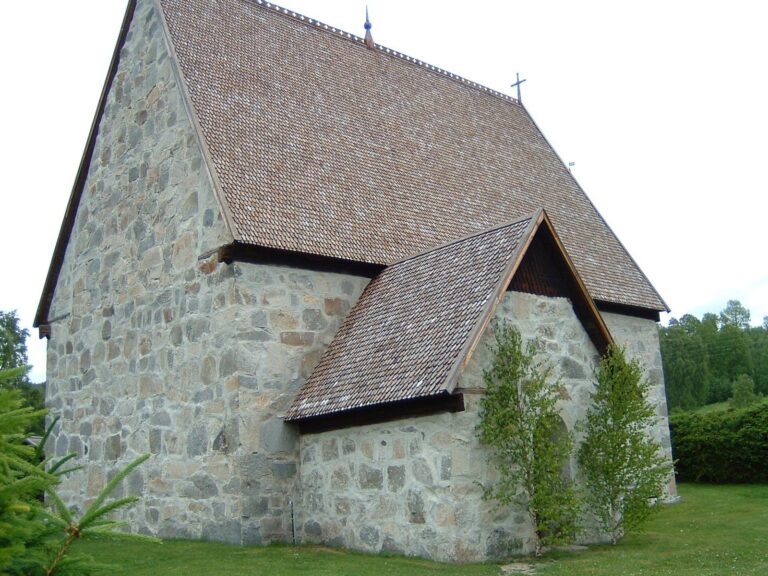
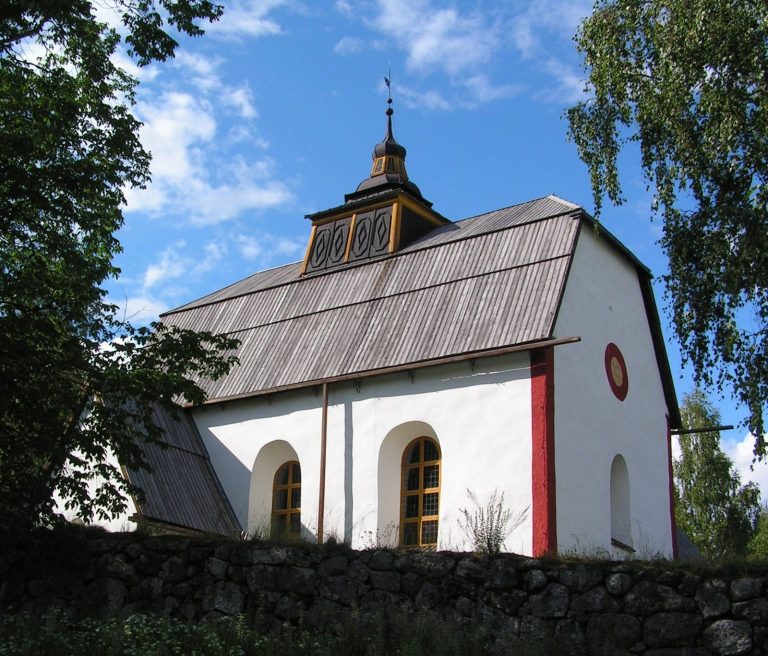
The church’s surviving structure is built of whitewashed grey stone. Its original chancel, the part containing the altar, remains lower and narrower than the nave, the main body of the church. The surviving fabric also includes medieval and later additions, furnishings, and painted decoration.
Exterior and additions
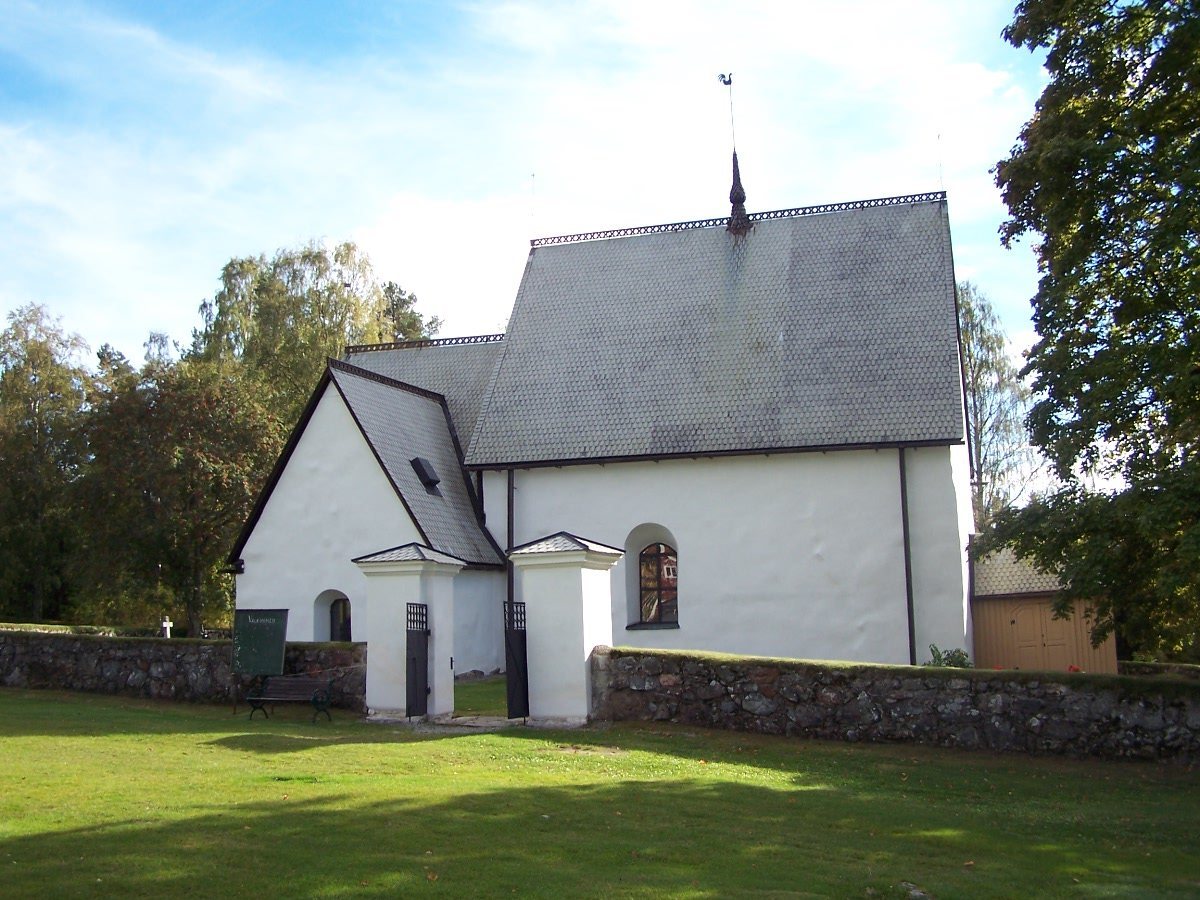
The sacristy and cemetery are thought to date from the fifteenth century, as does the older porch. A separate wooden porch was added in the late eighteenth century, with 1778 given as its date. In a southwest view, this porch is to the left of the older one; the nave lies behind the older porch, with the chancel to its right. The church’s present windows date from the eighteenth century, when openings in the south and east walls were enlarged. A weathercock stands on the roof.
Wall paintings
Late-fifteenth-century paintings, including works from around 1500, survive on the walls and ceiling. The painted scenes include Saint Clement, an early Christian leader, and Saint Anthony of Egypt, a hermit whose example helped shape monastic life. Anthony appears between two monks bearing a cross shaped like the letter T and a bell. Another scene depicts the mockery of Job, the biblical figure whose suffering is told in the Book of Job. The interior is regarded as among the most distinguished in Sweden.
Sculpture and furnishings
Sculpture
A fifteenth-century wooden figure said to show Saint Anne carrying the Virgin Mary is attributed to the late-medieval Swedish sculptor Haaken Gulleson of Enånger. It is thought to have been made before the Swedish Reformation of 1520, the country’s transition from Roman Catholicism to Lutheranism. A wooden crucifix also dates from the fifteenth century.
Other furnishings
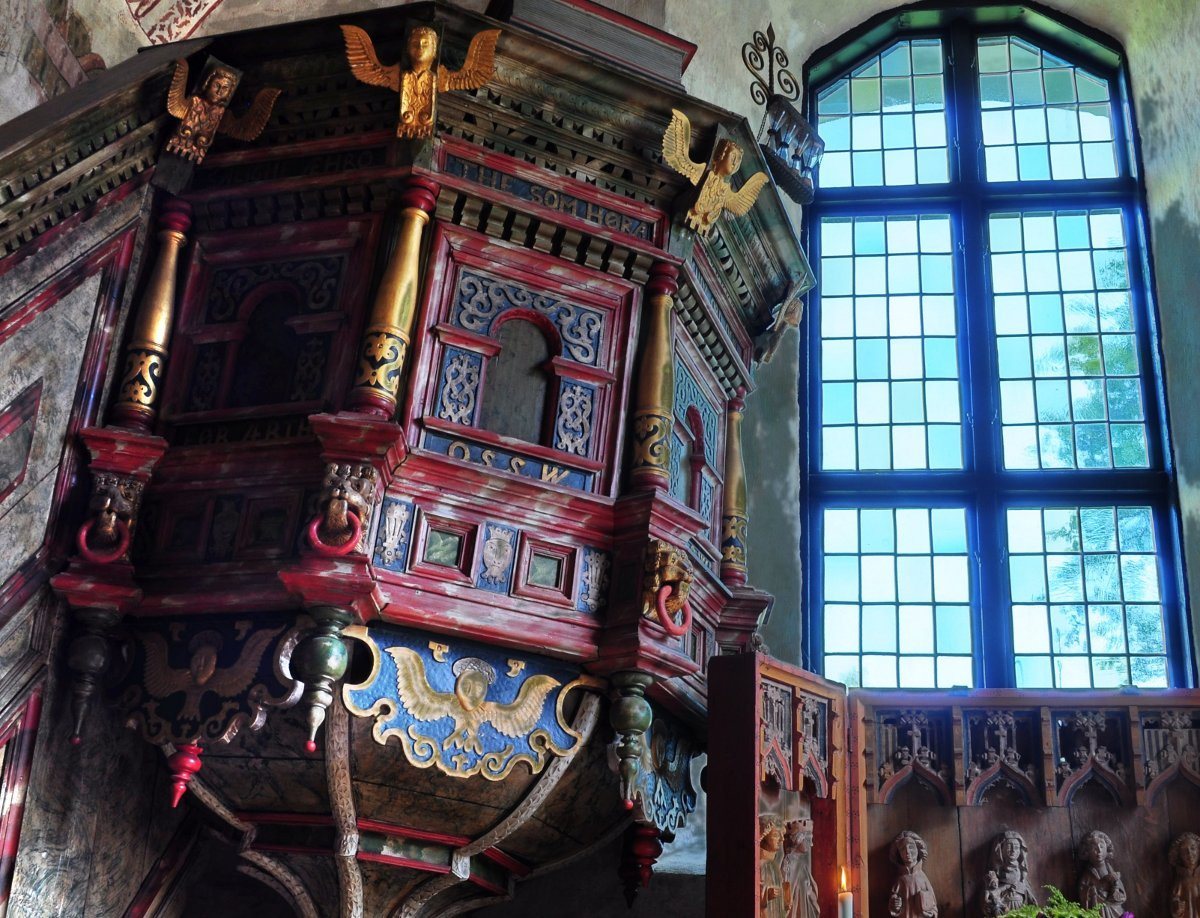
The present pulpit dates to 1656, and the altar rail is from the same period. An altarpiece and a grave cross on the church’s east side are also among the surviving features. A wooden baptismal font made in the thirteenth century was formerly kept here and has since been moved to Alnö New Church.