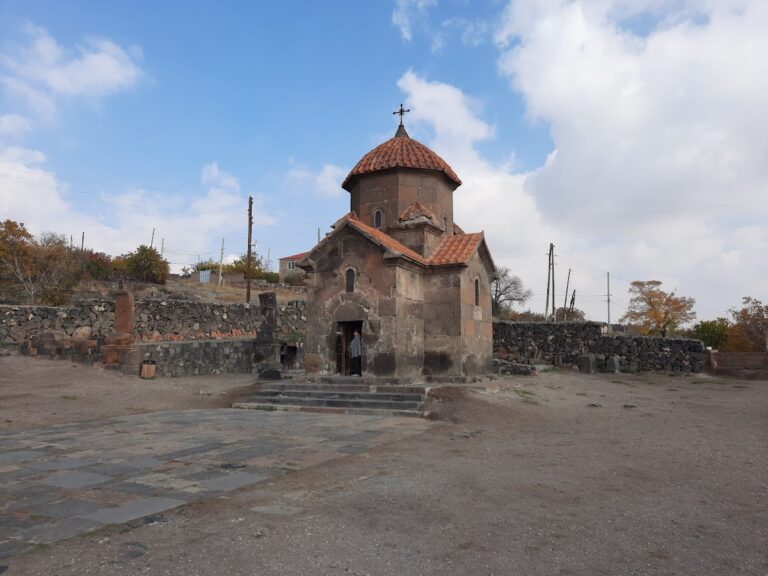
Artavazik Church: A Seventh-Century Armenian Apostolic Church


Site at a Glance
- Rating
- 4.8
- Popularity
- Very Low
- Country
- Armenia
- Primary era
- Medieval
- External website
- Open
- Eras represented
- Medieval
- Civilizations
- Armenian
- Site type
- Religious
- Remains
- Church
On this page6 sections
History
Artavazik Church is a seventh-century Armenian church in Armenia, located about 1 kilometer outside Byurakan on the southern slope of Mount Aragats. It belongs to the Armenian Apostolic Church, Armenia’s historic Christian church and an ancient independent apostolic tradition. The building is a small cruciform central-plan church, organized around a central space with arms projecting in the shape of a cross.
Foundation and Medieval Changes
The church’s name is traditionally connected with Artavazd, an Armenian royal name. Artavazd has been described either as the builder or as the Armenian king presumed to have founded the church, although the particular individual is not identified with certainty. Artavazik was first rebuilt in the twelfth century. During a major renovation in the thirteenth century, the roof slopes were altered and a rotunda-like belfry was added above the western arm.
The thirteenth-century work changed both the appearance and the vertical emphasis of the church. The new belfry rose over the western part of the building, while the central dome remained the principal feature of the church’s cruciform design.
Flood, Ruin, and Conservation
O. Shahkhatunyants reported that a flood destroyed the church in 1840. Artavazik became known to scholars during the nineteenth century, and Anatoly Yakobson made a schematic survey in 1929. Later studies by Stepan Mnatsakanyan and V. Grigoryan examined the church within a monograph on Armenia’s cruciform monuments.
Armenia’s monument-preservation authorities carried out restoration in 1958, followed by rebuilding in 1959 and 1960. This work reconstructed the vault over the western arm, installed new roof covering, and conserved surviving fragments. The belfry rotunda collapsed around 2005 and had not been rebuilt. Modern restoration began in 2017, when part of the floor had been repaired, the roof was under restoration, and work addressed drainage and the management of water from the roof. The church remains inactive and in ruins.
Remains
Main Church
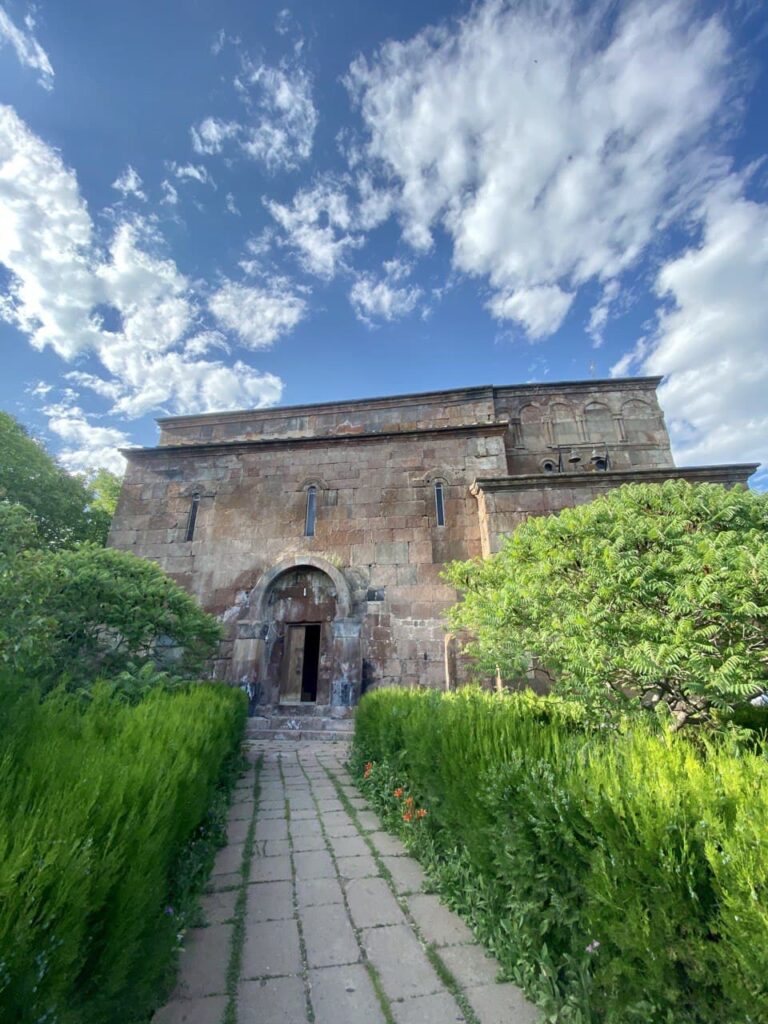
Artavazik is built from red and black tuff and follows a compact cruciform, central-plan layout. Its western arm is elongated, while the semicircular eastern apse is substantially narrower than the other three arms. A storage or prayer room occupies the northeastern corner beside the apse. On the western facade, a pair of semi-columns provides the principal recorded decorative feature. The southern walls have partly collapsed, while large portions of the other walls survive, including the walls of three arms. Parts of the vaults are damaged or collapsed.
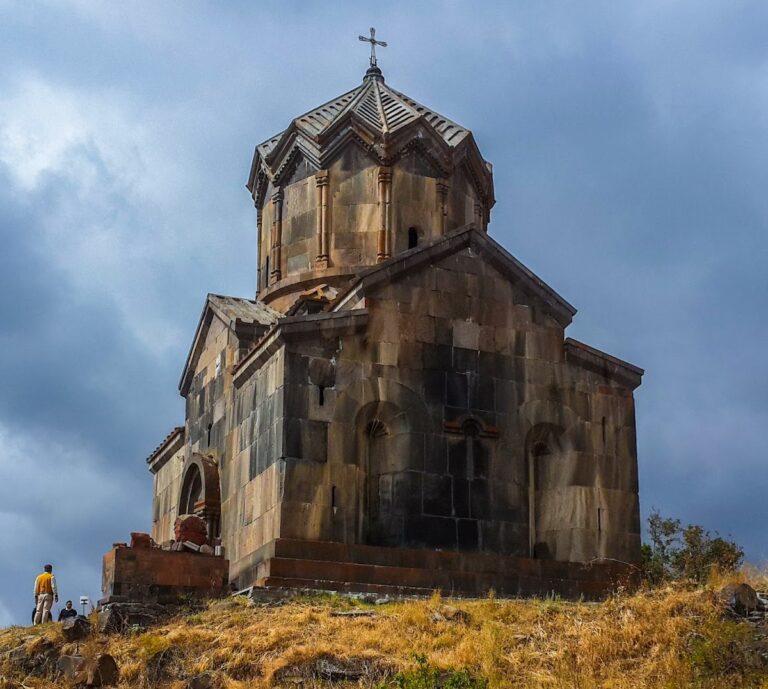
The center originally carried a large octagonal dome drum and a dome. A squinch, an arched transition from the central space to the dome drum, supported this arrangement. The main roof and dome have collapsed, and a substantial section of the damaged dome lies near the church to the southwest. The 1950s restoration rebuilt the vault over the western arm and added roof covering, while later work concentrated on the floor, roof, and water drainage.
Western Belfry and Khachkar
The western arm retains part of the lower drum of the thirteenth-century belfry above the entrance. The structure was designed as a rotunda: four tall, slender columns supported a slightly narrower upper drum and a small conical dome. Only a small portion of the column footings may still be visible. Interwoven geometric knot patterns decorated both the lower and upper drums, while the upper structure itself collapsed around 2005.
A large thirteenth-century khachkar stands near the church, across a small ravine or behind the building. A khachkar is an Armenian carved stone cross monument, usually enriched with intricate relief ornament. It is a separate stone monument from the church and forms part of the medieval remains associated with the site.
Nearby sites