Ziwiyeh Castle: An Ancient Mountain Citadel in Iran


Site at a Glance
- Rating
- 4.3
- Popularity
- Very Low
- Country
- Iran
- Primary era
- Iron Age
- External website
- Open
- Eras represented
- Iron Age
- Civilizations
- Median
- Site type
- Military
- Remains
- Castle
On this page7 sections
History
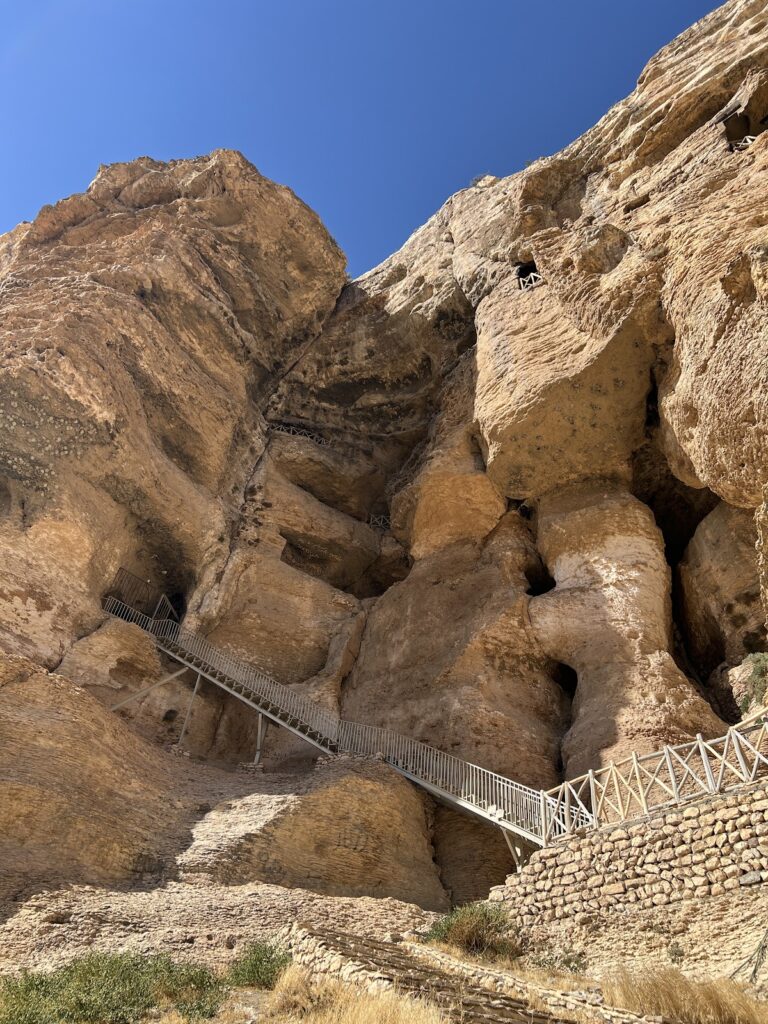
Ziwiyeh Castle is an ancient mountain citadel in Iran, associated with the Mannaeans, Medes, and Scythians during the first millennium BC. It stands above Ziwiyeh Cave, about 50 kilometres from Saqqez in Kurdistan Province, south of Lake Urmia, at an elevation of 1,835 metres. Finds from the site date to the ninth century BC, during a period when the Medes, an ancient Iranian people who controlled much of western Iran, held political dominance in the region.
Mannaean, Median, and Scythian Occupation
Before the rise of Median and Scythian power, the site is believed to have served as the capital of the Mannaeans, an earlier kingdom south of Lake Urmia that came under attack from the Assyrians. From the first millennium BC, the citadel served as a residence and capital for the Medes and Scythians. The Scythians, a nomadic people active across parts of Eurasia during the same broad period, are associated with a siege of the fortress at approximately 700 BC.
Excavation and Later Preservation
The first archaeological excavations began in 1946 under the scholar Ayub Rambu and continued for approximately twelve years. The Iranian Cultural Heritage Organization later carried out restoration and partial rebuilding. The castle remains partially ruined.
A group of objects known as the Ziwiyeh Treasure was found near the castle at the beginning of the twentieth century. The treasure is later than the castle ruins and is not considered related to them. Its pieces are preserved in major museums around the world.
Remains
Ziwiyeh Castle occupied a mountain setting above Ziwiyeh Cave and was arranged as a three-story fortress. Stone formed the foundations of its stairs and columns, while the walls were made from adobe, a building material of sun-dried earth often mixed with organic material. Twenty-one stone stairs connected the levels, and water pipes brought supplies from springs in the neighboring mountains.
Lower and Residential Levels
The ground floor was level with the hillside, which made it relatively accessible. Part of this level survives, and its presumed religious function has led to the possibility that it served as a temple.
The second floor had a residential role and contained interconnected rooms painted blue, cream, black, and brick-red. Archery equipment and a bronze arrow found there suggest that military personnel may also have used this level and that it served for storing army ammunition.
Rulers’ Residence and Upper Structures
The third floor was described as the rulers’ residence. It included a barn intended to provide security during warfare and sieges, together with broad rooms fitted with large doors and windows. Twelve stone capitals, the upper parts of columns that support the structure above them, belonged to this level, which also used stone and wooden columns. Archaeologist André Godard described a table and chairs decorated with bronze in the rulers’ residence.
Parts of the castle had floors paved with bricks or tiles. Two gates served the fortress, one on the northern side and one on the southern side. The gate facing the mountain summit carried tile decoration.
Archaeological Finds
Among the finds associated with the site is a large gold necklace engraved with mythical animals, regarded as one of the most famous objects discovered in the area. Other archaeological artefacts from Ziwiyeh are preserved in several museums.