Knabstrup Manor: A Historicist Estate in Denmark


Site at a Glance
- Rating
- 4.7
- Popularity
- Very Low
- Country
- Denmark
- Primary era
- Modern
- Eras represented
- Early Modern, Modern
- Civilizations
- Danish
- Site type
- Domestic
- Remains
- Manor House
On this page9 sections
History
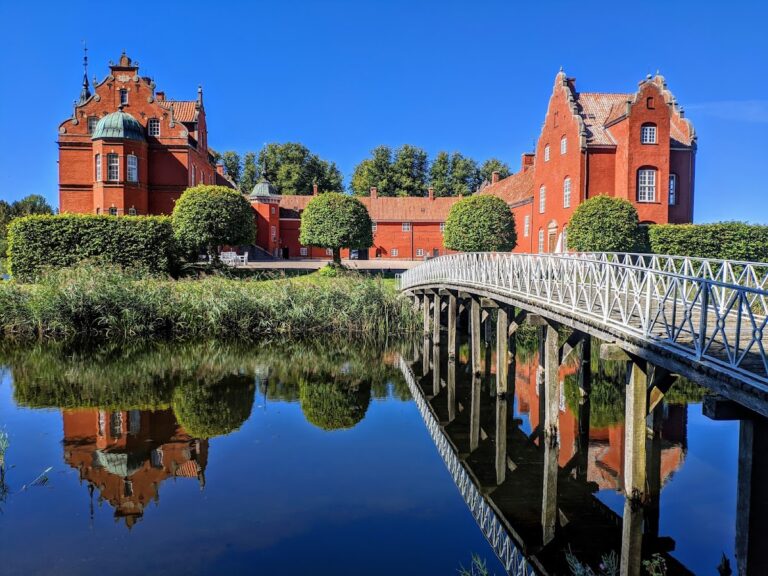
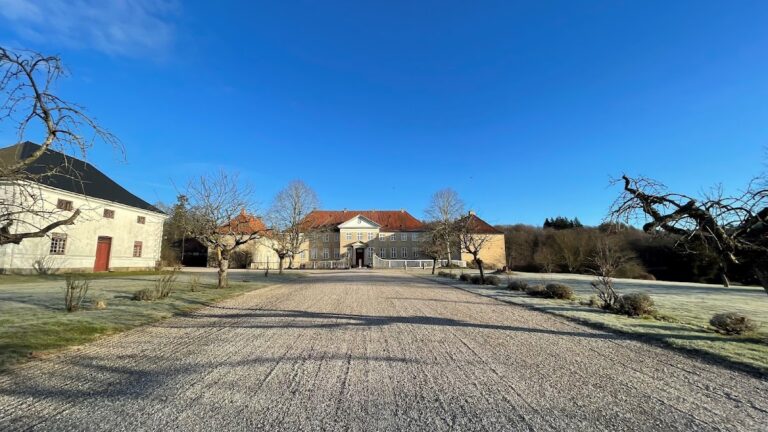
Knabstrup Manor is one of Denmark’s oldest manor houses, located near Holbæk on Zealand, with its present Historicist main building constructed in 1861 and 1862. Historicism was a nineteenth-century approach that combined forms drawn from earlier architectural traditions. The estate’s history extends to before 1288, and its long development reflects repeated changes of ownership, rebuilding, and use.
Medieval origins
The first written mention of Knabstrup dates to 1288, when the estate was confiscated from Niels Henriksen of the Hvide dynasty. The Hvide were a powerful medieval Danish aristocratic family whose members held important political and religious offices. Niels Henriksen was dispossessed because of his involvement in the 1286 murder of the Danish king Eric V.
Little is known about the earliest building. In 1460, Iver Axelsen Thott began constructing a new complex. Its plan was intended to resemble Lilø Manor in Scania, a historical province in southern Sweden across the Øresund from Zealand. Thott owned both estates.
Fire and relocation
The main building was destroyed by fire in 1620. Frederik Nielsen Parsberg subsequently acquired the estate and rebuilt the manor approximately 700 metres from the earlier site. This relocation created a new setting for the estate while preserving its role as a major country property.
The Lunn family and nineteenth-century rebuilding
Following foreclosure, the estate was sold in 1776 to Christian Ditlev Lunn, a theologian who had turned to farming. After his death in 1812, his son Willars Knudsen Lunn inherited Knabstrup. The manor gradually fell into disrepair under his ownership. His son, Carl Frederik August Willarsen Lunn, took over management in 1846 and decided that a new main building should be constructed.
Vilhelm Dahlerup designed the new building, which was erected from 1861 to 1862. The project also included a brickyard, with an oven built between 1856 and 1859 to support the estate’s construction work. Knabstrup remained associated with the Lunn family through later owners including Erasmus Sigismund Lunn and Knud William Lunn. From 1931 onward, the estate was held by Knabstrup Gods A/S through successive curators.
The estate also gave its name to the Knabstrupper, a Danish horse breed known for its spotted coat. V. Lunn bred the horses at Knabstrup in the early nineteenth century. The manor lies in Holbæk Municipality, about two kilometres from the settlement of Knabstrup and near Holbæk.
Remains
The present manor
Knabstrup Manor’s present main building is a three-winged structure in the Historicist style. The east wing of the earlier manor was incorporated into the new building and redesigned so that it harmonized with the two newly constructed wings. Materials from the earlier manor were reused wherever possible, including Baroque doors installed in the main wing. These surviving elements connect the nineteenth-century building with the estate’s earlier architectural phases.
Associated estate buildings
Dorotheaslyst
Dorotheaslyst, a residence for a widow associated with the estate, was built between 1799 and 1802 by Philip Lange, the son of Philip de Lange. The building is listed.
Brickyard oven
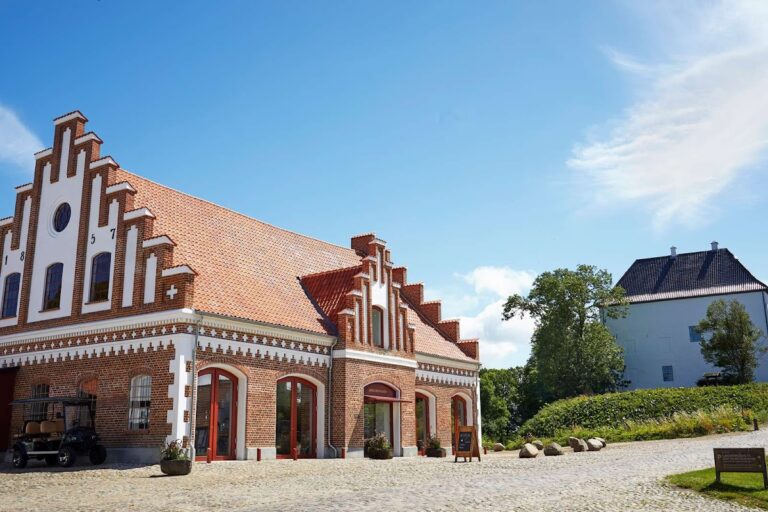
The manor’s nineteenth-century rebuilding was accompanied by a brickyard, a facility for producing bricks. Its oven was constructed between 1856 and 1859 as part of the estate’s building infrastructure.
Nearby sites