Château de Crazannes: A Historic Castle in France


Site at a Glance
- Rating
- 4.4
- Popularity
- Medium
- Country
- France
- Primary era
- Medieval
- External website
- Open
- Eras represented
- Medieval, Early Modern
- Civilizations
- Duchy of Aquitaine, French
- Site type
- Domestic
- Remains
- Castle
On this page13 sections
History
Château de Crazannes is a historic castle in France, begun in the fourteenth century on the site of an eleventh-century medieval fortress and preserving Romanesque and Flamboyant Gothic elements. Located in the historic region of Saintonge beside the Charente River, it is regarded as one of the oldest castles in Charente-Maritime and was among the first privately owned castles in the region to receive official protection as a historic monument.
Medieval Origins and Later Owners
The site initially belonged to the lords of Tonnay-Charente. Construction of the present château began during the fourteenth century, and building work continued through the eighteenth century. The estate later passed to Jacques Poussard, a counsellor of Charles VI, and subsequently to the Daillon and Acarie families.
The Acarie family remained at Crazannes for more than 300 years. Its male members were distinguished military figures, and the family carried out major enlargement works that shaped the château’s later development. The Black Prince, Edward of Woodstock, an English military leader who played a major role in the Hundred Years’ War, reportedly stayed at the estate during the fourteenth century. François I, king of France from 1515 to 1547 and a major patron of Renaissance culture, reportedly spent one night there in 1519.
Revolution, Restoration, and Protection
During the French Revolution, the château was rented by Pierre-Louis de La Rochefoucauld-Bayers, bishop of Saintes. It later belonged to the Chaudruc family, who undertook extensive restoration work in the early twentieth century. The château was classified as a historic monument in 1913, with additional listings made in 1925, 1963, and 1988.
Crazannes is also associated with the story of Puss in Boots. The château’s owner, described as the cat’s master, was celebrated by Charles Perrault, the seventeenth-century French writer known for literary versions of fairy tales including Puss in Boots. This association forms part of the site’s later cultural identity.
Remains
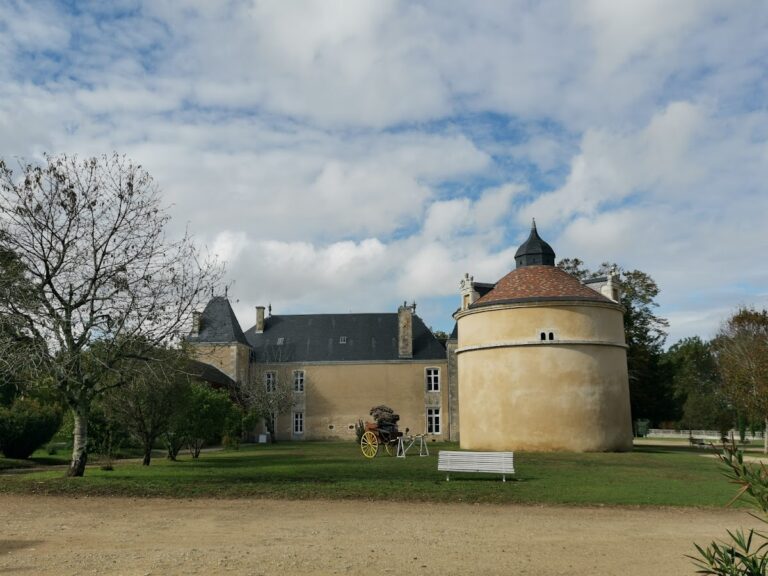
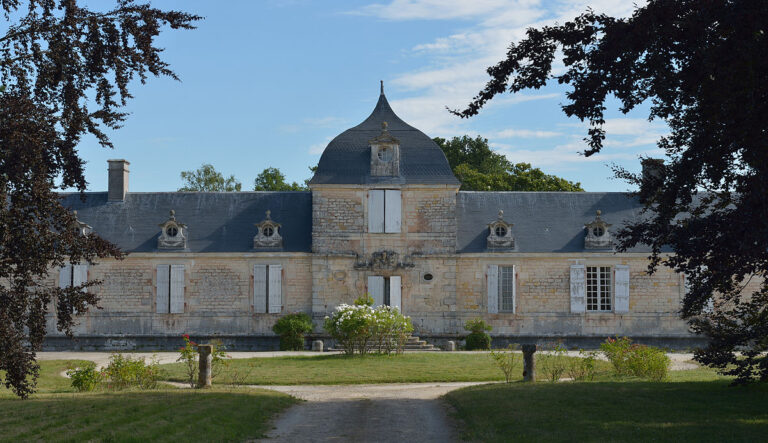
The surviving château combines elements of the former fortress with later residential and defensive work. The complex includes medieval structures, a sculpted north façade, a cylindrical tower, a seventeenth-century dovecote, and a park extending toward the Charente River.
Medieval Fortress Elements
Romanesque Chapel
The Romanesque chapel dates from the eleventh century. Romanesque architecture is a medieval European style characterized by massive walls, rounded arches, and relatively small openings. The chapel is one of the surviving elements from the fortress period.
Keep and Moat
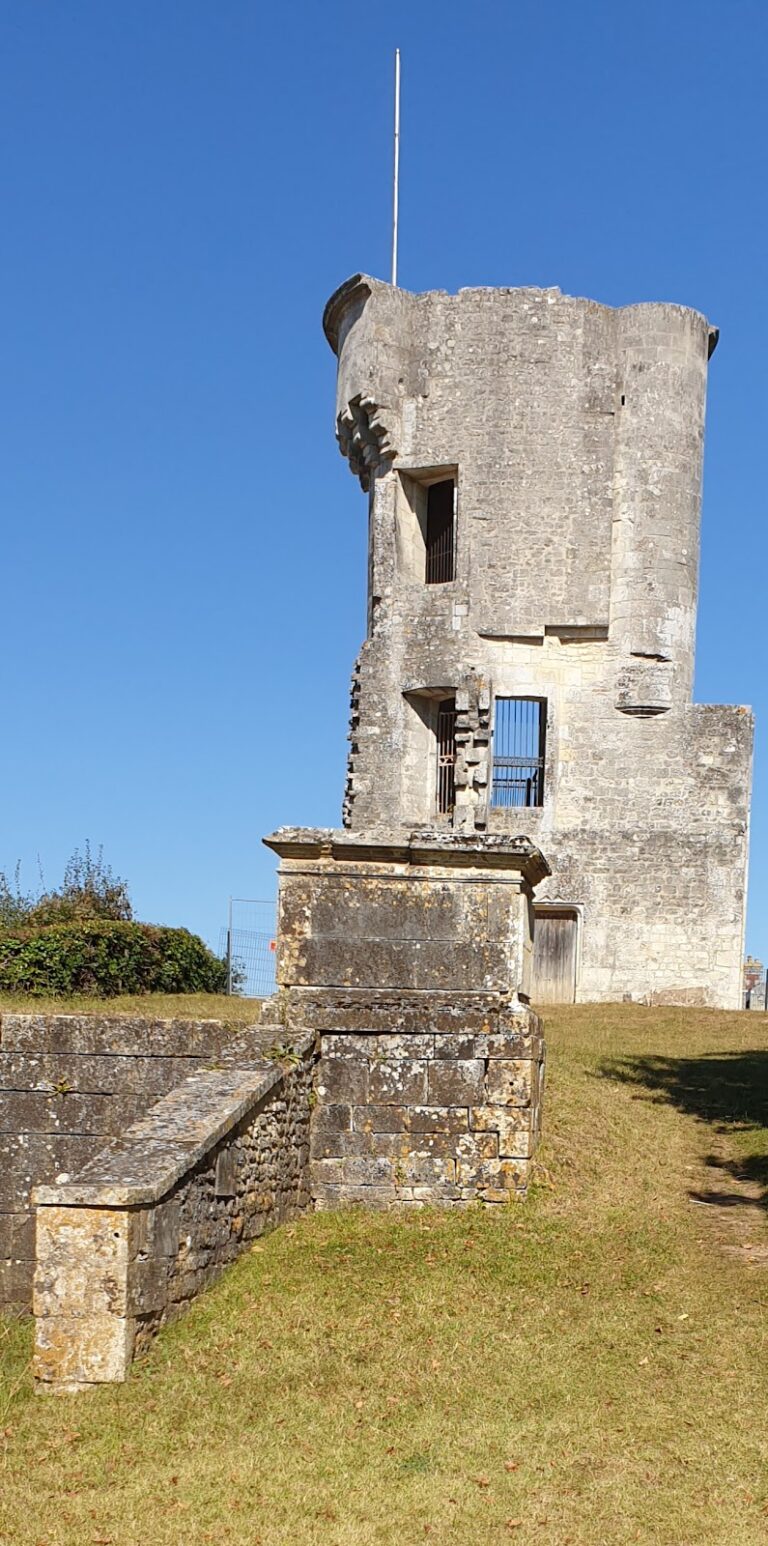
The eleventh-century keep is a remnant of the former enclosing wall and was modified repeatedly over time. Alongside it, the moat survives as another physical element of the medieval defensive site.
Sixteenth-Century Façade and Tower
North Façade
The north façade dates from the beginning of the sixteenth century. Its doors and windows carry elaborate stone sculpture in the Flamboyant Gothic style, a late Gothic form known for intricate, flame-like tracery and ornament.
Cylindrical Tower
A cylindrical tower adjoins the north façade. Its machicolations, projecting openings in a defensive wall or tower through which objects could be dropped onto attackers, emphasize its military character. The tower is capped by a sharply pointed pepper-pot roof, a small conical roof commonly placed over a turret.
Later Buildings and Grounds
Dovecote
The dovecote dates from the seventeenth century. Such a building was designed to house pigeons, and it forms part of the château’s later architectural group.
Park
The park surrounds the château and extends along the Charente River. It contains centuries-old trees and has been included in the preliminary inventory of remarkable gardens.