Château de Monteton: A Medieval Castle and Historic Residence in France


Site at a Glance
- Rating
- 4.5
- Popularity
- Very Low
- Country
- France
- Primary era
- Medieval
- Eras represented
- Medieval, Early Modern
- Civilizations
- Duchy of Aquitaine, English, French
- Site type
- Domestic
- Remains
- Castle
On this page8 sections
History
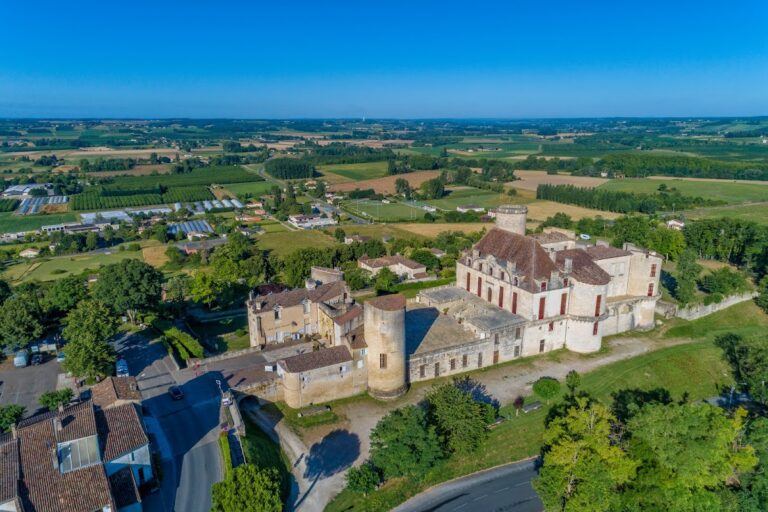
Château de Monteton is a medieval castle in Monteton, France, built in the thirteenth century in the Romanesque style. It was originally owned by the Caumont family and served as the seat of a lordship.
From the Caumont family to the Digeon de Monteton line
In 1623, the lordship passed to the Digeon family through the marriage of Jeanne de Béraud, Lady of Monteton, to Charles de Digeon, Lord of Peyrières. Their branch adopted the name Digeon de Monteton, also written Dijon de Monteton. The family also held the lordships of Autramat and Péchalvet.
The Digeon family was Protestant. After the revocation of the Edict of Nantes in 1685, a royal measure that ended the limited legal protection previously granted to French Protestants, part of the family left France for Prussia. This branch became known as Digeon von Monteton.
An eighteenth-century transformation
During the early eighteenth century, the Digeon de Monteton family remodeled the Romanesque castle as a more comfortable residence suited to the period. The property was connected with the family’s changing fortunes during the religious and political tensions of the time.
After Anne de Briquemaut, widow of Pierre de Digeon and the person entitled to use and benefit from his property, left France, the lordship of Monteton was seized. Her brother-in-law, Henry Digeon de Peyrières, attempted to have it transferred to him. The properties of Digeon de Boisverdun were treated in a similar way after his departure from the kingdom.
Inheritance, abandonment, and protection
The Digeon de Monteton family retained Château de Monteton until 1835. It then passed by inheritance to Léopold de Gervain, who restored Château de Lasserre and lived there.
Château de Monteton was abandoned during the twentieth century. It was later partially restored and converted into an inn. The building was listed as a French historic monument on 8 February 2008, placing it within France’s heritage-protection system for sites of historical or architectural importance.
Remains
Château de Monteton combines the defensive character of a thirteenth-century Romanesque castle with the more comfortable residential form created during its early eighteenth-century transformation. Its entrance and principal building preserve the architectural evidence of these successive uses, while partial restoration has adapted the property for use as an inn.
Defensive entrance and residential building
Drawbridge
A drawbridge protected the entrance to the château. Its presence reflects the defensive concerns associated with the site and the historical circumstances of Protestant families who had converted under pressure following the revocation of the Edict of Nantes in 1685.
Romanesque castle and later residence
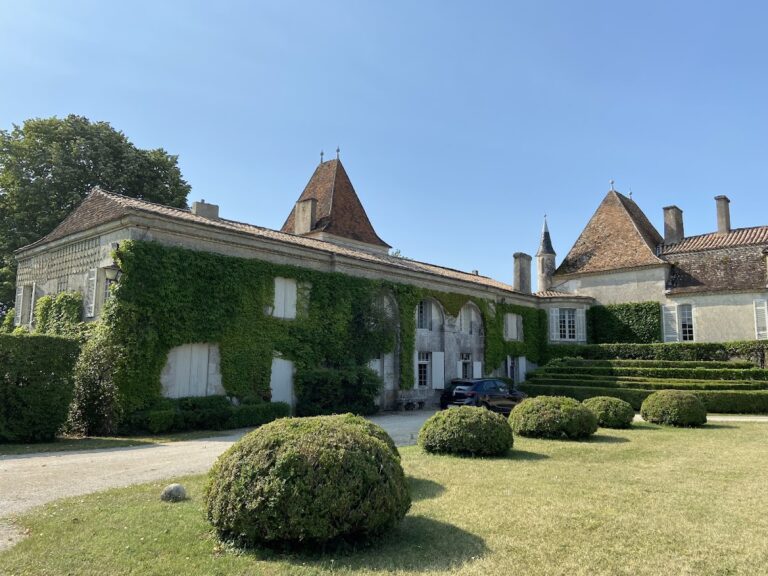
The building began as a thirteenth-century Romanesque castle, a medieval form commonly characterized by massive walls, rounded arches, and a fortress-like appearance. In the early eighteenth century, it was transformed into a residence intended to provide greater comfort. The château now survives in partially restored form and functions as an inn.
Nearby sites