Mamer Castle: Municipal Seat in Luxembourg


Site at a Glance
- Rating
- 5
- Popularity
- Very Low
- Country
- Luxembourg
- Primary era
- Modern
- Eras represented
- Medieval, Modern
- Civilizations
- Holy Roman Empire
- Site type
- Civic
- Remains
- Palace
On this page8 sections
History
Early castle and revolutionary destruction
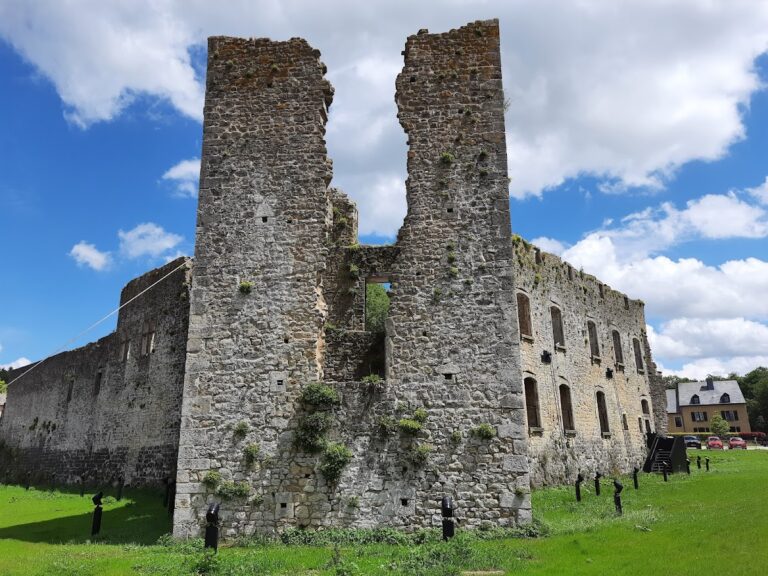
A castle was first built at Mamer in the tenth century. During the French Revolutionary Wars, the European conflicts associated with revolutionary France between 1792 and 1802, it fell into ruin. French forces seized the property and sold it in 1798 to Thierry de Bastogne.
Rebuilding and agricultural use
In 1830, Frédéric François, a senior official, commissioned a new castle on the site. The estate was later used for agriculture. In 1934, the castle and 1.72 hectares of arable land passed to Jacques Fischer and Julie Kremer, who operated an agricultural holding there.
Municipal restoration and administration
The communal administration, the municipal government of Mamer, purchased the property in 1995. In 1997, it voted unanimously to restore the castle. The work took place from September 1999 to February 2002, and the administration moved into the building on March 1, 2002. Mamer Castle now serves as the seat of the administration and council of the Commune of Mamer, whose meetings are regularly held there.
Remains
Castle complex and grounds
Main buildings and estate
The present complex comprises four buildings on Independence Square, near the centre of Mamer. The castle constructed in 1830 stood within a walled estate, with the enclosing wall reaching approximately two metres in height. A pond was also laid out on the grounds. The restored complex continues to accommodate Mamer’s municipal administration and council.
Commemorative sculpture
A sculpture near the main building commemorates Nicolas Frantz and Josy Barthel, both of whom were born in Mamer. Frantz was a Luxembourgish cyclist who won the Tour de France, a major annual road-cycling stage race, twice. Barthel, a Luxembourgish middle-distance runner, was Luxembourg’s only Olympic gold medalist.