Indo-Roman Maritime Trade
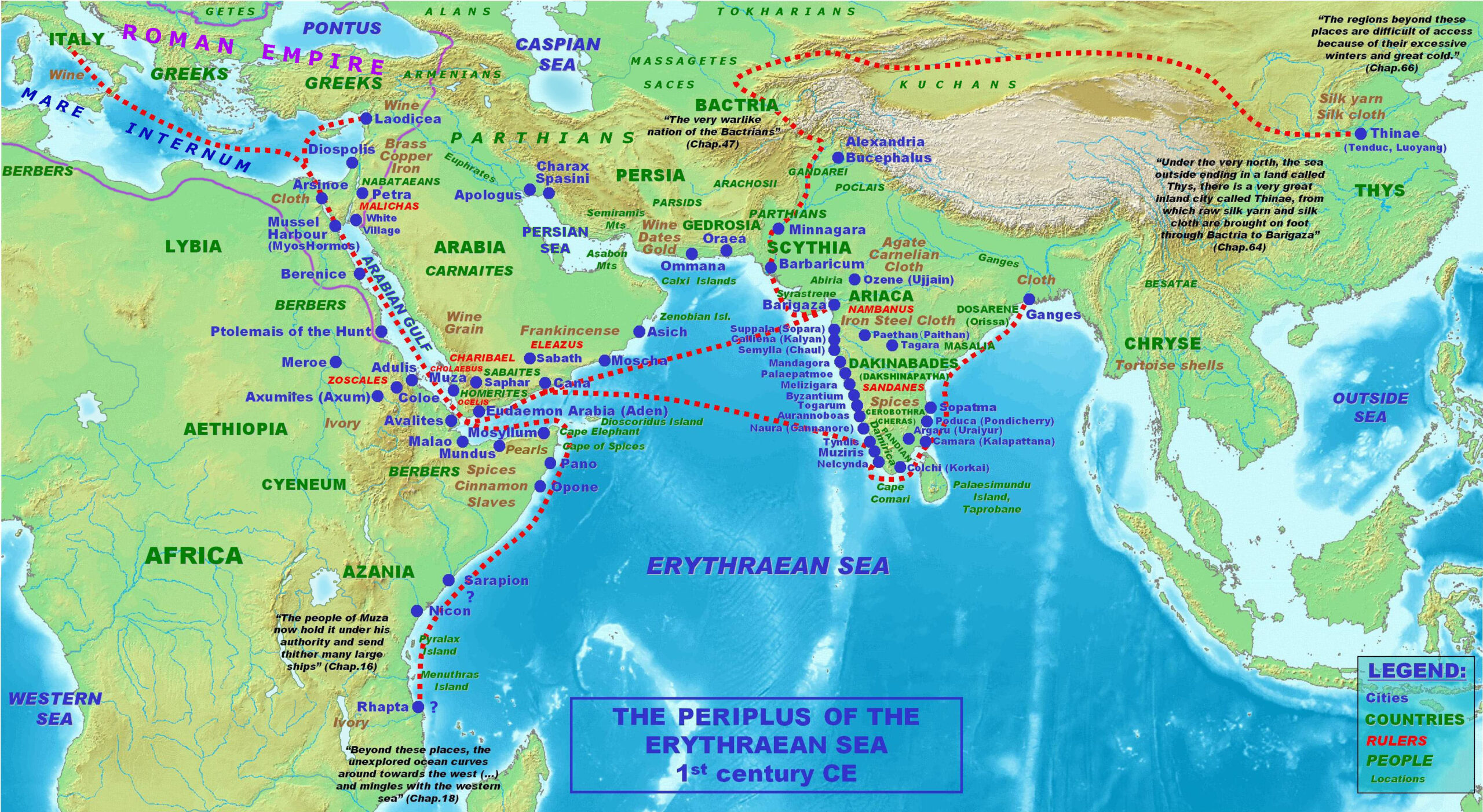
Roman Egypt supplied an overland connection between Mediterranean shipping and the Indian Ocean. Merchants took goods from Alexandria along the Nile and across the Eastern Desert to Red Sea ports. Sea voyages then reached markets in Arabia, eastern Africa and India, where local traders and rulers organised exchange.
Goods moved between Alexandria and the Nile route to Coptos, then across the Eastern Desert to Red Sea ports such as Berenike and Myos Hormos. Desert transport required water, animals, stopping places and security, while the ports needed stores, supplies and crews. The overland stage was therefore part of the commercial system rather than a minor gap between two sea voyages.
On this page6 sections
Navigating the monsoon system
Seasonally changing monsoon winds allowed open-water crossings towards India and a return voyage in another season. The Periplus associates knowledge of a direct passage with the pilot Hippalus. Departure dates determined the time available to trade before the winds changed.
Strabo reports that 120 ships sailed from Myos Hormos towards India during his time in Egypt under Augustus. His account describes an expansion in voyages after Roman annexation. Desert roads and Red Sea harbours connected that traffic with the Egyptian customs and transport system.
Indian ports and Roman demand
The first-century AD Periplus of the Erythraean Sea describes Barygaza in western India and the southern ports of Muziris and Nelcynda. It places Muziris on a river and records ships arriving from Arabia and the Greek-speaking trading world.
At Barygaza, shoals and strong tides made the approach difficult. The Periplus describes local pilots in the king’s service guiding incoming ships and towing them between fixed stations with the flood tide. Vessels waited at anchor through the ebb. Local knowledge and assistance were therefore needed after the ocean crossing.
Commodities exchanged
Cargoes differed between ports. Mediterranean wine, metals, glass and coin moved eastward, while pepper, textiles, gems, pearls and other goods moved through Indian and connected markets. Aromatics from Arabia and eastern Africa formed other branches of the network.
Pliny the Elder condemned expenditure on eastern luxuries and estimated the money sent to India, Arabia and the silk-producing world. His figures express a Roman writer’s concern about costly imports. Merchants also paid transport charges and customs, while eastern traders accepted or exchanged imported coins within local markets.
Roman glassware was highly prized in India. Coins featuring emperors from Augustus to Tiberius and later have been found in large hoards. The Periplus also mentions exports of copper, tin, lead, coral, and wine. Fragments of two-handled transport jars called amphorae found in Indian excavations testify to the reach of Mediterranean products.
Archaeological footprints
Excavations at Arikamedu recovered Mediterranean amphorae and fine pottery alongside regional material. Pattanam in Kerala has produced imported Mediterranean material and is a candidate in the search for ancient Muziris. Its precise identification remains debated.
Berenike’s excavations have recovered black pepper and objects connected with India. A Buddha statue announced in 2023 came from the courtyard of the temple of Isis. The research team dates it to the late first or early second century AD and identifies its material as Anatolian marble. Indian coins and objects bearing Sanskrit inscriptions provide further evidence of contact at the port.
Ancient descriptions and practical knowledge
The Periplus supplies practical information about markets, rulers, cargoes and sailing seasons. It recommends summer departures from Egypt for selected Indian destinations.
Pliny describes stages and seasons of the Indian voyage in Book 6 of the Natural History. Sailing time alone was only part of the undertaking: merchants also waited, bought cargo, arranged handling and prepared for the return. Roman seaborne trade explains these logistical demands, while Roman currency considers coin within a broader monetary economy.
The second-century “Muziris papyrus” preserves arrangements for moving an Indian cargo through Egypt. The borrower undertook to arrange camel transport across the desert, then shipment from Coptos down the Nile. Warehouses and seals secured the goods, and Alexandria was the point for the quarter-value customs duty. The cargo also secured the loan, with rights for the creditor if repayment failed.
Trade and consumption
Imported pepper supplied Roman cooking, while textiles and gems reached consumers able to afford them. Transport costs and customs added to the price paid for goods carried from distant markets. Roman food and drink explains the use of imported ingredients alongside local staples.
Exchange with India continued in late Roman and eastern Roman periods. Egyptian Red Sea ports and the routes serving them remained active under changing political conditions. Voyages depended on maintaining port access, desert transport and commercial arrangements with markets overseas.