Fortezza di Mont’Alfonso: A Border Fortress of the Duchy of Ferrara


Site at a Glance
- Rating
- 4.4
- Popularity
- Medium
- Country
- Italy
- Primary era
- Early Modern
- External website
- Open
- Eras represented
- Early Modern, Modern
- Civilizations
- Duchy of Ferrara, Italian
- Site type
- Military
- Remains
- Fort
On this page7 sections
History
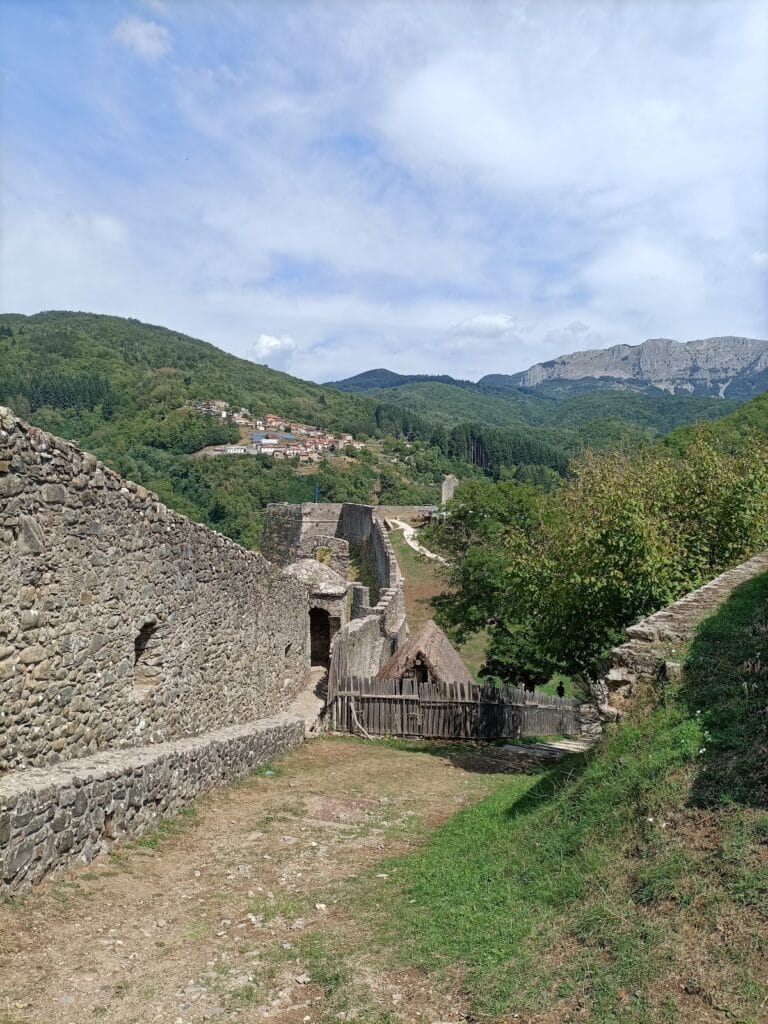
Fortezza di Mont’Alfonso is a fortified military stronghold in Italy, at Castelnuovo di Garfagnana, built between 1579 and 1586 for the Duchy of Ferrara. Designed by the engineer Marco Antonio Pasi of Carpi, it served as the duchy’s extreme defensive outpost on the frontier with the Republic of Lucca, an independent state whose border it was intended to protect. Its role also included long-range observation.
Este frontier stronghold
The fortress functioned as an Este military garrison during the sixteenth and seventeenth centuries. The Este dynasty was the ruling house associated with the Duchy of Ferrara and its wider military and political possessions. Mont’Alfonso therefore formed part of a system of border defense as well as a base for troops.
Napoleonic and private ownership
From 1805 to 1814, during the Napoleonic period, the fortress belonged to the Principality of Lucca and Piombino. This Napoleonic-era principality was sold in 1809 because the cost of maintaining the complex had become enormous. The fortress returned to Este ownership in 1814.
At the beginning of the twentieth century, Mont’Alfonso passed into private hands. The Scottish Bechelli family used it as a summer residence. By then, its structures had already deteriorated, and the complex suffered further damage in the 1920 earthquake in Garfagnana. Bombardments that struck Castelnuovo in 1944 and 1945, behind the Gothic Line, caused additional wartime damage. The Gothic Line was a German defensive system across northern Italy during the Second World War.
Internment during the Second World War
In 1942 and 1943, the fortress was used to intern approximately seventy Jewish refugees, including several families with children. After the German occupation and the establishment of the Italian Social Republic, the German-backed Fascist regime that controlled much of Italy from 1943 to 1945, almost all the internees were arrested on 4 December 1943. They were transferred first to the provincial camp at Bagni di Lucca and then deported to Auschwitz, the Nazi concentration and extermination camp complex in occupied Poland. Only two of those deported survived.
Restoration and continuing use
In 1980, the Province of Lucca acquired the fortress from the Bechelli family. An assessment at the time found the complex in very poor condition, with some areas completely ruined. A major restoration program followed, helping make the fortress a center of cultural and economic revitalization in the valley.
The Province of Lucca remains the owner, and the fortress continues in use. It serves as a center for research and education concerning alternative energy. Since 2008, it has also hosted advanced musical training organized by the Civic Music School of Castelnuovo.
Remains
The surviving site forms a fortified military complex at Castelnuovo di Garfagnana. Its condition reflects long-term deterioration, the 1920 earthquake, and the bombardments of 1944 and 1945. Some parts were completely ruined before restoration began after the Province of Lucca acquired the fortress in 1980, and the major restoration program shaped the complex’s present state.
North Gate and former prison building
The building to the right of the North Gate formerly housed the New Prison in the eighteenth century. Under the Bechelli family, it was converted into a villa in the Liberty style, the Italian form of Art Nouveau known for flowing decoration and natural ornamental motifs. This later residential use forms part of the surviving complex’s layered history.
Nearby sites