Khuchni Fortress: A Medieval Stronghold in Dagestan


Site at a Glance
- Rating
- 4.7
- Popularity
- Low
- Country
- Russia
- Primary era
- Medieval
- Eras represented
- Medieval
- Civilizations
- Unclassified
- Site type
- Military
- Remains
- Fort
On this page5 sections
History
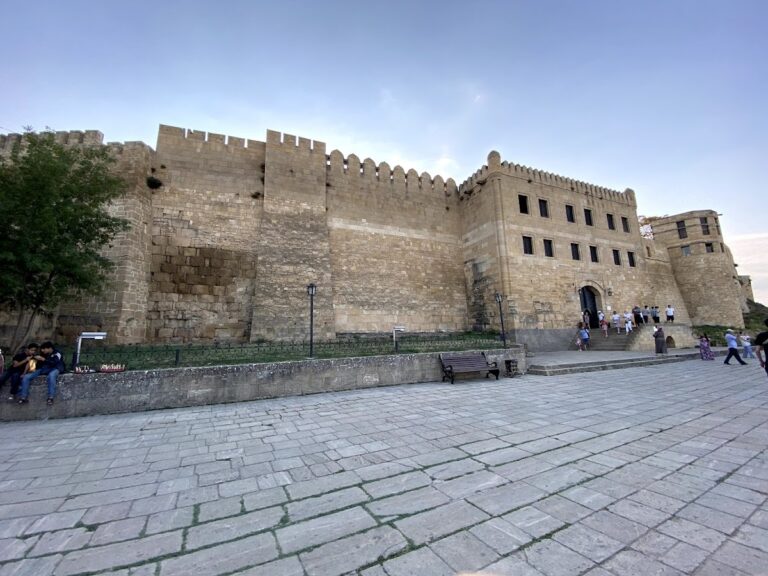
Khuchni Fortress is a medieval fortress in Russia, 1–2 km north of Khuchni, whose construction is dated to the seventh or eighth century. Built from shell rock, a stone formed largely from accumulated shell fragments, it is thought to belong to approximately the same period as the Derbent Citadel. The fortress is protected as a federally significant cultural-heritage site of the Russian Federation, a high-level legal designation for historically important places.
Medieval Origins
The fortress occupied a defensive position above a gorge on a steep-sided hill. Its distinctive masonry gives the exterior a particularly strong and unified appearance, while the substantial walls and surviving loopholes reflect its military purpose. The fortress was later left in a ruinous state, although much of its walling remains relatively well preserved.
The Seven Brothers and One Sister
Khuchni Fortress is traditionally called the Fortress of Seven Brothers and One Sister. A Tabasaran legend tells of seven heroic brothers and their beautiful sister who lived there. The brothers were celebrated as warriors who guarded neighboring villages. In the best-known version, Persian forces invaded Tabasaran territory but could neither storm the fortress nor move farther into the region. Other versions of the story identify the invaders as Mongols or Arabs.
Remains
The surviving fortress stands on a high hill above a gorge north of Khuchni. Its shell-rock walls form the principal visible remains and retain a compact, monolithic character. The structure is ruinous and in moderate condition, but the walls are still relatively well preserved.
Walls and Internal Levels
The walls are more than 2 metres thick and include surviving loopholes, narrow openings that allowed defenders to observe or use weapons from protected positions. The fortress originally had two levels. Earth now fills almost all of the lower level, so the structure appears taller from the outside than it does when viewed from within.