MANTR: Museo Archeologico Nazionale e Teatro Romano di Spoleto


Site at a Glance
- Rating
- 4.4
- Popularity
- Low
- Country
- Italy
- Primary era
- Classical
- External website
- Open
- Eras represented
- Stone Age, Bronze Age, Iron Age, Classical
- Civilizations
- Ancient Greek, Roman
- Site type
- Museum
On this page13 sections
History
MANTR – Museo Archeologico Nazionale e Teatro Romano di Spoleto is an archaeological museum in Italy that incorporates the remains of a Roman theatre dating to the first century BC. Established in 1985 in the former Sant’Agata monastery, the state museum presents the history of Spoleto and its surrounding territory from the fourth millennium BC to the fourth century AD.
Early Spoleto and the Umbrian period
The museum’s historical sequence begins with human presence during the Neolithic and Bronze Age. It continues through the Umbrian phase, represented particularly by funerary assemblages from the seventh and sixth centuries BC. These collections place Spoleto within the cultural world of the Umbri, an ancient Italic population associated with central Italy before and during Rome’s expansion.
The Piazza d’Armi necropolis provides an important view of pre-Roman society. Excavations took place in 1982, 2008, and 2011, and revealed numerous child burials with rich grave goods. Some of these graves contained weapons normally associated with adult warriors. After restoration, the objects were displayed from September 2013 in exhibitions focused on the child burials and on symbols of power in pre-Roman Spoleto.
A section devoted to the necropolis was created from discoveries made between 2008 and 2011. In 2015, a four-centimetre fibula decorated with a two-headed, anthropomorphic winged sphinx was found in the grave of a child-priestess. The object forms part of the material associated with the unusual funerary practices of Piazza d’Armi.
Roman political and urban transformation
Spoleto became a Latin colony in 241 BC. A Latin colony was a Roman settlement with Latin civic status. The museum presents this period through dedicatory inscriptions, votive offerings, architectural terracottas, and material connected with ceramic-production workshops. Votive offerings, also called ex voto objects, were dedicated to deities in fulfillment of a vow or in thanks for divine assistance.
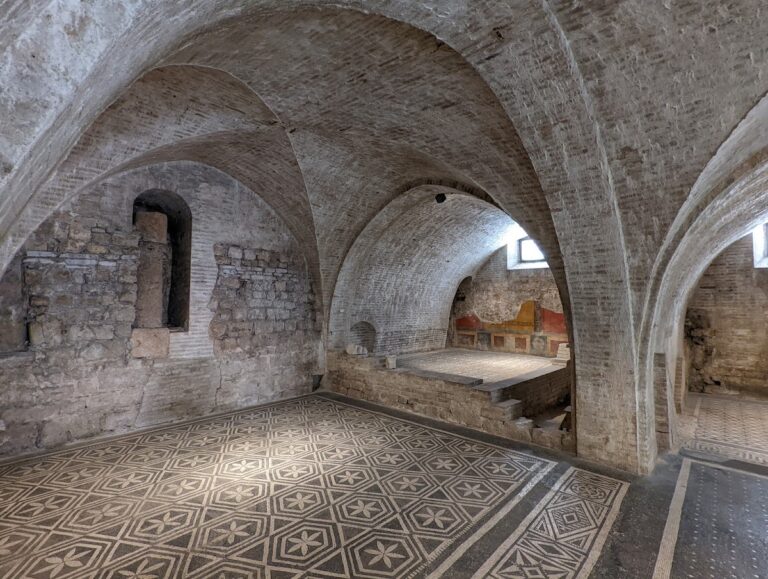
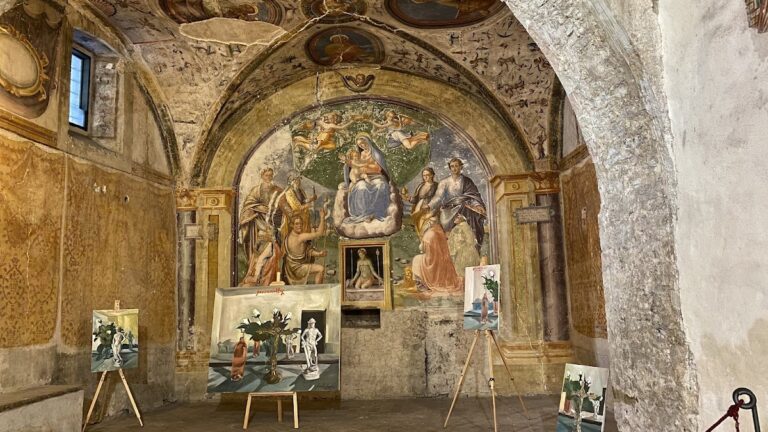
The later municipal and imperial phases began around 90 BC and continued into the Roman period. A municipium was a community incorporated into the Roman state with its own municipal organization. These phases are represented by monumental inscriptions, fragments of large honorific statues, decorated wall plaster, mosaics, portrait sculpture, and material connected with public imagery, political and social celebrations, and domestic life.
The museum also follows the relationship between Spoleto and the Valnerina. Its holdings include objects from sanctuaries, cemeteries, and settlements at Monteleone di Spoleto, Montefranco, Norcia, Ferentillo, Cerreto di Spoleto, Colfiorito, and Preci. The material shows the range of communities and ritual and funerary contexts connected with the surrounding territory.
The museum and theatre in the modern period
The Museo Archeologico Nazionale di Spoleto was established within the former Sant’Agata monastery in 1985. The collection of the physician Canzio Sapori, who died in 2002, was donated to the Italian state, and the museum’s Sala Canzio Sapori was named in 2003.
The Roman theatre became an integral part of the museum visit. It was excavated in 1933, 1938, and 1954. Systematic restoration began in the 1950s and recovered the seating, orchestra, ambulatory, and raised stage platform. Since December 2014, the museum has been managed by the Italian Ministry of Culture through the Umbrian Museum Centre, which became the Regional Directorate of National Museums of Umbria in December 2019.
Remains
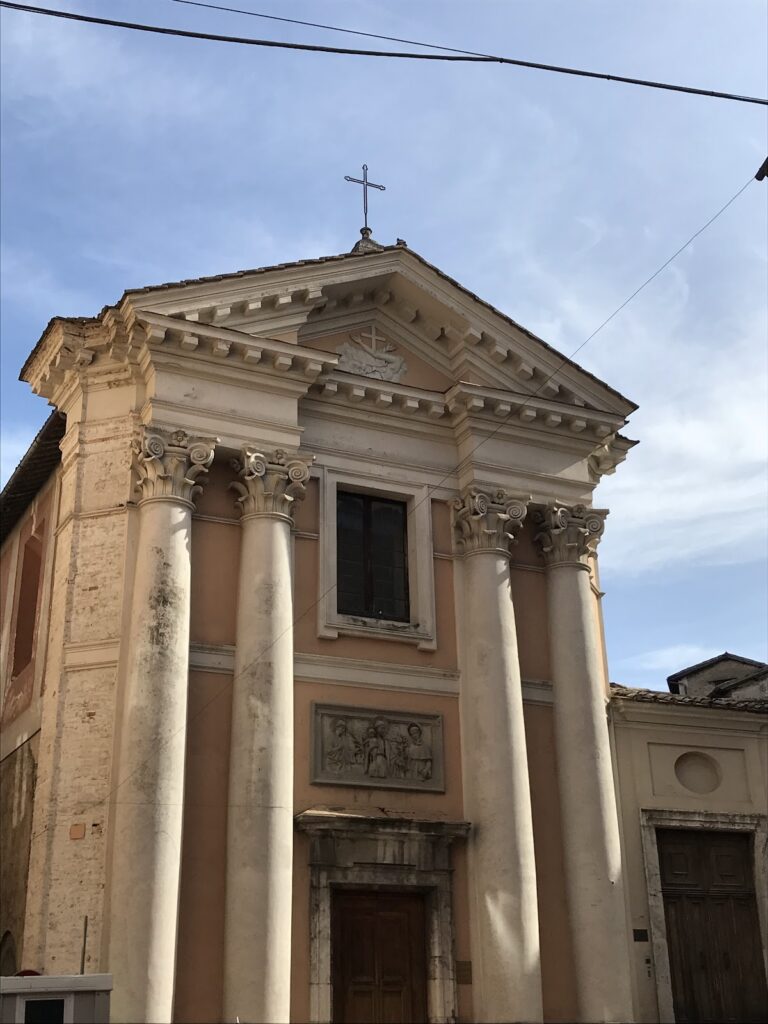
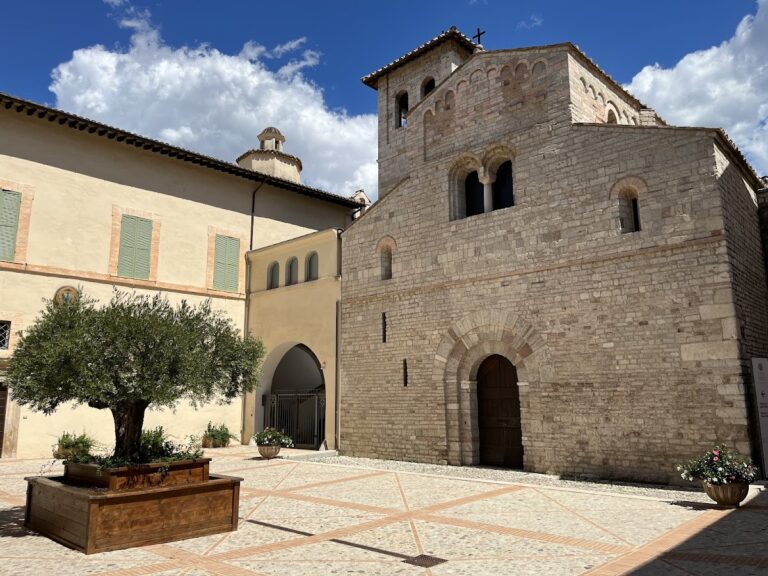
The museum occupies the former Sant’Agata monastery within the monumental Sant’Agata complex, in Spoleto’s archaeological area between Via di Sant’Agata and Via delle Terme. The complex incorporates parts of the Roman theatre, which were later enclosed within surrounding buildings. The museum is arranged across four levels, with the ground floor and first, second, and third floors. The principal exhibition route uses the first and third floors and concludes at the theatre, while the second floor contains a room for temporary exhibitions.
Museum collections
Early archaeological collections
The first floor contains five rooms overlooking a loggia. The archaeological material comes chiefly from the Pian delle Rotte cave near Campello sul Clitunno, the area of the Rocca Albornoziana, the Sant’Elia hill, and Piazza d’Armi. Early Spoleto is represented by busts, inscriptions, vessels, votive bronzes, and funerary assemblages.
Among the displayed objects are a large zoomorphic lid dated to the seventh or sixth century BC, a glass-paste balsamarium from the sixth century BC, and an impasto ceramic olla with concentric grooves from the eighth or seventh century BC. A balsamarium was a small container for perfumed oils or similar liquids. The collection also includes a small female head in bone dating to the third or second century BC.
Piazza d’Armi and the Lex Luci Spoletina
The Piazza d’Armi displays include funerary assemblages from the necropolis and the four-centimetre fibula found in the child-priestess’s grave. The burials combine the remains of children with rich grave goods, including weapons, giving the cemetery a distinctive place in the museum’s presentation of pre-Roman Spoleto.
Two limestone cippi, or inscribed stone markers, date to the third century BC and bear the Lex Luci Spoletina in archaic Latin. This sacred-forest regulation protected a grove dedicated to Jupiter, the principal Roman sky and state god, by prescribing penalties for profanation. The two stones were probably placed at the edge of the woodland approximately 20 kilometres apart.
Valnerina material
The Valnerina displays include Late Bronze Age cinerary urns from the Monteleone di Spoleto necropolis, finds from the sanctuaries of Monteleone di Spoleto and Montefranco, and funerary assemblages from the Hellenistic and Roman necropolis of Norcia. Other objects include seventh-century BC material from the Cave of Castel San Felice, a geometrically decorated cinerary urn from Ponte di Cerreto, and a funerary assemblage from the Colfiorito necropolis.
The same group contains metal objects from Colle del Capitano at Monteleone di Spoleto, together with small bronze objects and worked bones from Abeto di Preci. These finds are displayed alongside material from Spoleto, allowing the museum to present sanctuaries, settlements, and cemeteries across the Valnerina as part of the area’s archaeological history.
Roman-period material
Objects associated with the Latin-colony and early Roman phases include dedicatory inscriptions, votive offerings, architectural terracottas, and evidence from ceramic workshops. Architectural terracottas are moulded or decorated fired-clay elements used in ancient buildings, especially temples. Material from the municipal and imperial periods includes monumental inscriptions, fragments of large honorific statues, decorated wall plaster, mosaics, and portrait sculpture.
Roman theatre
Theatre structure
The Roman theatre dates to the first century BC and was partly incorporated into later buildings. During the medieval period, parts of the monument were dismantled, and materials from the stage were reused in Palazzo Corvi and the church of Sant’Agata. Excavation and restoration recovered the seating, orchestra, ambulatory, and stage platform. The orchestra is the semicircular area between the audience and the stage, while the ambulatory is a passage running around or behind the seating.
The theatre’s lower level is well preserved, and its ambulatory remains passable. The restored complex retains evidence of medieval dismantling and later incorporation into the surrounding buildings. It is also used for performances connected with the Festival dei Due Mondi, particularly dance performances.
Sculptures from the theatre
The theatre section contains sculptures recovered during twentieth-century excavations. They include portraits dating from the first to the third century AD, portraits identified as Augustus and Julius Caesar, and a local figure represented as Caesar. Augustus was the first Roman emperor, while Julius Caesar was the general and statesman whose career preceded the imperial system.
The collection also includes a statue of Aura, a figure from Greek mythology associated with a breeze or the air. In the Roman period, the sculpture was reworked to represent Venus. Its original form has been identified as a Greek marble work of the fifth century BC, showing how an earlier sculptural work was adapted to a later Roman setting.