Castillo de San Ramón: An 18th-century Coastal Battery in Almería



Site at a Glance
- Rating
- 4.5
- Popularity
- Very Low
- Country
- Spain
- Eras represented
- Early Modern
- Civilizations
- Spanish
- Site type
- Domestic
- Remains
- Castle
History
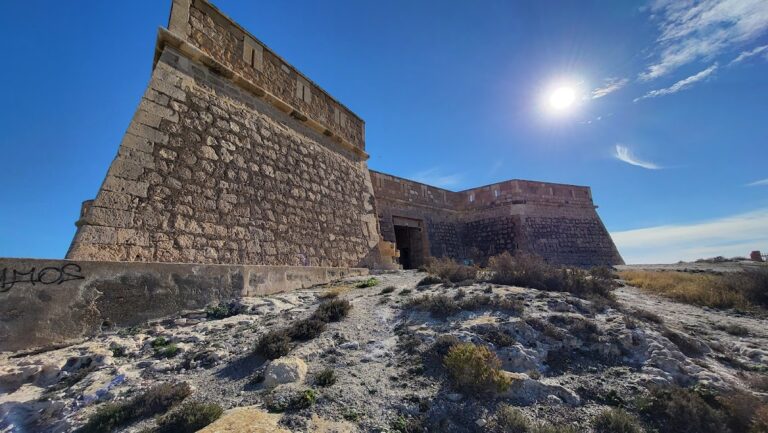
Castillo de San Ramón in Almería, Spain, is an 18th-century coastal battery erected by the Spanish crown in 1764 to protect the coastline and nearby mining interests. Built under a regulation issued the same year, the fortress belongs to the period of Bourbon coastal defences and was intended to guard maritime approaches against pirate attacks that threatened the lead and gold workings in the Rodalquilar valley.
Work began after the 1764 ruling that ordered the fortification, and the project carried an estimated cost of 200,000 reales de vellón, with private financing provided at the time. King Charles III approved its construction as part of wider efforts to strengthen the littoral. The emplacement was designed to host artillery and to observe the stretch of shore between Cerrico Romero and Cala de San Pedro, forming one element of the eastern Andalusian network of watchtowers and defensive points.
During the Peninsular War, from 1808 to 1814, the building suffered significant deterioration. In the decades that followed the conflict the site passed through a period of informal use, repeatedly occupied by people without permanent shelter and occasionally used by police units for coastal surveillance. In 1875 the State sold the property to a private individual for 1,500 old pesetas; ownership changed hands several times after that sale.
Throughout the late 20th and early 21st centuries the castle remained in private hands. In 1985 it received formal protection as an Asset of Cultural Interest (Bien de Interés Cultural), a designation that carries legal obligations to ensure its conservation and any necessary rehabilitation. By 2017 roughly fifty co-owners held title and placed the property on the market for just over three million euros. One owner, described as a wealthy architect, adapted interior spaces for year-round living over the last two decades, installing solar-powered electricity and a piped water supply drawn from the estate spring, and used the castle as his main seasonal residence. The local association Amigos del Parque Natural Cabo de Gata-Níjar has long campaigned for measures to safeguard the site and has proposed a visiting regime that seeks to balance owners’ rights with the preservation of its historical values.
Remains
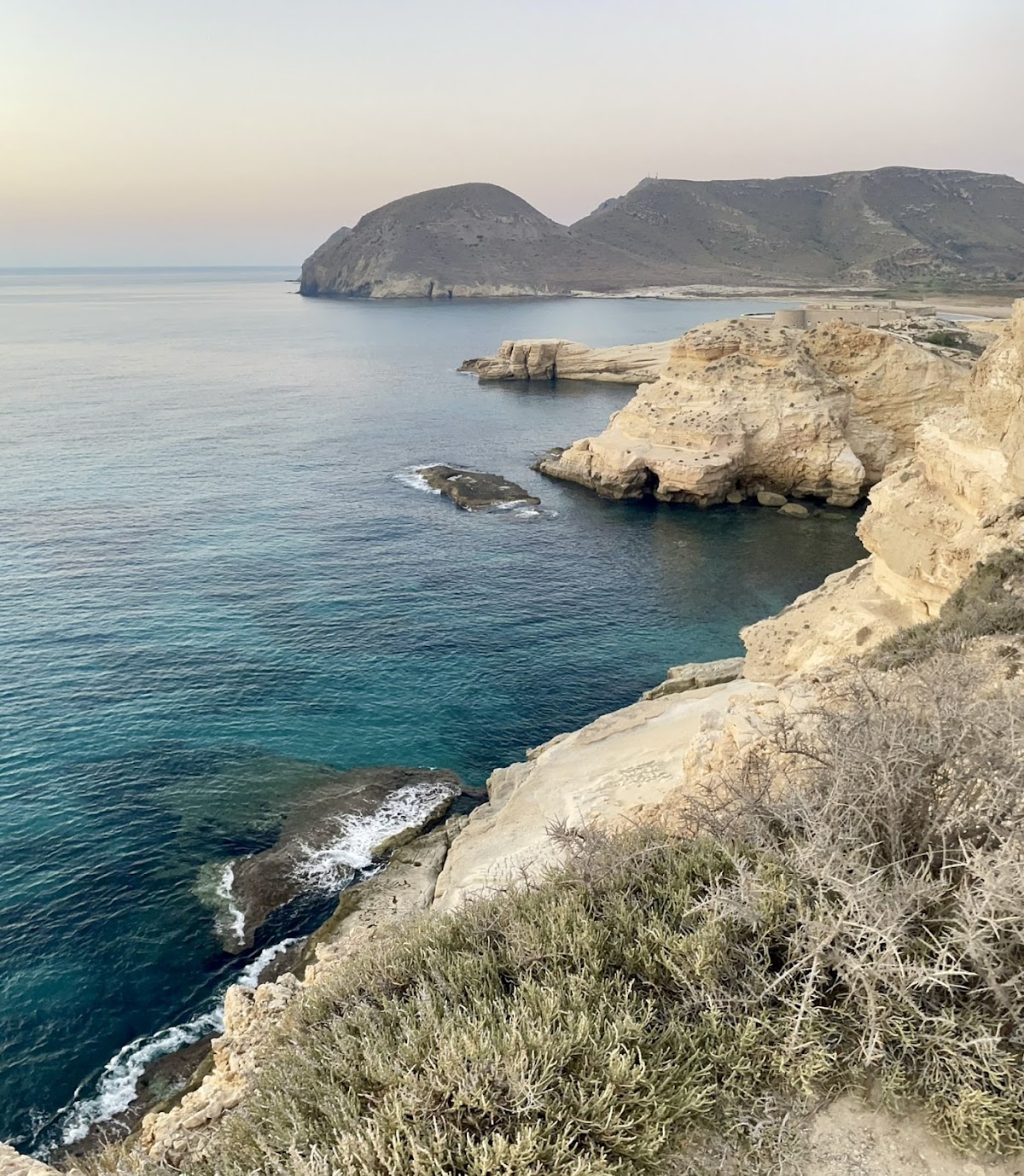
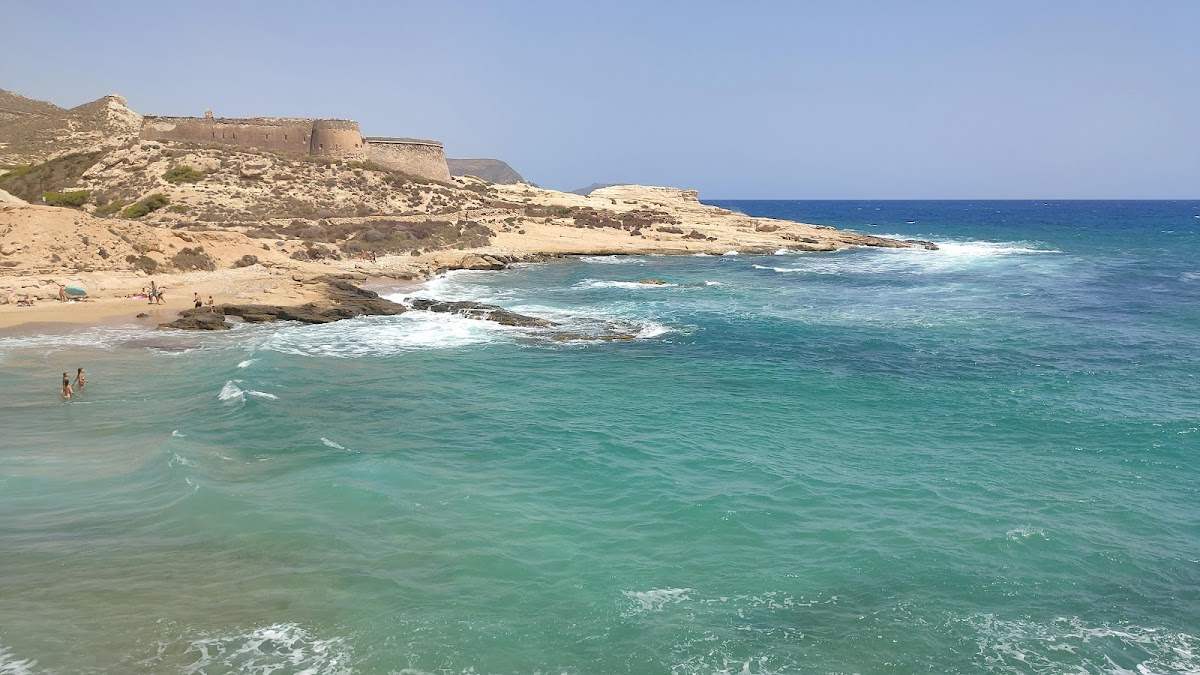
The site occupies more than 33,000 square metres of protected coastal land at El Playazo de Rodalquilar within the Cabo de Gata-Níjar Natural Park, close to the road linking Rodalquilar and Las Negras. The built footprint covers about 740 square metres distributed over two storeys. As a coastal battery constructed in the mid-1700s it was sited to command the shore and to mount up to four guns, its positioning chosen to observe and control the sea approaches near Cerrico Romero and Cala de San Pedro.
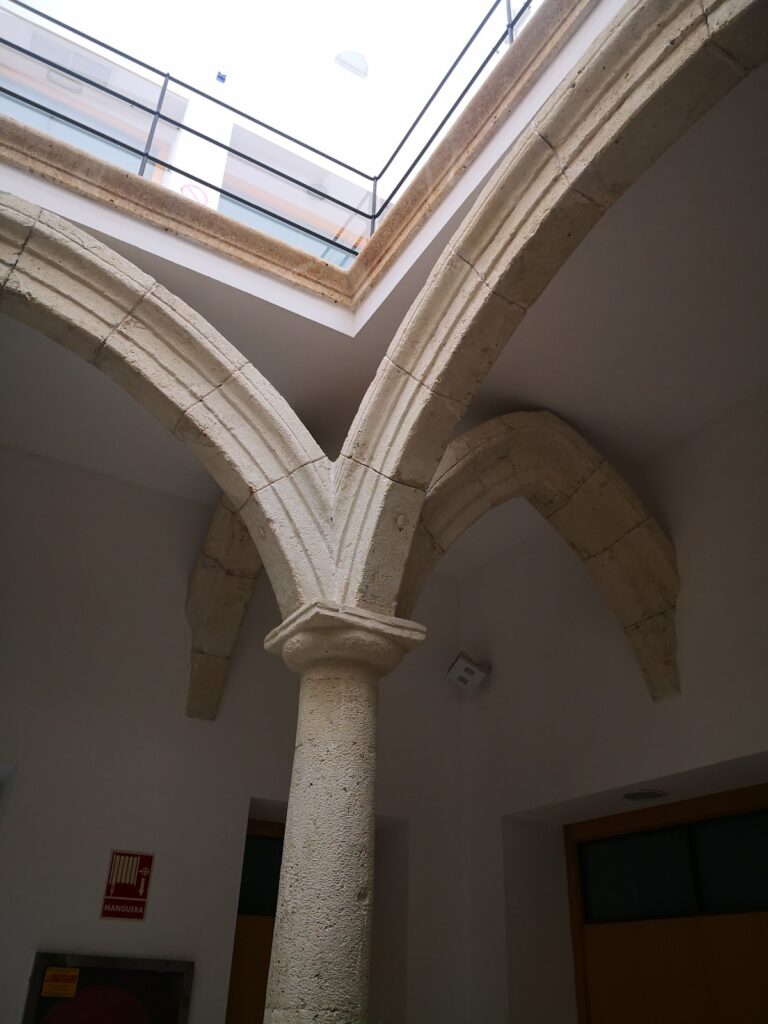
Interior spaces have been adapted for residential use while retaining elements tied to the building’s long history. The layout includes two principal living rooms, one of which connects directly to the kitchen, and a second that opens onto an indoor pool. The house contains seven bedrooms, five bathrooms and an old storehouse described as suitable for conversion to other uses. A central patio remains a prominent element of the plan and is singled out for its visual quality, while an Arab cistern survives on the plot and reflects an earlier phase of water storage and management on the estate.
Exterior features include terraces and a garden area, plus a garage parking space, and the position of the castle affords views over the Mediterranean and the surrounding park. The fabric of the building records clear episodes of damage and repair: the structure deteriorated during the Peninsular War and later underwent refurbishment to provide modern domestic services, including the installation of solar electricity and a piped water system supplied from the property spring. The 1985 cultural heritage listing requires any future interventions to secure the conservation, protection and, where needed, rehabilitation of these elements.
Nearby sites