Burg Gerolstein: A Medieval Hilltop Castle in Germany


Site at a Glance
- Rating
- 4.2
- Popularity
- Low
- Country
- Germany
- Primary era
- Medieval
- External website
- Open
- Eras represented
- Medieval, Early Modern
- Civilizations
- Holy Roman Empire
- Site type
- Military
- Remains
- Castle
On this page11 sections
History
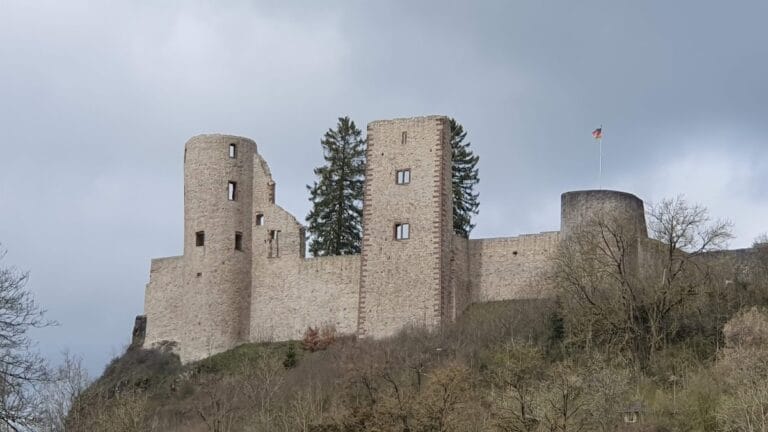
Burg Gerolstein is a medieval hilltop castle in Germany, above the town of Gerolstein in Rhineland-Palatinate. Its construction is generally dated to around 1100–1200, during the medieval period, and the castle is also described as having been built before 1212. Known at different times as Löwenburg, Burg Gerhardstein, and Junkernburg, it served as the seat of local noble power and later gave its name to Gerolstein.
Blankenheim origins and expansion
The castle was first documented in 1115, when Gerhard von Blankenheim moved his seat of lordship to the castle he had built, then called Burg Gerhardstein. The name Gerhardstein probably contributed to the later form Gerolstein. In the thirteenth century, Gerhard IV expanded the site into a fortified complex with an outer bailey, an enclosed subsidiary area outside the main castle, and a rear castle.
Between the thirteenth and fifteenth centuries, the complex was enlarged and strengthened repeatedly. Two chapels were added in 1486, and the castle’s large shield wall, a particularly strong defensive wall protecting a vulnerable side, was constructed during the sixteenth century.
Dynastic changes and destruction
After the Blankenheim line died out, Burg Gerhardstein passed to the House of Loon-Heinsberg, a medieval noble dynasty with possessions in the Eifel and neighboring regions, in 1423. In 1468 it passed to Dietrich III, Count of Manderscheid. Dietrich divided his possessions among his three sons in 1488. Johann, his second son, inherited the County of Blankenheim, Jünkerath, Burg Gerolstein, and parts of the lordship of Mechernich, establishing the Manderscheid-Blankenheim-Gerolstein line.
Lightning struck the powder tower in 1670 and severely damaged the castle. French troops occupied it on 6 July 1691, but it was retaken on 5 August during fighting in which Gerolstein was destroyed. By 1840, the castle was also being called Junkernburg.
Later damage and restoration
Parts of the remaining masonry were dismantled in the eighteenth century, while the former stronghold was also used as a quarry. Further destruction took place during the Second World War. The surviving remains were later restored, preserving the ruined character of the former castle complex.
Remains
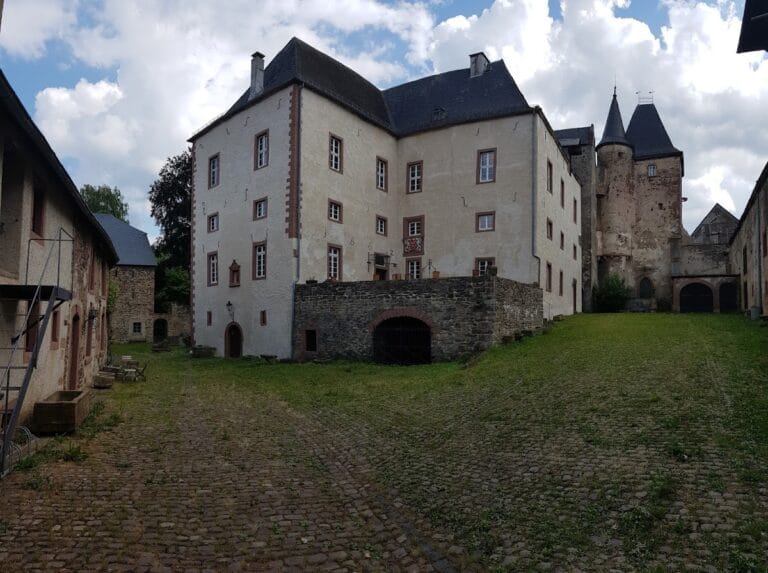
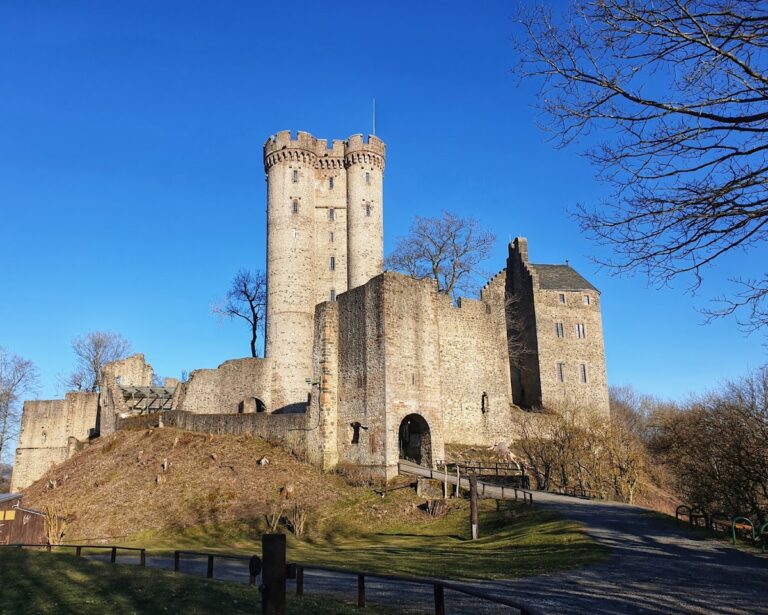
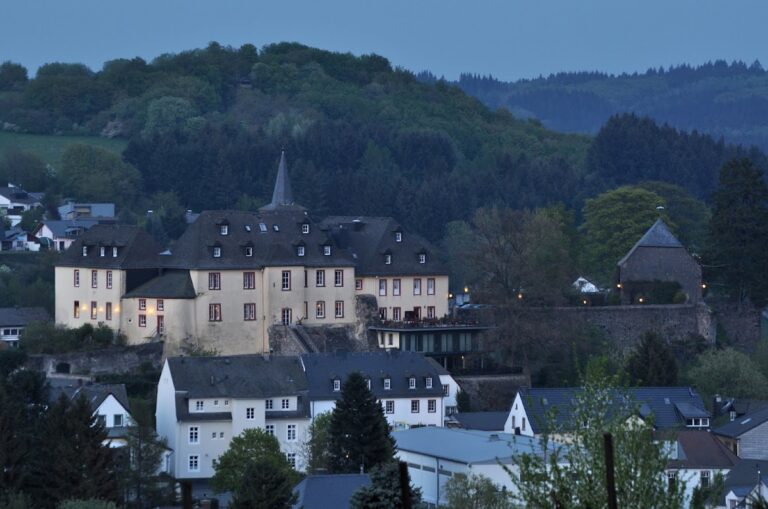
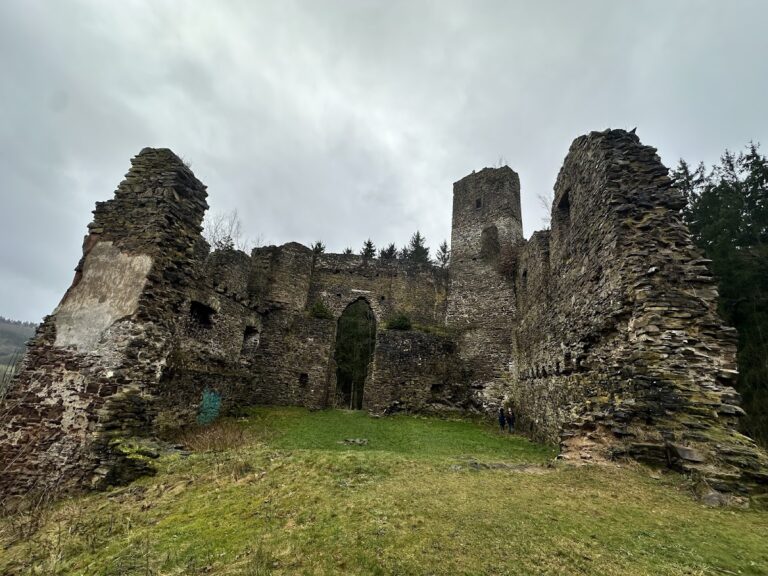
The ruins occupy a rocky hill at approximately 440 metres above sea level, east of Gerolstein’s town center in the area called An der Burg beside Gerolstraße. A rock in front of the hill partly conceals the site. The castle rises above the valley of the Kyll, the longest river in the Eifel and a left-bank tributary of the Moselle. The former complex consisted of a northern outer bailey and a main castle. Only portions of walls and towers survive, although the site is also listed with a private residential function.
Defensive and residential remains
Outer bailey and shield wall
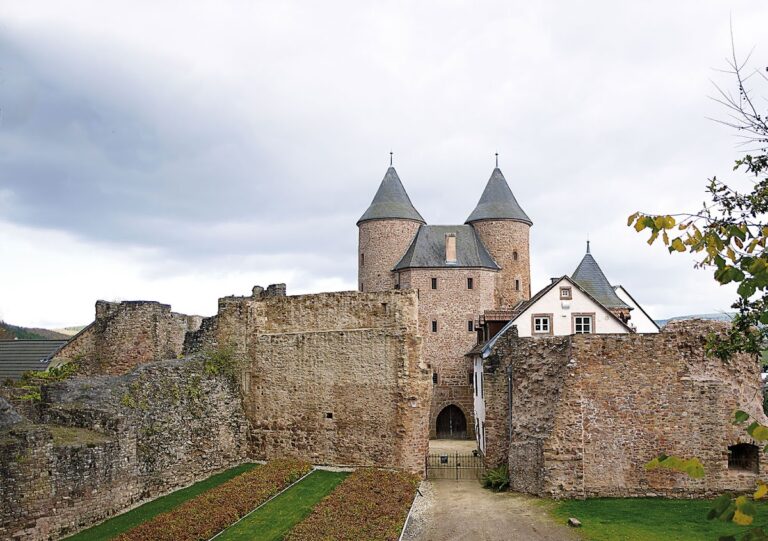
The northern outer bailey formed a subsidiary enclosed area outside the main castle. Its defenses included a massive shield wall approximately 11 metres high, 35 metres long, and 2 metres thick. This wall protected the strategically important side of the complex, while surviving tower remains mark other parts of the former defenses.
Residential buildings
Residential buildings formed part of the castle complex alongside its defensive works. Their surviving masonry belongs to the ruin that occupies the hilltop, together with the remaining wall and tower fragments.
Chapels
Castle chapel
One of the two chapels added in 1486 was built inside a half-tower. Its position combined a religious space with the existing fortified structure.
Court chapel
The second chapel, also added in 1486, stood below the rock. It formed another religious element of the castle complex and survives within the archaeological remains of the site.
Nearby sites