Drimnagh Castle: A Norman Lowland Castle in Dublin

Site at a Glance
- Rating
- 4.7
- Popularity
- Low
- Country
- Ireland
- Primary era
- Medieval
- External website
- Open
- Eras represented
- Medieval, Modern
- Civilizations
- Norman
- Site type
- Military
- Remains
- Castle
On this page8 sections
History
Norman origins and medieval development
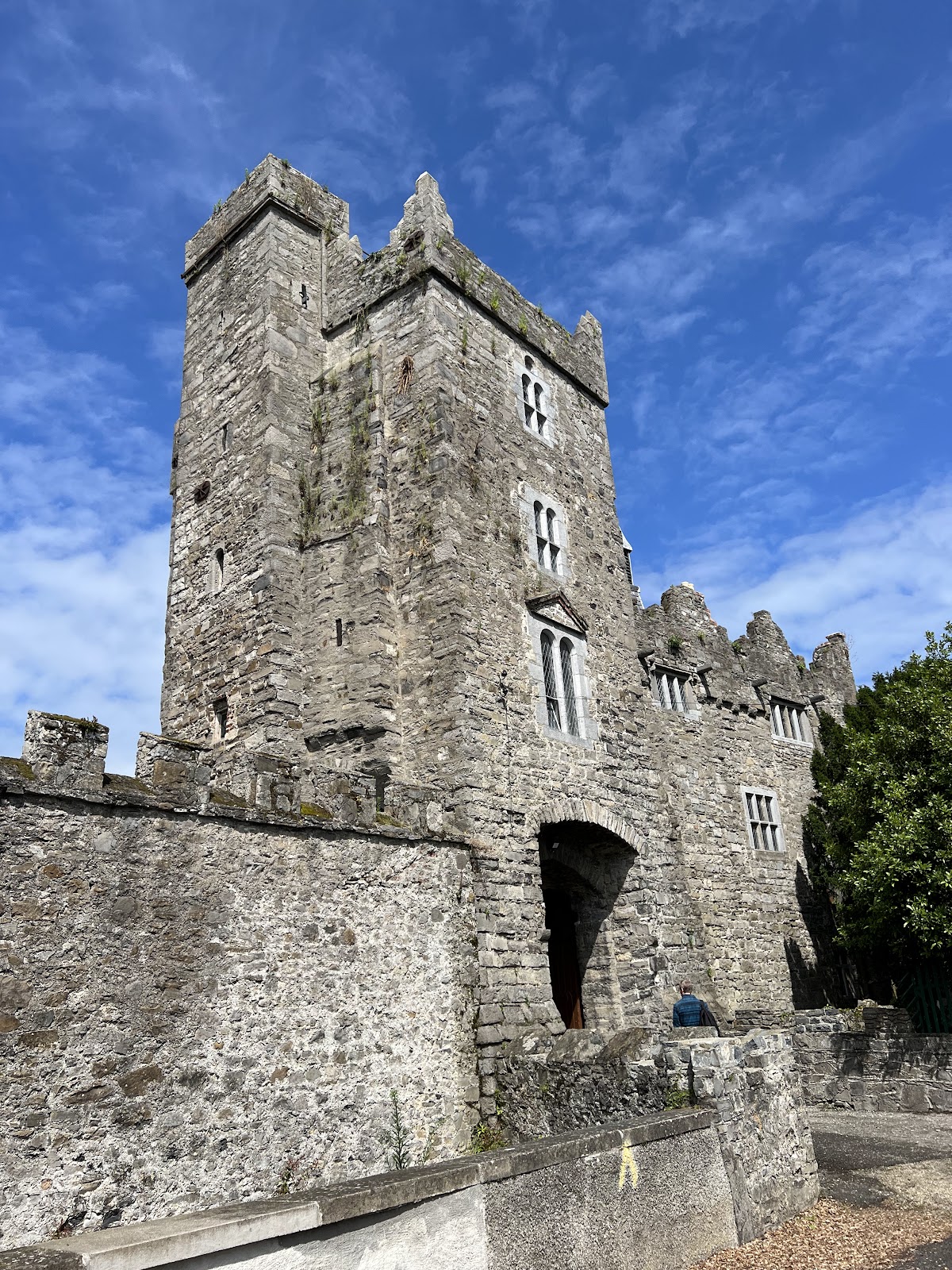
Drimnagh Castle is a Norman lowland castle in Ireland, located in Drimnagh, a suburb of Dublin. The site was fortified by the family later known as the Barnewalls in the mid-thirteenth century, during the period of Anglo-Norman expansion and settlement in Ireland. The earliest recorded owner was Sir Hugh de Bernival, whose name appears in Irish state papers from 1216. His family held the castle for centuries and later became known as the Barnewell or Barnewall family. Most of the surviving castle buildings date from the early fifteenth century.
Nineteenth- and early twentieth-century ownership
By the middle of the nineteenth century, Drimnagh Castle belonged to the Marquess of Lansdowne, a hereditary noble title below a duke and above an earl in the British peerage system. Samuel Lewis’s Topographical Dictionary of Ireland, published in 1837, described the castle as an “irregular pile” occupied by E. Cavanagh.
Joseph Hatch, a Dublin dairy businessman born in 1851, purchased the castle and its lands in the early twentieth century, chiefly to secure grazing land for his cattle. He represented Fitzwilliam Ward on Dublin City Council from 1895 to 1907 and restored the castle as a summer residence for his family. The building also hosted Hatch’s silver-wedding celebration with Mary Connell and the marriage of their eldest daughter, Mary, in 1910.
The Hatch family and the Christian Brothers
After Joseph Hatch died in April 1918, the property passed to his eldest son, Joseph Aloysius Hatch, known as Louis. Louis and his brother Hugh managed the family dairy farm and shop. Hugh died in 1950, while Louis, who never married, died in December 1951.
Louis Hatch left the castle to Dr. P. Dunne, Bishop of Nara. A bishop is a senior Christian cleric responsible for overseeing a diocese or another ecclesiastical jurisdiction. Dunne later sold the property, reportedly for a nominal sum, to the Christian Brothers, a Catholic teaching order that operated schools in Ireland. The brothers initially lived in the castle and ran a school there. In 1956, they moved to a new school and monastery nearby.
Decline and conservation
In 1978, the local Gaelic Athletic Association club, later known as St James Gaels GAA, took possession of the coach house and converted it into a clubhouse. The work added a hall, kitchen, changing rooms, and adjoining showers. By the middle of the 1980s, the castle itself had become a ruin, with collapsed roofs, missing windows, and partly collapsed masonry. In 1986, artist Peter Pearson worked with An Taisce, Ireland’s national trust and a voluntary heritage-conservation organization, to establish a local committee. The committee involved FÁS, an Irish state training authority that supported employment and vocational training, in a conservation and restoration programme. The castle reopened to the public in 1991, while further restoration continued through the 1990s. The associated work programme ended in 1996, although restoration was not yet complete.
Remains
Moat and medieval buildings
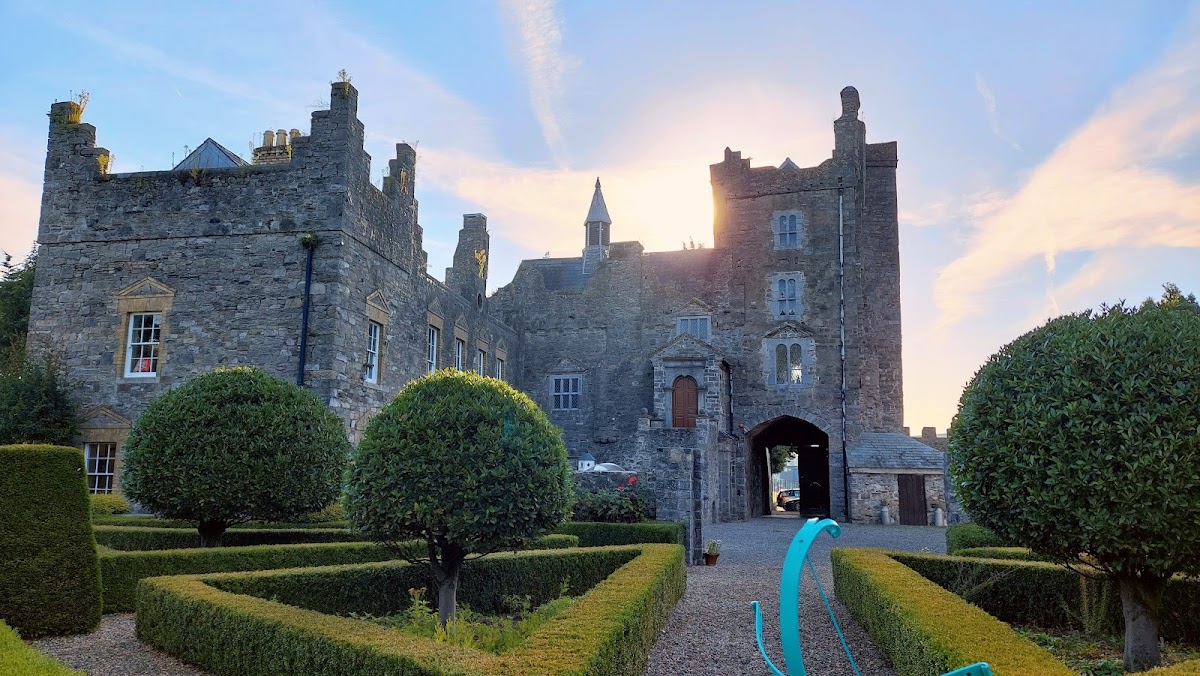
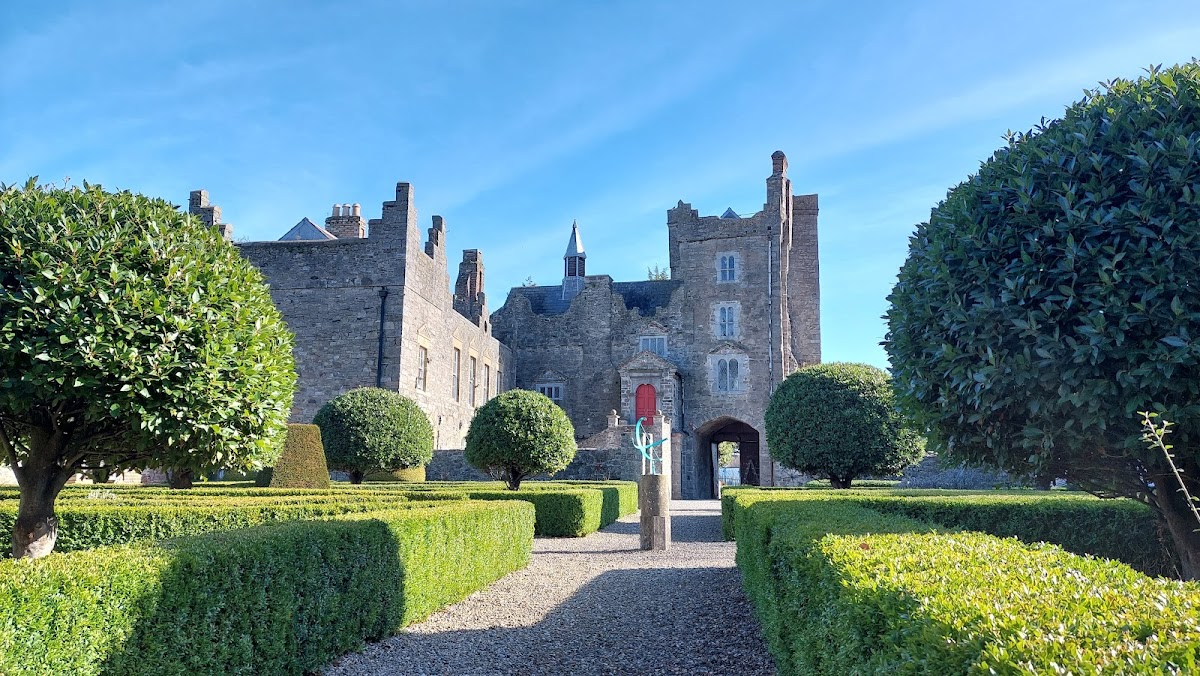
Drimnagh Castle stands within a flooded moat fed by a local watercourse. The water-filled moat surrounds the castle buildings and is described as the only surviving example of its kind at an Irish castle. Within it are a fifteenth-century great hall and an attached tower dated to the sixteenth or seventeenth century. The great hall received a medieval-style oak roof during the later conservation work, while mullioned stone windows, lime mortar, lime plaster, and carved oak formed part of the restoration treatment.
Later buildings and restored grounds
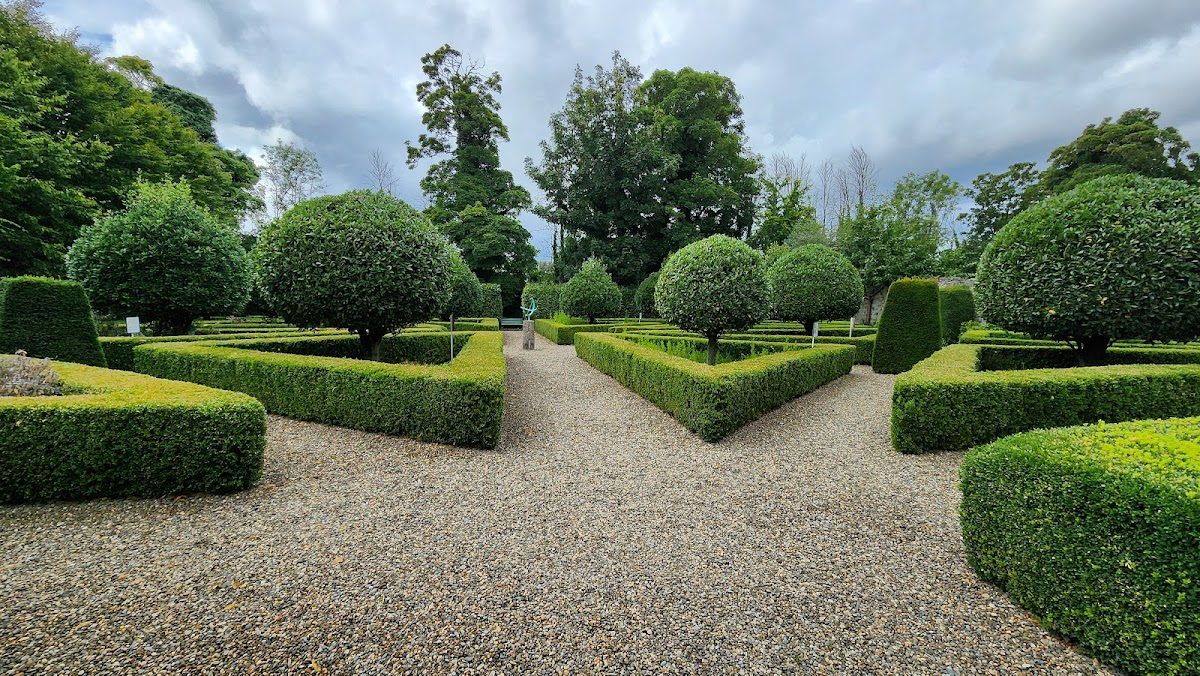
A large stone building from the early twentieth century remains on the site. It served at different times as a stable, ballroom, and coach house. The coach house was renovated in 1978 for use by the local Gaelic Athletic Association club, with space for a clubhouse, hall, kitchen, changing rooms, and adjoining showers. The restoration programme also created a formal garden in a medieval style, adding a planned landscape setting to the surviving buildings.