Prince of Oldenburg Castle: An Art Nouveau Palace in Gagra


Site at a Glance
- Rating
- 4.2
- Popularity
- Medium
- Country
- Russia
- Primary era
- Modern
- Eras represented
- Modern
- Civilizations
- Russian
- Site type
- Domestic
- Remains
- Palace
On this page10 sections
History
Construction and the Gagra resort
Prince of Oldenburg Castle is an Art Nouveau palace in Russia, built for Prince Alexander of Oldenburg between 1898 and 1902 in Old Gagra. Art Nouveau was a late nineteenth- and early twentieth-century style known for flowing lines, organic forms, and elaborate ornament. The design is attributed to the architect Grigory Ippolitovich Lyucedarsky, while local tradition holds that the contractor Yahye Kerbolaya Abbase completed the building from drawings made in the capital after the foundations allegedly cracked twice.
The complex developed in stages. After the original palace was built, an attached hotel section was added for members of the royal family and the highest nobility of the Russian Empire. In January 1903, Alexander announced the creation of a climate resort in Gagra at the newly opened Gagripsh restaurant. A climate resort, also called a climate station, was a health resort whose reputation rested on local conditions such as air, climate, and landscape.
Nationalization and later changes
Alexander left Russia in February 1917, after which his property was nationalized. The palace was converted into a sanatorium for patients with nervous disorders. During the Soviet period it was used as the Joseph Stalin Sanatorium and later as the elite Seagull boarding house. Literary essays subsequently described the building as neglected and only beginning to recover.
Prince of Oldenburg Castle suffered serious damage during the Georgian-Abkhaz conflict of 1992–1993 and was also severely damaged by fire at an uncertain date. In 2010, the palace was leased to a legal entity for 49 years. Work to replace the roof structure began without approval from the Abkhazian department responsible for protecting historical and cultural heritage, and restoration was still continuing on 15 September 2022. The question of including the palace on the UNESCO World Heritage List was also raised.
Remains
Palace and towers
Main palace
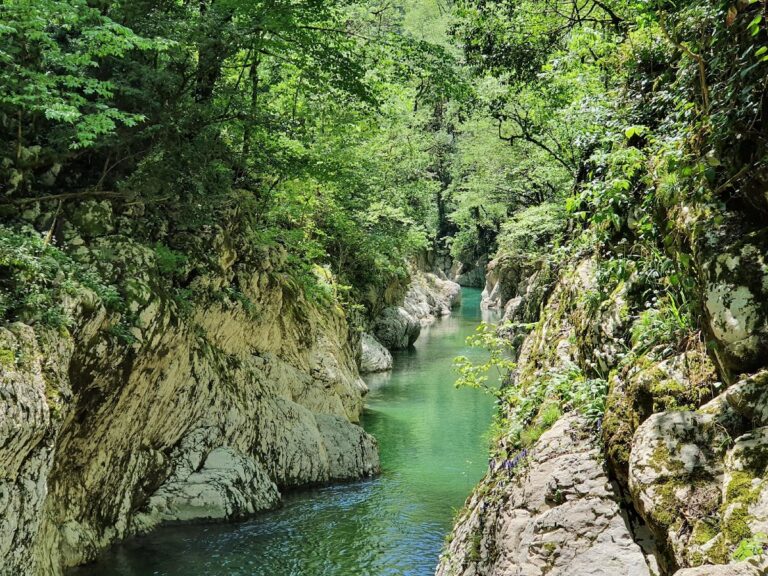
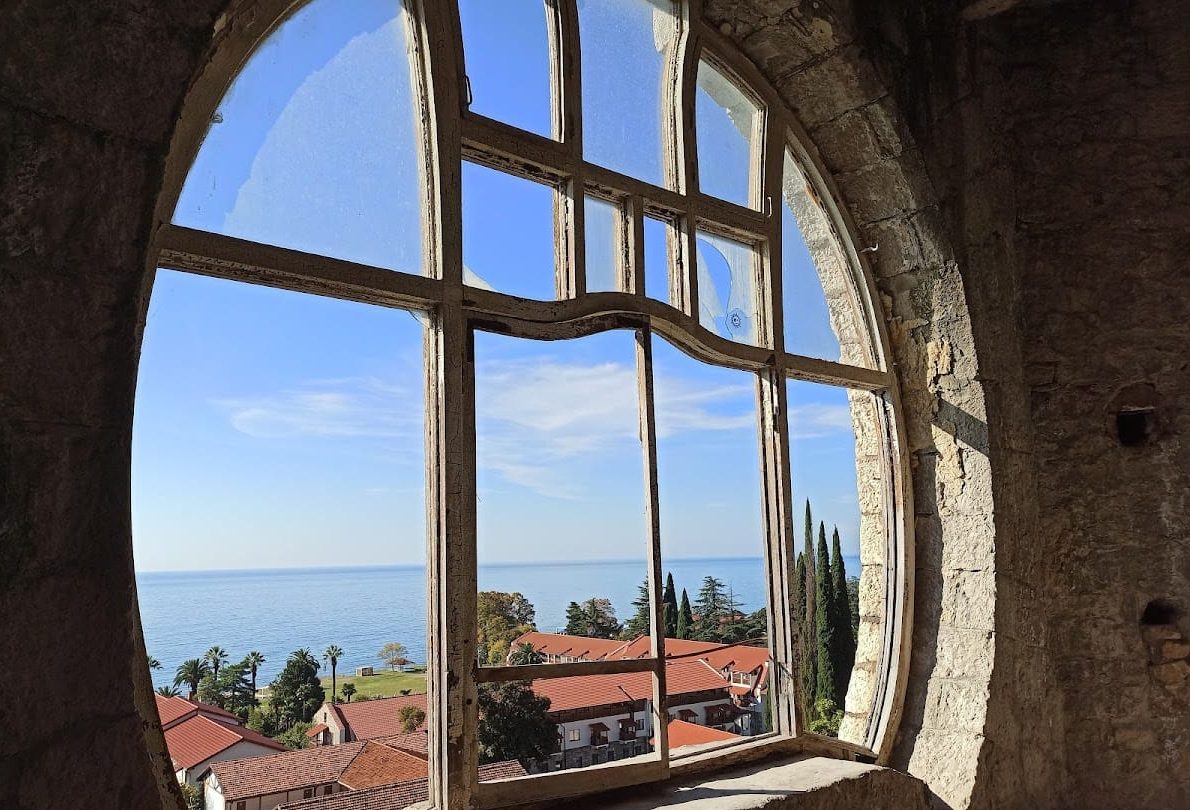
The palace stands on a mountainside in Old Gagra near the Joekwara River. Its Art Nouveau design combines a red-tiled roof with vivid architectural details, including colorful balconies, intricately shaped windows, a semicircular central pediment, and openwork balconies. The original building contained a round panoramic window in the prince’s study, a chimney, and an openwork wooden curl. Today the structure is ruinous, reflecting the effects of war and severe fire damage.
Falconry tower and later wing
A falconry tower rises above the main facade. It was reportedly built at Alexander of Oldenburg’s direction because of his interest in falconry. A wing with a tower was added in 1906, although its purpose remains disputed. It may have served as a viewing tower or as a tower for a falconer. One wing had been restored by the time Alexander’s great-nephew Gounod, Duke of Oldenburg, and his wife visited in 2013.
Gardens and maritime features
Garden and courtyard
The palace grounds included a luxurious garden with pools, sculptures, fountains, and tall arched gates. The entrance to the courtyard was too narrow for the prince’s Mercedes to turn, so a wooden turning platform was installed in front of the threshold.
Lighthouses
Two lighthouses stood within the grounds and illuminated the approach for ships and yachts. Their presence formed part of the estate’s relationship with the waterfront and its resort setting.