St Mary’s Church, Hitchin: A Church of England Parish Church
Site at a Glance
- Rating
- 4.6
- Popularity
- Medium
- Country
- United Kingdom
- Primary era
- Medieval
- Eras represented
- Medieval, Early Modern, Modern
- Civilizations
- British, English
- Site type
- Religious
- Remains
- Church
On this page12 sections
History
Early religious foundations
St Mary’s Church, Hitchin, is an active Church of England parish church in the United Kingdom. Tradition places a Benedictine monastery here, a community following the Rule of St Benedict, and says it was founded by Offa, king of the Anglo-Saxon kingdom of Mercia.
In 910, a church and its adjoining palace were burned. The monks left Hitchin for St Albans Abbey, a major English monastery, while local people reused stone from the ruined church to build a parish church. The Domesday Book, a survey of England compiled in 1086, identified St Mary’s as the most important church in the Deanery of St Albans, a subdivision of a diocese.
Medieval rebuilding and parish development
The Great Wind of 1115 partly destroyed the church, requiring its nave to be rebuilt. In 1220, nuns and Hugh, the medieval bishop of Lincoln, endowed a vicarage, the office and benefice of a parish priest. Lightning badly damaged the church in 1292. An earthquake brought down its centre in 1298, and the roof collapsed in 1304, possibly weakened by the earlier earthquake. The collapse damaged monuments and relics inside, and the church was rebuilt in 1305.
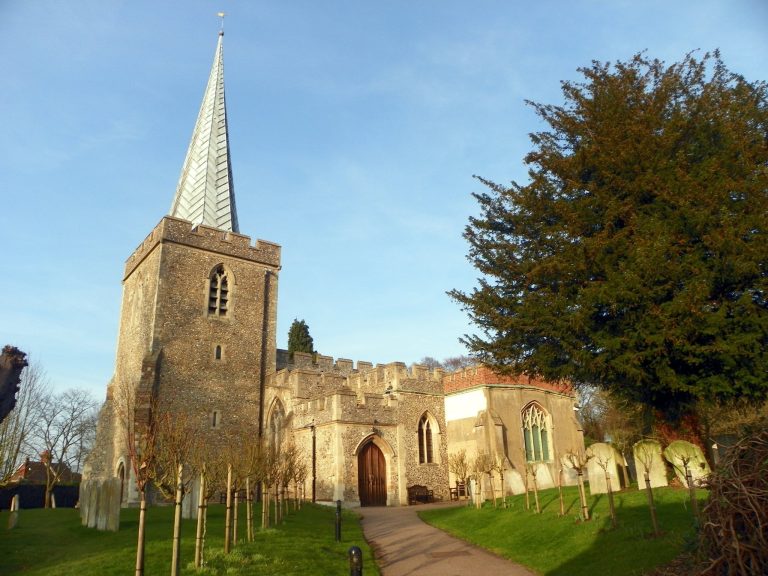
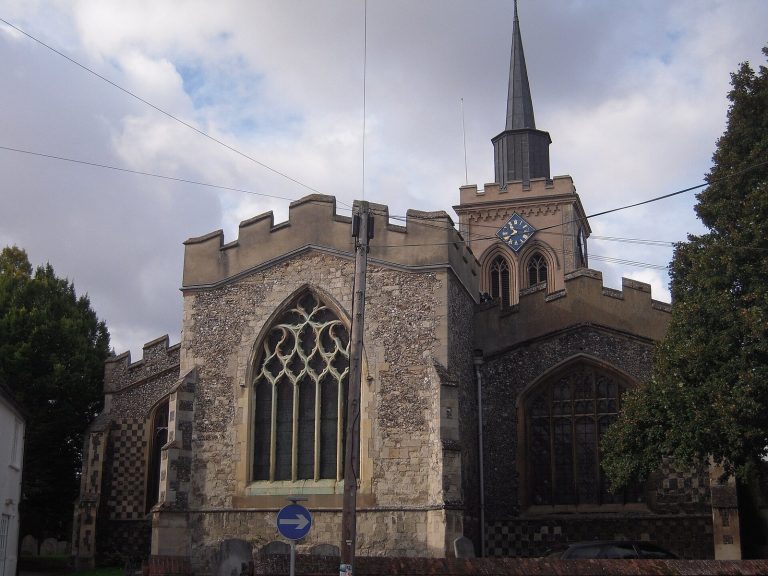
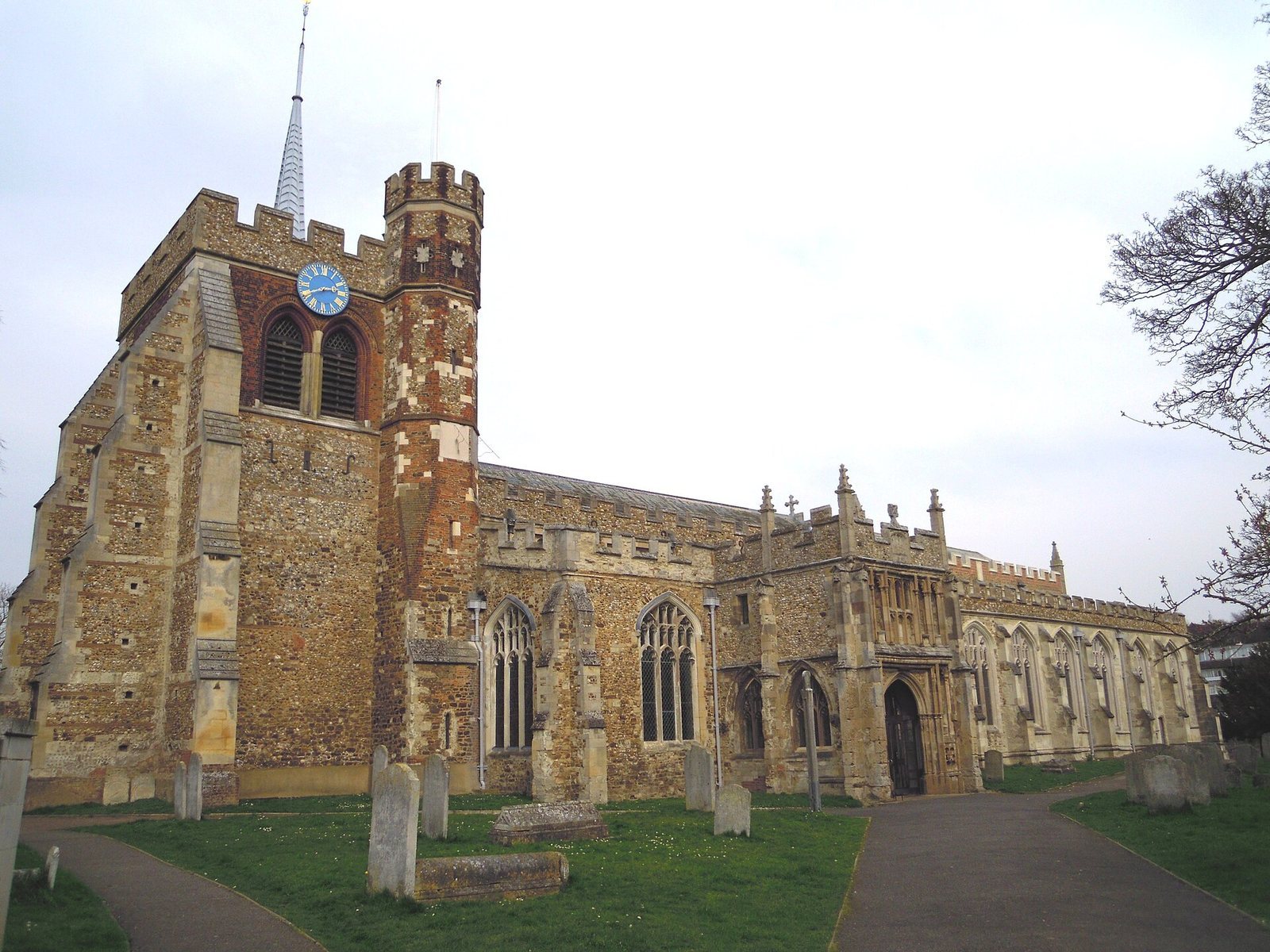
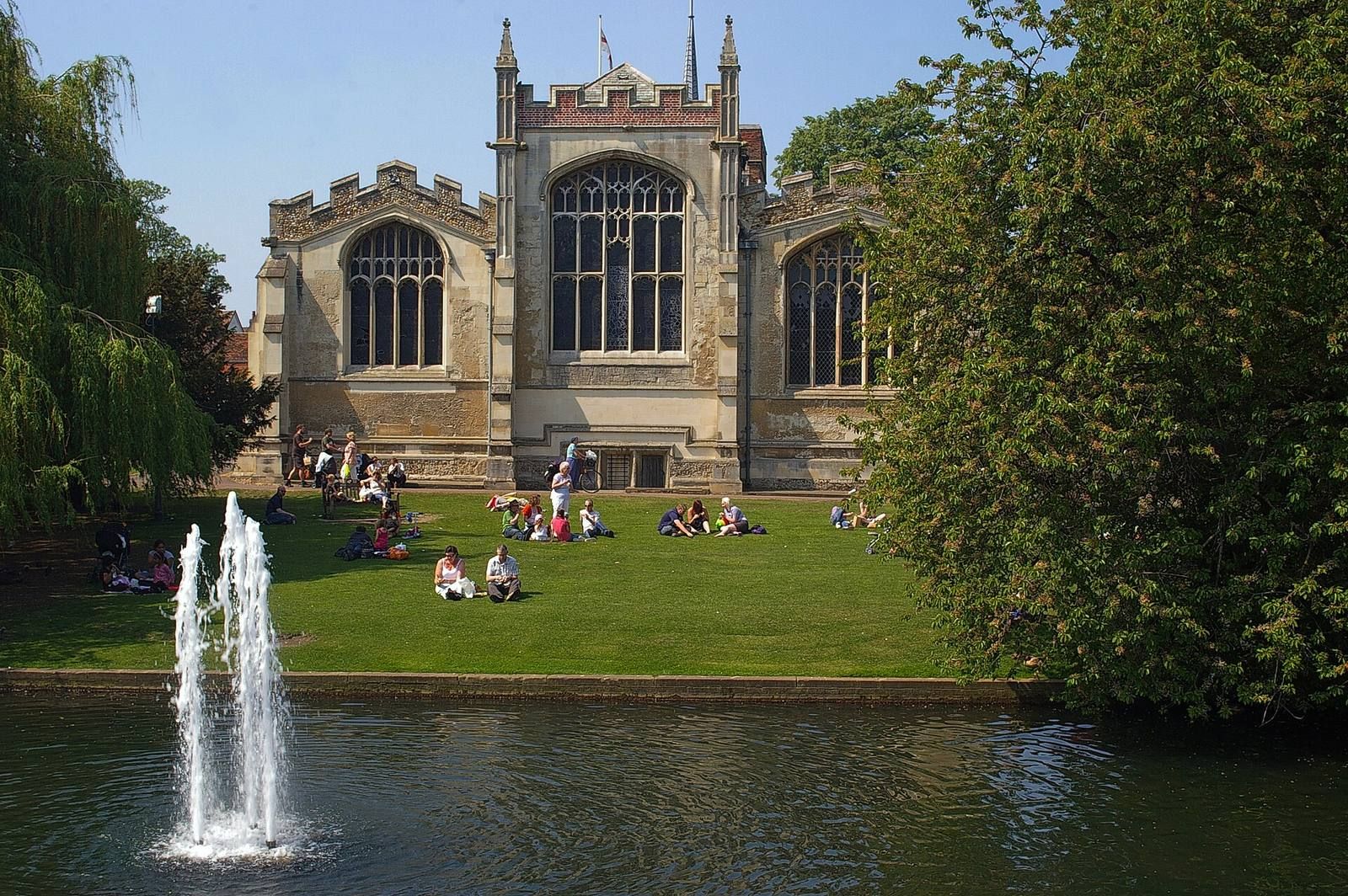
The present church stands on the site of two earlier churches and dates mainly from the 14th and 15th centuries. It was first dedicated to St Andrew, but became known as St Mary’s after the influential Guild of Our Lady, a religious society devoted to the Virgin Mary, was established in the 15th century. It is the largest parish church in Hertfordshire and unusually large for a town the size of Hitchin. Its scale has been interpreted as evidence of the town’s prosperity from the wool trade.
Civil War and later history
During the English Civil War, the conflict between Parliamentarian and Royalist forces in the 1640s and early 1650s, Oliver Cromwell’s troops were garrisoned in the church. In 1951, St Mary’s received Grade I listing, England’s highest category of listed-building protection.
Funeral services were held at the church for conductor Sir Henry Wood, who died at nearby Hitchin Hospital, and for solicitor and local historian Reginald Hine. In August 2015, the church’s windows were smashed in an attack that police described as religiously motivated.
Remains
Church fabric and furnishings
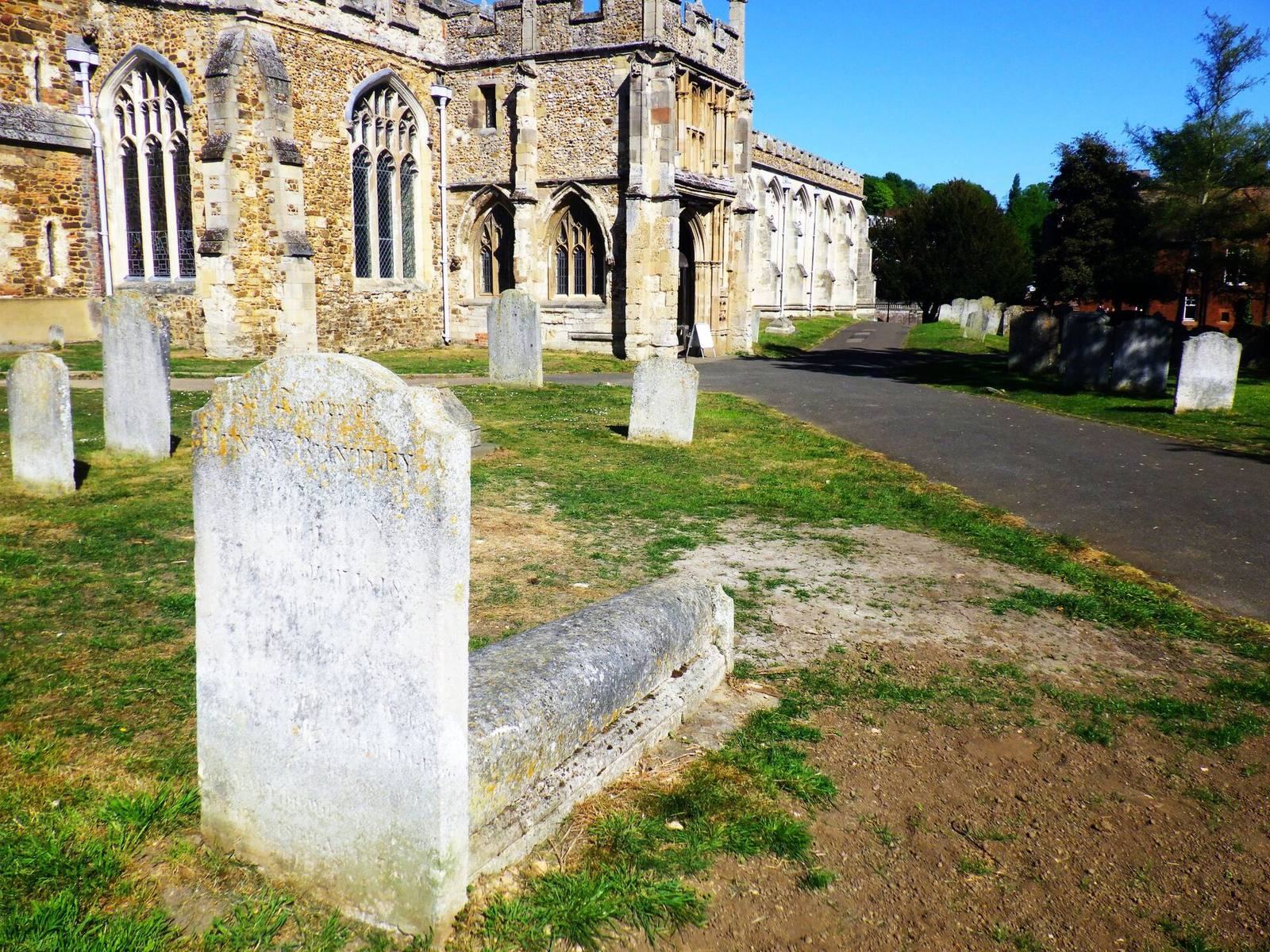
The church brings together foundations associated with an earlier building, medieval fabric and later furnishings. Its 1305 rebuilding used flint, rubble and stone quarried near Totternhoe in Bedfordshire.
Earlier church foundations
Foundations uncovered during floor work in 1911 may belong to the Benedictine monastery traditionally linked with Offa. Their plan appears to be basilican, with a central nave and side aisles, and resembles church types associated with the seventh century. The chancel was later enlarged, and transepts, arms crossing the nave, may have been added in the 10th century.
Tower and sundial
The tower dates from about 1190. A sundial at its south-east corner was erected in thanksgiving for the Restoration, the return of the monarchy in 1660 under Charles II.
South porch
Added around 1450, the south porch retains its original door.
Font and pulpit
The baptismal font, dating to about 1470, has figures of the Twelve Apostles around its base. Puritan soldiers, English Protestants who sought further reform of the Church of England, damaged the figures during the Civil War. The pulpit dates to about 1500; its canopy, wine-glass-shaped base and clerk’s desk have been lost.
Angel Screen and guild stalls
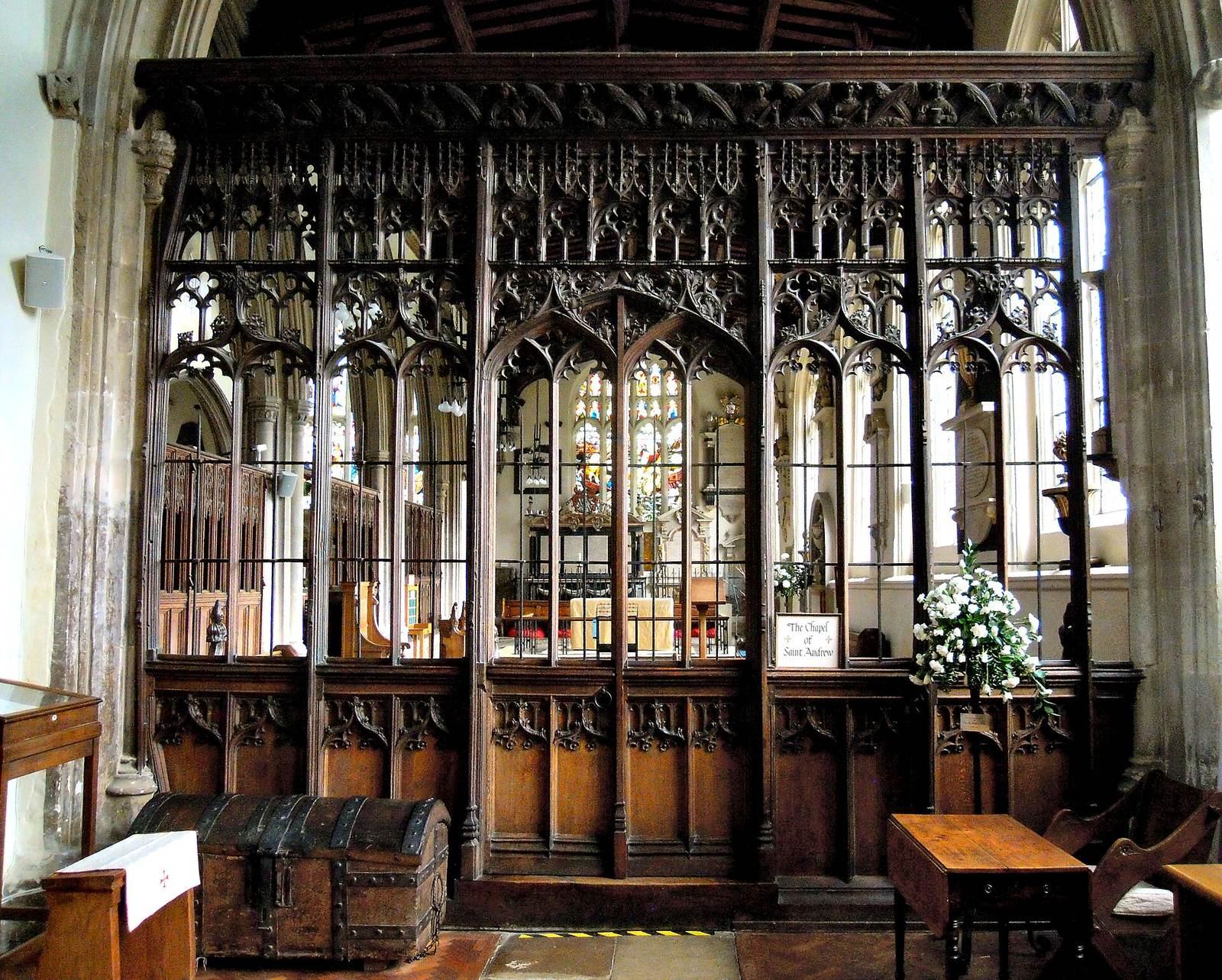
The Angel Screen is regarded as among the finest church screens in the country. Fraternity stalls, seats associated with a religious brotherhood, stand on its eastern side and were used by the Guild of Our Blessed Lady St Mary the Virgin.
Organ and altar rail
The three-manual organ, with three keyboards, was built by J. W. Walker in 1871 and inaugurated by English organist and composer John Stainer. It has been rebuilt three times, most recently in 1958. Its carved oak case, made by woodcarver Laurence Arthur Turner, was installed in 1913. The altar rail bears a carved mouse, the identifying mark of woodcarver Robert Thompson, known as Mouseman.