Southern Han Royal Mausoleums: Tombs of Liu Yin and Liu Yan
Site at a Glance
- Rating
- 5
- Popularity
- Very Low
- Country
- China
- Primary era
- Medieval
- Eras represented
- Medieval
- Civilizations
- Unclassified
- Site type
- Burial
- Remains
- Tomb
On this page7 sections
History
The Southern Han Royal Mausoleums are two royal tombs in Panyu, Guangzhou, China, associated with the Southern Han kingdom during the Five Dynasties and Ten Kingdoms period, an era of political division between the Tang and Song dynasties. The tombs belong to brothers Liu Yin and Liu Yan. Liu Yan was Southern Han’s first official ruler and was buried at Kangling in 942. He was later honored with the temple name Gaozu, a name used for a ruler in ancestral rites. Liu Yin was honored as Liezu, and Deling is identified as his tomb.
Discovery and Modern History
The tombs came to light in 2003 during a survey of Xiaoguwei Island prompted by construction of Guangzhou University City. The Guangzhou Institute of Cultural Relics and Archaeology investigated them under the leadership of Feng Yongqu. The discovery ranked eighth among China’s top ten archaeological discoveries of 2004. In 2006, the mausoleums received national-level protection as a Major Historical and Cultural Site.
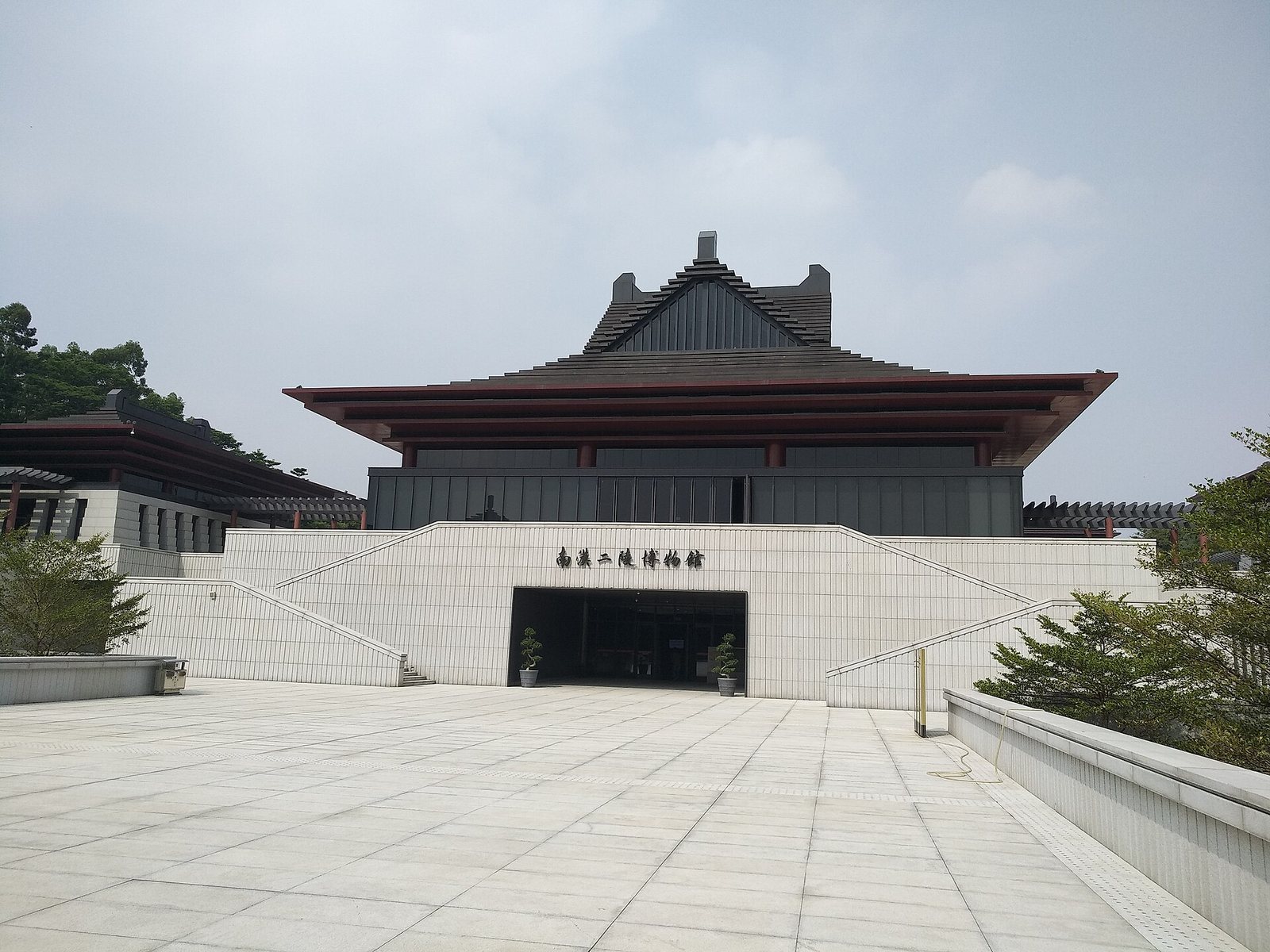
Deling had been robbed and was later used as an air-raid shelter during the Cultural Revolution. Archaeologist Mai Yinghao proposed creating a museum based on the mausoleums. Guangzhou Municipal Government approved the project in 2012, and construction began on 1 March 2015. The Guangzhou Institute of Cultural Relics and Archaeology manages the museum.
Remains
The two large tombs stand among the hills of Beiting Village on Xiaoguwei Island and have brick-built burial chambers. Kangling follows a slope on a north-south axis; Deling, about 800 metres to its south, has a north-facing plan. Excavations at both tombs yielded large quantities of high-quality celadon, a ceramic with a green or blue-green glaze, and other glazed pottery.
The Mausoleums
Kangling
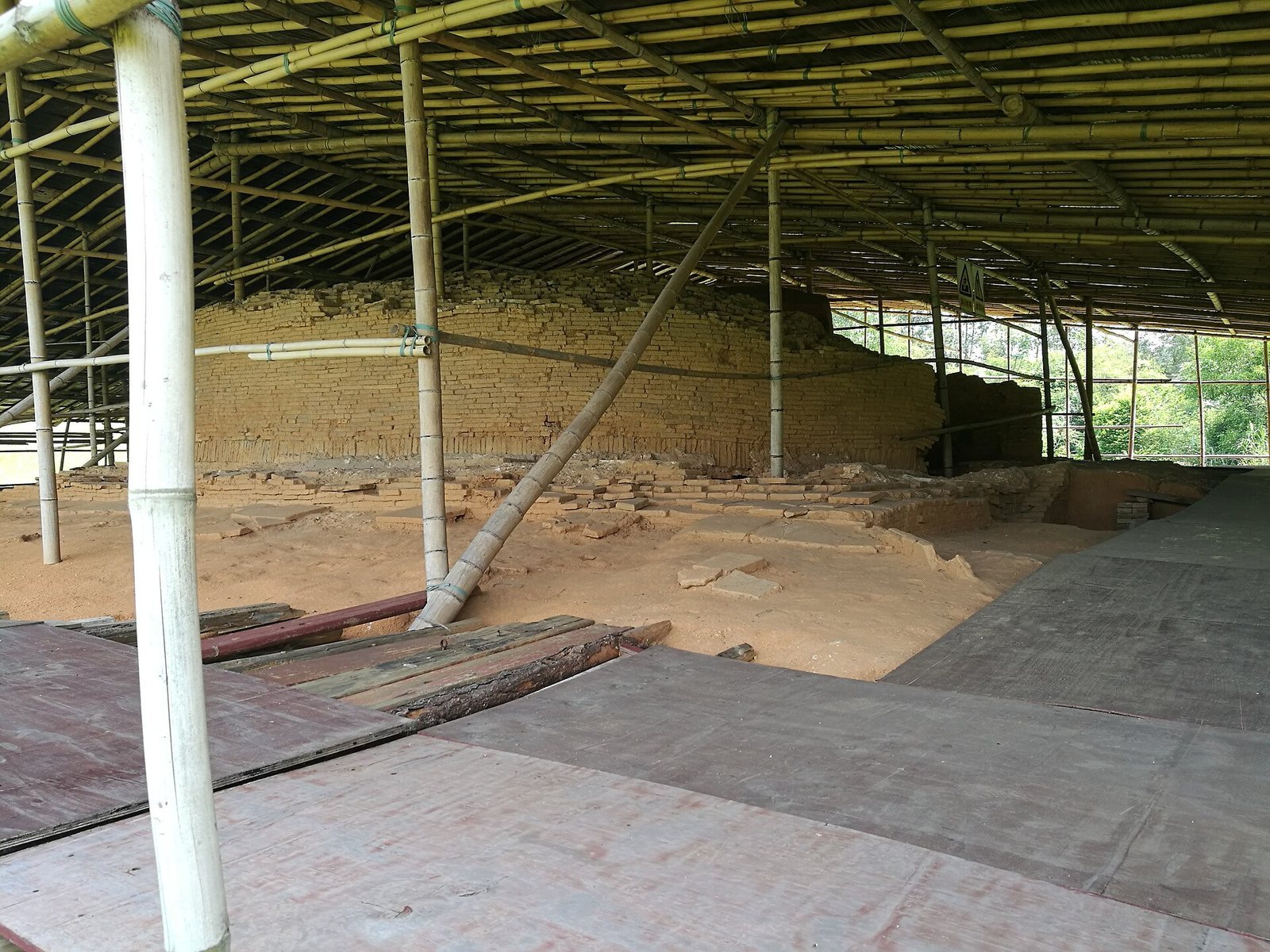
Kangling lies on the southern slope of Daxiang Shan. Its arrangement follows the slope, with a mausoleum precinct at ground level and a burial platform above an underground chamber. A circular mound sits within a rectangular enclosure measuring approximately 57.3 metres east to west and 96.8 metres north to south.
A complete stone stele, an upright inscribed slab, was excavated from the tomb. It bears Liu Yan’s full funerary eulogy, a formal text commemorating the dead. This was the first complete funerary-eulogy text found in an archaeological excavation in China and remains the earliest known stele of this type. The tomb also contained ceramic models of fruits and vegetables, including pineapples, bananas, water chestnuts, arrowhead tubers, peaches, persimmons, and other tubers. These are the earliest ceramic fruits and vegetables of this kind found in China. Kangling combines an altar and a tomb in one arrangement, prompting questions about funerary practices in southern China.
Deling
Deling occupies the northern slope of Qinggang and the southern slope of Daxiang Shan. Its north-facing plan comprises a passage, a sealed entrance, a front chamber, and a rear chamber. Celadon jars and glazed pottery jars found in its passage formed Guangzhou’s first discovery of a large quantity of ceramics from the Five Dynasties period.
Museum and Protective Facilities
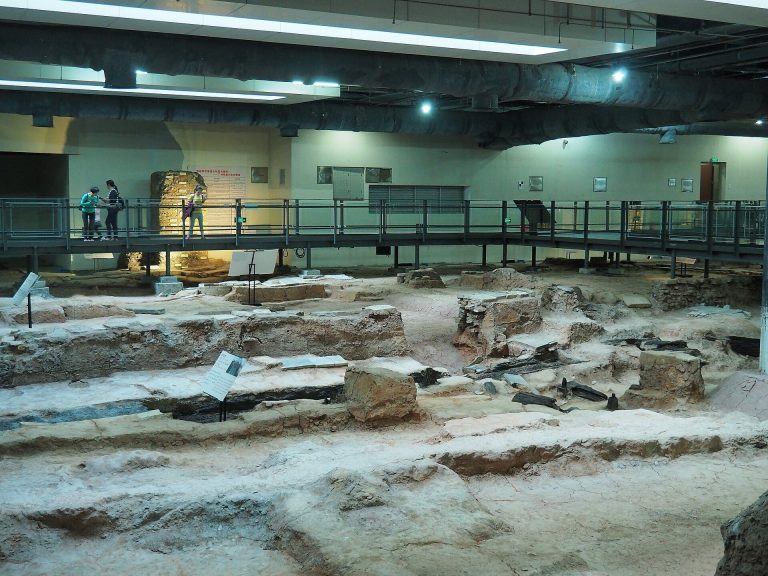
The museum complex covers 82,447 square metres, divided between a 49,317-square-metre museum precinct and a 33,130-square-metre Kangling archaeological precinct. Museum buildings have a total floor area of 20,000 square metres, while protective facilities in the Kangling precinct cover 1,800 square metres. The complex includes approximately 3,900 square metres of exhibition halls, a 426-square-metre conservation and restoration centre, and 7,452 square metres of collections storage. Permanent exhibitions focus on archaeological discoveries in Guangzhou and the history and culture of Southern Han during the Five Dynasties period.