Barnesville Petroglyph: Native American Rock Carvings in Ohio
Site at a Glance
- Rating
- 4.3
- Popularity
- Very Low
- Country
- United States
- Primary era
- Medieval
- Eras represented
- Medieval
- Civilizations
- Unclassified
- Site type
- Civic
- Remains
- Rock Art
On this page7 sections
History
The Barnesville Petroglyph is a Native American rock-carving site on a wooded hilltop southwest of Barnesville in Belmont County, Ohio, United States. Native American people made the carvings centuries ago, but their cultural affiliation is uncertain.
Early descriptions and cultural interpretations
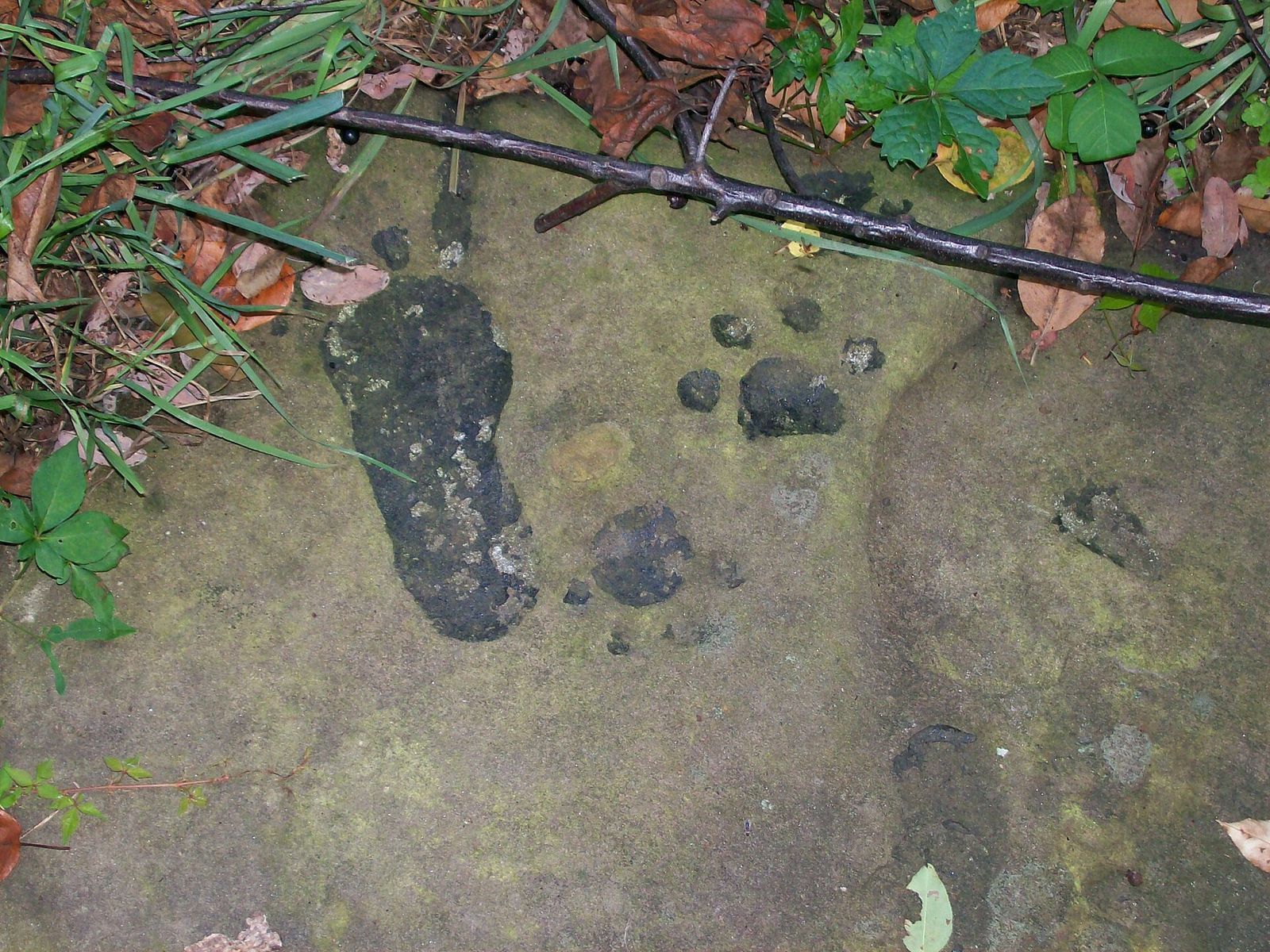
Thomas Kite published the earliest description around 1857 or 1858, followed soon afterward by James W. Ward. Charles Whittlesey and J. H. Salisbury prepared fuller descriptions in 1869 and 1871, published together in 1872. Their work discussed carvings then known at the site and those on a boulder believed to have been taken away. Local residents have also called the place “Track Rocks,” a name inspired by its many footprint designs.
The carvings have sometimes been attributed to the Adena, a prehistoric culture of eastern North America whose people occupied the region from about 500 BC to AD 300. Petroglyph specialist James L. Swauger reached a different conclusion in his 1972 book Rock Art of the Upper Ohio Valley. Comparing the designs with those at Indian God Rock, the Sugar Grove Petroglyphs, and the Hamilton Farm Petroglyphs, he associated the carvings with the Monongahela culture and proposed influence from Ojibwe people, an Indigenous people of North America. The earliest Monongahela presence in the Upper Ohio Valley is believed to date to about AD 1200. Projectile points of several types have been found nearby, most associated with Adena or Late Archaic peoples, the latter label referring to a broad archaeological period.
Damage and preservation
In the early twentieth century, men posing as museum staff removed a boulder that had been the site’s second largest. It was subsequently lost to archaeological study. A professional survey in 1971 found carvings only on the largest boulder; another was rediscovered four years later after being buried or otherwise obscured.
In 1974, the site was added to the National Register of Historic Places, the United States’ federal register of historic properties.
Remains
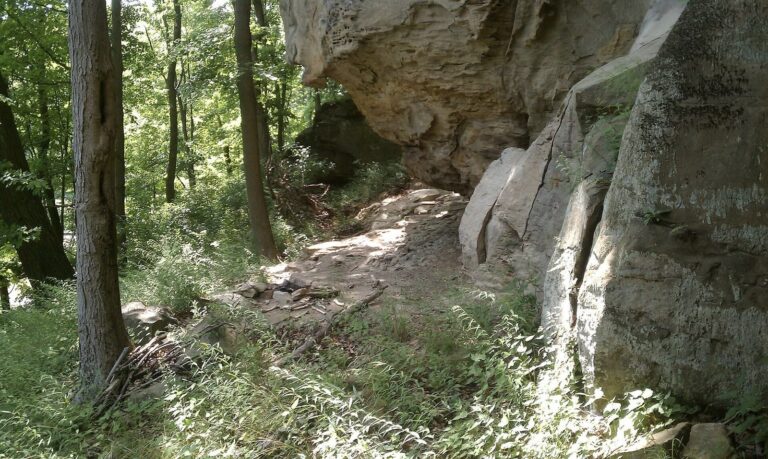
The three-acre property occupies a wooded hilltop about 1,320 feet above sea level. Dunkard-series sandstone boulders, made of stone associated with the regional Dunkard geological group, are scattered across the summit. Two boulders presently bear carvings, with the largest holding most of the described imagery.
The carved boulders
Largest boulder
The main carved boulder measures about 3.5 metres from east to west and 4.5 metres from northwest to southeast. Its surface slopes down toward the southeast: the northwestern corner rises nearly a metre above the soil, while the southeastern corner descends gradually to ground level.
Designs and imagery
The largest boulder bears 113 designs. These include 47 mammal impressions, such as bear and deer tracks, uncertain paw prints, and outlines resembling animal pelts; 26 bird tracks; and 21 human body parts, comprising five faces and 16 feet. The remaining carvings consist of 12 geometric figures, four snakes, and three small indentations, or pits. The animal identifications are tentative, reflecting species the carvers may have encountered. Some small tracks cannot be distinguished confidently as dog or cat prints. The pits may have been made individually or may preserve traces of designs worn down by erosion.
Animal-pelt outlines and human faces are unusual among petroglyphs in the Upper Ohio Valley. Only one other site in the valley has designs resembling stretched skins, and noses on some of the faces are rarely found in the region’s other carvings. Most geometric marks are abstract; similar marks occur at regional sites and are thought likely to connect many of them with the same culture. The imagery also contrasts with Belmont County’s Barton Rock, where turtles and birds predominate. That pattern resembles imagery at riverside sites, while Barnesville’s many tracks are like those at other upland locations.
Nearby Shannon Cave has also been considered archaeologically valuable. Some carvings have been proposed as pointing toward the cave, though their intended relationship to it remains uncertain.