Domtrapphuset: A Medieval Building Beside Uppsala Cathedral
Site at a Glance
- Rating
- 4.5
- Popularity
- Medium
- Country
- Sweden
- Primary era
- Medieval
- Eras represented
- Medieval, Early Modern
- Civilizations
- Swedish
- Site type
- Domestic
- Remains
- House
On this page7 sections
History
Domtrapphuset is a medieval building beside Uppsala Cathedral in central Uppsala, Sweden. It was probably built around 1280, although a date in the 1330s has also been proposed. It is regarded as the oldest surviving building in Uppsala.
Medieval cathedral precinct
The cathedral stairway is first mentioned in written records in 1376. In 1938, archaeologist Nils Sundquist proposed that the tower had belonged to a medieval wall encircling Domberget, where Uppsala Cathedral was built between the 1270s and 1435. Later research has questioned this interpretation.
In 1460, the cathedral transferred a stone tower and its associated house beside the cemetery’s eastern stairway to Henrik Lang, a canon, or clergyman attached to the cathedral chapter. In return, Lang gave the cathedral a plot on Södermalm, outside Stockholm. During political unrest in 1470, the tower was stormed and captured several times. Lang returned the house to the cathedral chapter in 1472 in exchange for land west of the church. Wars had left the residence unfit to live in.
Changing ownership and uses
In 1509, canon Erik Bengtsson received lifetime possession of Domtrapphuset. During the Reformation, the sixteenth-century movement that led to the establishment of Protestant churches in parts of Europe, the building became part of King Gustav Vasa’s personal estate. In 1548, Gustav transferred it to Per Brahe the Elder, a Swedish nobleman and statesman, who gave it to Uppsala Hospital.
In the eighteenth century, a cellar room served both as a prison for students disciplined for minor offenses and as a debtors’ prison. The student prison, known as Prubban, was formally abolished in 1852. Uppsala’s cathedral school also used premises in the building during the eighteenth century. From the 1790s until student associations established their own premises in the late nineteenth century, several Swedish student nations, university associations traditionally organized around regional ties, rented rooms there. These included Norrlands, Södermanlands-Nerikes, Gästrike-Hälsinge, and Kalmar.
Fire, restoration, and later occupation
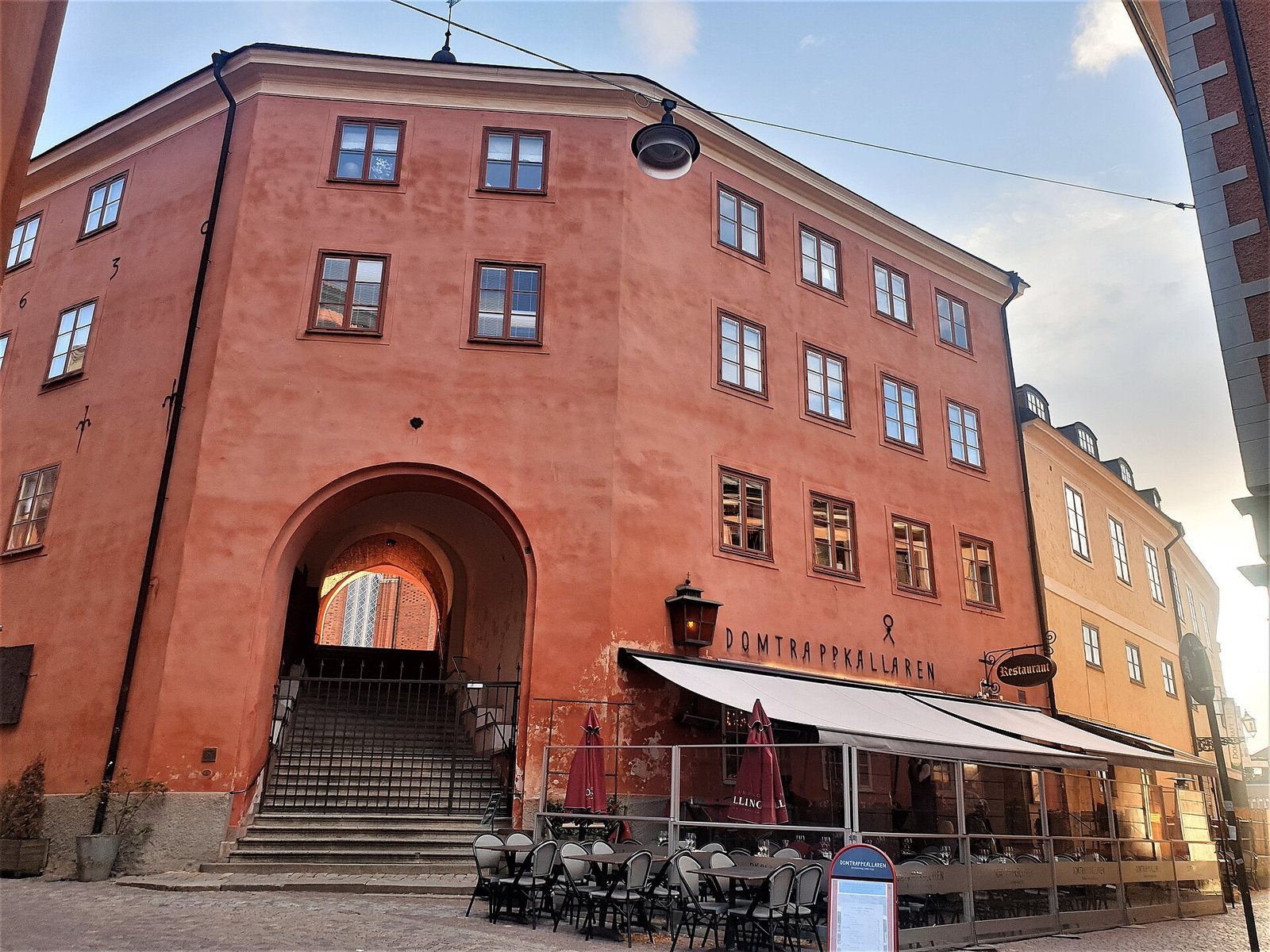
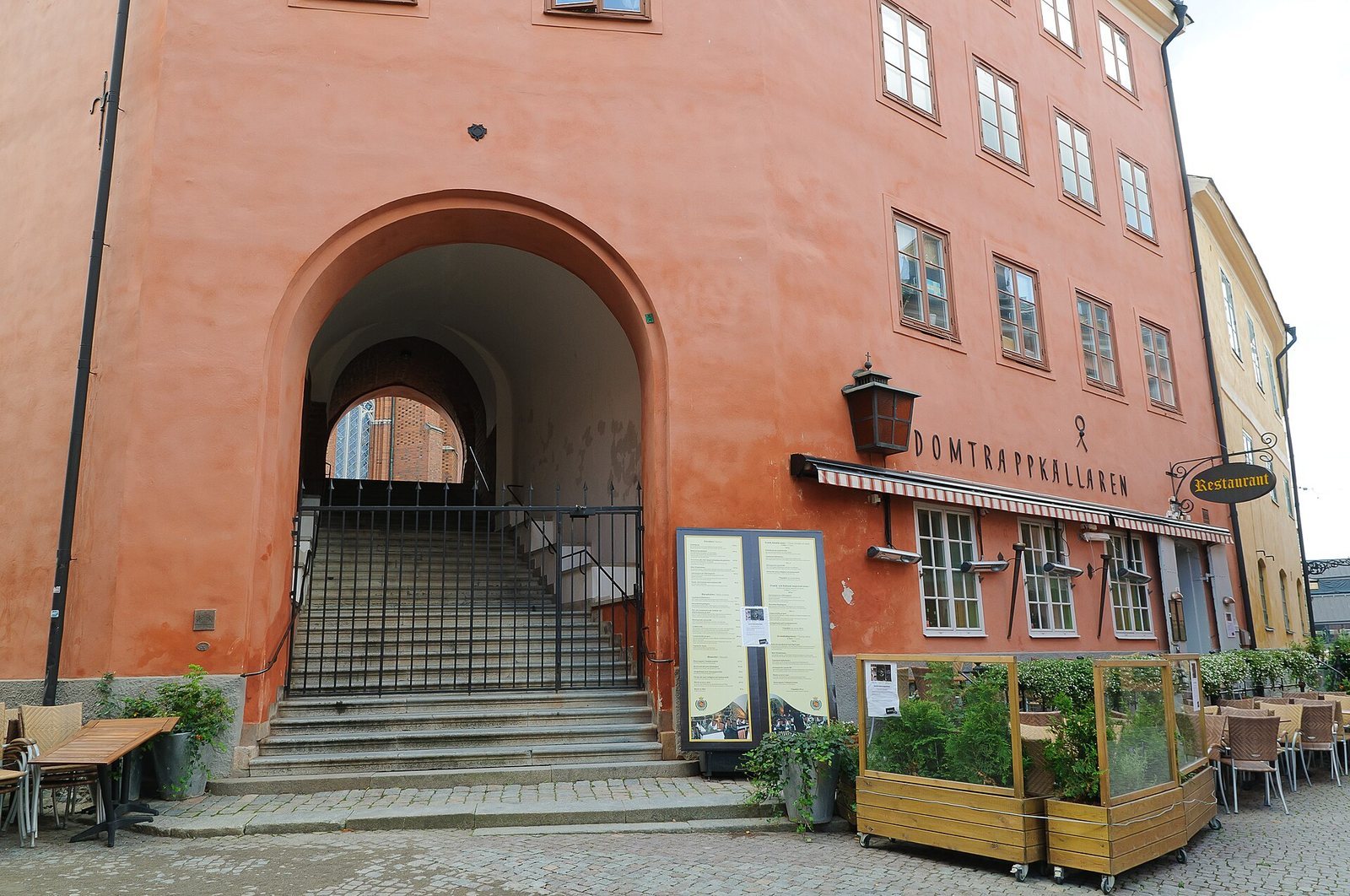
The city fire of 1702 severely damaged Domtrapphuset. Repairs undertaken between 1764 and 1767 gave it much of its present appearance, and a further restoration followed in 1960. The building has housed restaurants since the 1930s. It is protected as a historic building and now includes residences and institutional premises, while Restaurang Domtrappkällaren occupies the basement.
Remains
Building and towers
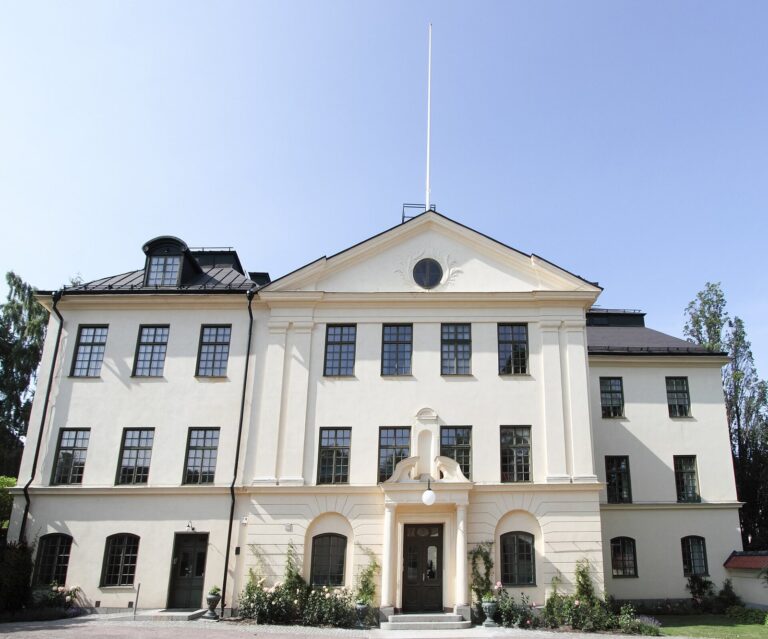
Domtrapphuset is built of stone and rises three to four storeys. Its facade has rust-brown plaster and grey-green woodwork. A three-storey tower stands at the centre of the building and has a sheet-metal roof. The tower above the cathedral stairway is topped by a distinctive dome added during the repairs of 1764 to 1767.
Earlier arrangement
In 1509, the stone house stood in the eastern part of the cathedral cemetery wall, above and north of the tower over the cathedral stairs. The house had a cellar, and the property transfer also included the tower and two stone storerooms beneath the house.