All Saints’ Church, Cheltenham: A Victorian Church of England Parish Church
Site at a Glance
- Rating
- 4.5
- Popularity
- Low
- Country
- United Kingdom
- Primary era
- Modern
- Eras represented
- Modern
- Civilizations
- British
- Site type
- Religious
- Remains
- Church
On this page11 sections
History
Construction and refurbishment
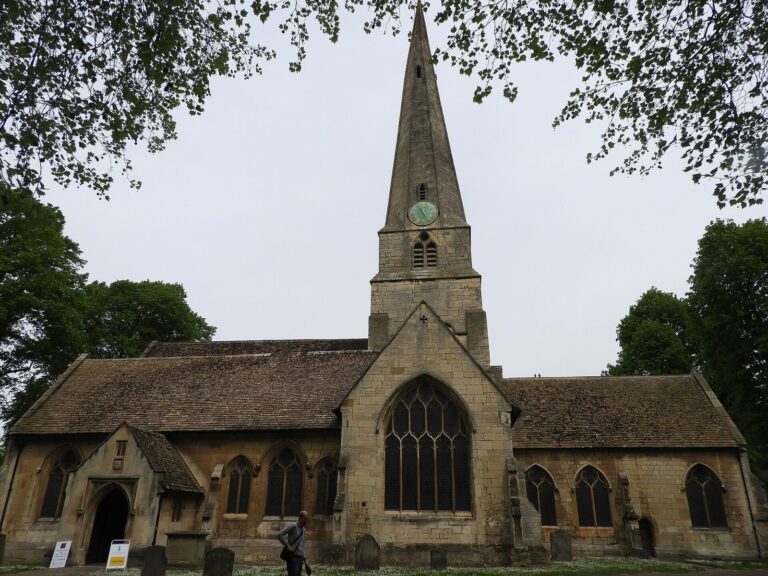
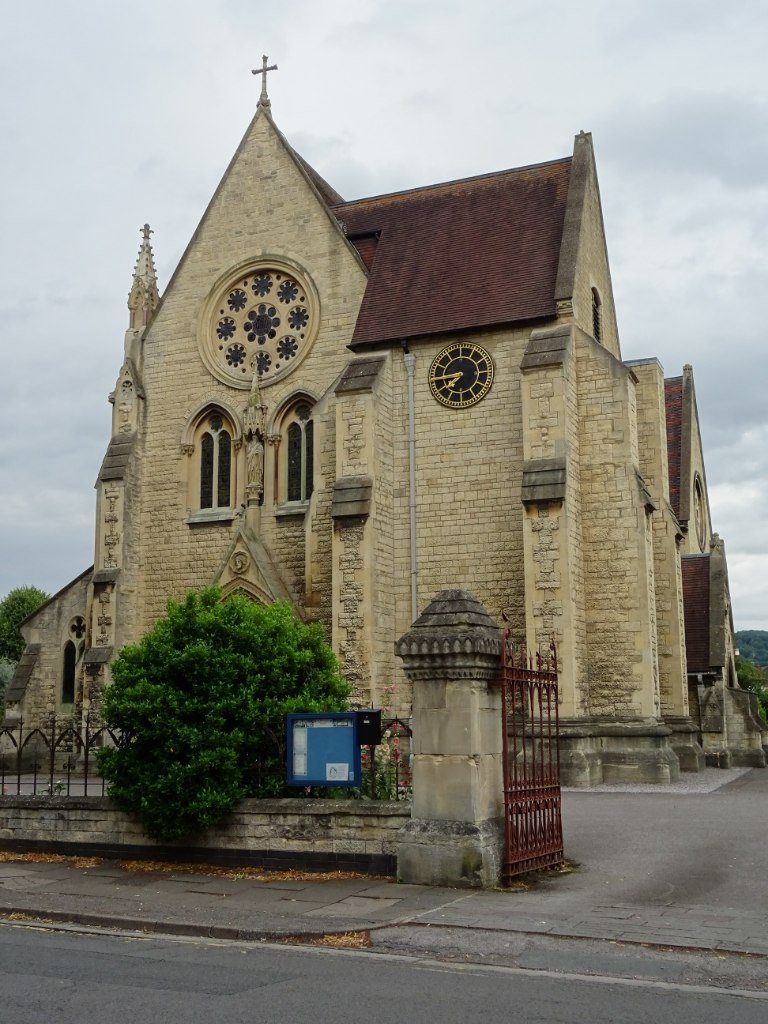
All Saints’ Church, Cheltenham, is a Church of England parish church in the United Kingdom, built between 1865 and 1868 by architect John Middleton. Dedicated to All Saints, it was refurbished in 1907 by Temple Lushington Moore. The church is Grade I listed, the highest statutory listing category in England, reserved for buildings of exceptional architectural or historic interest.
Parish and churchmanship
The church belongs to the Diocese of Gloucester, within the Province of Canterbury, and is part of Cheltenham Archdeaconry and Deanery. Its parish is Pittville All Saints. The parish follows the Anglo-Catholic tradition, which emphasizes historic Catholic worship and sacramental practice within Anglicanism. It rejects the ordination of women as priests and bishops and receives alternative episcopal oversight, a Church of England arrangement providing ministry from a bishop outside the usual diocesan provision.
Remains
Interior and fittings
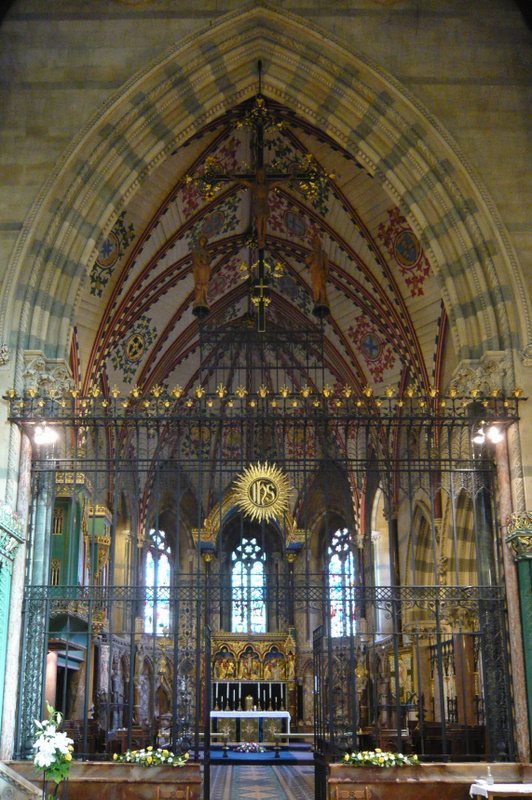
The interior includes a nave, chancel, north aisle and south transept. Architectural critic Harry Stuart Goodhart-Rendel described its character as assuredly Gothic, with a forceful Victorian quality. Among its fittings are a stone font, an iron screen at the chancel, a south transept window and a pipe organ.
Font and chancel screen
John Middleton made the stone font. Its canopy, designed by H. A. Prothero, was produced by William Letheren in 1896. Letheren also made the wrought-iron chancel screen.
South transept window
The rose window in the south transept follows a design by Edward Burne-Jones and was made by Morris & Co. in 1901.
Pipe organ
Original instrument and Chancel Great
William Hill & Son built the pipe organ in 1887. Its specification comprised 46 speaking stops, which select sets of pipes, 50 ranks, or series of pipes, and seven couplers, which link organ divisions. Vicar George Gardiner and organist Adolph von Holst drew up the plan with the firm’s builder, Arthur Hill. Gardiner served from 1888 to 1911, while von Holst was organist from the mid-1860s to 1894. By 1896, the Great division, which sounded into the north aisle, was difficult for the chancel choir to hear and overpowered singing in the nave. Gardiner ordered a Chancel Great in a new case designed by Prothero and placed above the console, the organ’s keyboard and controls. It incorporated stops transferred from the Hill transept organ at Worcester Cathedral, recently rebuilt by Robert Hope-Jones. These included Open and Stopped Diapasons, a Trumpet later removed, and a wooden Trombone. The Harmonic Flute was moved from the Nave Great.
Changes from 1899 to 1912
In 1899, Hill & Son replaced the organ’s note and stop actions with tubular-pneumatic mechanisms, which use air pressure to operate the valves controlling the pipes. The firm raised the air pressure to the Pedal division’s 16-foot Open Diapason to five inches, added a 32-foot extension reaching FFFF, and installed a Euphonium stop later revoiced as a Tromba. It also added the Swell Clarion, planned for in 1887. In 1912, A. J. Price replaced the hydraulic blower with a five-horsepower electric unit. The two-stage blower still runs with its original motor. Price also added a four-foot open wooden flute to the Swell division and extended the Solo enclosure to cover the Choir division.
Later alterations
Price returned to the instrument in 1927, fitting tuning slides to its pipes, adding harmonic trebles, or higher-pitched notes, to the Tuba, and raising its air pressure to ten inches. Nicholson & Co. rebuilt the organ in 1952–53, electrifying its actions, installing a four-keyboard console and making modest tonal changes, chiefly to the Choir division. Further alterations to the Choir and Solo divisions followed in 1968, 1994 and 2007.