Vyazma Fortress: A Historic Russian Fortification
Site at a Glance
- Rating
- 4.6
- Popularity
- Medium
- Country
- Russia
- Primary era
- Early Modern
- Eras represented
- Early Modern, Modern
- Civilizations
- Russian
- Site type
- Military
- Remains
- Castle
On this page10 sections
History
Medieval settlement and defenses
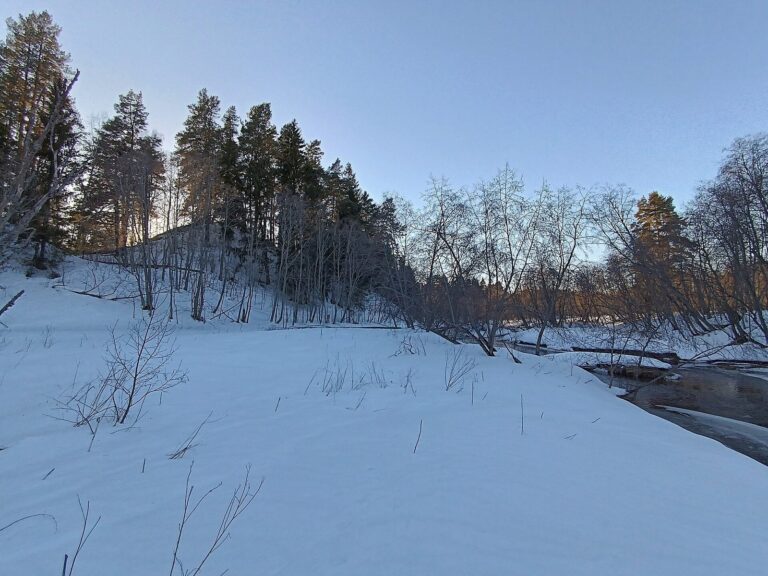
An earlier fortified settlement beside the Rusyatka River preceded Vyazma and appears to have served as a military outpost of the Smolensk land until the thirteenth century. Chronicles first name Vyazma as a city in 1239. The date when wooden defenses were built on Cathedral Hill is unknown; an earlier fortification stood on a hill beside the Vyazma River.
The fortress and its religious communities
In 1632, during the reign of Michael I, the first ruler of the Romanov dynasty, stone walls were built around the Big Lower Town. This enclosure covered a wider area than the wooden defenses of the former Kremlin, which thereafter became known as the Upper Small Town.
A local legend places the monk Arkady in the Big Lower Town in the eleventh century. A men’s monastery was founded there in 1661 around a wooden church built in 1540. The monastery ceased to exist in the eighteenth century.
In 1780, a women’s religious community was established on the site of Vyazma’s dissolved Ilyinsky Monastery. French forces burned the monastery buildings during their 1812 invasion of Russia, part of the Napoleonic Wars. After the grounds were rebuilt, the community was renamed a monastery in 1832.
Remains
The partially ruined fortress was arranged around the hilltop Upper Small Town and the broader Big Lower Town. Its defenses combined timber and stone, joined on the river side. The surviving structures include a square tower and religious buildings within the former fortress grounds.
Defensive works
Upper and Lower Towns
The Upper Small Town occupied the hill, while the stone wall of the Big Lower Town enclosed a wider area. On the river side, the lower town’s stone wall met the upper town’s wooden wall. The fortress’s defenses included six square towers.
Savior Tower
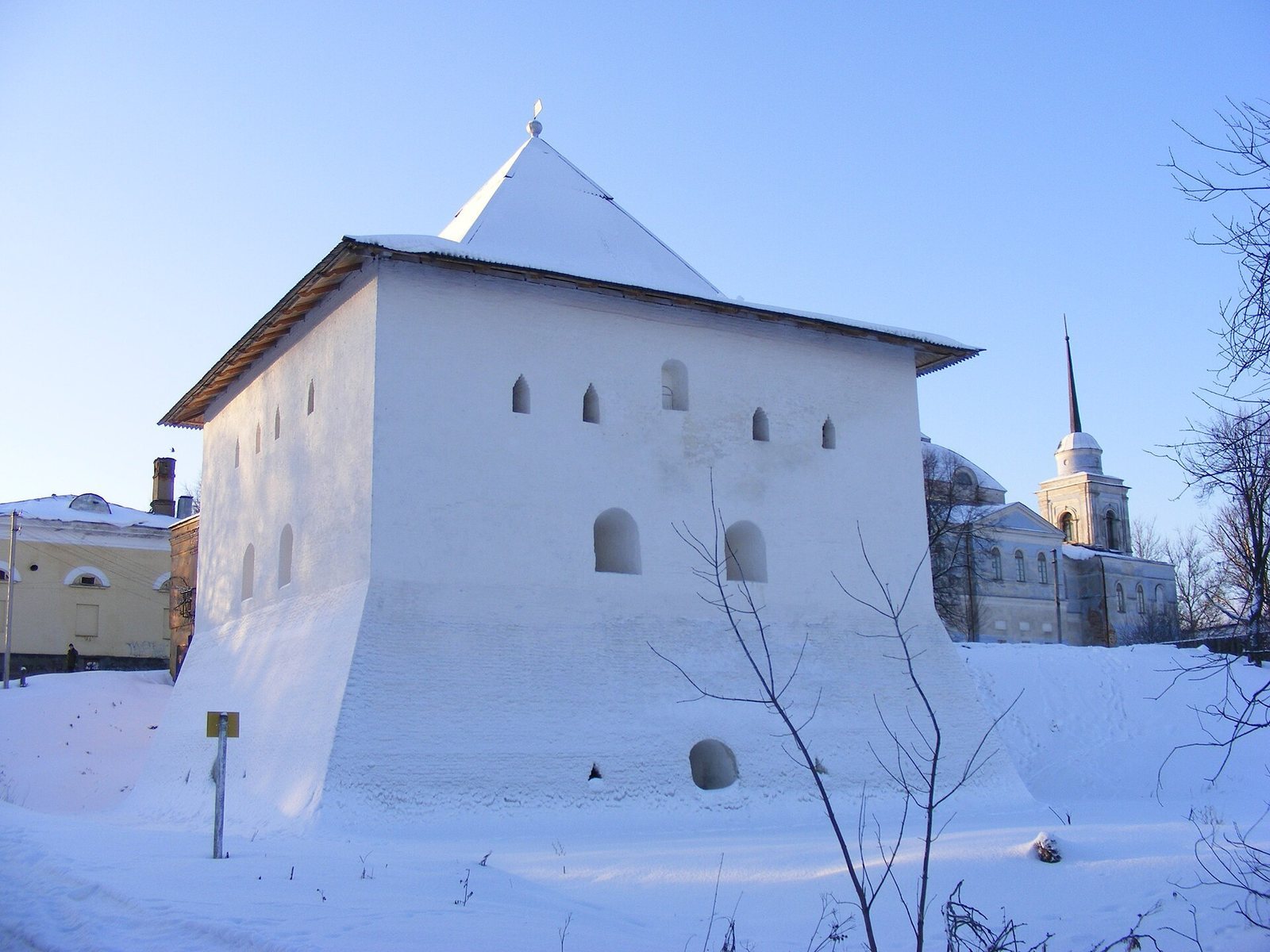
The square Savior Tower survives within the grounds of the Arkadievsky Monastery. It is the surviving tower associated with the Big Lower Town’s fortifications.
Religious buildings
Trinity Cathedral
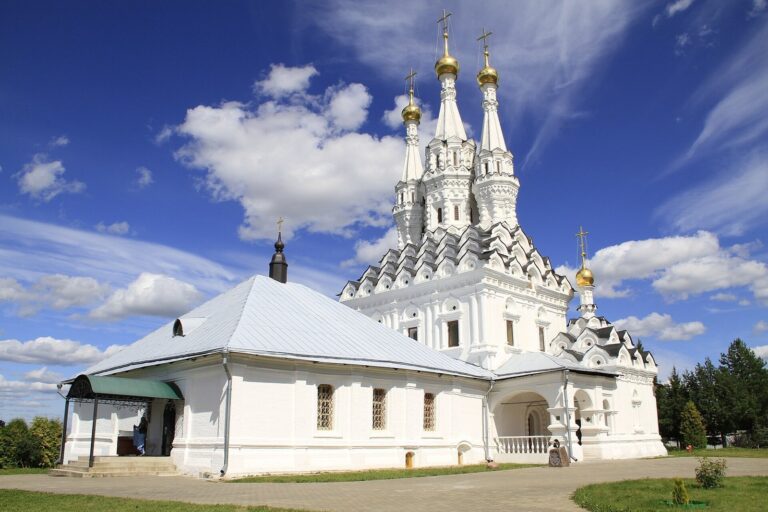
Trinity Cathedral is a surviving stone building on the Upper Small Town hill. A wooden cathedral stood there by at least the reign of Ivan the Terrible. It was rebuilt from 1587 to 1598 and again in 1635; Alexei Mikhailovich financed the stone building erected from 1674 to 1676. Repairs after 1812 apparently altered the dome and the structure supporting it. A bell tower and communal dining hall were added from 1847 to 1849.
Arkadievsky Monastery grounds
Buildings dating from the eighteenth and nineteenth centuries stand within the former monastery grounds. Among them is the stone Cathedral of the Most Merciful Savior, built in 1783.