Indian God Rock: An Indigenous Petroglyph Site in Pennsylvania
Site at a Glance
- Rating
- 4.8
- Popularity
- Low
- Country
- United States
- Primary era
- Medieval
- Eras represented
- Medieval
- Civilizations
- Unclassified
- Site type
- Civic
- Remains
- Rock Art
On this page7 sections
History
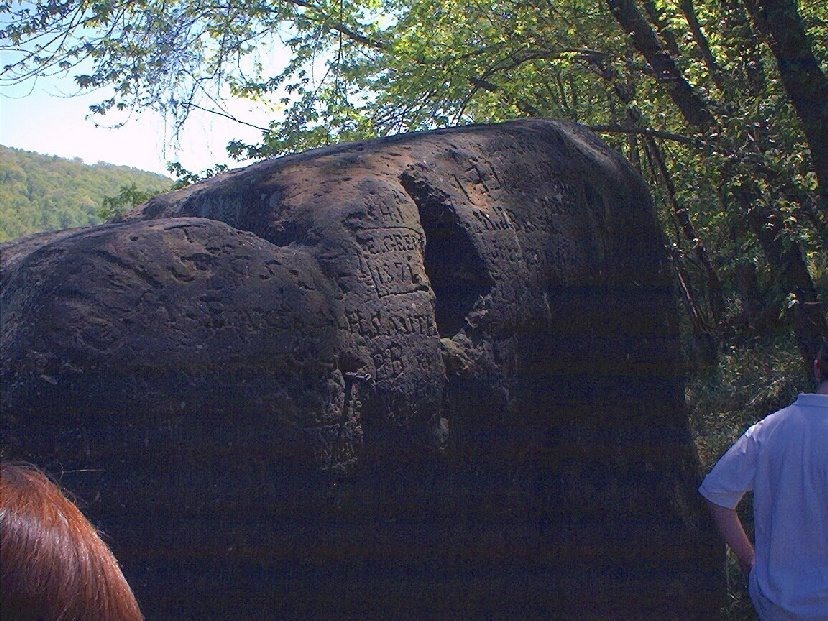
Indian God Rock is a sandstone boulder bearing petroglyphs, images carved into rock, near Brandon, Pennsylvania, in the United States. Its Indigenous carvings are thought to postdate AD 900, with around AD 1200 considered more likely, but their makers and precise date remain uncertain. It is regarded as the first petroglyph-bearing boulder in the Ohio River valley to be documented and studied, and as a leading example of monumental rock art in the region.
The French expedition of 1749
In 1749, a French expedition led by the military officer and explorer Pierre-Joseph Céléron de Blainville visited the rock. Its Indigenous guides reportedly regarded the place with religious reverence. The expedition’s written account described the carvings in disparaging terms about their Indigenous makers.
The expedition also placed two lead plates to assert France’s claim to the territory; both have since been lost. An inscription dated August 3, 1749, described a plate buried on the Ohio River’s southern bank, four leagues below the River aux Boeufs, opposite a bare mountain and near a large stone bearing roughly carved figures. This description establishes that the carvings were present by 1749.
Dating and authorship
The people who made the carvings have been debated. Archaeologist James L. Swauger attributed them to ancestors of the Shawnee, a proposed ancestral community sometimes called Proto-Shawnee. In 1934, Donald Cadzow proposed that their makers belonged to Algonquian-speaking peoples. In 1928, rock-inscription researcher Edmund Burke Delabarre suggested that Indigenous people might have considered the carvings unimportant or been reluctant to discuss their culture with non-Indigenous researchers.
Other interpretations remain tentative. A scholar proposed that similarities between some figures and drawings on birch-bark documents might point to use of the rock by Indigenous ritual specialists. The relative scarcity of martial imagery has also been read as a possible indication of a peaceful culture, rather than as a settled conclusion.
Later attention and recognition
During the nineteenth century, steamboats on the Allegheny River often stopped so passengers could see the rock. An 1887 complaint about visitors’ carvings was followed much later by the study of historic inscriptions in 2000 and 2001. Swauger first visited the site in 1958 and examined it again some years afterward.
The U.S. Forest Service has identified Indian God Rock as among the most important of 75 Native American archaeological sites along the stretch of the Allegheny designated a National Wild and Scenic River, a federal designation recognizing a river’s natural, cultural, or recreational values. On May 14, 1984, the National Park Service added the site to the National Register of Historic Places, the federal register of recognized historic places.
Remains
The archaeological site covers 0.1 acres and centers on a sandstone boulder measuring approximately 22 by 14 by 10 feet. The stone’s relative softness made it suitable for carving, and its surface preserves a varied group of Indigenous images.
The carved boulder
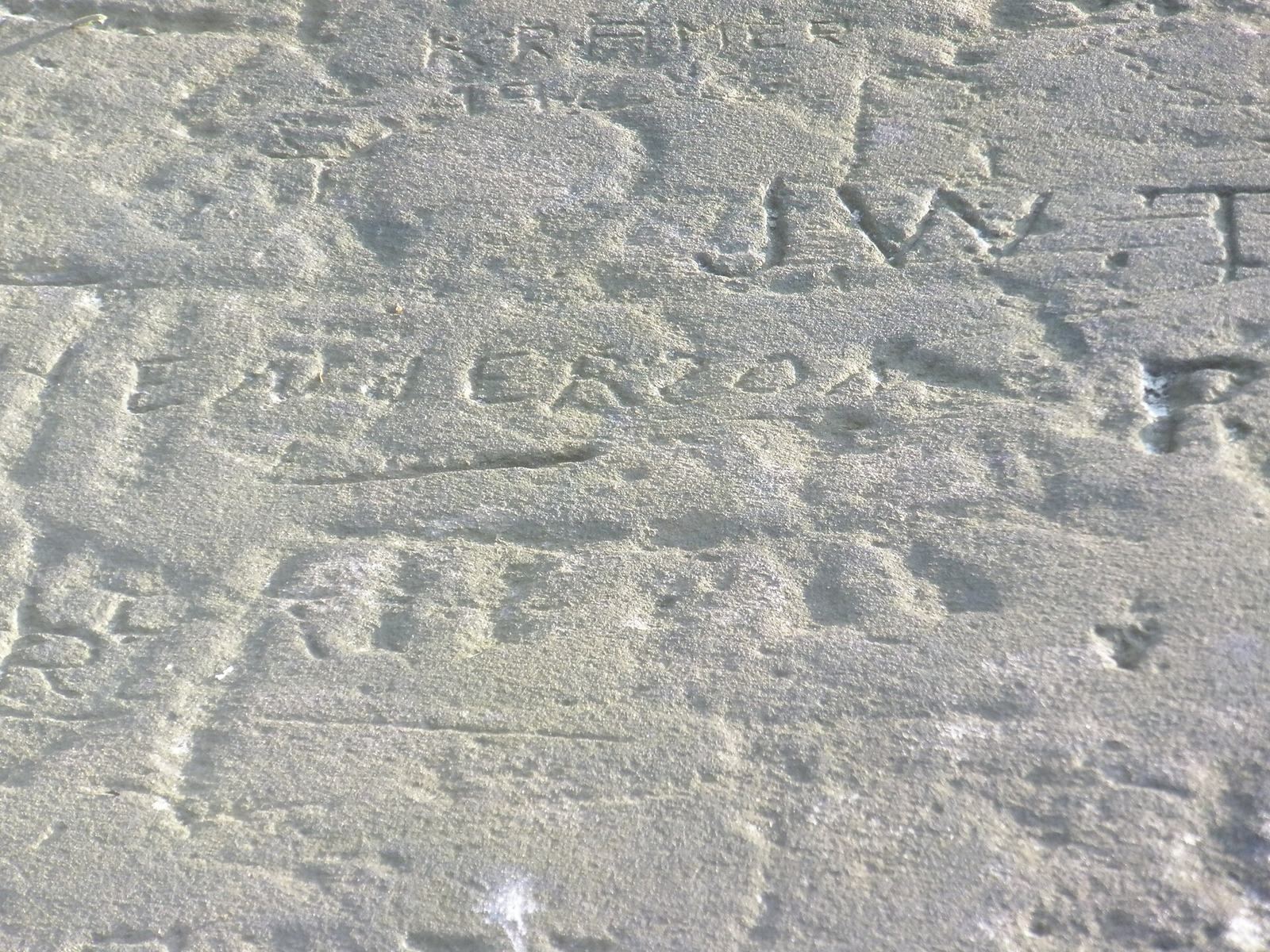
The petroglyphs show people and animals in different positions, along with abstract or symbolic forms. One count identifies 55 distinct elements, while an inventory gives a total of 56. Two images appear to depict archers; they are the only known archer images in Indigenous rock art of the Ohio River valley.
Weather and drifting timber have eroded the sandstone, and human damage has further obscured the carvings. Visitors cut names into the stone, and spray paint has also been used. Until the 1960s, people sometimes retraced the images with chalk or applied salt or mud to make them easier to see; these treatments endangered the rock and made the carvings harder to discern.
Viewing platform
A wooden platform is positioned to allow a view of the boulder without touching it. Its development involved the Venango Museum of Art, Science & Industry and the Allegheny Valley Trails Association. Jim Holden, then president of the association, and Beverly Chiarulli, then president of the Pennsylvania Archeological Council, were among its leading proponents.