Pedestals of Biahmu: Bases of Two Colossal Egyptian Statues
Site at a Glance
- Rating
- 4.5
- Popularity
- Low
- Country
- Egypt
- Primary era
- Bronze Age
- Eras represented
- Bronze Age
- Civilizations
- Egyptian
- Site type
- Civic
- Remains
- Monument
On this page7 sections
History
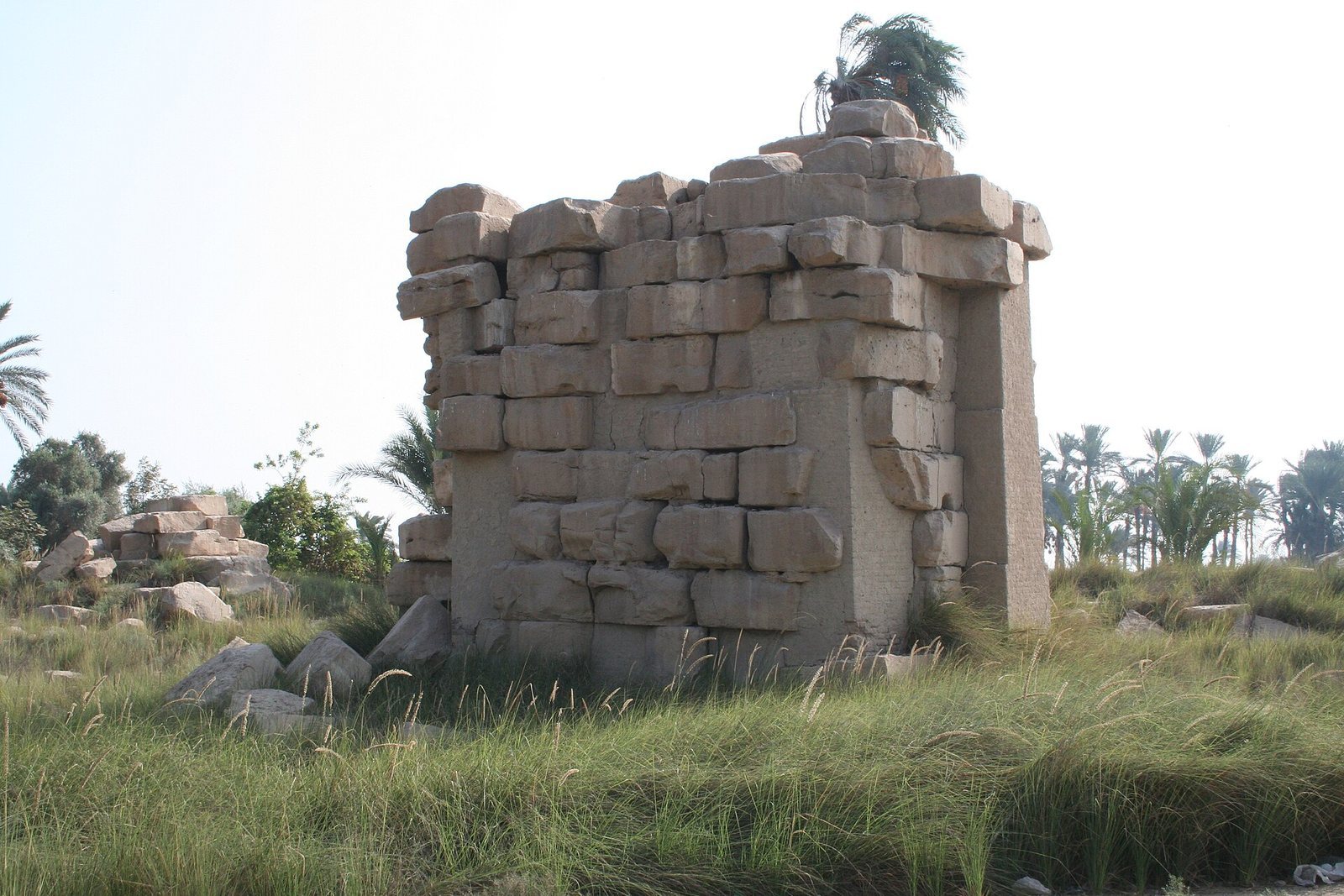
The Pedestals of Biahmu are the surviving bases of two colossal statues in Biahmu, in Egypt’s Fayum Oasis. Their erection is attributed to Amenemhat III, a pharaoh of Egypt’s Twelfth Dynasty during the Middle Kingdom. The monument is also known as the Colossi of Biahmu or the Pyramids of Biahmu.
Ancient descriptions
Herodotus, a Greek historian of the fifth century BC, gave the earliest known account. He described two pyramids in the middle of Lake Moeris, each topped by a seated statue. He claimed that the structures rose fifty fathoms above the water and extended just as far below it, a measurement almost certainly greatly exaggerated.
The Greek historian Diodorus Siculus, writing in the first century BC, and the Roman author Pliny the Elder, writing in the first century AD, repeated similar descriptions. In the nineteenth century, archaeologist William Matthew Flinders Petrie proposed that flooding might have covered the area when Herodotus described it, since building pyramids in water would have been impractical.
Medieval and early modern reports
In 1245, the Arabic writer Abu Osman el-Nabulsi el-Safadi reported that people searching for supposed treasure had partly destroyed the tops of both statues. In 1672, theologian Johann Michael Vansleb could make out remains of only one figure. When English travel writer Richard Pococke visited in 1737, he reported that only the bases remained.
Archaeological investigations
Petrie studied the site in the nineteenth century. In the 1940s, Egyptian Egyptologist Labib Habachi investigated the monument, and his research provided evidence supporting the attribution to Amenemhat III.
Remains
The surviving layout preserves the paired arrangement of a monument that joined statues, enclosed spaces, and a lakeside route. Its setting has changed as Lake Moeris gradually dried and its shore moved farther from the remains.
Statue bases and courtyards
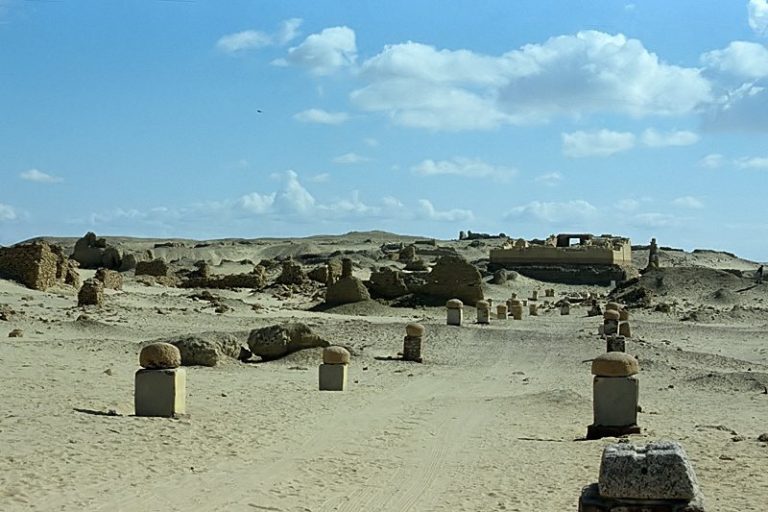
The statues have been destroyed, while their bases remain. Petrie estimated that each figure originally stood 18 metres tall. Each was supported by a plinth, a platform beneath a statue, whose carved decoration represented the 42 territorial divisions of ancient Egypt. A courtyard with sloping walls surrounded each statue.
Causeway and road
The statues stood on a causeway, a raised track bordering Lake Moeris. They flanked a road leading to the ancient city of Arsinoe, also known as Crocodilopolis. The remains are in the village of Biahmu, about 6.4 kilometres north of the city of Faiyum.