Charterhouse, Kingston upon Hull: A Carthusian Monastery and Almshouse
Site at a Glance
- Popularity
- Medium
- Country
- United Kingdom
- Primary era
- Early Modern
- Eras represented
- Medieval, Early Modern, Modern
- Civilizations
- British, English
- Site type
- Civic
- Remains
- Hospital
On this page11 sections
History
Charterhouse is a medieval religious complex and charitable almshouse in Kingston upon Hull, United Kingdom. Its Carthusian monastery was founded in 1377, following an earlier history of religious and charitable institutions on the site.
Hospital and Carthusian foundation
An earlier religious house is said to have stood here during the reign of Edward I. Around 1350, the merchant and financier William de la Pole established a hospital on the land, known as the Maison Dieu, or “House of God.” In medieval use, a hospital was a charitable institution offering shelter or care, not necessarily a medical facility. The community included thirteen men and two women, alongside a college of six priests. Conflict within the community and beyond it led to the residents’ removal, after which Franciscan Friars Minor occupied the site.
William de la Pole received permission from Edward III to establish a monastery intended for the Poor Clares, a women’s order in the Franciscan tradition. He died before the plan was completed, and his son Michael de la Pole established the monastery in 1377. Dedicated to Saint Michael, it was intended for thirteen monks of the Carthusian Order, whose members followed a largely enclosed, contemplative life. The monastery belonged to the order’s English province, a regional administrative division.
The Charterhouse also served as the family church of William, Duke of Suffolk, a great-grandson of the hospital’s founder. At his widow Alice Chaucer’s direction, William was buried there in accordance with his wishes.
Royal control and the return to charitable use
In 1506, the hospital was surrendered to the Crown in connection with the actions of Edmund de la Pole, 3rd Duke of Suffolk. By 1535, the monastery had an income exceeding £230, with net income of £174 18 shillings and 3 pence. It escaped the legislation suppressing smaller monasteries and received royal permission to continue, but the Crown suppressed it in 1538 and destroyed the priory during Henry VIII’s dissolution of England’s monasteries.
The hospital building survived. In 1553 it was restored to Hull’s mayor and burgesses, members of the borough’s civic body. After the priory’s destruction, the institution became known as the Charterhouse.
Rebuilding and later use
In 1642, during the English Civil War between Parliament and the Royalists, the hospital was demolished before the First Siege of Hull so that besieging forces could not use it. It was rebuilt in 1645 at a cost of £474, and further rebuilding between 1663 and 1673 added cells and a chapel. The hospital was rebuilt again in 1780 and extended in 1803.
By the 1860s, the almshouse cared for 70 pensioners, each receiving six shillings a week. It was still functioning as an almshouse in 2002, and its buildings remained in use through 2012. In 1975, a 1.65-hectare area around and including the Charterhouse was designated a conservation area, a district protected for its historic character.
Charterhouse School, east of the Charterhouse, opened in 1881 as a Victorian board school established by a local school board. It became a secondary school in 1950 and an annexe of Hull College in 1967. The college had sold the school site by 2015.
Remains
The historic group includes the almshouse buildings and their attached chapel, the Master’s House, Charterhouse School to the east, and an associated burial ground. The medieval monastery stood just outside Hull’s former town walls.
Almshouse and related buildings
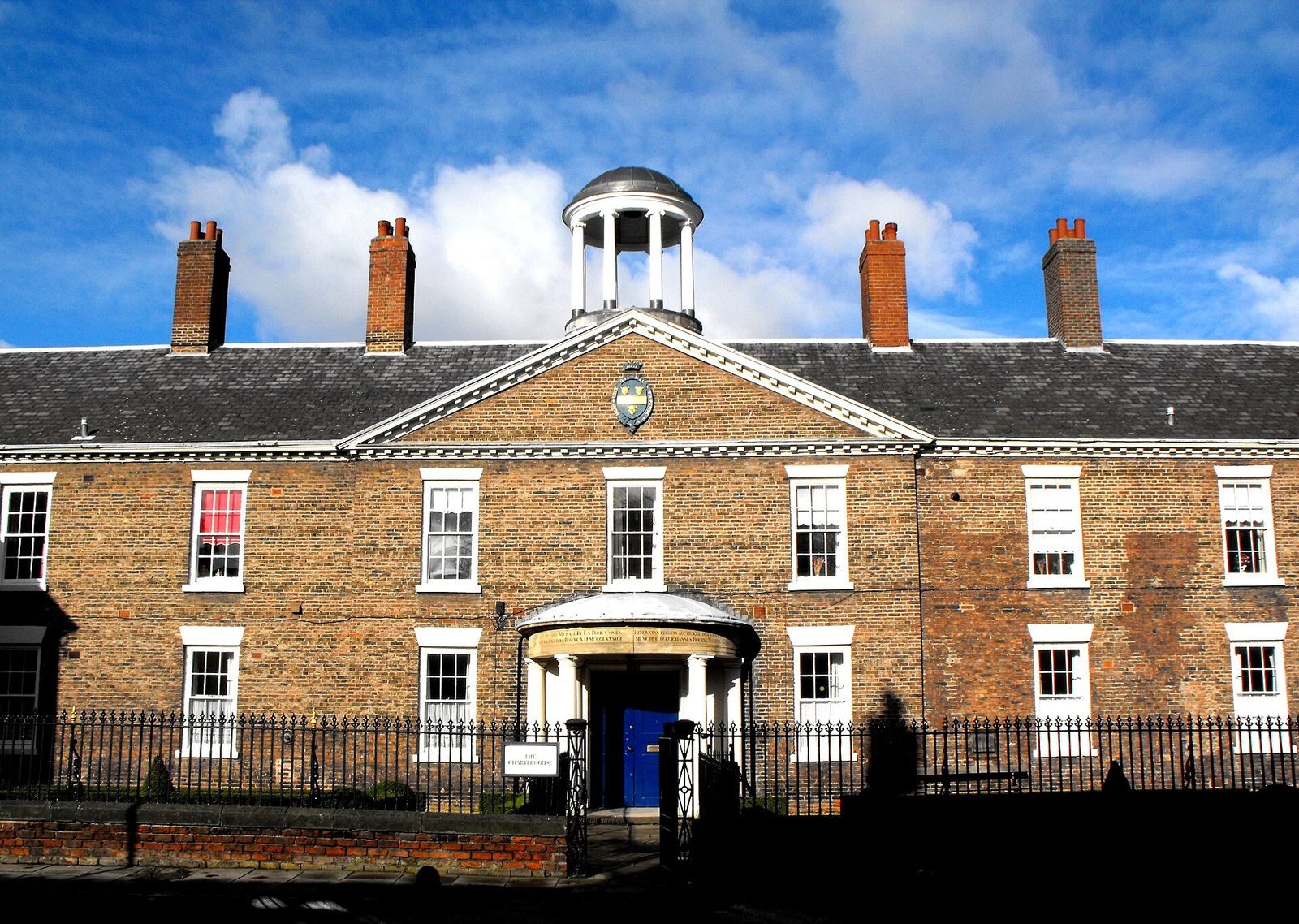
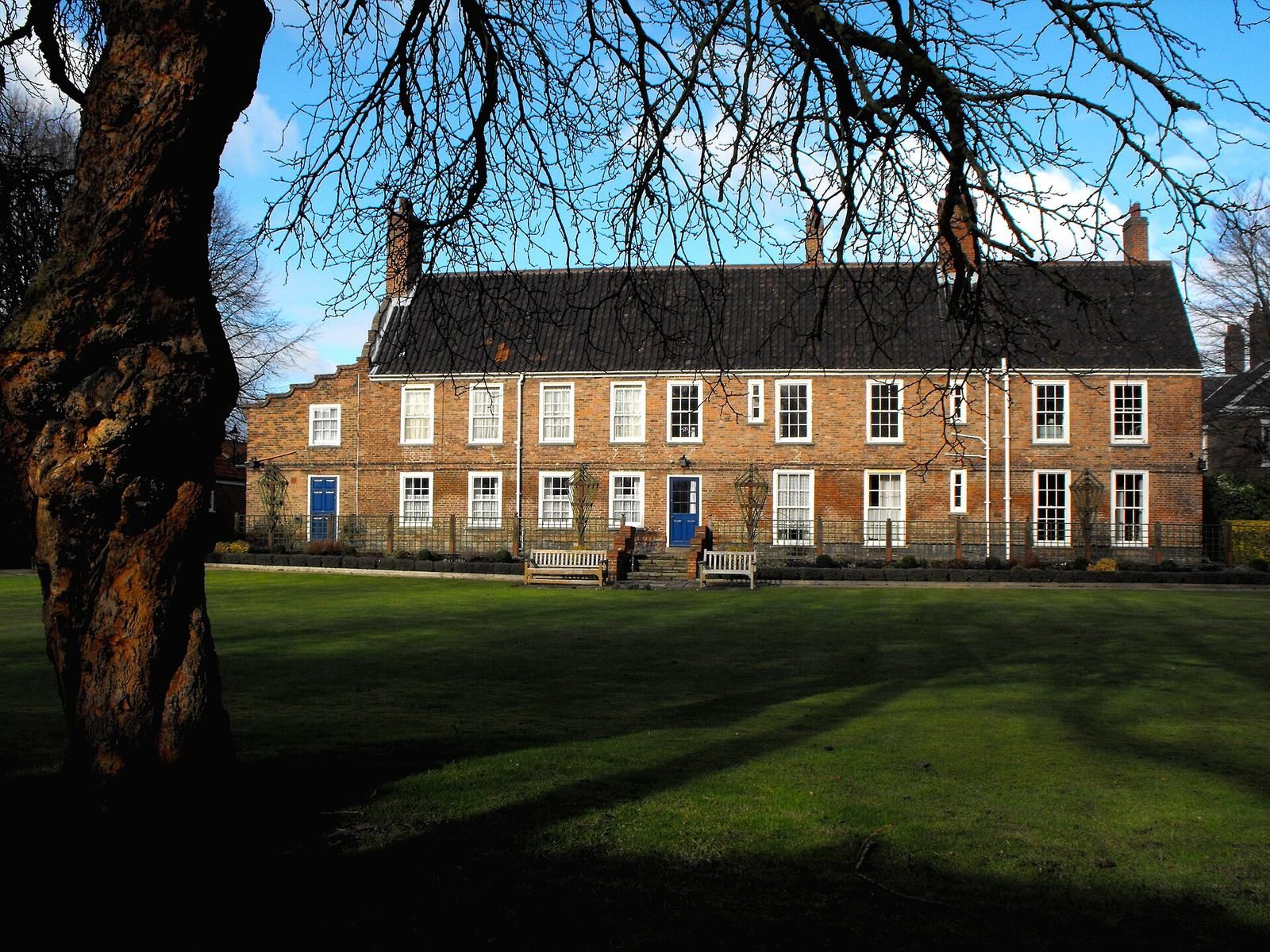
Almshouse and chapel
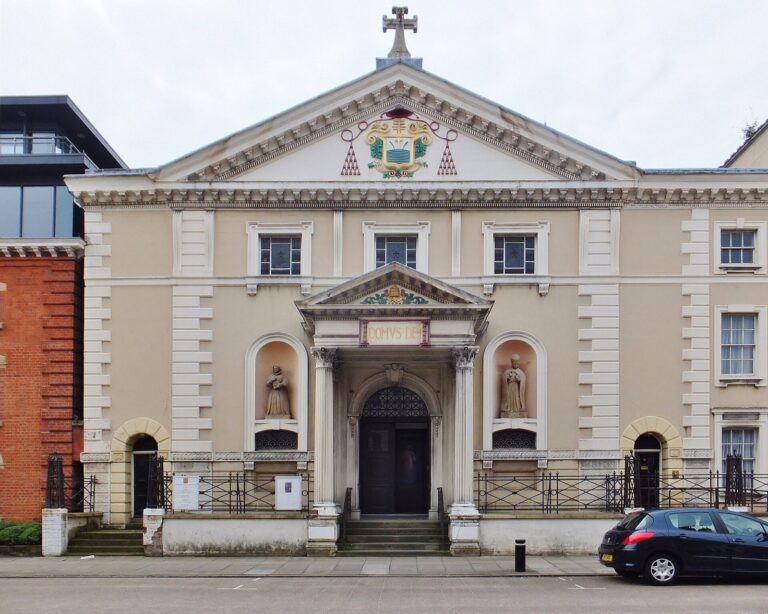
The almshouse buildings include an attached chapel, while cells formed part of the seventeenth-century additions. The Charterhouse bears the arms of William de la Pole in keeping with Carthusian tradition: three gold leopard heads and a horizontal gold band on a blue field.
Master’s House
The Master’s House is thought to incorporate part of a hospital building dating to 1650. It was damaged during the Second World War and restored in 1950.
School and burial ground
Charterhouse School
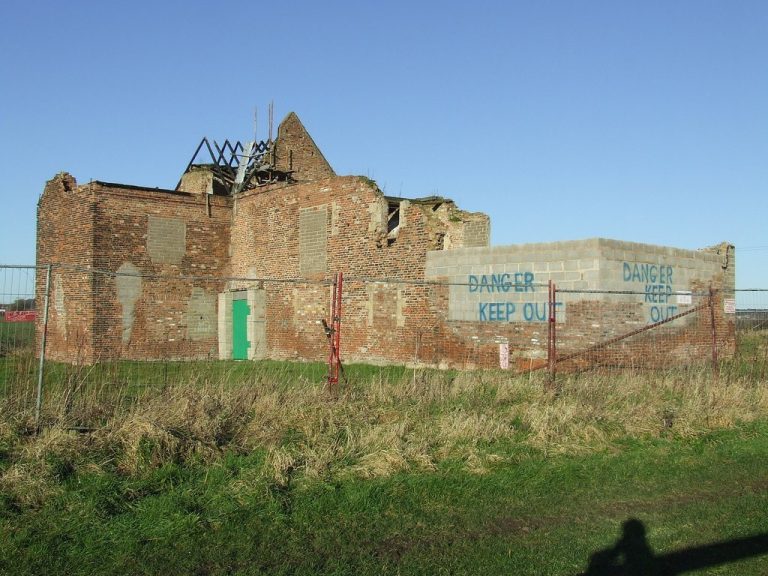
The school comprises a single-storey infants’ building and a two-storey school building. The boys’ and girls’ entrances were separate, and the girls’ classrooms were on the first floor.
Burial ground
An associated burial ground dates to the eighteenth century.