Church of Our Lady of Grace and Saint Joseph: A Baroque Carmelite Church in Barcelona
Site at a Glance
- Rating
- 4.6
- Popularity
- Medium
- Country
- Spain
- Primary era
- Early Modern
- Eras represented
- Early Modern
- Civilizations
- Crown of Aragon, Habsburg, Habsburg Spain, Spanish
- Site type
- Religious
- Remains
- Church
On this page9 sections
History
The Church of Our Lady of Grace and Saint Joseph, popularly known as Els Josepets, is a Baroque church in Barcelona, Spain, built by the Discalced Carmelites between 1658 and 1687. Its Classicist Baroque design draws on classical architecture within the ornate Baroque tradition. The church is the surviving building of a former convent whose dedication helped give the surrounding settlement its name.
Foundation and construction
In 1625, former Barcelona councillor and benefactor Josep Dalmau donated money to establish a convent dedicated to Saint Joseph and Our Lady of Grace. After considering whether to adapt a tower he owned in Sarrià, he bought the Torre Guinardó estate from Marianna Mitjà in early 1626. The property stood beside the Vallcarca stream, in the parish, or local church community, of Sant Vicenç de Sarrià, near the road between Barcelona and Sant Cugat. The Discalced Carmelites, a reformed branch of the Carmelite order associated with stricter, more contemplative observance, established their community there that year.
Construction of the convent of Santa Maria de Gràcia began in 1628, and by 1630 it could house novice friars. A small chapel served the community from its early years. The church itself was designed by Carmelite friar Josep de la Concepció, also known as Josep Ferrer, and built between 1658 and 1687. Its opening became contentious: the parish priest claimed authority to bless it because it lay within his parish, while the Carmelites asserted their order’s right to do so, with the diocese supporting the priest. The friars opened the church on 3 April 1687, three days before the scheduled ceremony. A diocesan order prohibiting an earlier blessing arrived two hours later, and the Carmelites answered it with a copy of the notarial record of the ceremony.
Settlement and military occupation
The convent’s dedication to Our Lady of Grace supplied the name Gràcia for the settlement that grew around it. Farmsteads helped shape the early community, including Ca n’Alegre, established in 1688. During Barcelona’s 1697 siege, French troops occupied the convent and used it as barracks. In 1705, Prince George of Darmstadt, who had served as viceroy of Catalonia from 1698 to 1701, was buried there after being killed in combat at Montjuïc. During the 1713–1714 siege, forces under the Duke of Pópuli attacked the convent to set up a gun battery, a position for artillery. Barcelona’s defenders destroyed it.
Suppression and parish life
The friars had to leave during the Peninsular War, fought in Spain against Napoleonic forces, from 1808 to 1814. In 1819, the writer and aristocrat Rafael d’Amat i de Cortada, Baron of Maldà, was buried in the church’s crypt. During the Liberal Triennium, Spain’s period of constitutional government from 1820 to 1823, the friars again moved to Barcelona amid efforts to suppress their order.
After the 1836 confiscation of church property, part of a wider process of secularizing and selling religious holdings, the monastery was auctioned on 3 January 1837 and bought by Llorenç Amigó i Font. The convent buildings were demolished, while the church was retained; a plaza on the former convent grounds opened in 1890. The church then saw only occasional services, held by parish vicars and a group of former Carmelites. The former convent library also entered the University of Barcelona’s Reserve Library collection following the 1835 confiscation of convent property. Its holdings comprise nearly 400 editions, including books bearing the convent’s ownership marks.
In 1848, the parish board and rector supported a request to make the church a parish church. The request was sent to the Minister of Grace and Justice on 18 November. On 20 July 1868, Queen Isabella II appointed Pere Jaume Carreny rector of the new parish of Our Lady of Grace and Saint Joseph, adding Saint Joseph to the parish’s name. Carreny organized cleaning and repairs and sought local backing for restoration. Associations dedicated to Saint Isidore and to Mary Immaculate and Saint Teresa helped establish parish life, which was firmly in place by the end of the nineteenth century.
Gràcia and the changing city
Gràcia was an independent municipality from 1856 until 1897, when it became part of Barcelona as a district. The square beside the church took the name Lesseps in 1899, after French diplomat and engineer Ferdinand de Lesseps, and electric tram service reached the area. The opening of Avinguda de la República Argentina in 1910 destroyed the underground cemetery known as the catacombs, whose walls were decorated with skeletons. In 1960, Plaça dels Josepets and neighboring Plaça de la Creu were joined to form Plaça de Lesseps. Road construction and the reorganization of the square in the 1970s further fragmented the neighborhood and the church’s urban setting.
War damage and recovery
The church escaped destruction during Barcelona’s Tragic Week, a period of unrest in 1909, because rioters believed it was defended. In July 1936, during the Spanish Civil War, it was set on fire. The dome and central nave collapsed. Worship resumed in a warehouse on Homer Street in 1939, and recovery work on the church was completed in 1961. Its exterior was restored in 1998.
Remains
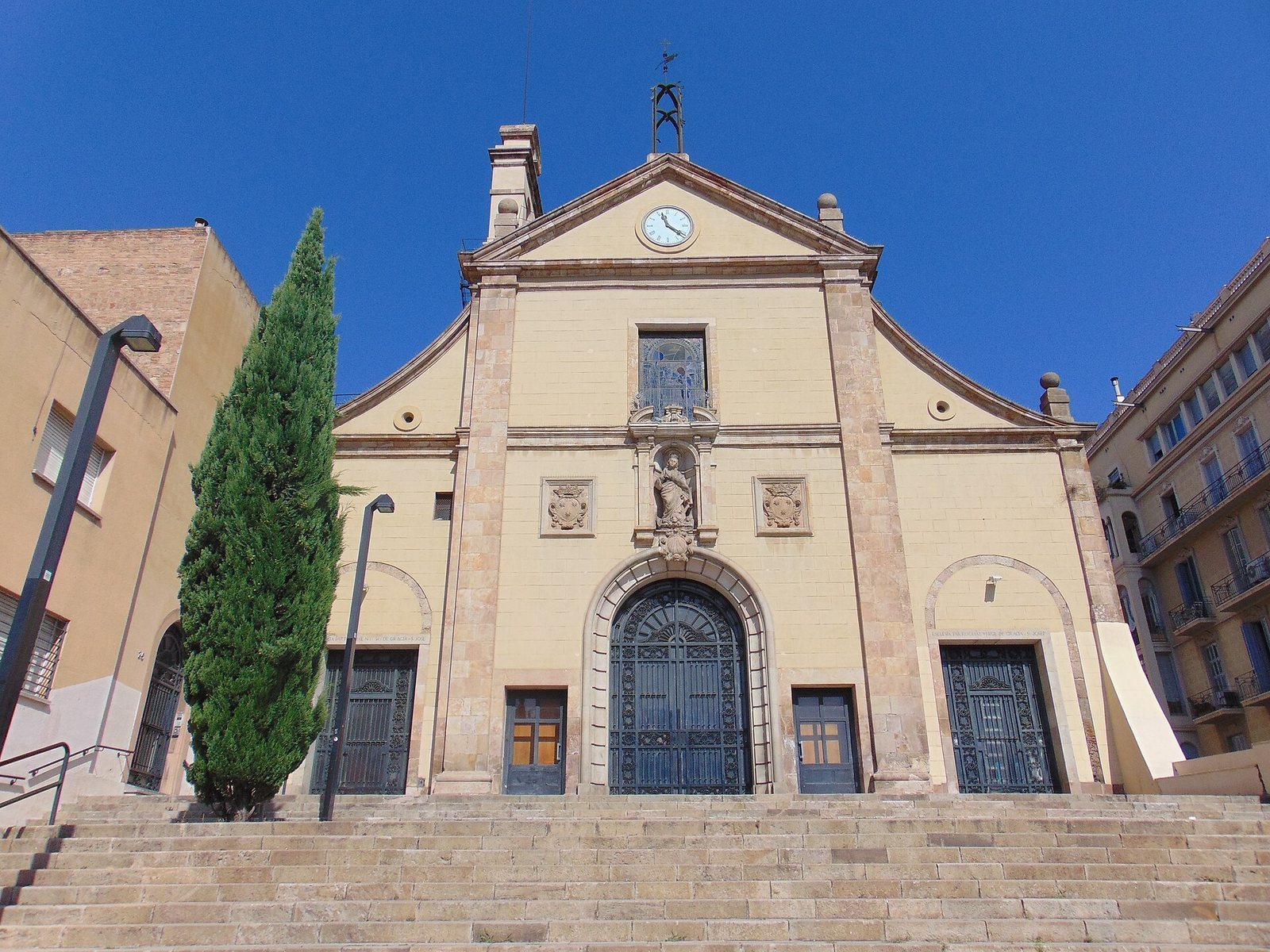
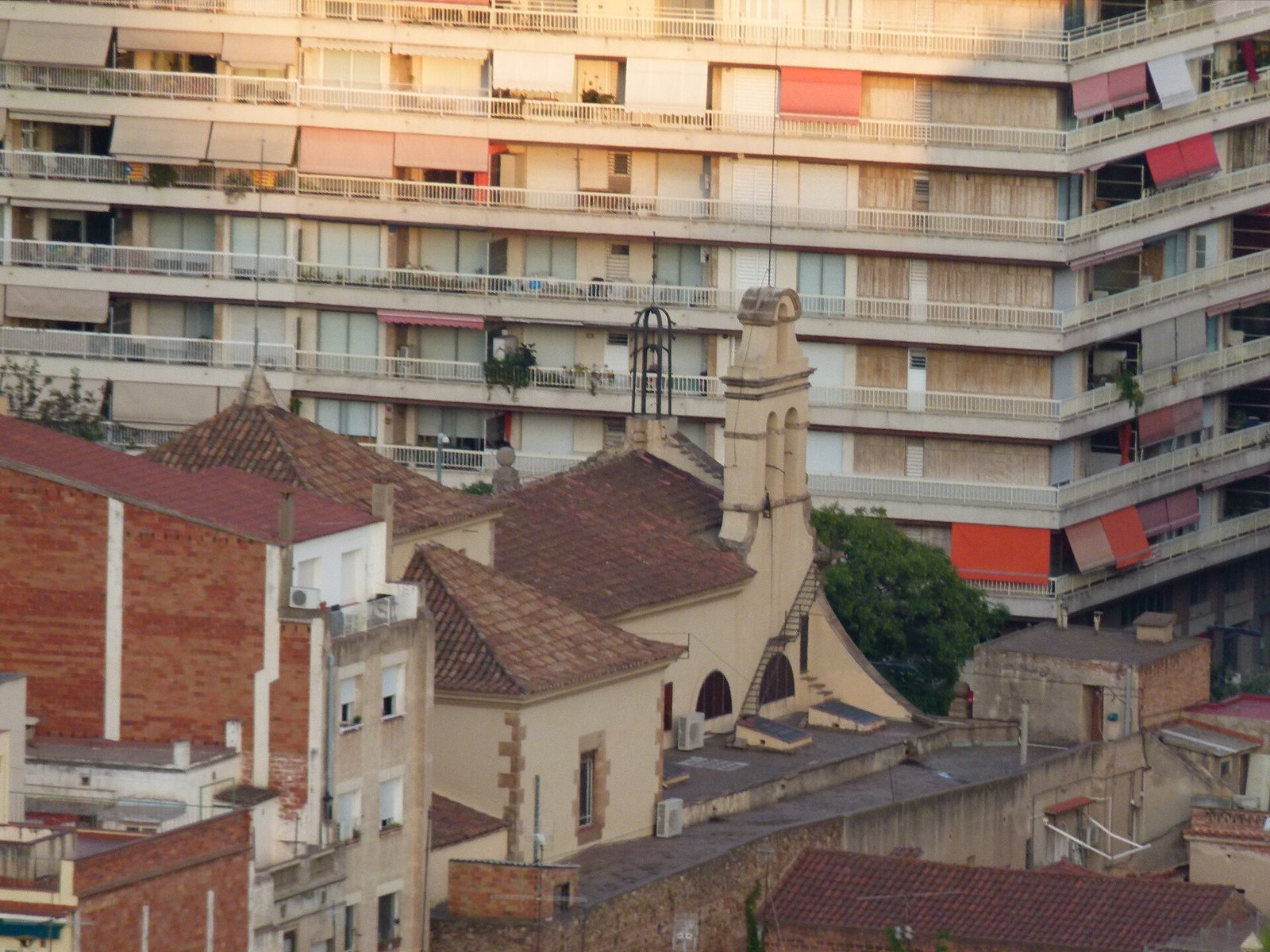
Raised on a stepped base, the church is organized around a single nave, the main central worship space, with side chapels set between projecting wall supports called buttresses. The chapels connect to one another, and the exterior is arranged as a three-part façade.
Interior
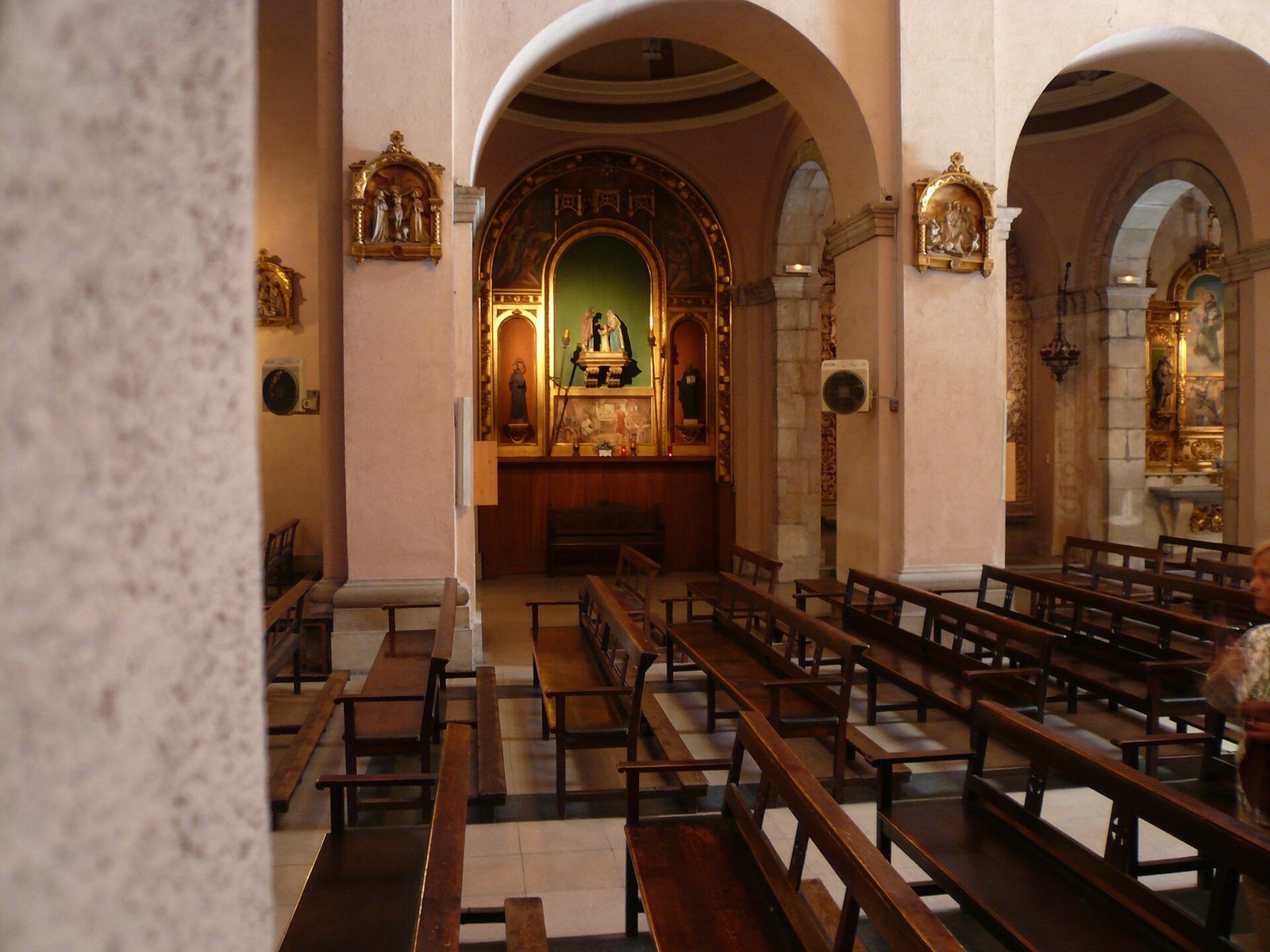
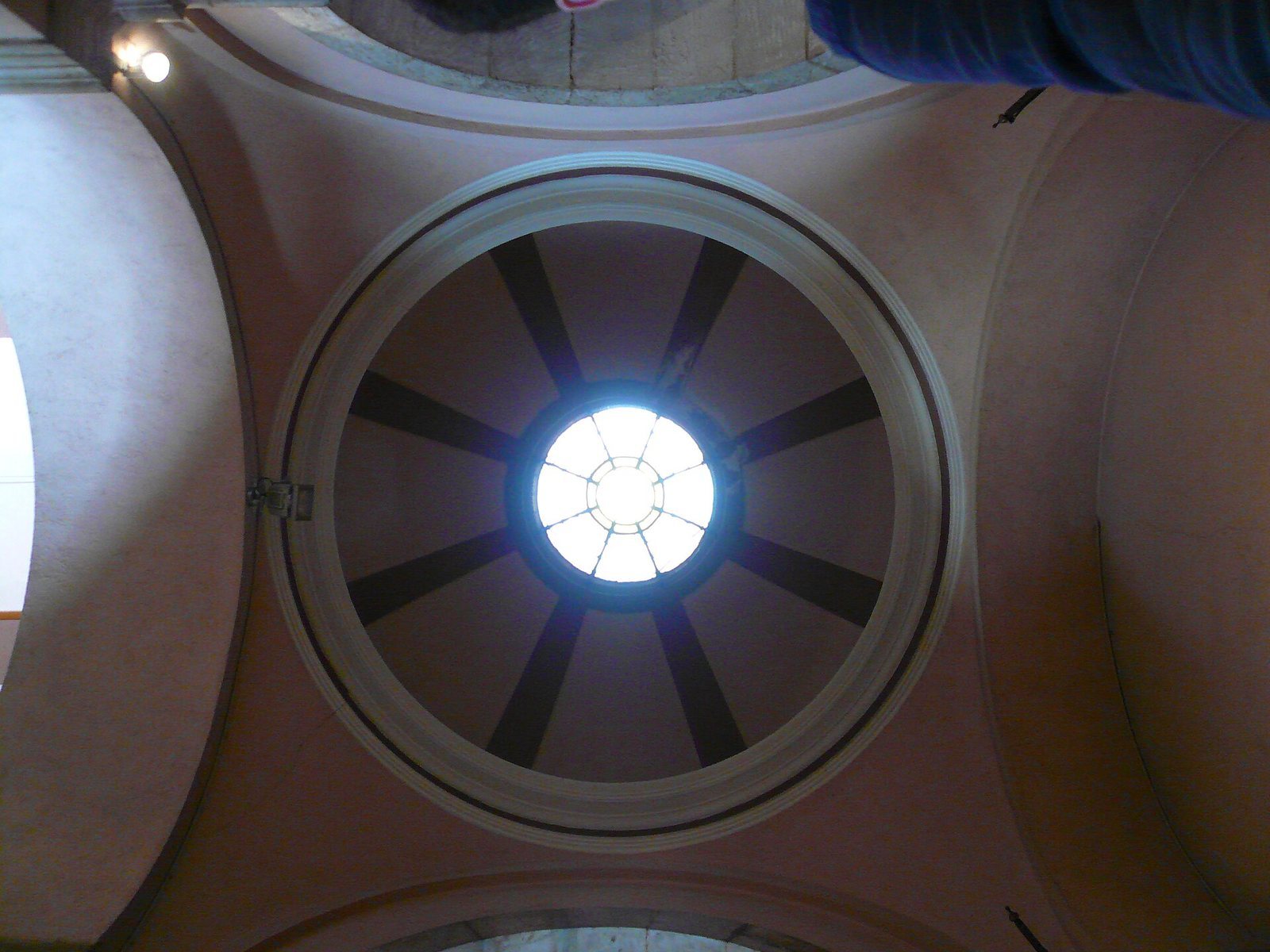
A barrel vault, a continuous curved ceiling, spans the nave, with lunettes, crescent-shaped areas where the vault meets the walls. An entrance vestibule called a narthex lies below the choir. The church also has a pseudo-transept, a crosswise projection that does not extend into full side arms, with a dome above it. The chapels between the buttresses are covered by domes fitted with skylights.
Façade
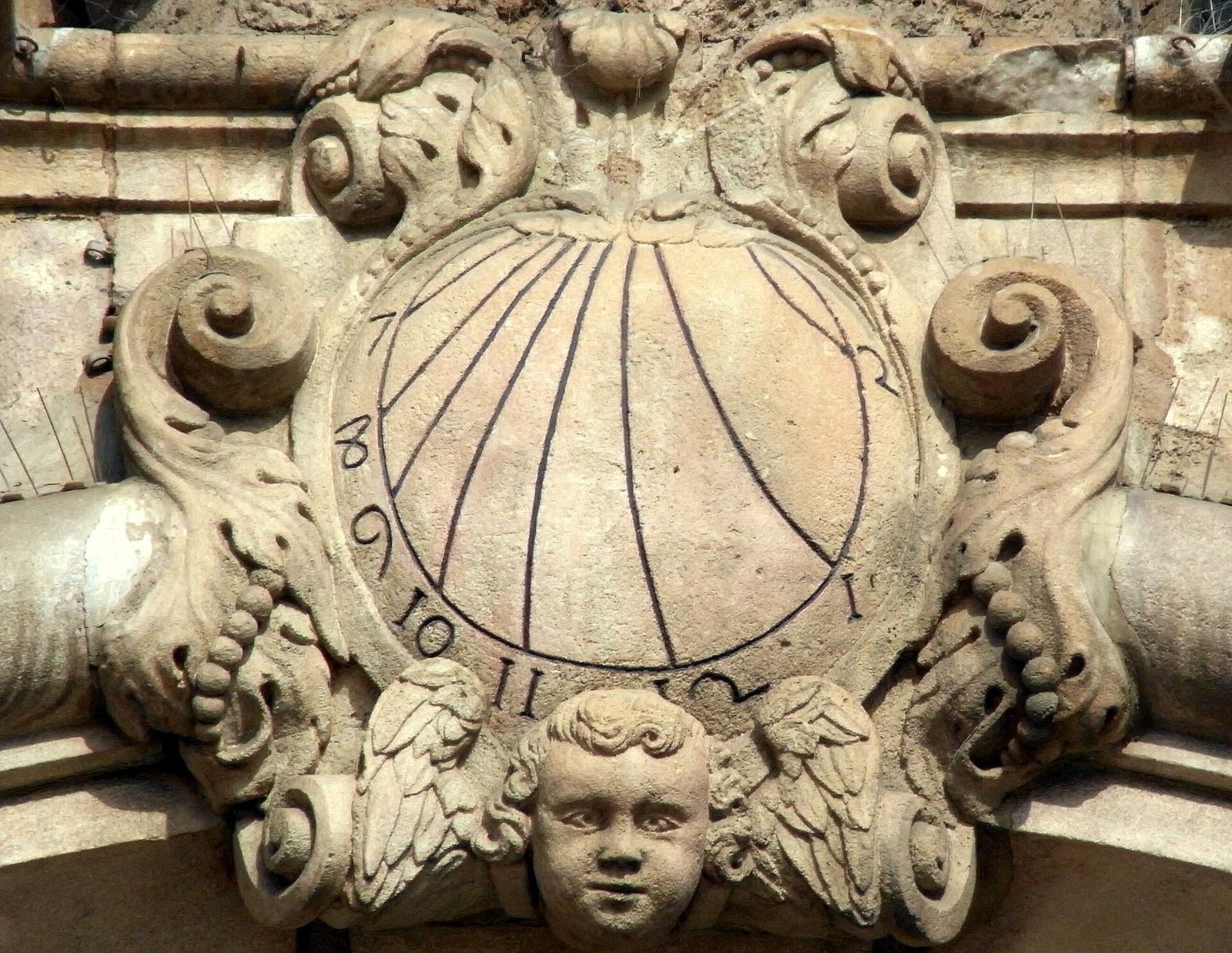
The façade facing Plaça de Lesseps is divided into three sections framed by buttresses. Its central pediment, the shaped upper section of the façade, contains a clock. Three arched entrance bays and five ground-floor doors of different sizes are described. The central door is flanked by two smaller openings, while taller doors occupy the central and side sections; the side doors were added later. Above the main portal, two coats of arms flank a recess containing a stone sculpture of the Immaculate Conception, the Catholic belief that Mary was conceived without original sin. A window above it lights the nave and is likened to a medieval rose window. A horizontal architectural band called an entablature runs across the façade, and a bell gable, a wall-mounted structure for bells, stands at right angles to it. Light ochre painted plaster imitates finely cut stone blocks, while exposed stone appears around the openings, buttresses and cornices.