Falkirk Old Parish Church: A Presbyterian Parish Church in Scotland
Site at a Glance
- Rating
- 4.5
- Popularity
- Medium
- Country
- United Kingdom
- Primary era
- Modern
- Eras represented
- Medieval, Early Modern, Modern
- Civilizations
- British, Kingdom of Scotland
- Site type
- Religious
- Remains
- Church
On this page11 sections
History
Origins and medieval history
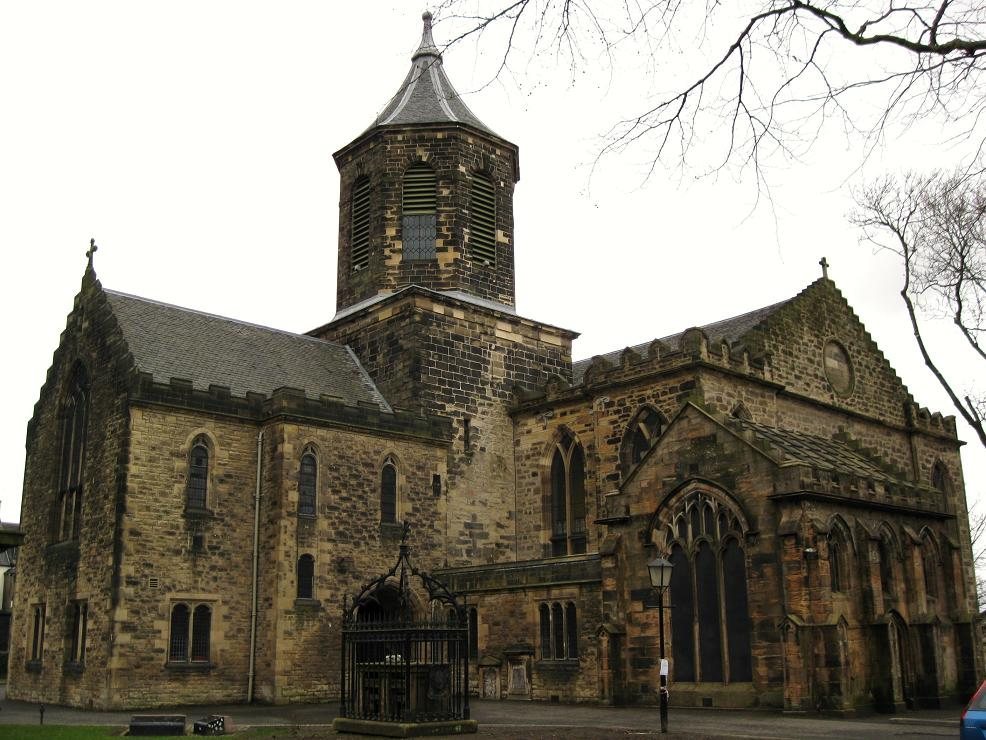
Falkirk Old Parish Church is a Church of Scotland Presbyterian parish church in Falkirk, United Kingdom, dedicated to Saint Modan, an early medieval Christian saint associated with Scotland. It is also known as Falkirk Trinity Church. The church’s beginnings are uncertain, though tradition places a church here as early as the sixth or seventh century and attributes its foundation to Saint Modan. The name Faw Kirk, meaning “speckled church,” is said to have given the town of Falkirk its name.
Another tradition credits Malcolm Canmore, also known as Malcolm III, king of Scotland, with founding a church here in 1057. A church at the site is known by the eleventh century, but the specific 1057 date is doubtful: a stone inside the church carries that date and is believed to have been made in the nineteenth century. In 1166 the church was given to Holyrood Abbey, a medieval religious house in Edinburgh.
Rebuilding and later changes
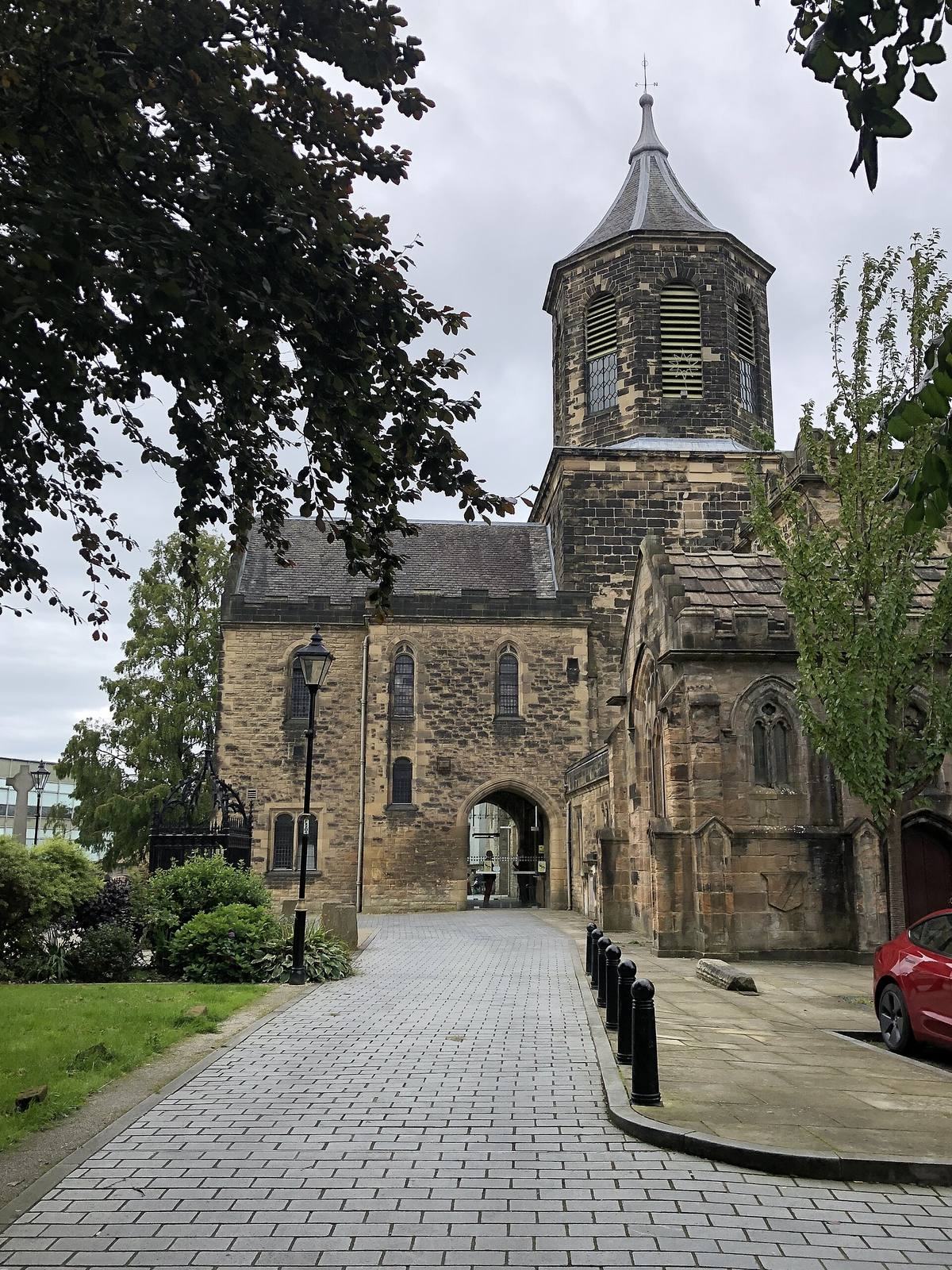
The tower was rebuilt between 1738 and 1741. By the 1790s the congregation had outgrown the church, and proposals to renovate or enlarge it led to prolonged disagreement. In 1810 the Court of Session, Scotland’s highest civil court, ruled that the tower should remain while the rest of the medieval building was replaced. The new church was completed in autumn 1811.
A session house was added in 1893. In 1986 the Old Parish Church congregation joined the congregation of neighboring St Modan’s, forming Falkirk Old & St Modan’s Parish Church. The building received category B listing in 1960 and was upgraded to category A, Scotland’s highest listing category, in 2004.
Remains
Medieval plan and retained tower
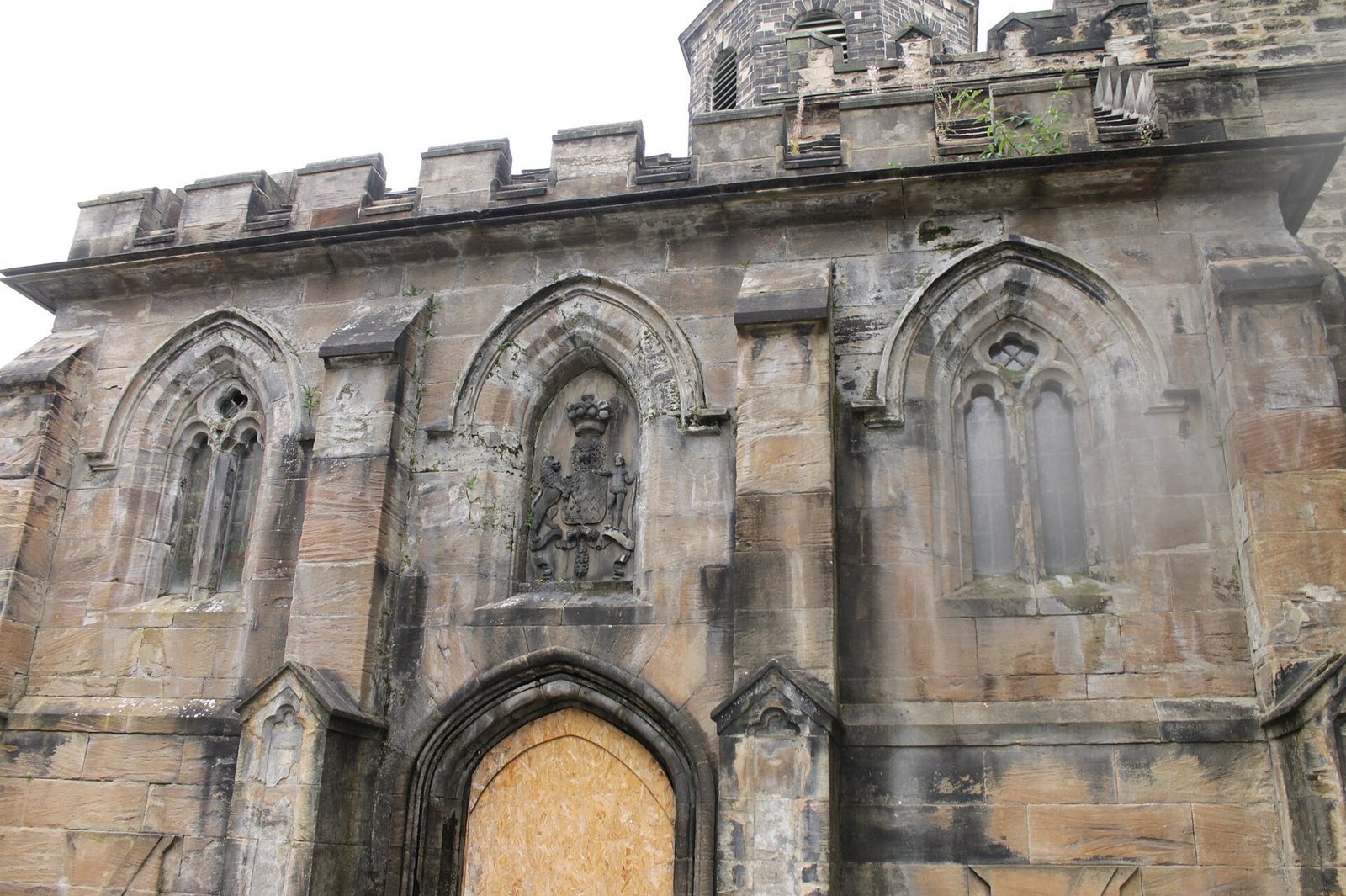
The present church combines fifteenth-century fabric with a building largely reconstructed in the nineteenth century, while retaining its eighteenth-century tower. The oldest parts probably date to around 1450. They indicate that the medieval church had a cross-shaped plan, with a central hall and projecting arms meeting beneath a tower.
Session house and carved stones
The session house, a building for church meetings, stands on the south side of the church. It was designed by the architectural practice Wardrop & Anderson, with Robert Rowand Anderson identified as its architect.
Carved medieval stones are preserved inside the church. These include figures of nobles that once stood atop tombs, which are thought to have been inside the medieval church, and a cross-head dating to the twelfth century.
Churchyard monuments
Sir John de Graeme’s grave
Sir John de Graeme, a Scottish knight, was killed at the Battle of Falkirk on 22 July 1298. His gravestone has been replaced twice; the present slab is said to copy the original. Its inscription praises his strength and wisdom, describes him as a leader who rescued Scotland three times, and commends his truth and courage.
Sir John Stewart of Bonkyll
Sir John Stewart of Bonkyll, a Scottish nobleman, was also killed at the Battle of Falkirk. He was a direct male ancestor of James VI of Scotland and, consequently, of the present royal family.
Patrick Murehead of Rashyhill
A churchyard tomb commemorates Patrick Murehead of Rashyhill, a Scottish landowner who died in 1723.
Sir Robert Munro
Another notable tomb commemorates Sir Robert Munro, 6th Baronet, a Scottish soldier and politician who died in 1746.