San Cristoforo, Siena: A Medieval Church and Civic Meeting Place
Site at a Glance
- Rating
- 4.7
- Popularity
- Low
- Country
- Italy
- Primary era
- Early Modern
- Eras represented
- Medieval, Early Modern, Modern
- Civilizations
- Grand Duchy of Tuscany, Holy Roman Empire
- Site type
- Religious
- Remains
- Church
On this page11 sections
History
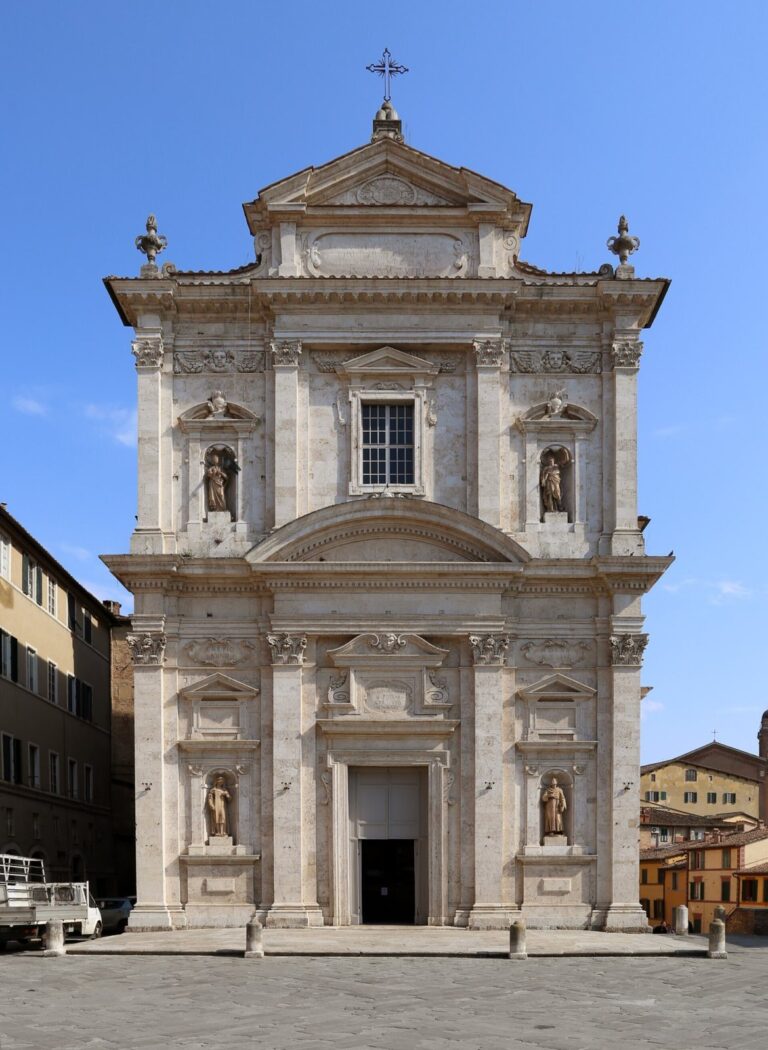
San Cristoforo is a Roman Catholic church dedicated to Saint Christopher in Siena, Italy. Its origins date to the 11th and 12th centuries, and it was completed in 1711. Its present façade reflects Neoclassicism, an architectural style drawing on ancient Greek and Roman design.
Medieval civic and political life
Before Siena built the Palazzo Pubblico in Piazza del Campo, the Republic’s General Council met at San Cristoforo. The Republic of Siena was a medieval city-state, and the General Council was also known as the Council of the Bell because a bell summoned its meetings. In the 13th century, the church’s adjoining cloister hosted the council of the emerging Republic.
In 1260, Siena resolved at the church to fight Florence, whose forces were threatening the city. A meeting there between the Council of 24, Siena’s communal governing body, and Florentine ambassadors may have helped prompt the decision. The ambassadors demanded that Siena breach its walls and allow Florentine fortresses in each of the city’s three historic districts. The Sienese rejected the demand and prepared for war.
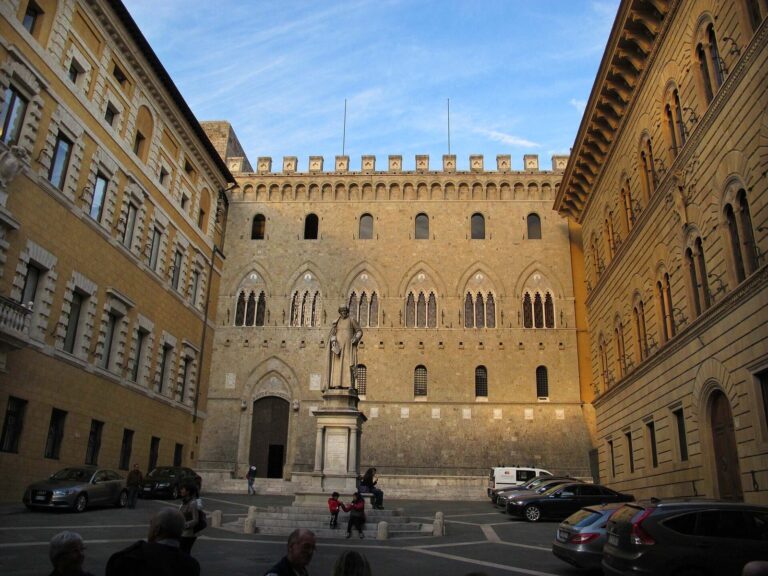
Siena needed German mercenaries supplied by Count Giordano d’Anglano, the vicar of King Manfred of Sicily, but lacked the money to hire them. Banker Salimbene Salimbeni went to his nearby home and returned to the cloister with a wheelbarrow carrying 118,000 florins. He was associated with an early branch of what later became Monte dei Paschi di Siena, a historic Italian bank founded in the 15th century. The mercenaries helped secure Siena’s victory over Florence at the Battle of Montaperti on 4 September 1260.
Religious and civic associations
In 1376, Saint Catherine of Siena may have helped reconcile the feuding Maconi and Tolomei–Rimaldini families. In the presence of the parties, she may have entered a trance-like ecstasy while praying at an altar.
The Tolomei family maintained a long association with the church. From 1796 to 1945, San Cristoforo served as the seat of the Contrada Priora della Civetta, one of Siena’s traditional neighborhood communities.
Damage and modern changes
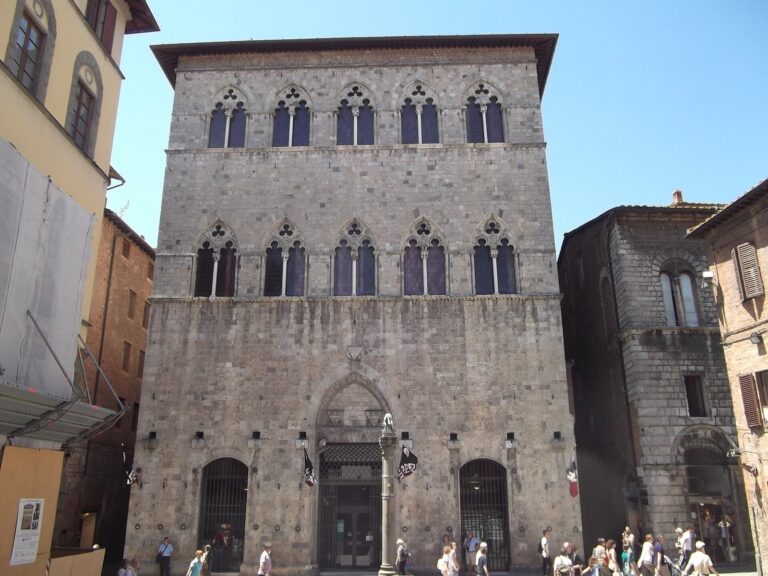
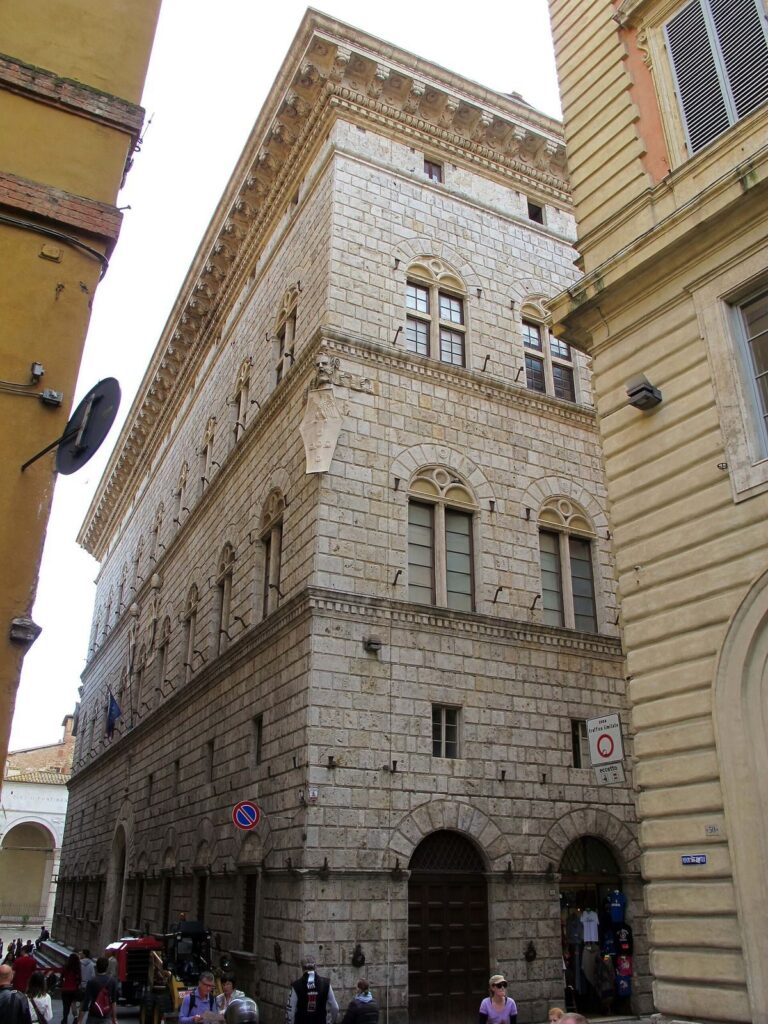
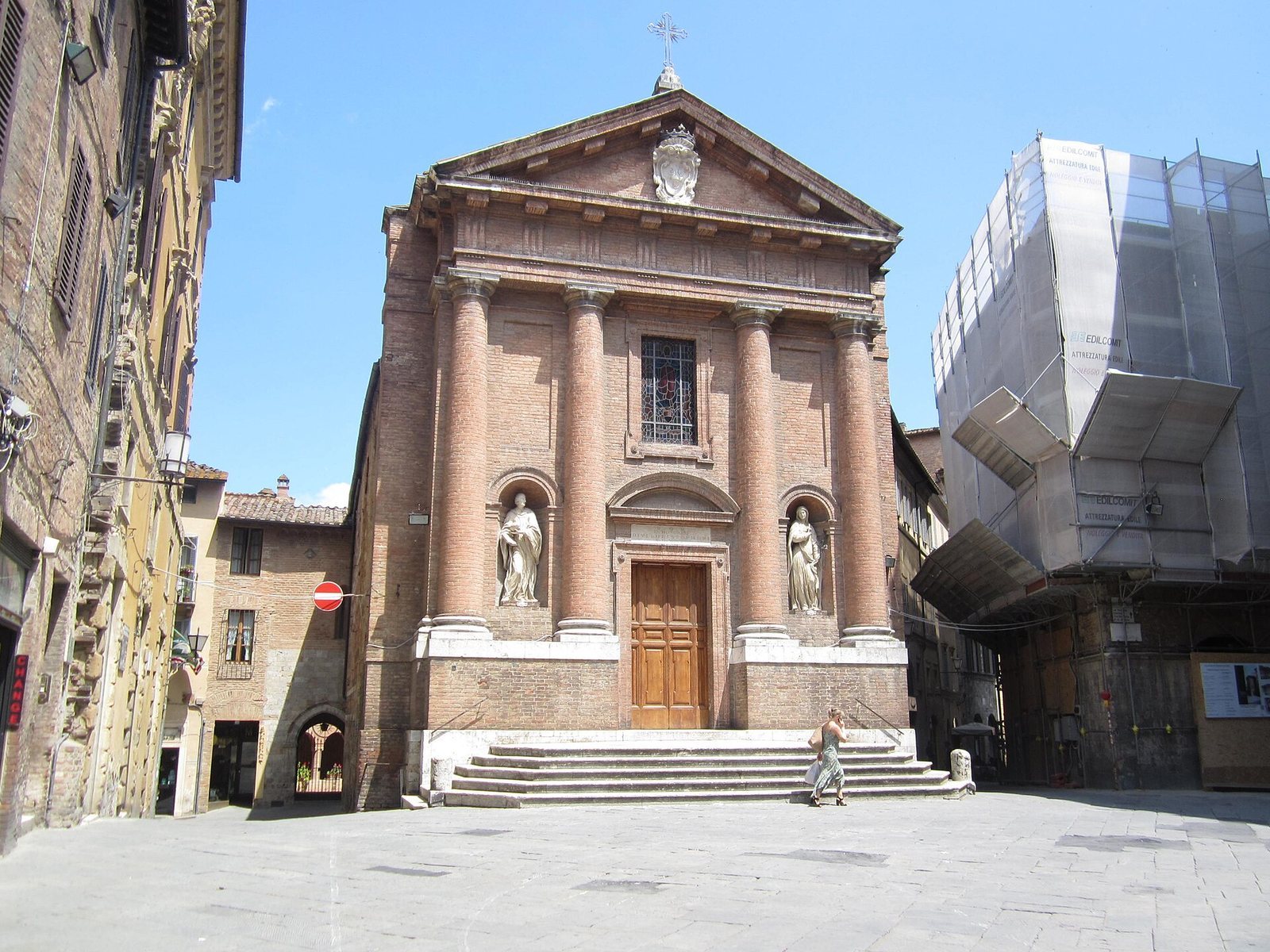
The 1798 earthquake badly damaged San Cristoforo. Its old façade collapsed, and the church was shortened. A replacement façade was built in 1800 with support from the Counts Tolomei, whose palace stands across the piazza.
The small cloister was restored in 1921. Work in the 1990s focused particularly on the presbytery, the area around the main altar, adapting it to contemporary worship.
In 1988, Archbishop Mario Ismaele Castellano suppressed the parish of San Cristoforo and joined its territory with those of San Donato all’Abbadia and San Pietro a Ovile in the newly established parish of Santa Maria in Provenzano. San Cristoforo now functions as an autonomous rectory, a church administered by a rector, within the Archdiocese of Siena–Colle di Val d’Elsa–Montalcino. The Sisters, Daughters of the Church, care for it, and it serves worship and pastoral activities for university students.
Remains
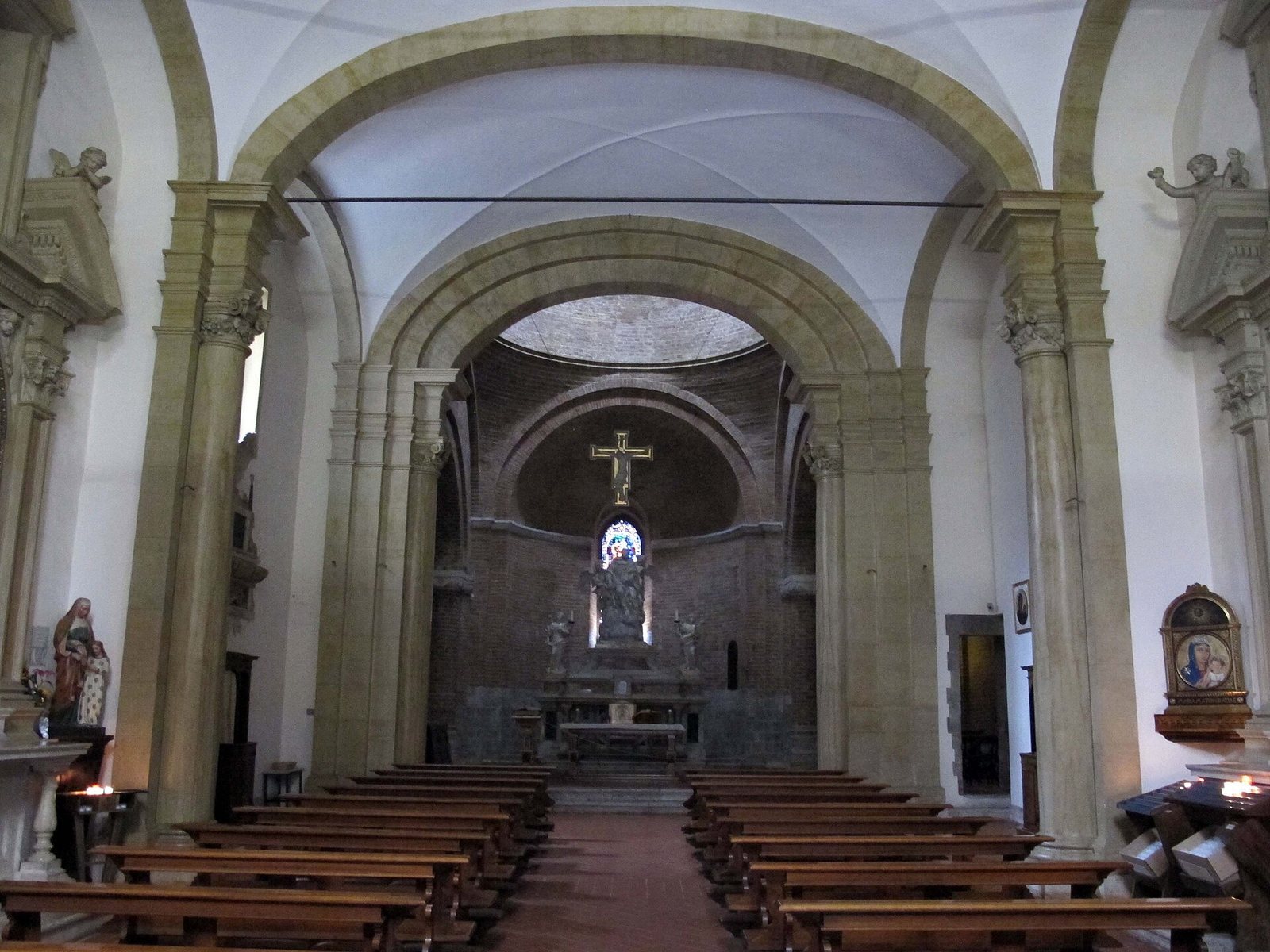
The church has a Latin-cross plan, with a long main body crossed by a shorter arm, and a single nave, the church’s main body, beneath a dome. Traces of Romanesque architecture, a medieval style characterized by rounded forms, survive alongside later features.
Church fabric and façade
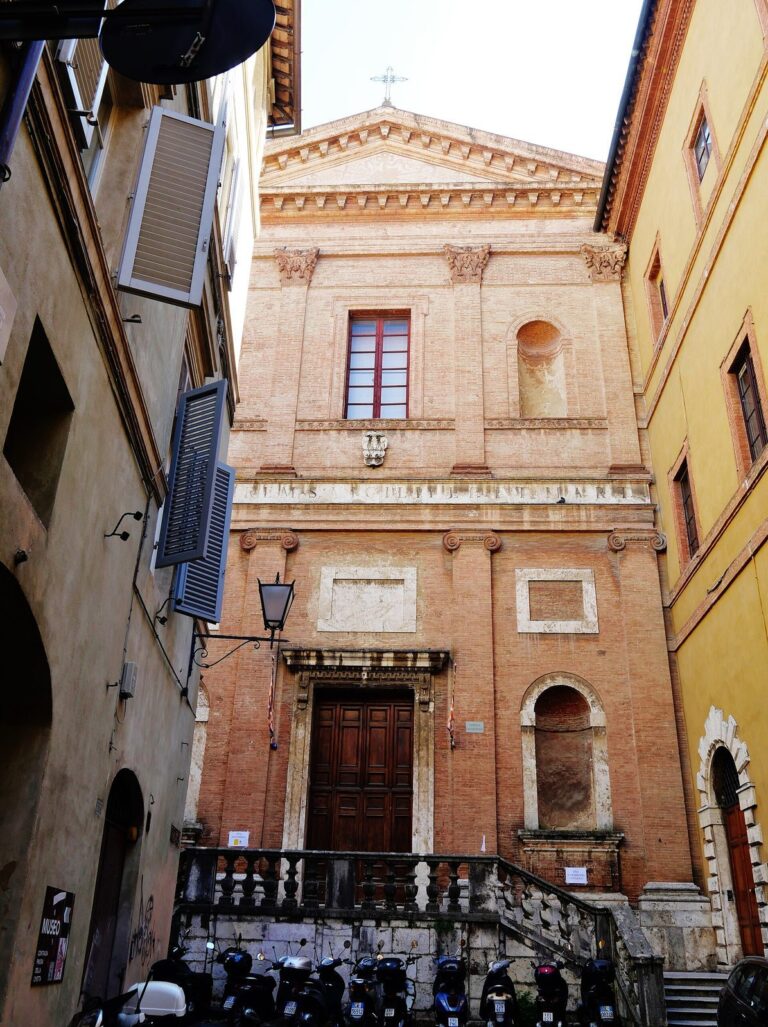
Romanesque remains can be seen in the church’s outer perimeter walls and apse, a recess at the end of the building. The façade has four columns beneath a pediment, the triangular upper section, and an entablature, the horizontal structure above the columns. It is faced in brick, though it was originally covered with painted plaster. Niches beside the entrance hold statues of Saint Bernardo Tolomei and Blessed Nera Tolomei, made by Giuseppe Silini in 1802.
Cloister
Traces of Romanesque columns remain in the small cloister, which can be reached from Via del Moro. A bell formerly associated with the General Council is now kept in Siena’s Museo Civico.
Altar and memorial
The Civetta community retains patronage of the first altar on the right, dedicated to Saint Anthony of Padua, a 13th-century Franciscan preacher and theologian who is also the community’s co-patron. A plaque on the exterior of the apse marks the traditional burial place of Cecco Angiolieri, a medieval Sienese poet, in the cloister.
Associated artworks
Paintings and frescoes
Works associated with San Cristoforo include Madonna and Child with Saints Luke and Romuald, painted by Girolamo del Pacchia around 1508, and a fresco of the Pietà, a depiction of Christ mourned after his death, with the instruments of the Passion by Martino di Bartolomeo. Other paintings include a 15th-century Madonna and Child from the Della Robbia school, Saint George and the Dragon and Saint Christopher, attributed to Sano di Pietro, and a round Madonna and Child attributed to the Master of San Pietro a Ovile.
Marble sculpture
A marble group showing the Passing of Saint Benedict was made by Giovanni Antonio Mazzuoli in 1693. It came from the Olivetan monastery of San Benedetto ai Tufi. The Olivetans are a branch of Benedictine monasticism; their founder, Saint Bernardo Tolomei, established the monastery. The Napoleonic government suppressed it in 1808, and it was later destroyed. The sculpture, depicting the death of Saint Benedict, a sixth-century monk, is the monastery’s sole surviving artistic testimony.