Marksville Prehistoric Indian Site: Type Site of the Marksville Culture
Site at a Glance
- Rating
- 2.9
- Popularity
- Low
- Country
- United States
- Primary era
- Classical
- Eras represented
- Classical
- Civilizations
- Hopewell
- Site type
- Burial
- Remains
- Burial Mound
On this page4 sections
History
Marksville culture
The Marksville Prehistoric Indian Site is an archaeological site near Marksville, Louisiana, United States. Its earthworks were built by prehistoric Indigenous peoples of southeastern North America. Radiometric dating indicates that the site was occupied from AD 0 to 400. It is associated with the Marksville culture, a local variation of the Hopewell tradition, a broader prehistoric cultural tradition in eastern North America. As the culture’s type site, Marksville serves as a reference for defining and characterizing it, and it was the first site scientifically excavated to investigate the culture.
Later history and archaeological study
Centuries later, Indigenous Avoyel and Natchez peoples lived in the surrounding area until 1700. Formal archaeological investigation of the site began in the 1920s, and study has continued. The site was designated a National Historic Landmark in 1964.
Remains
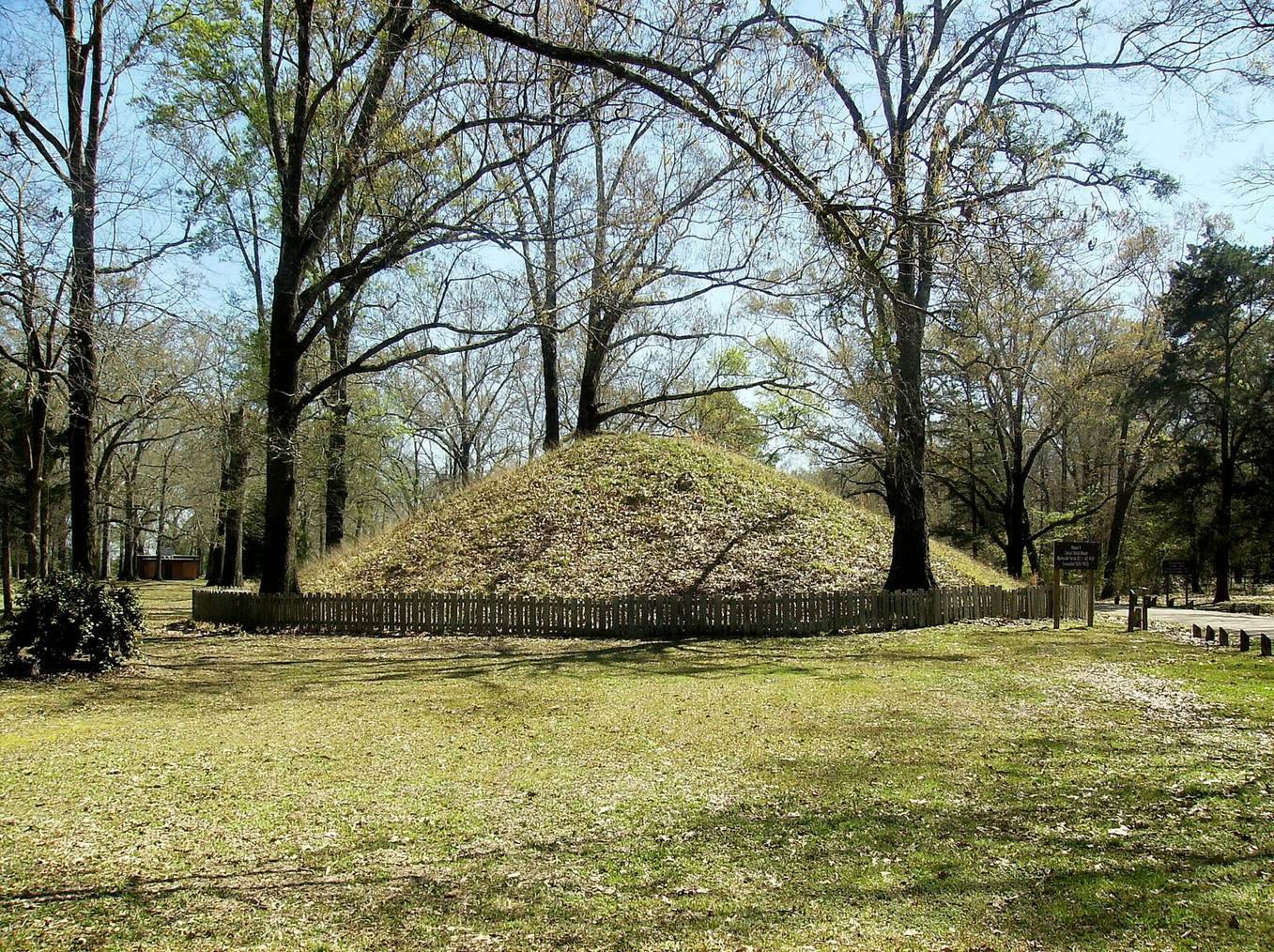
About 1 mile (1.6 km) southeast of Marksville, in Avoyelles Parish, the site’s earthworks include burial mounds enclosed by a horseshoe-shaped earthen embankment about 3,000 feet (910 m) long. Large ring features are another distinctive element and are described as having no parallel elsewhere. Marksville is among the largest sites of its period in the southeastern United States.