Inchcolm Abbey: An Augustinian Monastery in the Firth of Forth
Site at a Glance
- Rating
- 4.8
- Popularity
- Medium
- Country
- United Kingdom
- Primary era
- Medieval
- Eras represented
- Medieval
- Civilizations
- Kingdom of Scotland
- Site type
- Religious
- Remains
- Monastery
On this page7 sections
History
Foundation and monastic community
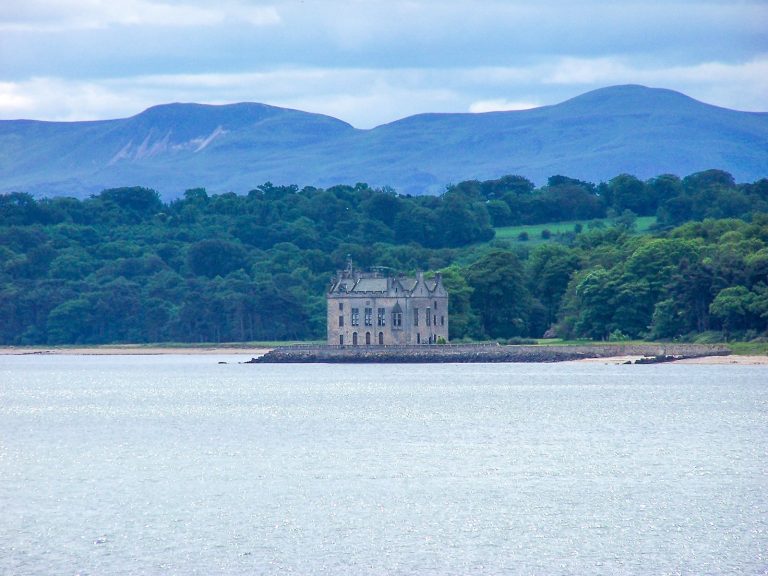
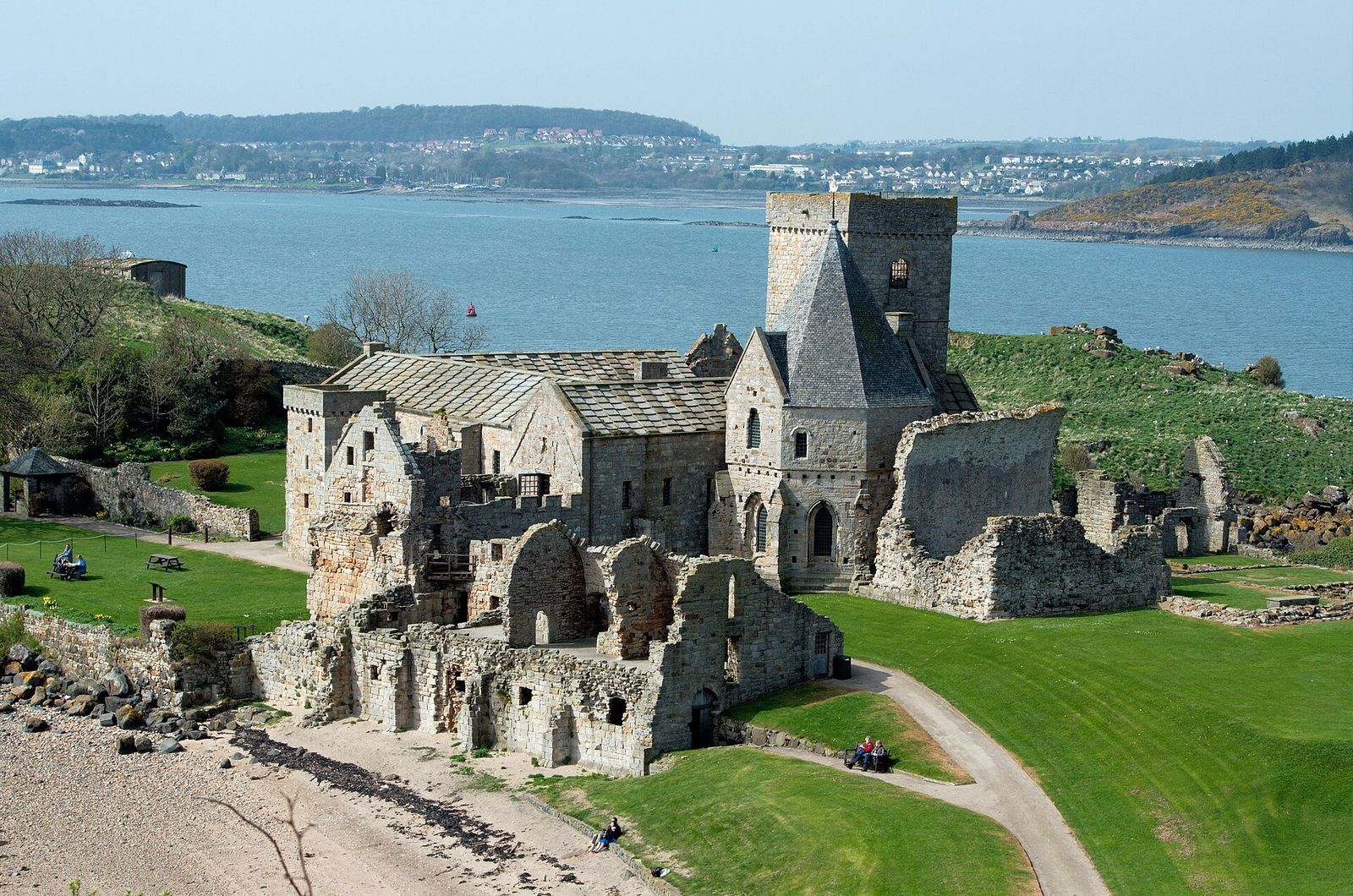
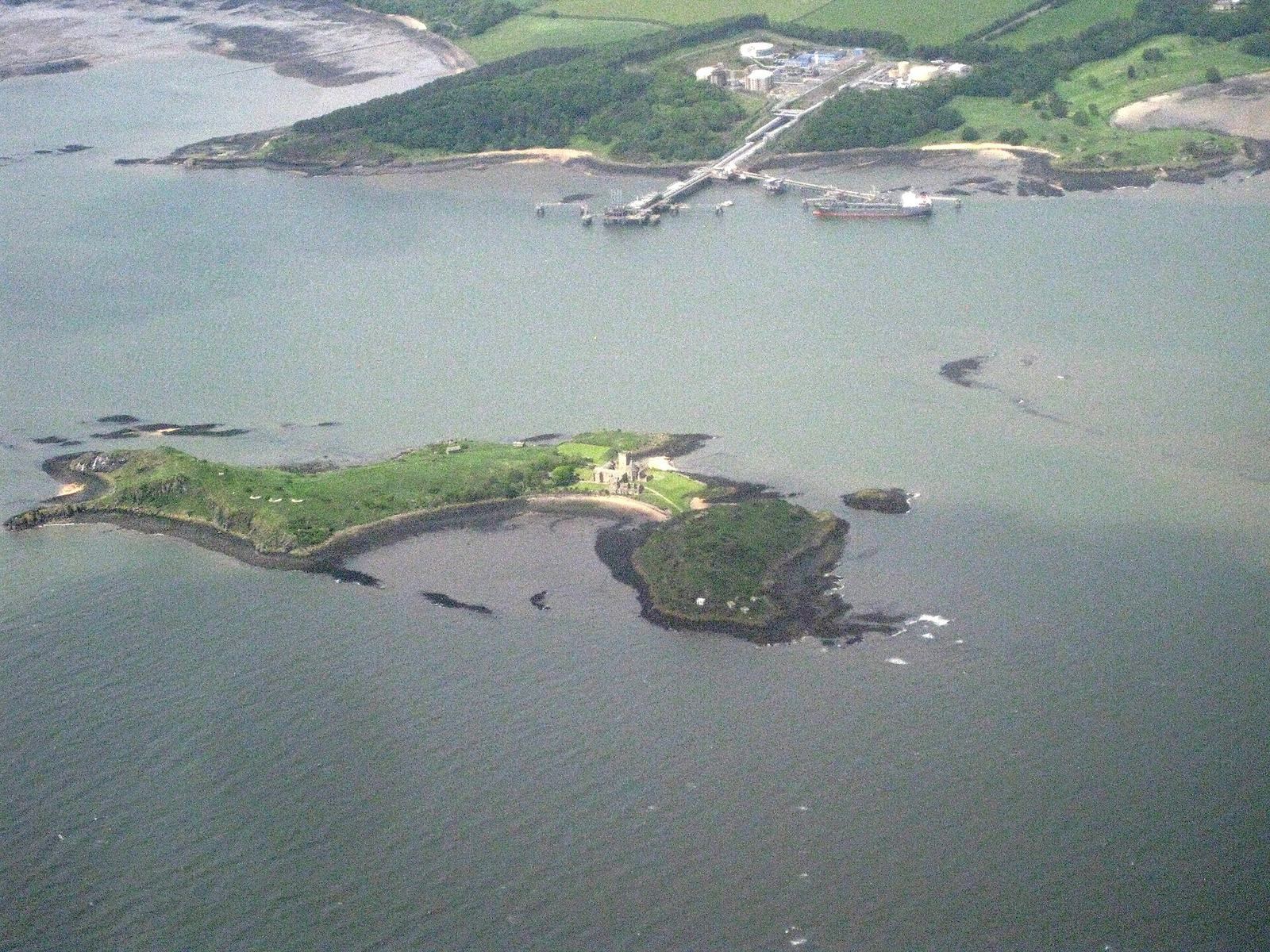
Inchcolm Abbey is a medieval Augustinian monastery on Inchcolm Island in the Firth of Forth, United Kingdom. Founded during the 12th century while Gregoir was Bishop of Dunkeld, its establishment is attributed to him and David I, king of Scots. The Augustinian priory is dated to 1147 to 1169, and it became a full abbey in 1235.
A later tradition connected the foundation with Alexander I, another king of Scots. After a shipwreck in 1123, he was said to have found shelter in a hermit’s hut on the island; one version of the story says he stayed for three days.
The abbey was a Catholic community of Augustinian canons regular, clergy who lived together according to the Rule of Saint Augustine. It belonged to the Diocese of Dunkeld, the area under a bishop’s authority, and exercised control over churches at Aberdour, Auchtertool, Beath, Dalgety, Dollar, Leslie, and Rosyth.
Writing and chant
Inchcolm is considered the likeliest place where the 14th-century Inchcolm Antiphoner was compiled, and it may also have been composed there. An antiphoner is a book of chants for the church’s daily services. The manuscript contains numerous chants devoted to Saint Columba, an early Christian missionary and monastic founder associated with Iona, as well as one of the few surviving examples of Celtic plainchant, unaccompanied liturgical singing linked to early Celtic Christian communities. The chants may instead have come from other religious houses associated with Columba, including Oronsay Priory and Iona.
Walter Bower, abbot from 1417 to 1449, was a Scottish chronicler associated with the abbey.
Attacks, abandonment, and reuse
English attacks on Inchcolm began in 1296. The abbey was abandoned during the Scottish Reformation in 1560, the 16th-century religious transformation that ended its active monastic use. Its position in the middle of the Firth of Forth led to its subsequent use for defensive purposes.
In 1581, stones from the abbey were taken to Edinburgh to repair the Tolbooth, a municipal building used for administration and justice. The abbey was disestablished in 1609.
The ruins are protected as a scheduled monument, a nationally important archaeological or historic site under Scottish law. The designation was made on 6 April 1921 under the title “Malcolm Canmore’s Tower.” Malcolm Canmore was the byname of Malcolm III, king of Scots from 1058 to 1093.
Remains
Cloister buildings
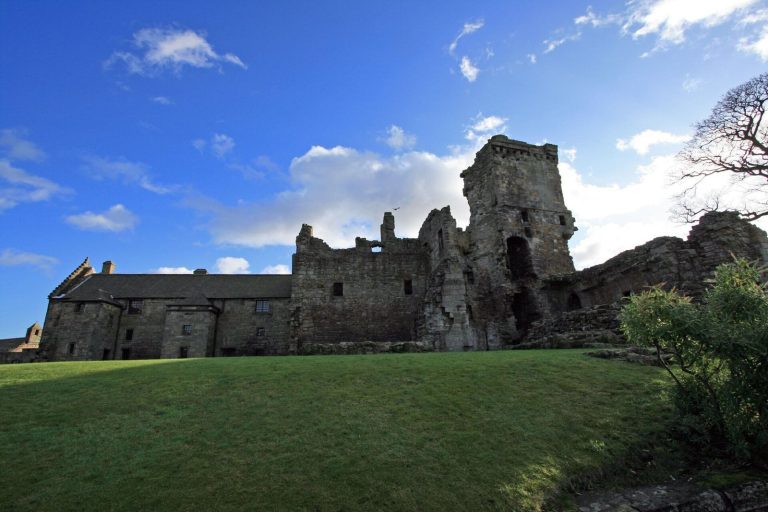
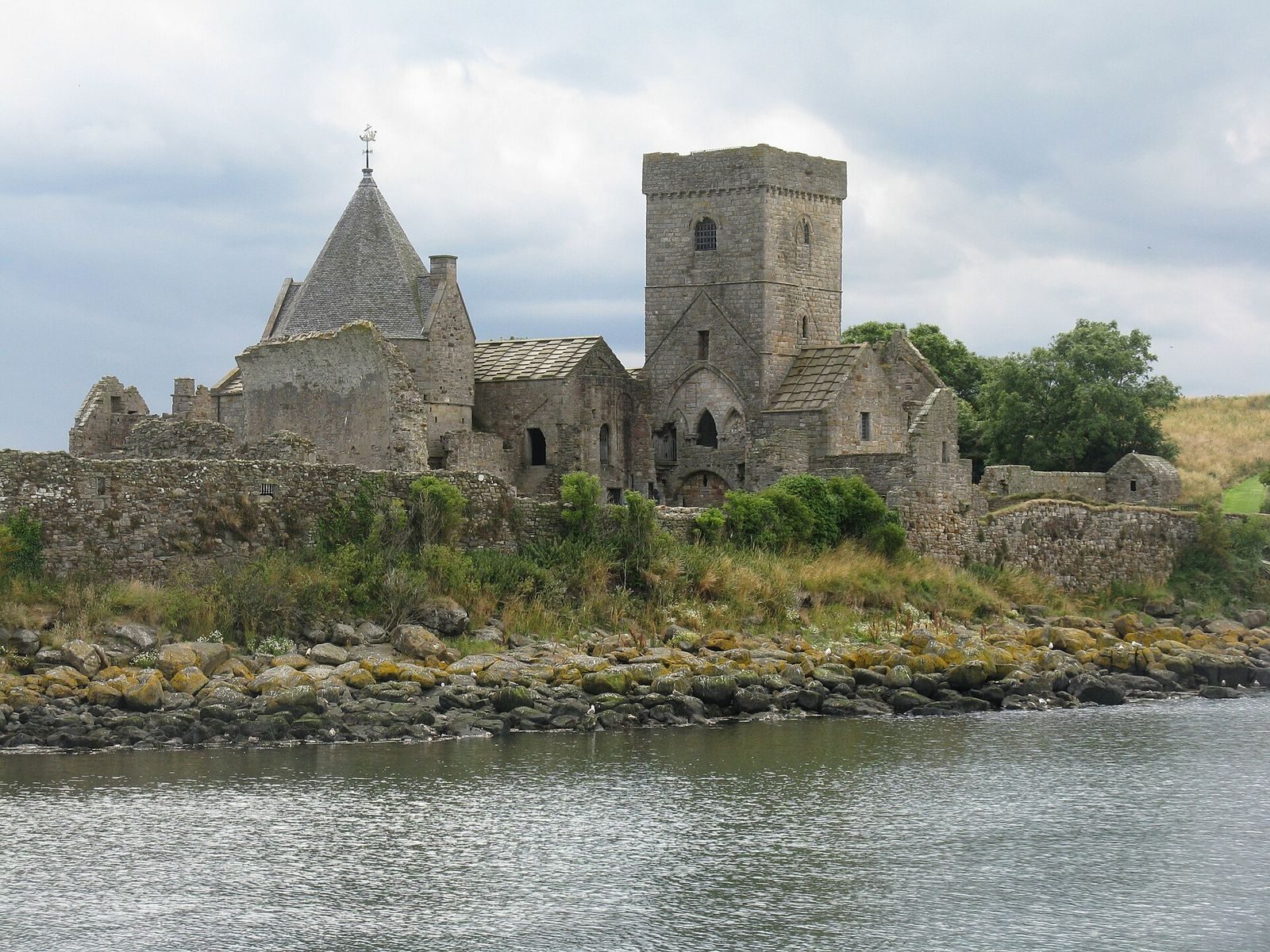
The surviving layout is that of a monastic complex, with cloisters, covered walks around a courtyard, and associated buildings. The cloisters, chapter house, warming house, and refectory survive complete. These served as the community’s meeting room, heated common room, and dining hall, respectively. Most of the other buildings arranged around or serving the cloister also remain largely complete. Inchcolm preserves the most complete remains of any Scottish monastic house.
Church and entrance
The monastic church is the least well-preserved part of the complex. Above the abbey entrance, a carved Latin inscription expresses the hope that the building will endure until an ant drinks the sea dry and a tortoise travels around the world.