Nyero Rock Paintings: Prehistoric Rock Shelters in Uganda
Site at a Glance
- Popularity
- Medium
- Country
- Uganda
- Primary era
- Stone Age
- Eras represented
- Stone Age
- Civilizations
- Unclassified
- Site type
- Civic
- Remains
- Rock Art
On this page12 sections
History
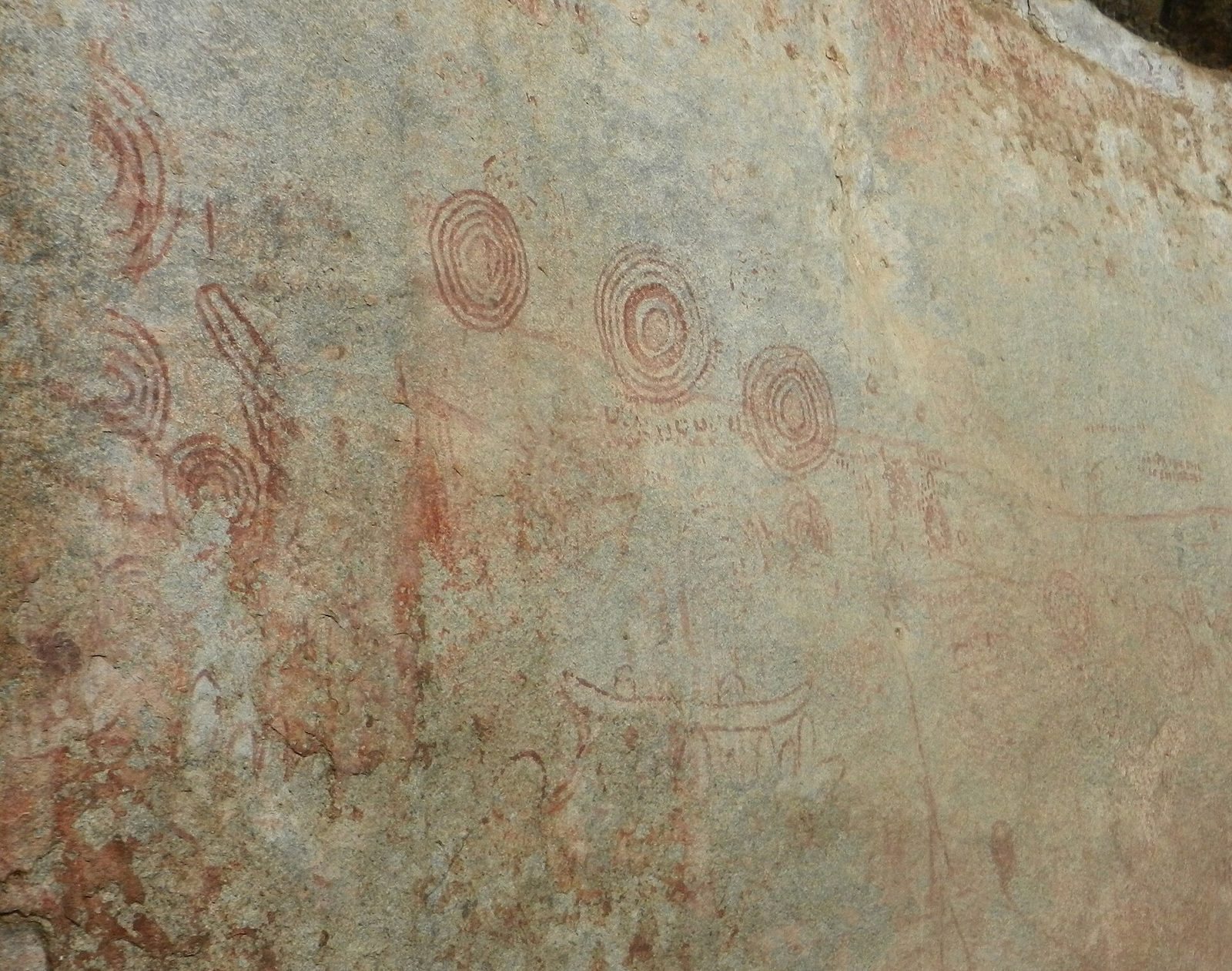
Nyero Rock Paintings are a group of six painted rock shelters in Kumi District, eastern Uganda, about 8 km west of Kumi town. Made before 1250 CE, their predominantly geometric designs belong to a widespread African rock-art tradition, and the site is regarded as among Uganda’s most important examples of rock art.
Pre-1250 rock art
Geometric rock art made with red pigment occurs across eastern, central, and parts of southern Africa. Its distribution corresponds to that of Late Stone Age communities, a prehistoric period associated here with hunter-gatherers and stone tools. The Nyero paintings are generally attributed to Batwa, also called Twa, a collective name for Indigenous peoples in parts of Central and East Africa. The artists themselves are unknown.
Twa communities may once have lived in the area and moved away after the arrival of Nilotic and Bantu peoples. Luo communities belong to the Nilotic grouping. The paintings’ place within this regional tradition gives them a wider context, while their meaning remains uncertain.
Iteso religious traditions
The paintings contribute to the cultural identity of the Iteso, an ethnic group associated with the Teso region of eastern Uganda, and are valued by Teso communities. The shelters are believed to have been sacred places associated with gods.
In the past, Iteso people made sacrifices and offerings in response to concerns about rainfall, misfortune, blessings, and childbearing. Individuals and clans prayed at the shelters at particular seasons. Oral history describes a strong attachment to the places, although government authorities stopped people from praying there in the 1970s.
A local practice continues at Nyero 2, where people leave money in a small cavity before or after seeking help from ancestral spirits. Nearby communities also continue to be drawn to a sacred prayer place within the site’s buffer zone.
Recognition and protection
Nyero was added to UNESCO’s World Heritage Tentative List in the cultural category on 10 September 1997. A tentative listing identifies a place that a country may consider nominating for World Heritage status; it is not the same as inscription on the World Heritage List.
Uganda’s 1995 Constitution provides for the protection of national heritage and government management of cultural sites and related property. The Historical Monuments Act of 1967, amended in 1977, protects historical monuments and objects of archaeological, palaeontological, ethnographic, or traditional interest. Rock-art sites and other identified properties of cultural importance are treated as state property, and destruction or alteration can be punished by up to six months’ imprisonment or a fine.
Remains
The six shelters
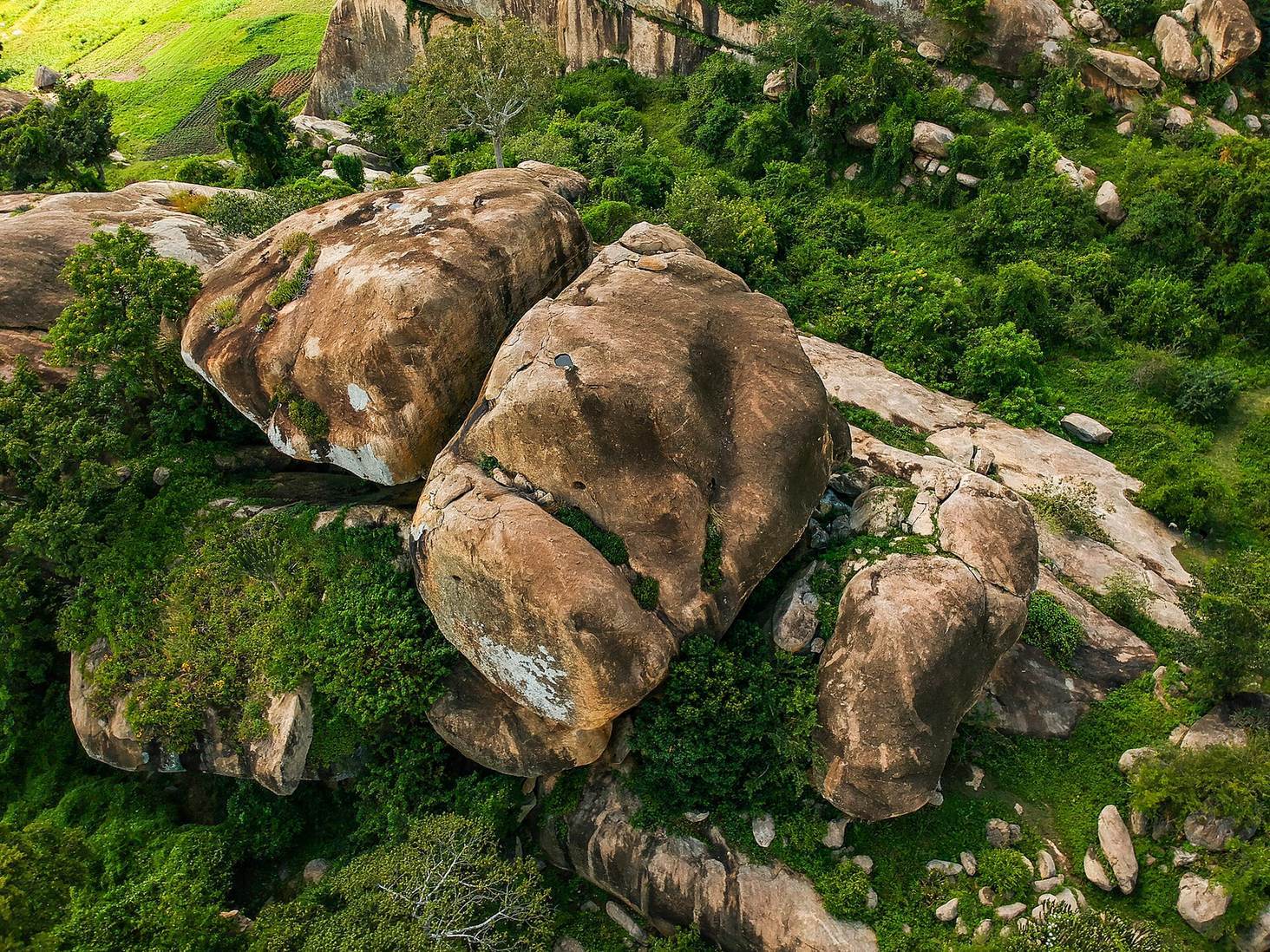
The six shelters, numbered Nyero 1 through Nyero 6, occupy an inselberg, an isolated rocky rise above its surroundings. Overhanging rock and large boulders supported by other rocks form the shelters. Their painted surfaces vary in colour, design, and exposure to the elements.
Nyero 1
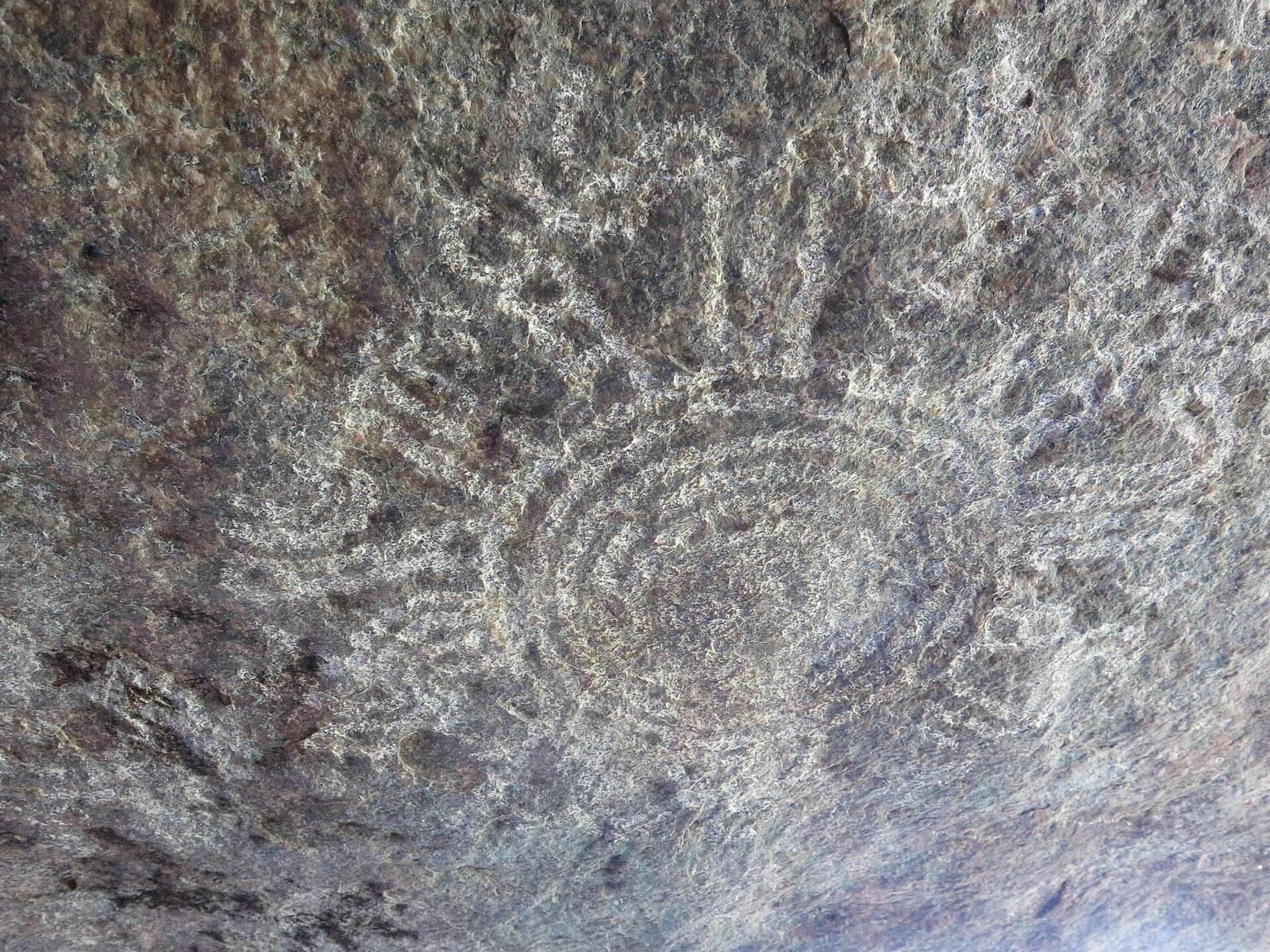
This small shelter is formed by a low overhanging rock resting on three supporting rocks. Six groups of white concentric circles and paintings shaped like acacia pods appear along the outer edge of the overhang.
Nyero 2
The main shelter has a near-vertical rock about 10 m high against its back wall. Its overhang formed when an enormous boulder, estimated to weigh at least 20,000 tons, broke away. The overhang shields the paintings from direct rain, while rocks at the front and sides protect them from the sun.
The paintings use shades of red, with concentric circles among the more than forty identified designs. A large design shaped like an acacia pod has also been described as a canoe. On the shelter’s south-eastern side, a narrow passage between boulders leads to a small, dark shelter containing a cavity known as the pocket. Traces of sacrificial smoke are visible in some caves.
Nyero 3
At the far northern end of the rocky hill, this shelter is formed by a large boulder perched on supporting rocks. Its interior is too low to stand in. A built protective wall encloses it, and a second wall at the far end makes the space safer while allowing a broad view of the land below. The paintings include white concentric circles surrounded by double-curved designs, as well as paired lines divided into smaller sections between the curves.
Nyero 4
This small shelter lies on the south-western side of the hill. Its surviving paintings include red concentric circles made with the fingers, two cone-shaped forms, and lines.
Nyero 5
On the western side of the hill near a primary school, this shelter has a red geometric design combining circular and linear forms. The motif was made with a brush and a finger, and part of it has been damaged by natural water erosion.
Nyero 6
High on the hill, this shelter looks over the surrounding countryside. Traces of red pigment outline small oval shapes and a slanting L-shape made with two fingers. They also include an outlined cross with a small circle below it. The painted rock surface is peeling and exposed to rain and the morning sun.